
🏠 Home > 🗺️ Recipes > 🍱 Snacks > 🇹🇭 Thailand Snacks > 🍱 Thai Fried Bananas (Kluay Tod) , Thai Grilled Pork Skewers (Moo Ping) , Crispy Thai Crepes (Khanom Buang)
🍱 Authentic Thai Snacks Recipes You’ll Want to Make Again and Again
Published by Supakorn | Updated: February 2026
Introduction: The Unsung Heroes of Thai Cuisine
Let's be honest, when you think about Thai food, your mind probably jumps straight to the classics: the tangy, fiery kick of Pad Thai, the creamy richness of Green Curry, or a steaming bowl of Tom Yum soup. These dishes are superstars for a reason, but if you stop there, you’re missing out on the true heart and soul of Thai culinary life: the Thai snacks.
Known locally as “khanom” (for sweets) or “ar-harn wang” (for appetizers), these small bites are anything but simple side dishes. They are portable masterpieces, little treasures of flavor, and cultural staples, often the first taste of Thai cuisine a tourist experiences, bought hot off a friendly street vendor's cart. From sweet, comforting fritters to savory, smoky skewers, Thai snacks are an essential, addictive, and often overlooked part of the Thai food landscape. They are the perfect embodiment of the Thai philosophy of eating—snacking often, sharing widely, and always prioritizing a perfect balance of flavors.
In this long-form guide, we’re going beyond the restaurant menu to bring the best of the street food scene right into your kitchen. We’re going to dive deep into three iconic, absolutely essential Thai snacks that are surprisingly simple to recreate at home. These aren't just recipes; they are your ticket to mastering the casual, incredible flavors of Thailand.
Here are the three must-try Thai snacks we'll be making:
1.Thai Fried Bananas (Kluay Tod) – The crispy, sweet, nutty comfort food.
2.Thai Grilled Pork Skewers (Moo Ping) – The smoky, savory, perfectly marinated street-side favorite.
3.Crispy Thai Crepes (Khanom Buang) – The crunchy, colorful, sweet (or savory!) handheld treat.
Grab your apron, get your ingredients ready, and let’s start cooking like we’re on the bustling streets of Bangkok!
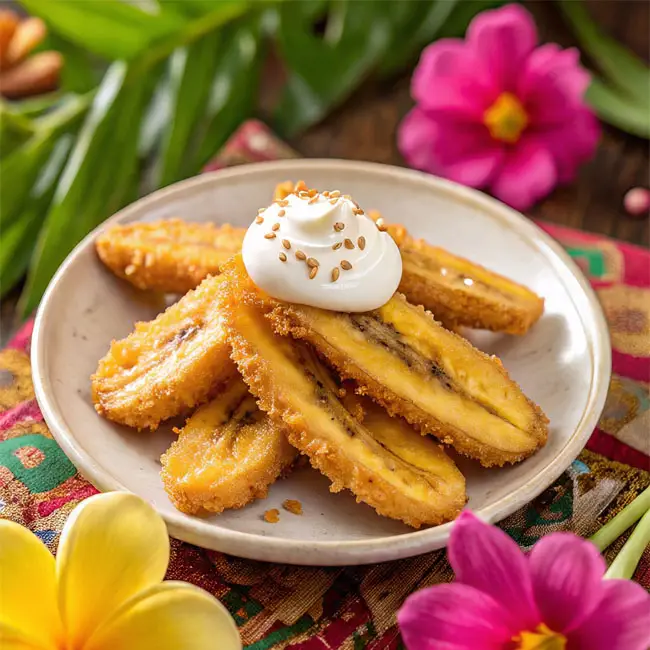
🔹 Recipe 1: Thai Fried Bananas (Kluay Tod)
About This Recipe: Your New Favorite Fritter
If you’ve ever walked past a street food stall in Thailand, you’ve probably caught the irresistible aroma of Kluay Tod. This snack is pure, unadulterated comfort. Imagine biting into a slice of warm, perfectly ripe banana—soft and sweet on the inside—encased in a gloriously crispy, golden-brown shell that’s studded with crunchy sesame seeds and flakes of coconut.
Unlike Western-style banana bread or heavier desserts, the Thai version uses a unique batter blend (often featuring rice flour) that gives it an incredibly light, airy crunch that holds up without feeling greasy. It’s the perfect blend of texture: crunchy, tender, and slightly chewy all at once. It’s so good, you’ll find yourself eating one right after the other. It’s a versatile snack, perfect as a dessert or a mid-day energy boost.
Ingredients & Measurements
- 6 ripe bananas (firm is best—we don't want mush!)
- 1 cup rice flour (This is key for that signature crisp!)
- ½ cup all-purpose flour
- ¼ cup shredded coconut (unsweetened, for texture and tropical flavor)
- 2 tbsp sesame seeds (for nuttiness and visual appeal)
- 1 tsp baking powder
- ½ tsp salt
- 1 cup cold water (The cold temperature helps create a crispier crust)
- Oil for deep frying (a neutral oil like canola or peanut works great)
Step-by-Step Instructions
1.Prep the Bananas: Peel your bananas. Slice them lengthwise into halves or quarters. Keep them uniform in size so they cook evenly. Place them on a plate and set aside.
2.Mix the Dry Ingredients: In a medium-to-large mixing bowl, combine your rice flour, all-purpose flour, shredded coconut, sesame seeds, baking powder, and salt. Give it a good whisk to make sure everything is distributed evenly.
3.Make the Batter: Gradually add the cold water to the dry mixture. Whisk until you achieve a smooth batter. You want a consistency that's thick enough to coat the bananas but not so thick that it looks like pancake dough. A good consistency is similar to heavy cream. Don't overmix—a few lumps are okay!
4.Heat the Oil: Pour enough oil into a deep pan or wok so that the bananas can be fully submerged when frying (about 2–3 inches deep). Heat the oil over medium heat. If you have a thermometer, aim for about 350°F (175°C).
5.Dip and Fry: Dip your banana slices into the batter, ensuring they are fully and evenly coated. Carefully drop them, one by one, into the hot oil. Do not overcrowd the pan; work in small batches to keep the oil temperature steady.
6.Achieve Golden Glory: Fry the slices for about 3–4 minutes per side, turning them gently once they are golden brown. They should be beautifully crisp and a deep golden color when done.
7.Drain and Serve: Use a slotted spoon or wire mesh skimmer to remove the fritters from the oil. Place them immediately on a plate lined with paper towels to drain off any excess oil. Serve them immediately and warm for the best experience.
Pro Tips & Mistakes to Avoid
- Banana Choice Matters: The best bananas for Kluay Tod are ripe but still firm. Overripe, mushy bananas will break down in the oil and make the fritters soggy.
- The Power of Cold: Keeping your water and even the batter cold right up until frying is a professional technique. The difference in temperature between the cold batter and the hot oil makes the crust expand quickly, resulting in that spectacular crispiness.
- Heat Control is Key: If the oil is too hot, the outside will burn before the inside cooks or the batter fully crisps. If the oil is too low, the bananas will sit in the oil and absorb too much of it, resulting in a greasy, soggy fritter. Stick to a steady medium heat.
- For Extra Nutty Flavor: Toast the sesame seeds lightly in a dry pan before adding them to the batter. The aroma is incredible!
FAQ: Your Kluay Tod Questions Answered
Q: Can I use plantains instead of bananas?
A: Absolutely! Plantains (Kluay Nam Wa in Thai) are actually the traditional choice. They are firmer and less sweet than typical Western bananas, which works beautifully and provides a slightly chewier texture.
Q: I want to make them gluten-free. Is that possible?
A: Yes! Rice flour is naturally gluten-free. For a 100% gluten-free version, simply use 100% rice flour (1 ½ cups total) and skip the all-purpose flour. The texture will be slightly crunchier!
Q: What’s the best way to serve them?
A: They are perfect on their own, but a light drizzle of honey, a side of vanilla ice cream, or a dusting of powdered sugar takes them over the top.
Summary of Kluay Tod
Thai Fried Bananas are the definition of a successful snack: quick, easy, and incredibly satisfying. They’re a wonderful way to introduce someone to the sweet side of Thai street food—crispy, sweet, and comforting, all rolled into one perfect bite.

🔹 Recipe 2: Thai Grilled Pork Skewers (Moo Ping)
About This Recipe: The Smoky King of the Street
If Kluay Tod is the sweet king of Thai street snacks, then Moo Ping is the savory, smoky emperor. Moo means pork, and Ping means grilled or roasted. These perfectly seasoned, succulent pork skewers are a ubiquitous sight across Thailand, usually grilled over glowing charcoal, their sweet, smoky aroma drifting down every city soi (side street).
What makes Moo Ping so special isn't just the charcoal grill, but the secret marinade. It’s a magic mix of savory (fish sauce, soy sauce), sweet (palm sugar), and aromatic (garlic, coriander root/cilantro stems), often enriched with coconut milk to keep the pork unbelievably tender and juicy. The result is pork that’s caramelized, slightly sticky, intensely flavorful, and so tender it practically melts in your mouth. They are most commonly eaten for breakfast or as an afternoon snack, often paired with sticky rice (khao niao).
Ingredients & Measurements
For the Pork:
- 1 lb (approx. 450g) pork shoulder (pork butt), sliced thinly against the grain
- 20–25 small wooden skewers (soaked in water for 30 minutes to prevent burning)
For the Marinade (The Secret Sauce):
- 3 tbsp soy sauce (light or thin soy sauce)
- 2 tbsp oyster sauce (adds umami and thickness)
- 2 tbsp palm sugar (or brown sugar), grated or finely chopped
- 2 tbsp coconut milk (full-fat)
- 1 tbsp black pepper, freshly ground
- 1 tsp baking soda (optional, but a great tenderizer!)
For the Aromatic Paste (The Flavor Base):
- 2 tbsp chopped garlic
- 2 tbsp chopped coriander root (if you can’t find roots, use the lower stems of cilantro)
- 1 tsp white peppercorns
(Pro Tip: For maximum flavor, use a mortar and pestle to pound the garlic, coriander root, and white peppercorns into a rough paste.)
Step-by-Step Instructions
1.Prep the Pork: Slice the pork shoulder into thin, bite-sized strips (about ⅛ to ¼ inch thick). You want them thin so they cook quickly and absorb the marinade better.
2.Make the Marinade: In a large mixing bowl, combine all the Marinade ingredients (soy sauce, oyster sauce, palm sugar, coconut milk, black pepper, and baking soda). Stir until the sugar dissolves.
3.Add the Flavor Paste: Add the Aromatic Paste (garlic, coriander root, and white pepper) to the bowl and mix well to combine with the marinade.
4.Marinate the Pork: Add the sliced pork to the bowl. Use your hands to thoroughly massage the marinade into the meat. Ensure every piece is coated. Cover the bowl and refrigerate for a minimum of 4 hours, but ideally overnight (12–24 hours). This is crucial for flavor!
5.Thread the Skewers: Remove the soaked wooden skewers from the water. Thread 3–4 slices of marinated pork onto each skewer. Bunch the pork together slightly for thickness, but don’t pack it too tightly.
6.Grill Time (The Authentic Way): Preheat your grill (charcoal is best for that smoky flavor, but gas works fine) to medium-high heat. Place the Moo Ping skewers on the grill.
7.Cook and Baste: Grill for about 3–4 minutes per side. As they cook, you can use the leftover marinade to baste the skewers a couple of times. This helps the sugars caramelize and keeps the pork moist.
8.Serve Hot: The pork is done when it is beautifully caramelized, slightly sticky, and cooked through (no pink inside). Serve immediately with a side of sticky rice (khao niao) for the ultimate authentic experience.
Pro Tips & Mistakes to Avoid
- Pound the Aromatics: Don't skip the step of pounding the garlic, coriander root, and pepper. This releases the essential oils and is the foundation of authentic Thai flavor. If you don't have a mortar and pestle, mince them very finely.
- Soak the Skewers: Soaking the wooden skewers prevents them from catching fire on the grill.
- The Baking Soda Trick: A pinch of baking soda in the marinade is a classic tenderizing trick for Asian meat dishes. Don't use too much, or it can give the pork an odd taste, but a small amount works wonders!
- Charcoal is King: If you want that deeply authentic, smoky taste, grilling over charcoal is the only way to go. The fat dripping onto the coals is what creates that beautiful aromatic smoke.
FAQ: Your Moo Ping Questions Answered
Q: Can I cook this indoors without a grill?
A: Absolutely! You can pan-fry them in a skillet (on medium heat) or, even better, use a broiler or a grill pan. Just make sure you turn them often to get that caramelized crust.
Q: Where can I find coriander root?
A: Look for cilantro with the root still attached in Asian supermarkets. If you can’t find the roots, substitute by using the bottom 1 inch of the cilantro stems, which are the most flavorful part of the plant.
Q: How do I make this spicier?
A: Moo Ping isn't traditionally spicy, but you can serve it with a side of Nam Jim Jaew (a Northeastern Thai dipping sauce made with dried chili flakes, fish sauce, lime juice, and toasted rice powder) for a fiery kick!
Summary of Moo Ping
Moo Ping is savory, smoky, sweet, and unbelievably tender. It’s the ultimate grab-and-go comfort food that proves Thai food isn't all about chili heat. This recipe is your opportunity to master the subtle, complex art of Thai marinating.
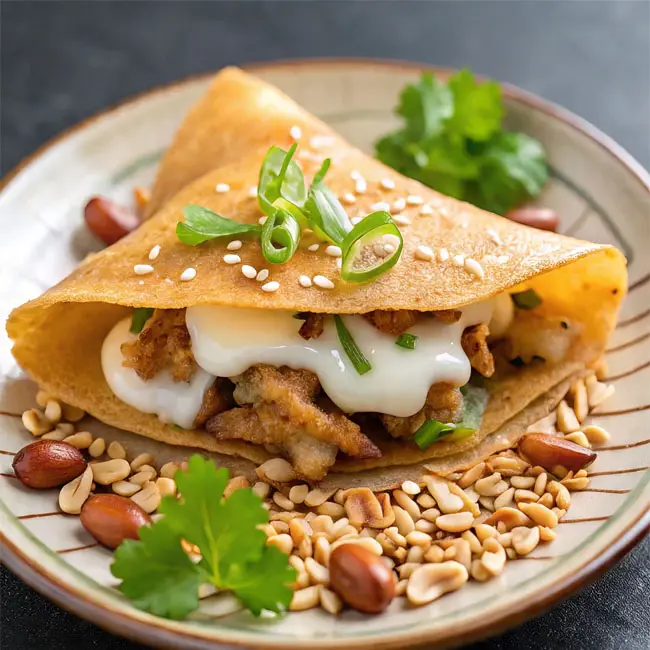
🔹 Recipe 3: Crispy Thai Crepes (Khanom Buang)
About This Recipe: The Colorful Crunch
Khanom Buang is perhaps the most fun and visually captivating snack on the Thai street food scene. Often called "Thai Crispy Pancakes," these little half-moon treats are more like a cross between a crunchy crepe and a delicate taco. They are made on a large, flat griddle, where a thin layer of batter is spread, cooked until impossibly crisp, and then filled with a whimsical combination of toppings.
Traditionally, they are filled with a dollop of white, fluffy cream (often made from egg whites or coconut milk), and then topped with sweet ingredients like foi thong (shredded, sweetened egg yolk threads) or toasted coconut flakes. But the true beauty is their versatility: savory versions with minced shrimp, shredded pork, or scallions are equally popular. The contrast of the crispy shell, the soft, creamy filling, and the colorful, textured toppings makes Khanom Buang an unforgettable sensory experience.
Ingredients & Measurements
For the Crepe Batter:
- 1 cup rice flour (essential for the crisp texture)
- ½ cup all-purpose flour
- ½ cup sugar
- 1 cup water
- ½ tsp baking soda
- ¼ tsp turmeric powder (optional, for the traditional yellow color)
For the Fillings (Sweet Version):
- 1 cup whipped cream or meringue (pre-made or freshly whipped)
- ½ cup shredded coconut (toasted in a dry pan until lightly golden)
- ½ cup “foi thong” (Thai egg yolk threads, a very sweet and traditional topping) or substitute with thinly sliced egg crepe or egg custard strips.
Step-by-Step Instructions
1.Make the Batter: In a bowl, thoroughly whisk together the rice flour, all-purpose flour, sugar, baking soda, water, and turmeric (if using) until you have a perfectly smooth batter. It should be thin enough to spread easily.
2.Heat the Pan: Heat a non-stick pan or griddle on medium-low heat. This is critical—too high a heat and the crepes will burn before they crisp up. Lightly grease the pan with a tiny bit of oil (or a piece of pork fat, if you're being super traditional).
3.Spread the Crepe: Spoon about one tablespoon of batter onto the hot pan. Immediately use the back of the spoon to spread the batter into a very thin, uniform round or oval shape (about 3–4 inches wide).
4.Cook Until Crisp: Let the crepe cook slowly for about 2–4 minutes. You’ll know it’s ready when the edges are starting to curl up, and the center is dry and has a beautiful, lacy, crispy texture.
5.Add the Filling: While the crepe is still in the pan (and hot), add a small dollop of your whipped cream or meringue right in the center. Work quickly!
6.Add Toppings and Fold: Sprinkle generously with toasted shredded coconut and your foi thong (or substitute topping). Use a thin spatula to fold the crepe like a taco (a half-moon shape) and remove it immediately from the pan.
7.Serve: Place them upright on a plate. The residual heat will soften the cream just slightly while the shell stays perfectly crunchy. Serve right away.
Pro Tips & Mistakes to Avoid
- Thin is In: The thinner you can spread the batter, the crispier the final product will be. Practice makes perfect here—it’s the most challenging part!
- Low and Slow: Do not rush the cooking. The medium-low heat allows the moisture to cook out slowly, which is what creates the incredibly crispy texture.
- Timing the Fillings: Add the fillings while the crepe is still on the heat for a few seconds. The heat from the crepe shell helps warm the cream slightly, but do not leave it too long or the cream will melt completely.
- Storage: These must be eaten fresh. They will begin to soften quickly, especially if the air is humid.
FAQ: Your Khanom Buang Questions Answered
Q: Can I make a savory version of Khanom Buang?
A: Absolutely! The savory version is just as popular. For the filling, you can use a mixture of finely minced shrimp, scallions, and a little shredded coconut, seasoned with a touch of soy sauce and pepper. Skip the cream and egg yolk threads for this version.
Q: I can't find foi thong. What's the best substitute?
A: The texture and color are unique, but a good substitute is finely diced, caramelized egg custard, or simply use more toasted coconut and maybe a few pieces of finely chopped, colorful fruit (like mango or papaya) for visual interest.
Q: Why is my crepe not getting crispy?
A: Two main reasons: 1) Your batter is too thick (try adding a little more water), or 2) Your heat is too high or too low. Too high burns it; too low steams it. Make sure your heat is a steady medium-low, and let it cook until the center is visibly dry and crunchy.
Summary of Khanom Buang
Crispy Thai crepes are a light, fun, and customizable snack. They are a delightful demonstration of Thai pastry skills, balancing a delicate, brittle shell with sweet, soft, and colorful fillings. They’re a guaranteed crowd-pleaser and a beautiful way to end a meal.
Final Thoughts: The Joy of Thai Snacking
We’ve covered some serious ground, from the sugary-sweet Kluay Tod (Fried Bananas) to the intensely savory and smoky Moo Ping (Grilled Pork Skewers), and finally, the delicate crunch of Khanom Buang (Crispy Crepes). Each of these snacks brings a distinct flavor profile and texture to the table, yet they all share that essential Thai characteristic: a perfect, compelling balance that keeps you reaching for "just one more."
Thai snacks are proof that big flavor often comes in the smallest, most portable bites. The best part? These recipes, while rooted in centuries of street-food tradition, are surprisingly accessible for the home cook. They don't require fancy equipment or complex techniques, just a willingness to play with flavors and a desire to bring the magic of the Bangkok streets into your own kitchen.
Start with the recipe that calls to you most, master the technique, and then try the others. Each dish tells a wonderful story of Thai culture, a history of enjoying food in community, and the sheer joy of sharing something truly delicious.
So go ahead—fire up that grill, heat that oil, invite your friends over, and whip up a batch of authentic Thai snacks. We promise, they’ll disappear faster than you can shout, “Aroy Mak!” (That's Thai for "super delicious!").
| 🇹🇭 🍱 < Back |