
🏠 Home > 🗺️ Recipes > 👑🍨 Grand Finales (Desserts) > 🇺🇸 USA Grand Finales (Desserts) Recipes
🇺🇸 👑🍨 USA Grand Finales (Desserts) Recipes
Published by Supakorn | Updated: August 2026
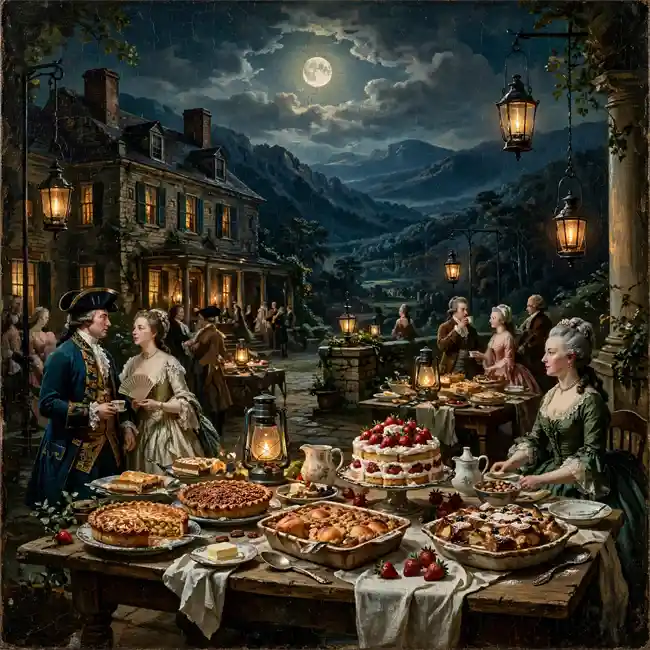
🏰📜 The Storyteller’s Intro: Unlocking the Forgotten Aristocratic Dessert Table
There is one important secret to reveal before we open this culinary chapter: the United States never developed a single royal court in the European sense, so there is no honest historical basis for claiming that America possessed a continuous “royal palace dessert tradition” stretching back 1,000 years.
But that does not mean the story is short.
In fact, the food history of the land that became the United States reaches far deeper than the age of the nation itself. Indigenous peoples developed sophisticated food systems over thousands of years, cultivating and trading foods that would later become essential to American cuisine. Corn, beans, squash, wild rice, berries, pecans, maple sugar, and countless regional plants were part of diverse Indigenous foodways long before European colonization.
So, when we use the phrase “aristocratic” in this chapter, think of it as a storytelling lens rather than a claim that an American royal dynasty once guarded these desserts behind palace walls.
Our “Grand Finales” are the luxurious ending of the American culinary story—the desserts associated with prosperous households, historic estates, plantation-era kitchens, urban dining rooms, celebrations, community gatherings, and regional traditions.
And that makes the story much more interesting.
Instead of imagining one secret palace kitchen, picture thousands of kitchens scattered across forests, coastlines, plantations, farms, trading towns, Indigenous communities, frontier settlements, and growing American cities.
Each kitchen had its own treasures.
Some were delicate.
Some were rustic.
Some were intensely sweet.
Others depended on fruit, nuts, grains, honey, maple, berries, or seasonal ingredients.
And some were created from necessity, turning humble ingredients into something worthy of a celebration.
🕰️ The First Era: Indigenous Foodways Before the United States
The deepest layer of this culinary timeline belongs to Indigenous peoples.
This period stretches back thousands of years, long before the formation of the United States. Food was closely connected to geography, seasons, community, ceremony, trade, and stewardship of the environment.
There was no single “Native American cuisine.” There were countless food traditions shaped by different landscapes.
In the Northeast, forests and waterways supplied berries, nuts, fish, maple, and other seasonal foods.
In the Great Lakes region, wild rice became deeply connected with local food traditions.
Across the Southeast, corn, nuts, fruits, and cultivated crops formed important parts of regional foodways.
In the Southwest, Indigenous communities developed sophisticated agricultural systems adapted to dry environments.
This matters when discussing American desserts because many ingredients now considered unmistakably American have Indigenous histories.
Maple sugar is a particularly fascinating example. Sweetness did not begin with European refined sugar arriving in colonial markets. Indigenous knowledge demonstrated how local landscapes could provide concentrated natural sweetness.
That makes ingredients such as maple, berries, nuts, corn, pumpkin, and wild fruits part of the deeper American dessert story.
🕯️ The Second Era: Colonial Kitchens and the Birth of the American Sweet Table
The next major chapter begins with European colonization.
European settlers brought different baking traditions, wheat, dairy practices, orchards, sugar, spices, and culinary techniques. At the same time, they encountered Indigenous ingredients and knowledge.
The result was not a simple replacement of one cuisine with another.
It was an ongoing exchange—sometimes cooperative, sometimes unequal, and often shaped by colonial power.
By the eighteenth century, wealthy households could display social status through food. Imported sugar and luxury ingredients were particularly significant because sugar remained expensive and was deeply connected to Atlantic trade and slavery.
Fruit gardens also became symbols of refinement among some prosperous colonial households. Wealthier settlers maintained carefully managed gardens containing European fruit varieties, while commercial nurseries increasingly supplied improved varieties during the eighteenth century.
This is where the idea of the American aristocratic dessert table becomes useful as a metaphor.
Imagine a large wooden dining table.
There might be baked fruit desserts, cakes, custards, preserved fruits, sweet pastries, puddings, and carefully prepared seasonal treats.
The dessert was not merely something eaten at the end of dinner.
It could communicate wealth.
It could demonstrate hospitality.
It could celebrate a marriage, harvest, holiday, political gathering, religious occasion, or important visitor.
And sometimes the dessert was deliberately designed to impress.
📖 The Third Era: American Cookbooks Begin Writing the Story Down
By the late eighteenth century, American cooks were no longer simply adapting British cookbooks.
A landmark example is American Cookery, published by Amelia Simmons in 1796. The National Park Service notes that it was an important milestone because Simmons wrote specifically for American cooks, using American products and language and adapting culinary knowledge to local conditions.
This is an important turning point.
The American dessert identity begins moving from borrowed tradition toward something recognizably local.
The kitchen becomes a laboratory.
Cooks adapt recipes depending on what grows nearby.
Fruit changes with the region.
Nuts change with the landscape.
Sweeteners change according to availability.
Flour behaves differently depending on milling and climate.
And family traditions begin turning ordinary ingredients into recognizable regional specialties.
That is how culinary identity is often created—not through one famous chef, but through generations of cooks quietly changing recipes until a dish becomes “ours.”
🎩 The Fourth Era: The Gilded Dining Room and the American Grand Finale
During the nineteenth century, American cities expanded, wealth accumulated, transportation improved, and dining culture became increasingly elaborate.
Hotels, restaurants, private mansions, social clubs, department stores, bakeries, and grand celebrations helped create a new culture of American luxury.
Dessert could now become theatrical.
A grand meal might finish with elaborate cakes, pies, molded desserts, ice cream, custards, fruit creations, or elaborate confections.
The American “aristocratic” dessert table was therefore not tied to hereditary nobility.
It was connected to wealth, social prestige, hospitality, celebration, and culinary craftsmanship.
That distinction is important.
America's grand dessert culture is a story of social aspiration rather than royal inheritance.
🗺️ The Royal Culinary Tourism: Mapping Flavors to Historic Landscapes
If you want to explore America's grand dessert heritage, don't think of the country as one giant kitchen.
Think of it as a culinary map.
Every landscape tells a different story.
🏛️ New England: Colonial Elegance and Orchard Traditions
Begin in New England, where colonial history, historic villages, old farms, orchards, and coastal communities create one of the most atmospheric settings for exploring early American foodways.
Here, desserts naturally connect with apples, berries, maple, corn, dairy, wheat, and seasonal fruit.
Historic towns provide an especially interesting backdrop because food history can be experienced alongside preserved architecture, old farms, gardens, meetinghouses, and colonial-era sites.
The real attraction is not simply finding an “old dessert.”
It is understanding how cooks worked with the ingredients available to them.
The orchard was important.
The garden was important.
The pantry was important.
The changing seasons were important.
A visitor interested in historic American desserts and colonial food culture can therefore treat New England as an edible history lesson.
🏙️ Philadelphia and the Mid-Atlantic: The Sophisticated American Table
Move south and west toward the Mid-Atlantic, and the culinary story becomes increasingly connected to trade, immigration, urban life, and prosperous households.
Philadelphia was an important commercial center in the colonial era, and wealthy merchants had access to luxury foods that ordinary families could not easily obtain.
Historical records from the period show that imported confectionery and “sweetmeats” could occupy a special place in elite consumption, while sugar itself was part of a much larger Atlantic trading system.
For culinary travelers, this region offers a fascinating combination of historic architecture and food history.
The dessert story here is not simply about taste.
It is also about trade.
Who could afford sugar?
Who prepared the food?
Who worked in the kitchen?
Which ingredients were local?
Which ingredients traveled thousands of miles?
Those questions turn a beautiful dessert into a window into social history.
🌾 The Chesapeake and Southern Atlantic: Celebration, Memory, and Community
The Southern food story is impossible to understand without recognizing the contributions of Indigenous peoples, African Americans, European settlers, and later immigrant communities.
Southern desserts and celebratory foods emerged from complicated histories of plantation agriculture, slavery, migration, family traditions, and regional adaptation.
The National Park Service documents how African American cooks played a major role in shaping Southern foodways, while Indigenous ingredients and techniques also became deeply embedded in the cuisine.
This is where the phrase “secret aristocratic kitchen” requires care.
Many dishes associated with wealthy households were actually prepared by cooks whose names were rarely recorded.
Their knowledge was essential.
Their techniques survived through families and communities.
Their influence shaped American cuisine.
So the true “keepers of the secret” were often ordinary cooks rather than aristocrats.
That is one of the most powerful lessons hidden inside American culinary history.
🚣 Cradle of Royal Delicacies – Rivers, Coasts & Historic Port Cities
America's waterways created culinary crossroads.
The Atlantic coast, Chesapeake Bay, Mississippi River system, Great Lakes, and Gulf Coast connected communities through transportation, trade, migration, and food exchange.
These landscapes encouraged desserts based on ingredients that could be transported, preserved, cultivated, or traded.
🦪 Chesapeake and Coastal Traditions
Coastal communities had access to fruits, berries, nuts, corn, and other seasonal ingredients while participating in extensive maritime trade.
Historic food tourism here can combine waterfront towns, old plantations, historic homes, museums, markets, and regional bakeries.
The fascinating part is seeing how food changed as it traveled.
A recipe could begin as a household tradition and eventually become a regional specialty.
🌊 New Orleans and the Gulf Coast
Further south, the culinary story becomes dramatically more multicultural.
French, Spanish, African, Caribbean, Indigenous, and other influences contributed to the region's distinctive foodways.
Creole food history demonstrates how desserts, breads, sweets, and other foods developed within a larger cultural mixture. The National Park Service describes Creole foodways as a broad culinary tradition encompassing desserts and sweets alongside many other categories.
For culinary travelers, New Orleans is therefore more than a destination for famous dishes.
It is a place where migration, trade, memory, architecture, music, and food overlap.
The grand finale here might be a pastry, pudding, cake, or confection—but the deeper experience is discovering the people and cultures behind it.
⛰️ Kingdom of Wild Aromatics & Heritage – Mountains, Forests & Frontier Kitchens
Travel inland and the American dessert story changes again.
The mountains and forests introduced cooks to ingredients such as berries, apples, nuts, maple, wild herbs, and other seasonal foods.
Here, “luxury” often meant something different.
A sophisticated dessert did not necessarily require expensive imported ingredients.
It could mean using a rare seasonal fruit at exactly the right moment.
It could mean preserving summer berries for winter.
It could mean turning apples from the family orchard into a centerpiece dessert.
It could mean transforming cornmeal, nuts, honey, maple, or dried fruit into something memorable.
🍎 Appalachian and Mountain Heritage
The Appalachian region is especially interesting for travelers interested in traditional American foodways.
Its culinary identity grew from forests, farms, gardens, orchards, migration, and family preservation techniques.
Many food traditions developed because households had to make the most of what they had.
That resourcefulness is itself a form of culinary sophistication.
A dessert made from a handful of seasonal ingredients can reveal more about a culture than an extravagant modern confection.
🌲 Great Lakes and Northern Forests
The northern interior offers another fascinating food landscape.
Wild rice, berries, maple, nuts, corn, and other regional foods connect modern food tourism with much older Indigenous traditions.
The Smithsonian emphasizes that Indigenous foodways were highly connected to environment, seasonality, and stewardship, and that many foods now common in American diets have Indigenous histories.
For travelers, that means the best culinary experience may happen outside a luxury dining room.
It might happen at a farmers' market.
A heritage food festival.
An Indigenous food event.
A historic farm.
A local bakery.
Or a community gathering where food is connected to place.
🍰 Secret Grand Finales Worth Remembering
Instead of claiming these desserts were literally hidden royal recipes, it is more historically responsible to treat them as forgotten, elite-associated, regional, ceremonial, or heritage-inspired American grand finales.
Here are some names that fit the atmosphere of this collection:
• The Colonial Orchard Apple Finale — a celebration of America's early orchard traditions.
• The Maple Sugar Heritage Pudding — inspired by the deep history of maple as a North American sweetener.
• The Chesapeake Berry Estate Tart — a refined interpretation of seasonal coastal berries.
• The Old American Pound Cake — connected to early American baking traditions and the landmark cookbook culture of the eighteenth century.
• The Southern Pecan Grand Finale — built around one of the most recognizable nut traditions of the American South.
• The Appalachian Orchard Cake — a rustic yet elegant expression of mountain fruit culture.
• The New England Cranberry Celebration — highlighting a fruit strongly associated with the northeastern landscape.
• The Great Lakes Wild Rice Sweet Heritage — an imaginative dessert concept inspired by Indigenous foodways, presented respectfully rather than as an invented ancient recipe.
• The Colonial Fruit Garden Tart — inspired by the carefully managed fruit gardens maintained by some wealthy colonial households.
• The Grand American Berry Custard — a fictionalized heritage-style title connecting seasonal fruit with historic dining culture.
These titles are best understood as creative heritage concepts, not claims that an exact recipe existed in a specific aristocratic household.
That distinction keeps the storytelling dramatic without turning culinary fiction into fake history.
🏟️❓ Royal FAQ: Unlocking Palace Kitchen Mysteries
Q1.Did the United States actually have royal desserts?
Not in the traditional European sense.
The United States did not have a hereditary royal court comparable to European monarchies. Therefore, “royal dessert” is best treated as a creative label for luxurious, ceremonial, elite, historic, or prestigious desserts.
For historical accuracy, aristocratic-style, elite, colonial, heritage, or grand American are safer descriptions.
Q2.Are there American desserts with very old roots?
Absolutely—but the timeline needs to be separated carefully.
Indigenous food traditions in North America extend back thousands of years. Many foods now associated with American cuisine have Indigenous histories.
However, individual dessert recipes usually cannot be traced continuously for 1,000 years.
A responsible article should distinguish between the age of a food tradition, the age of an ingredient, and the age of a documented recipe.
Q3.When did American dessert culture become recognizable?
There was no single starting date.
Indigenous foodways provide the deepest foundation. Colonial settlement introduced European baking traditions and ingredients. By the late eighteenth century, American cookbooks were beginning to document distinctly American adaptations. The nineteenth century then expanded dessert culture through urbanization, commercial baking, transportation, and changing social customs.
Q4.Why use “aristocratic” instead of “royal” for America?
Because it better reflects American history.
America developed wealthy households, influential merchants, plantation elites, prominent families, grand estates, and sophisticated urban dining cultures—but not a traditional hereditary royal court.
Using aristocratic as an editorial concept allows the content to preserve the luxurious atmosphere while avoiding the false claim that America had a royal culinary dynasty.
🧠 Final Thoughts: The Timeless Allure of Aristocratic Gastronomy
The real mystery of USA Grand Finales is not that America supposedly possessed a hidden royal cookbook.
The mystery is that American dessert culture was created from thousands of culinary encounters.
Indigenous knowledge.
Colonial adaptation.
Immigrant traditions.
African American culinary creativity.
European baking techniques.
Regional agriculture.
Trade routes.
Family kitchens.
Grand hotels.
Country farms.
Urban bakeries.
Holiday tables.
Community celebrations.
And countless cooks whose names never appeared in history books.
That is the true American grand finale.
If you want to explore this culinary world as a traveler, start by placing pins on the map.
Begin in New England for colonial landscapes, orchards, maple traditions, and historic foodways.
Move toward Philadelphia and the Mid-Atlantic for early American urban dining and the story of luxury ingredients.
Continue into the Chesapeake and Southern Atlantic to explore the complicated cultural roots of Southern cuisine.
Then travel toward New Orleans and the Gulf Coast, where culinary traditions reveal extraordinary cultural exchange.
Head into the Appalachians for orchard, mountain, and preservation traditions.
Finally, explore the Great Lakes and northern forests, where Indigenous foodways provide an essential connection to the deeper history of North American ingredients.
And that is where this story should pause.
Because the next chapter can go much deeper.
Instead of discussing the dessert table as a whole, each individual grand finale can become its own culinary investigation.
A single dessert can have its own historical setting.
Its own regional identity.
Its own ingredient story.
Its own aristocratic-style presentation.
Its own cultural background.
And eventually, its own carefully developed modern recipe inspired by historical foodways.
That is where the Lost Royal Recipes concept becomes genuinely exciting—not because we pretend fictional recipes are documented facts, but because we use historical clues, regional ingredients, culinary traditions, and respectful imagination to reconstruct the atmosphere of an older American table.
The treasure is not a fake palace.
The treasure is the story.
👑 Credit to the Keepers of the Culture (The Legacy)
Every exploration of American culinary heritage deserves one final gesture of respect.
The deepest credit belongs not to modern food trends, luxury restaurants, or writers who give glamorous names to old-fashioned dishes.
It belongs to the people who carried food knowledge forward.
Indigenous communities preserved relationships with native plants, landscapes, seasons, and traditional foods despite enormous historical disruption. The Smithsonian notes that many Indigenous communities are actively reclaiming and revitalizing food traditions today.
Credit also belongs to generations of African American cooks whose knowledge profoundly shaped American cuisine, often without receiving recognition equal to their contribution.
It belongs to immigrant families who carried treasured food traditions across oceans and adapted them to American ingredients.
It belongs to farm families who preserved fruit, nuts, grains, and seasonal foods.
It belongs to community cooks who remembered recipes that were never written down.
And it belongs to historians, museum curators, archivists, food scholars, chefs, farmers, and cultural organizations working to preserve these stories.
So when we call this collection USA Grand Finales (Desserts), the grandness should not be measured only by expensive ingredients or elegant presentation.
It should be measured by heritage.
By memory.
By survival.
By adaptation.
And by the remarkable human ability to turn what a landscape provides into something worth sharing at the end of a great meal.
That is the real legacy of the American dessert table.
And perhaps that is a far more fascinating secret than any imaginary palace cookbook could ever contain.
👑🍨 Unveiling the Forgotten Desserts of Early American High Society
👉 Unlock Iconic American Grand Finales
| 🌐 👑🍨 < Back | 🇺🇸 👑🍝 < Previous | Next > 🍷👑 🇺🇸 |