
🏠 Home > 🗺️ Recipes > 🍞 Breads > 🇻🇪 Venezuela Breads
🇻🇪 🍞 Venezuela Breads Recipes
Published by Supakorn | Updated: June 2026
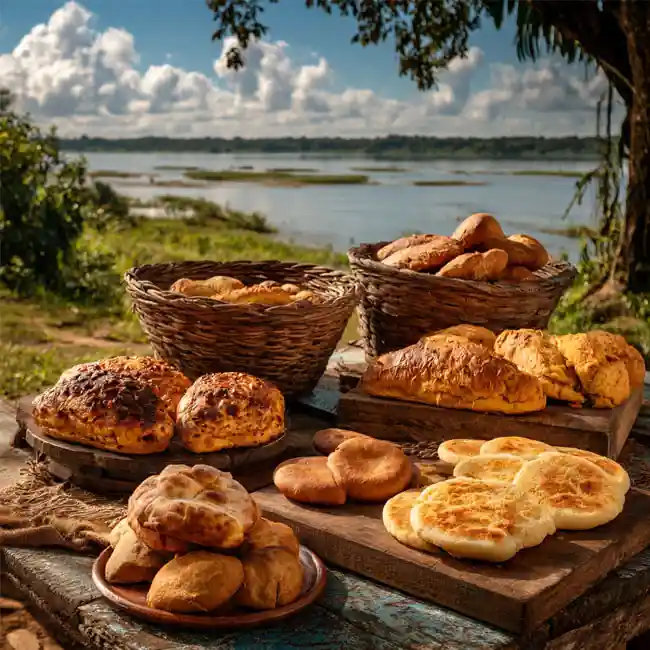
🇻🇪 🥖 Why Venezuela Breads Tell the Story of a Whole Country
Let’s be real — you can learn more about Venezuela from its bread basket than from any guidebook. Venezuela breads aren’t just side dishes. They’re breakfast, lunch, dinner, road trip snacks, birthday party must-haves, and the reason you show up early at grandma’s house. Each loaf, roll, or flatbread carries a piece of history, immigration, geography, and pure Venezuelan comfort.
From the Andes to the Caribbean coast, the way Venezuelans bake tells you how they live. Wheat came with Spanish colonizers, corn was already here thanks to indigenous communities, and then Italian, Portuguese, and Lebanese immigrants rolled in with their own oven magic. The result? A bread scene that’s wildly diverse, super comforting, and totally unique to Venezuela. If you’re planning a food trip or just want to understand the culture through carbs, you’re in the right place.
🗺️🏡 Bread, Daily Life, and How Venezuelans Actually Eat
Breakfast is sacred, and bread is non-negotiable
Mornings in Venezuela start early and they start with bread. Walk past any panadería at 6:30am in Caracas, Maracaibo, or Mérida and you’ll smell it — warm, yeasty, slightly sweet. Office workers grab a cachito with coffee before work. Kids get pan dulce dipped in café con leche before school. Sunday family breakfast? That’s arepas time, split open and stuffed until they can’t close.
Bread is how you share
Venezuelans are big on sharing food, and bread makes it easy. You don’t show up to someone’s house empty-handed. You bring a bag of pan canilla or pan francés. At the beach, coolers are packed with pan de jamón slices for December, or arepas with cheese for any other month. Road trips aren’t complete without stopping at a roadside bakery for golfeados — sticky, cheesy, anise-scented rolls that somehow taste better with a view of the mountains.
Panaderías are community hubs
The local bakery in Venezuela is basically an unofficial town hall. Portuguese-run panaderías opened all over the country in the 20th century and became the heartbeat of neighborhoods. You go for bread, but you stay for the gossip, the jugos naturales, and the pastelitos. Most are open from dawn until late, and during holidays like Christmas, lines go out the door for pan de jamón. It’s not just shopping — it’s a daily ritual.
🌟🥐 Iconic Venezuela Breads You Need to Know
Venezuela’s bread game is strong. Here are the heavy hitters that define the culture. No recipes here — just the stories, the vibes, and why locals are obsessed.
🥮 Arepa: The Queen of Venezuelan Tables
◦ What it is: A round, flat cornmeal cake, grilled, baked, or fried until it has a crisp crust and soft, steamy inside. Not technically “bread” by wheat standards, but ask any Venezuelan and they’ll tell you arepa is bread.
◦ Culture bite: Arepas are 2,800+ years old, rooted in indigenous cooking. Today they’re the great equalizer — eaten by everyone, everywhere, any time of day.
◦ How it’s eaten: Split like a pita and stuffed. Reina pepiada with chicken-avocado salad, domino with black beans and white cheese, or just butter and cheese at breakfast.
◦ Travel tip: For the most authentic experience, hit an arepera at 2am after a night out in Caracas. Arepas taste better when the city is asleep and the budare grill is sizzling.
◦ Long-tail love: If you Google “best arepa fillings in Venezuela” you’ll get 100 answers and 100 arguments. That’s how personal it is.
🥖 Pan Canilla & Pan Francés: The Daily Loaves
◦ What it is: Pan canilla is Venezuela’s baguette — long, crusty outside, airy inside. Pan francés is shorter, softer, the everyday sandwich roll.
◦ Culture bite: Thank Portuguese bakers for these. They arrived mid-1900s and set up panaderías that still run the bread scene. Canilla means “shin bone” because of its shape.
◦ How it’s eaten: Every. Single. Way. With cheese and ham for sándwich, to scoop up asado negro gravy, or torn into chunks with soup. Stale? Toast it for torrejas.
◦ Travel tip: Buy it in the morning. Venezuelans say canilla doesn’t “last” — it’s meant to be eaten fresh, warm, same-day. After 5pm, it’s pan viejo territory.
🥐 Cachito: The Ham-Filled Breakfast Hero
◦ What it is: Soft, slightly sweet crescent roll stuffed with smoky ham, sometimes cheese. Think croissant’s Caribbean cousin.
◦ Culture bite: Born in Caracas panaderías as a grab-and-go breakfast for busy city workers. Now it’s a national icon.
◦ How it’s eaten: With café marrón or malta for breakfast. Also acceptable as 4pm merienda when you need a pick-me-up.
◦ Travel tip: The best cachitos have that shiny, egg-washed top and a hint of sweetness in the dough to balance the salty ham. If you see a line at a bakery before 9am, they’re probably pulling cachitos from the oven.
🎄 Pan de Jamón: Christmas in Every Slice
◦ What it is: A festive rolled bread stuffed with ham, raisins, and green olives. Sweet, salty, briny, and totally addictive.
◦ Culture bite: Invented in Caracas around 1905. It was bakery marketing genius — a holiday-only bread that became tradition. No cena navideña is complete without it.
◦ How it’s eaten: Sliced thick as part of the Christmas plate with hallaca, ensalada de gallina, and pernil. Also amazing next-day for breakfast.
◦ Travel tip: Season runs October to January. Outside those months? Good luck. Some bakeries do “emergency” pan de jamón in July, and Venezuelans lose their minds.
◦ Long-tail SEO gold: “Why do Venezuelans eat ham bread at Christmas” is a real search, and the answer is pure nostalgia.
🌀 Golfeado: Sticky, Cheesy, Anise-Spiked Bliss
◦ What it is: A spiral roll made with papelón (raw cane sugar), anise seeds, and topped with queso de mano or queso llanero. Sticky, sweet, salty, aromatic.
◦ Culture bite: Born in the Caracas outskirts, in a town called Petare, then perfected in the mountain town of Los Teques. It’s the official road trip snack of Venezuela.
◦ How it’s eaten: Warm, with extra cheese melting on top, and a café con leche. Don’t even try to eat it neatly.
◦ Travel tip: The classic stop is “Los Golfeados de Los Teques” on the highway between Caracas and Valencia. Drivers pull over just for these. If you’re touring the Andes, every mountain town claims to have the best.
🍯 Pan Dulce & Tunjitas: The Sweet Side of Panaderías
◦ What it is: Pan dulce covers a whole family of sweet breads — soft, sugar-topped, sometimes with custard or guava. Tunjitas are small, round, slightly sweet rolls perfect for snacking.
◦ Culture bite: The Portuguese influence again. These are the Venezuelan version of pão doce. Kids grow up dunking them in hot chocolate.
◦ How it’s eaten: Merienda at 4pm. Or breakfast if you’re feeling rebellious. Always with coffee or toddy.
◦ Travel tip: Each bakery has its own secret. Some add orange zest, others extra butter. Try a few and pick your favorite — it’s a legit travel activity.
🧀 Pan de Queso & Tequeños’ Cousin: Pan de Bono Style Breads
◦ What it is: While tequeño is fried, some regions do baked cheese breads similar to Colombian pan de bono, using yuca starch and salty white cheese.
◦ Culture bite: In border states like Táchira, the Colombian influence is strong. You’ll find these cheesy breads next to arepas.
◦ How it’s eaten: Hot, when the cheese is stretchy. Street vendors sell them in paper bags at bus terminals.
◦ Travel tip: If you’re doing the Andes route — San Cristóbal, Mérida — try the local cheese breads. They’re different from Caracas versions.
🗻🏖️ Bread and Where You Travel: Regional Flavors
Caracas & Central Region: The Panadería Capital
This is where pan de jamón, cachito, and golfeado were born. The capital has the highest density of Portuguese bakeries. Food tours here always include a panadería crawl. December in Caracas smells like ham, olives, and baking dough — no joke.
Andes Region: Mérida, Táchira, Trujillo
Cold mountain mornings mean hearty breads. Arepas andinas are wheat-based, not corn, because wheat grows here. They’re thicker, fluffier, and often eaten with queso ahumado and mantequilla de nata. Stop at roadside areperas on the páramo for the best view + carb combo.
Zulia & Maracaibo: Bold Flavors
Maracaibo loves tumbarrancho — a deep-fried, stuffed arepa — and pan de maíz, a sweet corn bread. The breads here tend to be richer, reflecting the region’s bold food culture. Also, mandocas — corn and plantain rings — are breakfast staples.
Eastern Venezuela & Margarita Island
Coastal areas lean into corn and cassava. Casabe is an indigenous flatbread made from yuca, super thin and crisp. It’s ancient, pre-colonial, and still eaten with pisca andina or fish. On Margarita, pan de leche is a soft, milky roll you’ll find at every beach kiosk.
Los Llanos: The Plains
Cheese is king here. Queso llanero and queso de mano end up on or in everything. Bread is simpler, often paired with grilled meat. Arepas are bigger, cooked over wood fire, and served with carne en vara.
🥰🍽️ The Social Side: How Bread Brings People Together
Holidays run on bread
Christmas without pan de jamón? Not happening. Easter? Pan dulce and rosca. Birthdays? Arepa stations where guests build their own. Bread marks the calendar in Venezuela.
Street food culture
5am in any city: street vendors selling arepas cabimera or empanadas, but always with a side of fresh pan francés if you want it. Late-night cravings? Arepera trucks park outside clubs. Bread is the edible safety net for any occasion.
The “bajón” cure
El bajón is that post-party hunger that hits at 3am. Solution: bread. Arepa, cachito, or just a loaf of canilla torn apart with friends. No one cures a bajón with salad.
📍🔥 How to Experience Venezuela Breads Like a Local
◦ Go to a panadería, not a supermarket: The real magic is fresh, same-day, from a wood-fired or deck oven. Chains are fine, but family-run spots have soul.
◦ Learn the lingo: Order a marroncito with your cachito — that’s a small, dark coffee. Ask for pan sobao if you like soft, slightly sweet sandwich bread.
◦ Time it right: Bread is best in the morning. By afternoon, Venezuelans say it’s “pan dormido” — sleepy bread. Still good, but not the same.
◦ Don’t fear the line: If locals are lining up, join them. Especially in December for pan de jamón. You’ll make friends and get the best loaf.
◦ Try it with queso: Queso blanco llanero, queso guayanés, queso de mano — Venezuela has 50+ cheeses and they all belong on bread.
🌐💡 Why Venezuela Breads Matter Globally
Venezuelan migration has taken these breads worldwide. Miami, Madrid, Bogotá, Santiago — you’ll find areperas and panaderías run by Venezuelans who refused to leave their food behind. Pan de jamón is now shipped frozen globally in November. Arepa was named by the world’s top food guides as a must-try street food.
But the best way to understand it is still in Venezuela, with a cachito in one hand, coffee in the other, and a panadero who knows your name. Because here, bread isn’t just food. It’s how you say good morning, happy birthday, and welcome home.
🗽 FAQ
Q1.What is the most popular bread in Venezuela?
Arepa takes the crown as the most eaten and most iconic. It’s made from cornmeal and served daily across all regions. But for wheat-based breads, pan canilla and pan francés are the everyday essentials you’ll find in every panadería.
Q2.Why is pan de jamón only eaten at Christmas?
It started as a seasonal bakery specialty in Caracas in the early 1900s and became a tradition. The combo of ham, raisins, and olives became tied to cena navideña, so now Venezuelans associate the flavor with family, holidays, and nostalgia. Some bakeries sell it year-round now due to demand.
Q3.Are Venezuelan breads usually sweet or savory?
Both! Venezuela loves contrast. Cachito and golfeado mix sweet dough with salty fillings like ham or cheese. Pan dulce is obviously sweet, while arepa, pan canilla, and pan de jamón balance sweet and salty in one bite. Anise and papelón add sweet notes even to savory breads.
Q4.Can I find authentic Venezuela breads outside Venezuela?
Yes. Thanks to the Venezuelan diaspora, major cities like Miami, Madrid, Bogotá, Buenos Aires, and Lima have authentic panaderías and areperas. Look for Portuguese-owned bakeries — many Venezuelan bakers trained there. For pan de jamón, check Latin markets from October to January.
🍞 Quick and Delicious Venezuelan Bread Recipes for Busy Home Bakers
👉 Enjoy 3 Delicious 30-Minute Venezuelan Breads!
| 🌐 🍞 < Back | 🇻🇪 🥗 < Previous | Next > 🍱 🇻🇪 |