
🏠 Home > 🗺️ Recipes > 👑🍨 Grand Finales (Desserts) > 🇦🇺 Australia Grand Finales (Desserts) Recipes > 👑🍨 1.Aristocratic Wattleseed and Quandong Pudding
👑🍨 Rediscovering Australia’s Forgotten Aristocratic Desserts
Published by Supakorn | Updated: September 2026
Some desserts satisfy a sweet craving. Others open a window into another time.
This Australian dessert does both. It brings together the style of a grand colonial dining room and ingredients connected to a much older relationship with the Australian landscape. Roasted wattleseed adds a deep, nutty aroma, quandong provides a bright fruit tang, and macadamias create the rich finish expected from an elegant celebration dish.
One point matters before we begin: this is a historically inspired recipe rather than a transcription of one specific archival dish. Australia did not develop its own hereditary palace cuisine or native aristocratic dynasty. Its formal colonial dining traditions were influenced largely by Britain, while the continent’s native ingredients were known, gathered and prepared by Aboriginal communities for countless generations before European settlement.
The “ancient” character of this dessert therefore comes from the ingredient knowledge behind it—not from a claim that this exact pudding appeared in a thousand-year-old Australian cookbook.
🕌⚔️ The Forgotten Aristocratic Legacy of Australia: The Colonial Era
Australia’s grand colonial houses developed a style of hospitality that reflected social position, prosperity and access to imported goods. Formal meals were opportunities to display polished tableware, fine linens, preserved fruits, carefully made puddings and the latest culinary fashions arriving from Britain and other parts of the world.
Australia did not have a homegrown aristocratic class comparable to the hereditary nobility of Europe. However, wealthy pastoral families, senior officials, governors and influential merchants often created households that imitated the dining customs of Britain’s upper classes.
Historic properties preserve evidence of that world. At Elizabeth Farm, for example, an elaborate monogrammed dessert service associated with John and Elizabeth Macarthur offers a glimpse of the importance placed on the final course. Rouse Hill House also retains cookbooks and handwritten recipes collected across generations, showing how food and generous hospitality shaped domestic life.
These dining rooms looked outward to European fashion, but they stood within a landscape filled with ingredients that had sustained First Nations communities for millennia. The modern Australian kitchen can acknowledge both histories without pretending they were equal, interchangeable or free from the realities of colonisation.
🕯️ The Storyteller’s Intro: An Evening in a Colonial House
Imagine an Australian homestead in the middle of the nineteenth century.
The afternoon heat has faded, and the long windows of the dining room are open to the evening air. Candlelight flickers across a polished table. China plates wait beside silver spoons, while somewhere beyond the dining room, a busy kitchen prepares the final course.
The cooks know that dessert will be remembered.
A pudding must arrive warm but not heavy. Fruit should offer enough sharpness to balance the sweetness. Nuts must be toasted carefully, never scorched. Every element needs to appear effortless, even though hours of preparation may have taken place behind the kitchen door.
A traditional colonial dessert might have relied on apples, dried fruit, bread, custard or imported spices. Apple charlotte, for example, transformed apples and stale bread into a practical but attractive dessert.
Our imagined cook takes that familiar pudding tradition in a distinctly Australian direction. Quandong replaces the usual orchard fruit. Wattleseed brings roasted, earthy depth. Macadamias add a creamy crunch that feels luxurious without overwhelming the dish.
The result is not an antique recipe copied word for word. It is a respectful culinary reconstruction: a dessert that asks what an Australian aristocratic-style pudding might become if native ingredients were placed at the centre rather than treated as a curiosity.
🌍 The Global Value: Why These Flavours Matter
Historic recipes rarely survive in a simple, complete form. Some remain in household notebooks, while others are remembered through objects, oral traditions, cooking methods or fragments of family history.
Affluent households had a particular advantage. They could preserve recipes in writing, purchase cookbooks and pass carefully recorded instructions to later generations. The food knowledge of servants, labourers and cooks was less likely to appear under their own names, even though their skill made formal dining possible.
First Nations food knowledge followed different systems of transmission. It was connected to Country, season, community, responsibility and generations of direct observation. Native ingredients should not be described merely as fashionable discoveries. Their culinary value was understood long before they appeared on restaurant menus or in contemporary cookbooks.
Wattleseed is now used in cakes, biscuits and other sweets for its roasted flavours, which can suggest nuts, coffee, spice and chocolate.
Macadamias are native to Australia and have long been gathered by Aboriginal peoples in subtropical Queensland and northern New South Wales.
Preserving culinary history therefore involves more than making an old-fashioned pudding. It means asking where ingredients came from, whose knowledge made their use possible and how we can source them responsibly today.
📜 The Collection: Restoring a Lost Style of Dessert
This recipe revives the atmosphere of formal colonial desserts while avoiding unsupported claims about a secret royal cookbook. It combines three layers of Australian food history:
• The structure of a warm European-style baked pudding
• The presentation associated with prosperous colonial dining rooms
• Native Australian ingredients with histories far older than colonial society
The recipe is designed for a modern home kitchen. You will not need copper moulds, a wood-fired range or a team of household cooks. The method is forgiving, the ingredients have practical substitutes, and most of the work can be completed before your guests arrive.
Think of it as an edible conversation between old techniques and a living Australian pantry.
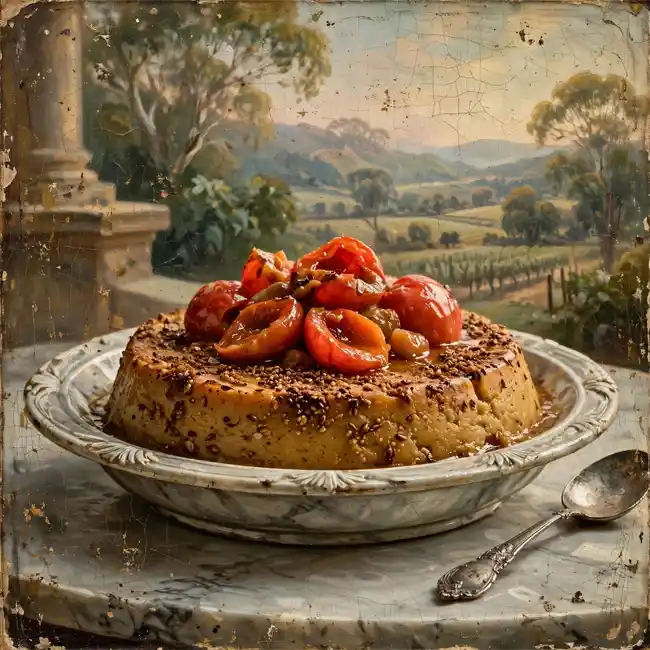
🍮 Recipe: Aristocratic Wattleseed and Quandong Pudding
This warm dessert has a soft, buttery crumb perfumed with roasted wattleseed and lemon myrtle. Tart quandong compote runs through the pudding, while toasted macadamias provide a delicate crunch.
A lightly sweetened macadamia cream completes the plate. The finished dessert looks sophisticated enough for a celebration but still feels comforting and familiar.
Preparation time: 30 minutes, plus soaking
Cooking time: 40 minutes
Servings: 8
Difficulty: Moderate but home-kitchen friendly
👑 About This Aristocratic Secret
There is no verified record identifying this exact pudding as the favourite dessert of a governor, noble family or titled guest. Presenting it that way would turn an attractive story into false history.
Instead, the recipe is inspired by the kind of dessert that could have suited a prosperous colonial household hosting a formal dinner. Fruit puddings were practical, elegant and adaptable. Wealthier hosts could improve them with finely milled flour, sugar, butter, cream, decorative serving pieces and carefully selected fruit.
The Macarthur family’s historic dessert service demonstrates how seriously the dessert course could be treated in an influential colonial home.
Our pudding borrows that sense of occasion while giving native Australian flavours a more prominent role.
Serve it at the end of a family celebration, heritage-themed dinner or quiet weekend meal when you want dessert to feel memorable. Its real exclusivity does not come from a royal name. It comes from carefully balanced ingredients, patient preparation and an honest connection to place.
🌰 Ingredients & The Aristocratic Touch
🧺 The Aristocratic Pantry
Wattleseed is the aromatic heart of the pudding. Once roasted and ground, culinary wattleseed has a warm, complex character that may remind you of toasted nuts, cocoa and gentle spice. Only purchase food-grade wattleseed from a reputable supplier. Do not gather or consume unidentified acacia seeds, because not every species is edible.
Quandong is a native fruit with a vivid colour and pleasantly sharp flavour. It cuts through the richness of butter, sugar and cream much as sour cherry or cranberry would. Dried quandong is often easier to obtain than fresh fruit and works beautifully after soaking.
Macadamias create the dessert’s luxurious texture. Their richness makes the pudding feel generous, while their mild flavour allows the wattleseed and quandong to remain distinctive.
Lemon myrtle supplies a bright citrus fragrance. A small amount is enough. Using too much can dominate the entire dessert, so treat it as you would a precious spice rather than an ordinary dried herb.
Whenever possible, purchase native ingredients from First Nations-owned producers or businesses that identify their growers and supply relationships. Responsible sourcing turns appreciation into practical support.
🔄 Modern Substitutes
Do not abandon the recipe if one native ingredient is difficult to find. You can preserve the balance of flavour with thoughtful alternatives.
• Wattleseed substitute: Combine one tablespoon of finely ground toasted hazelnuts with half a teaspoon of unsweetened cocoa powder. The result will not duplicate wattleseed, but it will provide similar roasted depth.
• Quandong substitute: Use dried sour cherries, cranberries or chopped dried apricots with an extra teaspoon of lemon juice.
• Macadamia substitute: Choose unsalted cashews, blanched almonds or hazelnuts.
• Lemon myrtle substitute: Use one teaspoon of finely grated lemon zest.
• Dairy-free option: Replace butter with a firm plant-based baking block, milk with unsweetened macadamia or oat milk, and cream with a thick plant-based cream.
• Gluten-free option: Use a reliable cup-for-cup gluten-free baking flour containing a binder such as xanthan gum.
Substitutes make the recipe more accessible, but label the final dish honestly. A pudding made without wattleseed or quandong is an Australian-inspired variation rather than the same flavour experience.
⚖️ The Measurements
For the quandong compote:
• 100 grams dried quandong
• 500 millilitres water for soaking
• 90 grams caster sugar
• 1 tablespoon fresh lemon juice
• 1 strip lemon peel
• 1 small pinch fine salt
For the pudding:
• 180 grams plain flour
• 2 teaspoons baking powder
• 1 tablespoon roasted ground wattleseed
• 1 quarter teaspoon ground lemon myrtle
• 1 quarter teaspoon fine salt
• 120 grams unsalted butter, softened
• 150 grams soft brown sugar
• 2 large eggs, at room temperature
• 1 teaspoon vanilla extract
• 160 millilitres whole milk
• 80 grams unsalted macadamias, lightly toasted and chopped
• 120 grams prepared quandong compote
• Extra softened butter for greasing
For the macadamia cream:
• 250 millilitres thickened cream
• 1 tablespoon icing sugar
• 1 half teaspoon vanilla extract
• 30 grams toasted macadamias, very finely chopped
For the final presentation:
• 2 tablespoons reserved quandong compote
• 20 grams toasted macadamias, roughly chopped
• A very light dusting of icing sugar, optional
🥄 The Chef’s Ritual
1.Soak the quandong. Place the dried quandong in a bowl and cover it with 500 millilitres of water. Leave it for at least four hours, or refrigerate it overnight. This gentle soaking restores moisture without destroying the fruit’s tart personality.
2.Prepare the compote. Transfer the soaked fruit and 250 millilitres of its soaking water to a small saucepan. Add the caster sugar, lemon juice, lemon peel and salt.
3.Simmer patiently. Bring the mixture to a gentle simmer. Cook for 15 to 20 minutes, stirring occasionally, until the fruit is tender and the liquid becomes glossy. Remove the lemon peel, then allow the compote to cool.
4.Create the desired texture. For a refined finish, blend half the compote and stir it back into the remaining fruit. This gives you a smooth sauce with small jewel-like pieces. Reserve two tablespoons for serving.
5.Prepare the oven and dish. Heat the oven to 350 degrees Fahrenheit ( 180 degrees Celsius ), or 325 degrees Fahrenheit ( 160 degrees Celsius ) for a fan-forced oven. Butter a round 20-centimetre baking dish or eight individual ramekins.
6.Combine the dry ingredients. Whisk together the flour, baking powder, wattleseed, lemon myrtle and salt. Whisking distributes the aromatic ingredients evenly and prevents one bite from becoming too intense.
7.Cream the butter and sugar. Beat the softened butter and brown sugar for three to four minutes. The mixture should become lighter in colour and visibly fluffy. This step creates a tender pudding rather than a dense one.
8.Add the eggs slowly. Beat in one egg at a time, mixing thoroughly after each addition. Add the vanilla. If the mixture appears slightly curdled, stir in one spoonful of the measured flour.
9.Fold with restraint. Add one-third of the dry ingredients, followed by half the milk. Repeat, finishing with the remaining dry ingredients. Fold only until no dry streaks remain.
10.Add the aristocratic touch. Gently fold in the chopped macadamias. Spoon half the batter into the prepared dish, add small spoonfuls of quandong compote, and cover with the remaining batter. Swirl once or twice with a knife without blending the layers completely.
11.Bake until golden. Bake a large pudding for 35 to 40 minutes or individual puddings for 22 to 28 minutes. The top should be golden and spring back lightly when touched. A skewer inserted away from a fruit pocket should emerge with a few moist crumbs.
12.Allow the pudding to settle. Rest it for ten minutes. This short pause stabilises the crumb and prevents the warm pudding from breaking apart during serving.
13.Whip the macadamia cream. Beat the cream, icing sugar and vanilla until soft peaks form. Fold in the finely chopped macadamias. Keep the texture soft and spoonable rather than stiff.
14.Present with quiet elegance. Serve the pudding warm with a spoonful of macadamia cream, a ribbon of reserved quandong compote and a scattering of toasted nuts. Add only a delicate dusting of icing sugar if desired.
🔐 Secrets of the Palace Kitchen: Tips and Mistakes
✦ Although Australia had no native palace-kitchen tradition of this kind, the careful habits associated with formal household cooking can still improve your result.
✦ Toast the macadamias gently. Bake them at 325 degrees Fahrenheit ( 160 degrees Celsius ) for approximately eight minutes, checking frequently. Their high oil content means they can move from golden to bitter very quickly.
✦ Use roasted culinary wattleseed. Raw or incorrectly prepared seed will not provide the intended aroma. Buy a product clearly labelled for culinary use.
✦ Do not add extra wattleseed casually. Its flavour develops during baking. Too much can make the pudding taste bitter or muddy.
✦ Keep the quandong tart. The fruit’s acidity is necessary because the batter and cream are rich. Adding excessive sugar removes the contrast that makes the dessert interesting.
✦ Bring the eggs to room temperature. Cold eggs may cause the butter mixture to split and produce a less even texture.
✦ Avoid overmixing the batter. Once flour is added, vigorous mixing can make the pudding tough.
✦ Measure lemon myrtle carefully. Its fragrance is powerful. A restrained amount creates elegance; too much can taste medicinal.
✦ Check individual puddings early. Ramekins bake faster than one large dish and can become dry if left in the oven for the full 40 minutes.
✦ Do not serve the cream ice-cold. Let it stand outside the refrigerator for five minutes so its flavour and texture can soften slightly.
✦ Make the compote ahead. It keeps in a sealed container in the refrigerator for up to five days, allowing you to assemble the dessert with less pressure.
✦ Serve the pudding warm, not scorching hot. Ten minutes of resting reveals the wattleseed aroma and protects the cream from melting immediately.
✦ Respect ingredient provenance. Native ingredients are not decorations without a history. Choose traceable products and acknowledge the communities whose knowledge helped preserve their use.
🏯❔ Aristocratic Dessert FAQ
Q1.Can I use fresh quandong instead of dried fruit?
Yes. Remove the stones and begin with approximately 250 grams of prepared fresh quandong. Reduce the cooking water to 100 millilitres and adjust the sugar after tasting, because the fruit’s tartness can vary.
Q2.Can I prepare this dessert without wattleseed?
Yes, although the flavour will change. Use the toasted hazelnut and cocoa substitute or make a macadamia and quandong pudding. Do not use unidentified acacia seeds as an alternative.
Q3.Can the pudding be made in advance?
You can bake it up to one day ahead. Cool it completely, cover it and refrigerate it. Reheat individual portions in a moderate oven until warm. Prepare the cream shortly before serving for the best texture.
Q4.Can I freeze the pudding?
The baked pudding can be frozen without the cream or final garnish. Wrap it carefully and freeze it for up to two months. Thaw it overnight in the refrigerator, then reheat it gently in the oven.
📖 The Taste of History
The first flavour to arrive is the tart brightness of quandong. Then comes the warm, nutty character of wattleseed, followed by buttery macadamia and a subtle fragrance of lemon myrtle.
It tastes familiar enough to be comforting but distinctive enough to inspire questions.
That balance is exactly what a successful historical reimagining should achieve. It should not pretend that the past was simpler than it really was. Nor should it invent a royal legend merely to make an ordinary recipe sound exclusive.
Instead, this pudding connects a recognisable colonial dessert technique with ingredients rooted in a far older Australian food story. It acknowledges that colonial households left behind written recipes and formal tableware, while First Nations communities hold food knowledge developed through enduring relationships with Country.
The dessert becomes more meaningful when those histories are presented honestly.
🏡 Final Thoughts: Bringing History to Your Table
You do not need an aristocratic dining room to create a memorable dessert. You need carefully selected ingredients, a reliable method and enough patience to let each flavour do its work.
Make the compote the night before. Measure the wattleseed rather than guessing. Toast the macadamias gently. Fold the batter with a light hand. These small actions transform a simple baked pudding into something worthy of a special table.
Most importantly, do not be intimidated by the historical atmosphere surrounding the recipe. Grand households may have relied on elaborate kitchens and many skilled workers, but this modern version has been designed for one ordinary home oven.
History is not preserved only in museums. It also survives when people cook thoughtfully, share what they learn and tell the story behind the ingredients.
✨ The Call to Action: The Golden Hook
If you fall in love with these flavours from history, become part of the effort to preserve the world’s culinary stories.
Share this recipe with someone who enjoys Australian food history. Seek out responsibly produced native ingredients. Record the changes you make, the people you serve and the memories created around your table.
A forgotten recipe becomes living culture only when it is cooked, discussed and passed forward.
🤝 Credit to the Keepers of the Culture: The Legacy
This recipe respectfully acknowledges Aboriginal and Torres Strait Islander peoples as the custodians of the world’s oldest continuing cultures and recognises their enduring knowledge of Australia’s native foods, landscapes and seasons.
Wattleseed, quandong, macadamia and lemon myrtle should not be treated as newly discovered culinary trends. Their modern use is connected to knowledge that existed long before colonial dining rooms, printed cookbooks or contemporary restaurants.
This dessert is an original historical interpretation. It is not presented as a traditional First Nations recipe, an authenticated colonial formula or a documented dish from a royal household.
Readers are encouraged to learn the specific cultural and geographic origins of native ingredients, purchase from First Nations-owned producers where possible, and avoid treating diverse Aboriginal cultures as one single culinary tradition.
The most respectful way to celebrate Australian food is to enjoy its flavours while remaining honest about where its knowledge began.
| 🇦🇺 👑🍨 < Back |