
🏠 Home > 🗺️ Recipes > 👑🍨 Grand Finales (Desserts) > 🇦🇺 Australia Grand Finales (Desserts) Recipes
🇦🇺 👑🍨 Australia Grand Finales (Desserts) Recipes
Published by Supakorn | Updated: September 2026
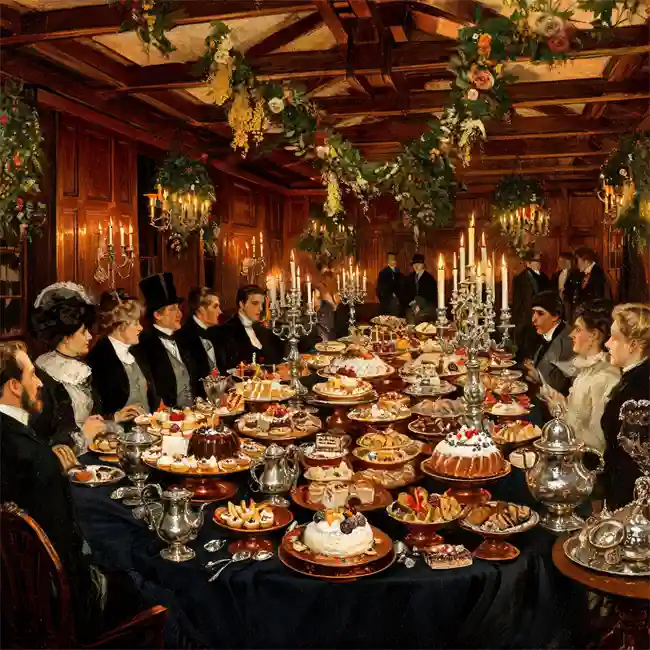
🤴📜 The Storyteller’s Intro: When Pavlova Was Not Pavlova Yet
Australia never had a crowned King on its own soil, so let's be honest — our royalty was not born in palaces of marble. Our royalty was born in dust-covered boots, in wool fortunes, in sandstone mansions. We call them the Aristocracy of the Pastoral Age.
If you want to understand Australia Grand Finales, you have to understand who got to eat sweet things when sugar itself was a luxury shipped for 6 months by sea.
The story of Australian aristocratic desserts spans roughly 250 years, but it taps into knowledge systems that are over 1,000 years old. It breaks into 3 distinct eras:
🔸 The Era of Deep Country Knowledge (1,000+ Years - Present): The Indigenous Pantry. Long before any manor was built, Aboriginal custodians were creating naturally sweet finales from the land. This is the true foundation. Roasted wattleseed ground into nutty, chocolatey flour, sweet nectar from Banksia flowers, honey-like sap from grass trees, and the caramel-like pulp of bunya nuts after fire-roasting. This was not dessert as Europeans knew it. It was ceremonial sweetness, a reward after ceremony and hunt. This knowledge was whispered, not written.
🔸 The Era of The Squattocracy (1820s - 1890s): The Wool Barons' Golden Age. This is our true Aristocratic Age. Families who claimed millions of acres — the Clarkes, the Chirnsides, the Dangars — built English-style manors in the middle of nowhere. Think Werribee Mansion in Victoria or Retford Park in NSW. They imported French chefs, English silver, and created a hybrid cuisine. Dessert became the ultimate status symbol. You were not just serving food; you were serving ice. In the 1860s, having an ice house to make iced puddings in 40°C heat meant you were untouchable. This era invented our secret finales.
🔸 The Era of Government House Grandeur (1830s - 1901): The Colonial Elite Table. In Sydney, Melbourne, and Adelaide, the Governor's table was the absolute pinnacle of society. Invitations were everything. The wives of governors and pastoral queens competed with elaborate dessert tables — charlottes, jellies, blancmanges, and trifles, but secretly infused with native flavors to impress visiting British dignitaries. This is where the "secret" part really starts.
So how did these aristocrats actually live and eat? It was theater.
• The Long Table Ritual: Dessert was never rushed. After a massive roast dinner, the gentlemen might have a short break, but for the finale, everyone returned. The table would be cleared and reset with fresh linen just for sweets. It was called "setting the finale stage."
• The Cool Room Privilege: Only the wealthiest stations had a dedicated cool room or ice pit lined with straw from the Blue Mountains. A dessert that was cold — a frozen cream, a set jelly — was worth more than gold in February.
• Native Meets Noble: The biggest secret of Australian aristocratic kitchens is this: the French chef would be instructed by the Aboriginal guides and the station's kitchen women. That is how Lemon Myrtle, Aniseed Myrtle, Wattleseed, and Finger Lime quietly entered high society, decades before they became trendy.
And now, the names you were not supposed to know. The Lost Finale List:
Here are the legendary, almost-secret Grand Finales that were only served in these manor houses. We are not giving the full recipes today — just unlocking the names and their story.
• The Government House White Velvet Pavlova: Before the famous Pavlova was claimed, the Government House version was a closely guarded secret. A cloud-like meringue shell so delicate it had to be baked for 4 hours in a cooling bread oven, filled not with kiwi, but with a cold cream infused with Aniseed Myrtle and topped with wild alpine raspberries.
• Darling Downs Lemon Myrtle Custard Tart: From the great cattle stations of Queensland. A shortcrust so buttery it used 3 days' worth of churned cream, holding a trembling custard that was scented with dried lemon myrtle leaves hand-picked by the ladies of the house. It was served slightly warm.
• Werribee Mansion Wattle Seed Crème Brûlée: The Chirnside family's ultimate flex. A classic French custard technique, but the sugar crust was not just sugar — it was dark roasted wattleseed sugar, giving a deep, mocha-hazelnut crackle. Only served when the master returned from Melbourne.
• Bunya Bunya Mountain Nut Pudding: A steamed pudding that takes 3 days to prepare. Bunya nuts, which only fruit every 3 years and are sacred to Indigenous peoples, were roasted, pounded, and folded into a rich suet pudding with brown sugar and Davidson plum glaze. It was a once-in-a-season finale.
• Lady Franklin's Tasmanian Honey & Lavender Jelly: From the 1840s, at Ancanthe in Hobart. A shimmering, crystal-clear jelly made from Leatherwood honey, set with isinglass, and suspended with wild river mint flowers. It was served in individual crystal coupes.
• The Squatter's Rosella & Rose Trifle: A towering glass bowl layered with sponge soaked in rosella flower syrup, native raspberry jam, and a thick custard made with rosella petals. The top was a mountain of cream.
🗺️ The Royal Culinary Tourism: Mapping Flavors to Historic Landscapes
You cannot taste Australia's aristocratic desserts without traveling to where the aristocracy lived. This is not just food tourism; this is culinary archaeology. Every flavor is pinned to a historic landscape.
• The Government Domain Trail — Sydney, NSW: Start at Government House Sydney. Walk the gardens where the first Lemon Myrtle trees were cultivated for the kitchen. The finale experience here is about elegance and colonial power. Look for heritage tours that still serve a "Governor's Afternoon Tea" — this is where you will find the descendant of the White Velvet Pavlova. SEO gold for travelers searching for "historic high tea Sydney" and "Government House dessert history."
• The Western District Manor Trail — Victoria: This is the heartland of the Squattocracy. Drive from Geelong to Werribee Mansion, to Rippon Lea Estate, to Como House. These bluestone and sandstone mansions still have their original ice houses and cool pantries you can tour. The flavor here is rich, dairy-heavy, buttery, and smoky from wattleseed. This is where you hunt for Wattle Seed Crème Brûlée.
• The Darling Downs Station Trail — Queensland & Northern NSW: Vast, golden, endless. Visit heritage-listed stations like Jondaryan Woolshed and Glengallan Homestead. The flavor profile is bright, citrusy, and sun-baked — Lemon Myrtle, Finger Lime, and Rosella. The local farm-gate shops now sell lemon myrtle shortbread, which is the modern grandchild of the famous Custard Tart.
• The Tasmanian Van Diemen's Land Trail — Hobart & The Huon Valley: Cooler, mistier, and older. Visit Runnymede House and Female Factory historic sites. Here, desserts were delicate jellies and honey-based finales because sugar was rarest. Look for Leatherwood honey and Mountain Pepper tastings. This is the origin point for Lady Franklin's Jelly.
🚣 Cradle of Royal Delicacies - The Coastal & Riverine Pantry
Australia's aristocratic families were not just mountain people. Their true wealth came from the rivers and the coast. The Murray River, the Hawkesbury, the Derwent — these were highways for ingredients.
• The Murray-Darling Basin Secret: The river provided the first refrigeration. Station kitchens would lower butter, cream, and custards in sealed tins into the cold river water. The key ingredient from here is the River Mint and the Native River Raspberry, used to cut through the richness of cream finales. The "Murray Cod Cream" was a savory joke, but the River Mint Jelly was serious business.
• The Hawkesbury & Sydney Harbour Citrus Groves: Before Victoria took over, the Hawkesbury was Australia's food bowl. The aristocratic families had private citrus orchards with early Finger Limes — called "citron caviar" by the elite. They would sprinkle the tiny pearls over jellies and pavlovas for a pop that would make guests gasp. It was a secret texture trick.
• The Tasmanian & South Australian Coastline: The coastal manors had access to something rare: seaweed-derived setting agents. Before gelatin was common, clever Aboriginal kitchen hands taught the chefs to use a type of native seaweed to set jellies and blancmanges. This created a softer, more trembling jelly that was considered far superior to the stiff English version. This is the hidden technique behind Lady Franklin's famous jelly.
⛰️ Kingdom of Wild Aromatics & Heritage - The Mountain & Bushland Pantry
If the coast was about technique, the mountains and bush were about pure, wild aroma. This is where Australia's grand finales become completely unlike anything in Europe.
• The Blue Mountains & Great Dividing Range: This is the kingdom of Aniseed Myrtle and Sassafras. High-altitude manors would send staff for days to collect young aniseed myrtle leaves. These were dried and ground into a sweet, licorice-like sugar dust used exclusively for dusting over custard tarts and meringues. It was a signature scent of wealth — if your house smelled of aniseed myrtle, you were rich.
• The Bunya Mountains, Queensland: Every three years, the ancient Bunya Pines drop massive cones filled with nuts. For the Wakka Wakka, Kabi Kabi and Jinibara peoples, this was a major gathering and feasting event for millennia. The pastoral aristocrats who took over this land quickly learned that serving a Bunya Nut Pudding meant you had connections to the land and its original custodians. It was a finale that money could not buy every year — it depended on nature.
• The Victorian High Country & Tasmanian Highlands: The source of the most prized wattleseed. Not all wattleseed is equal. The high-country acacia seeds, when slow-roasted, develop a deep coffee-chocolate-hazelnut note. Station families would have their own secret roasting drums. This roasted flour was then folded into shortbread, custards, and brûlées. It is the soul of the Werribee Mansion secret.
• The Wildflower & Heathlands of Western Australia & South Australia: Home to Rosella and Geraldton Wax flowers. Rosella flowers were made into a tart, ruby-red syrup that was the aristocratic equivalent of showing off. A trifle glazed with Rosella was instantly recognized as "Australian" and not just a copy of an English dessert.
🛡️⚔️ Royal FAQ: Unlocking Palace Kitchen Mysteries
Q1: Did Australia actually have its own royal desserts if it never had a King?
A: That is the best part of the secret. We did not have a royal family, so our "royal" was the Squattocracy — families who owned more land than some European countries. Their desserts were royal in cost and effort, not by title. A single Werribee Mansion Wattle Seed Crème Brûlée in 1880 required ice from the Blue Mountains, cream from 20 cows, sugar from Mauritius, and wattleseed collected over weeks. Only 10 families in the entire country could afford to serve it. That is aristocratic by every definition except a crown.
Q2: Why are native ingredients like Lemon Myrtle and Wattleseed called "secret" in these old recipes?
A: Because for over 100 years, it was deliberately hidden. To be seen as sophisticated, colonial elites had to appear purely British. They would never admit on a printed menu that they used Aboriginal ingredients. So in their private handwritten recipe books — the "kitchen ledgers" — they would write "lemon leaf from the creek" or "black seed flour." They hid the Indigenous origin to maintain British prestige, but used the flavor because it was superior. We are only now decoding those ledgers.
Q3: What makes an Australian Grand Finale different from a normal Australian dessert like Lamington or Pavlova?
A: A normal dessert is for everyone, every day. A Grand Finale was built on three rules of aristocracy: Time, Cold, and Distance. Time: it took 2-3 days to make (like the Bunya Pudding). Cold: it required ice or a cool room, which 99% of people did not have. Distance: its ingredients came from far away — your own private mountain, your own river, your own forest. A lamington can be made in an hour. A Grand Finale was a logistical operation that showed off your entire estate.
Q4: Where can I still taste these lost aristocratic finales today without a time machine?
A: You have to go to the source. The heritage estates themselves are now keeping the culture alive. Rippon Lea Estate in Melbourne does a heritage kitchen tour with wattleseed shortbread. Retford Park in Bowral has a garden tour where they serve rosella cordial. And in Tasmania, the Leatherwood honey jelly is making a comeback in heritage restaurants in Hobart's Battery Point. These are not modern inventions — they are revivals based on those secret kitchen ledgers. The full, original recipes are what we will unlock next.
🧠 Final Thoughts: The Timeless Allure of Aristocratic Gastronomy
Australia's grand finales are not just sweet dishes. They are edible maps of power, land, and survival.
They tell the story of a strange, beautiful country where the aristocracy wore Akubras instead of crowns, where the palace was a bluestone homestead surrounded by 100,000 sheep, and where the most precious ingredient was not imported from France, but whispered about by the oldest culture on Earth.
The true allure is that these desserts were never meant for us. They were meant to be secrets, served behind closed doors in dining rooms that seated 40 people, while outside the bush was endless and wild.
Now, that door is slowly opening. We have traced the tourism trails, we have named the forbidden puddings, we have mapped the mountains and rivers where the aromas were born.
This was just the introduction — the cultural curtain-raiser. We have not given you the measurements, the temperatures, or the step-by-step methods. Not yet.
Because in the next chapter, we will unlock one-by-one: The exact Government House White Velvet Pavlova ledger, the Darling Downs Lemon Myrtle Custard Tart with the 3-day crust, and the Bunya Nut Pudding that only appears every three years.
If you are planning a trip, pin these estates. If you are a food lover, remember these names. The lost aristocratic pantry of Australia is about to be opened.
👑 Credit to the Keepers of the Culture (The Legacy)
This content would not be possible, nor would it be respectful, without acknowledging who really kept this knowledge alive.
First and foremost, our deepest respect to the Aboriginal and Torres Strait Islander peoples of Australia — the Traditional Custodians of the land. The knowledge of wattleseed, lemon myrtle, bunya nut, finger lime, rosella, and river mint is not an "Australian discovery." It is Indigenous science, perfected over more than 60,000 years. We pay respect to Elders past and present and recognize that every "secret aristocratic ingredient" was first a staple, a medicine, and a ceremony.
Secondly, to the Heritage House Trusts and The National Trust of Australia. The teams at Werribee Mansion, Rippon Lea Estate, Retford Park, Como House, and Government House Sydney who have preserved the fragile kitchen ledgers, ice houses, and cool rooms. Their archival work is the only reason we know these recipes existed.
Finally, to the pastoral families and their kitchen staff — the unnamed Aboriginal guides, the convict cooks, the station women who wrote down "a handful of black seed" in faded ink. They were the true bridge between two food worlds.
This article is written in the spirit of cultural respect, historical preservation, and culinary curiosity. No culture is claimed, only honored and shared for educational exploration.
👑🍨 Rediscovering Australia’s Forgotten Aristocratic Desserts
👉 Master Authentic Australian Grand Finales
| 🌐 👑🍨 < Back | 🇦🇺 👑🍝 < Previous | Next > 🍷👑 🇦🇺 |