
🏠 Home > 🗺️ Recipes > 🥗 Salads > 🇦🇹 Austria Salads
🇦🇹 🥗 Austria Salads Recipes
Published by Supakorn | Updated: February 2026
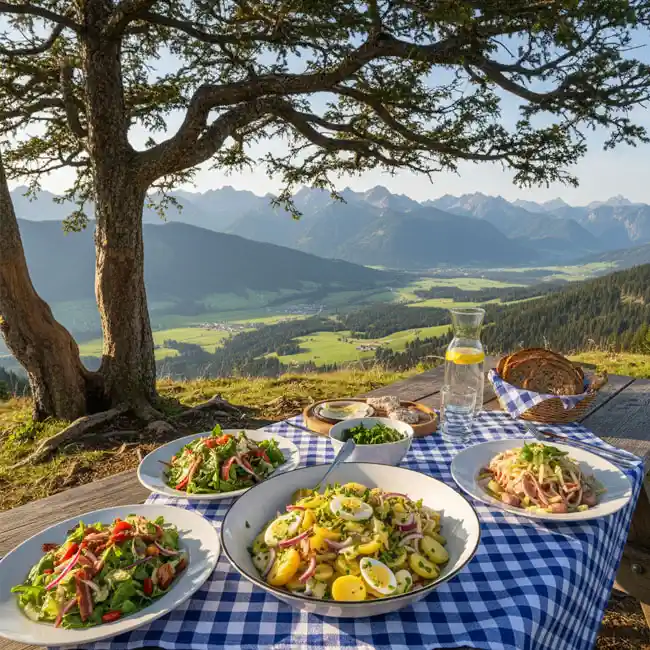
When you think of Austrian food, your mind might first wander to hearty schnitzels, rich stews, or decadent pastries. But there’s a lighter, fresher side to Austria’s cuisine that deserves just as much love — Austrian salads. 🥬
These aren’t your average leafy bowls. Austrian salads are full of flavor, balance, and culture — often served as part of a meal, never as an afterthought. Whether it’s a tangy potato salad alongside Wiener Schnitzel, a refreshing cucumber salad in summer, or a colorful mix of seasonal vegetables at a family lunch, salads here tell their own delicious story.
Let’s explore how Austria celebrates freshness, seasonality, and simplicity through its unique salad traditions. 🌿
🥔 The Austrian Love for Hearty Salads
In Austria, salads are not just “starters” or “diet food.” They are an integral part of the meal, sometimes even the main attraction.
Unlike some cuisines where salads are light and leafy, Austrian salads are often substantial — filled with potatoes, beans, or cabbage. They’re made to complement rich dishes, offering acidity, freshness, and texture.
You’ll often find that salads in Austria come as a collection of small side salads (known as Gemischter Salat, or “mixed salad”) — each with a different flavor: potato, lettuce, cucumber, carrot, or beetroot, all arranged together on one plate.
This variety gives every meal balance — rich meets refreshing, soft meets crunchy. 🥕
🥗 Everyday Salad Culture in Austria
Austrians take pride in eating seasonally and locally. Most families buy their vegetables from farmers’ markets (Bauernmärkte), where the produce reflects the time of year.
Salads play an important role in daily eating habits. Whether it’s lunch at home, a quick meal at a café, or a formal dinner, a salad is almost always part of the experience.
It’s not about being “healthy” in the modern sense — it’s about freshness and tradition. Austrians have always believed that meals should feel balanced. You might have a heavy roast, but you’ll always see a small salad on the side to lighten it up.
There’s a lovely rhythm to this — a cultural balance between indulgence and moderation that feels both satisfying and sustainable. 🌿
🍽️ A Typical Austrian Table: Balance on Every Plate
When you sit at an Austrian dining table, you’ll notice a few constants — bread, a drink, and a salad.
Even in mountain huts where hearty dishes dominate, a side salad appears like a burst of color on the plate. At home, many families make salads fresh for every meal — not pre-made or store-bought.
What’s most fascinating is the attention to dressing. Austrians prefer vinegar-and-oil-based dressings, often made with apple cider vinegar or pumpkin seed oil. These give salads a distinct tangy and nutty flavor that’s hard to find elsewhere.
The salads are typically tossed just before serving — not too early, not too late. Timing matters here; it’s all about the right texture and taste. ⏳
🥬 The Iconic Salads of Austria
Now, let’s meet some of the stars of the Austrian salad world — the dishes that define the nation’s idea of freshness and flavor.
🥔 Erdäpfelsalat (Austrian Potato Salad)
The undisputed king of Austrian salads. Made with sliced potatoes, onion, broth, and vinegar, Erdäpfelsalat is served warm or room temperature — never creamy or heavy.
It’s soft yet tangy, light yet comforting. Austrians love it alongside Wiener Schnitzel, grilled fish, or sausages.
🥒 Gurkensalat (Cucumber Salad)
This refreshing salad is a staple in summer. Thinly sliced cucumbers marinated in vinegar, sugar, and dill create a perfect balance of sweet, sour, and crisp.
Sometimes a bit of sour cream or yogurt is added for richness, especially in the alpine regions.
🥕 Karottensalat (Carrot Salad)
Grated carrots with lemon juice, sunflower oil, and a pinch of sugar — a simple, sunny dish that’s full of life.
Austrians often serve it as part of a Gemischter Salat, bringing color and crunch to the plate. 🧡
🥬 Krautsalat (Cabbage Salad)
A winter favorite. Finely shredded white cabbage is marinated with vinegar, oil, and sometimes caraway seeds. The result? Crisp, slightly tangy, and perfect alongside roasted meats or dumplings.
🍅 Tomatensalat (Tomato Salad)
In summer, when Austrian tomatoes are at their sweetest, this salad takes center stage. Simple slices of tomato dressed in vinegar, salt, pepper, and a drizzle of pumpkin seed oil — that’s all it takes. 🍅
Each of these salads can stand alone or appear together on one plate — a rainbow of flavor and texture that makes even the simplest meal feel complete. 🌈
🌻 The Magic of Pumpkin Seed Oil (Kürbiskernöl)
If there’s one ingredient that defines Austrian salads, it’s pumpkin seed oil — deep green, nutty, and wonderfully aromatic.
Originating from Styria (Steiermark), this oil is so beloved that it’s often called “green gold.” It transforms even the simplest salad into something luxurious.
A few drops over lettuce, beans, or potatoes add an unmistakable depth of flavor. Many Austrians consider it a national treasure — one that speaks of their connection to the land and local farming traditions. 💚
🏡 Home Traditions: How Austrians Enjoy Salads
At home, salads are prepared fresh right before meals. Families often gather vegetables from the garden or local market and make small batches of dressing using whatever oil and vinegar they have on hand.
It’s common to find bowls of different salads on the dinner table, allowing everyone to take a bit of each. Sharing and variety are part of the charm.
Sundays and holidays might include something a bit fancier — maybe a beetroot salad with apples, or warm lentil salad. But even then, simplicity remains the key.
There’s a comforting predictability to it — a sense that no matter what else changes, a good salad will always be there. 🥗
🧂 The Art of the Dressing
Austrian salad dressings are masterpieces of simplicity. The goal is always balance — acidity, salt, and natural sweetness in harmony.
The classic dressing, called Marinade, is usually made from:
- Apple cider vinegar or wine vinegar 🍎
- Sunflower oil or pumpkin seed oil 🌻
- Salt and pepper
Sometimes a touch of sugar or mustard
In some regions, the dressing is enriched with vegetable broth to make it smoother and more flavorful.
Every Austrian home seems to have its own secret ratio — often passed down like a family heirloom. 🧴
🌿 Salads Through the Seasons
Austrian salads change with the calendar. This is a country that truly embraces seasonal eating, and salads reflect that beautifully.
🌸 Spring
Fresh greens like dandelion leaves, radishes, and herbs appear after winter. These are tossed with light dressings — a symbol of renewal.
☀️ Summer
The season of abundance — cucumbers, tomatoes, peppers, and beans dominate. Fruit often sneaks into the mix too, like strawberries or apples for sweetness.
🍂 Autumn
Root vegetables and cabbage take over, with pumpkin seed oil dressing everything in its golden glow. Warm potato salads make a comeback.
❄️ Winter
Even in the cold months, salads persist — often featuring pickled or marinated vegetables. Krautsalat is a winter hero, providing freshness when gardens sleep.
This mindful rotation keeps Austrian cuisine connected to nature’s rhythm — a delicious reminder that good things come in seasons. 🌤️
🥄 Salads Beyond the Plate: Social and Cultural Meaning
In Austria, food is community — and salads are no exception.
You’ll often see families sharing bowls of salad during gatherings, everyone helping themselves before the main course. In restaurants, salads are served before or alongside the meal, encouraging conversation and pacing.
This reflects something deeply Austrian: the joy of slowing down. Meals aren’t rushed. Each bite — even of salad — is meant to be enjoyed.
In this sense, salads are more than vegetables on a plate; they’re part of a national attitude toward food — thoughtful, grounded, and appreciative. 🕊️
🏔️ Regional Influences
Each Austrian region adds its own touch to salads:
- Styria: Famous for pumpkin seed oil and bean salads (Bohnensalat).
- Vienna: Prefers elegant mixed salads served with warm dishes.
- Tyrol: Uses mountain herbs and root vegetables.
- Burgenland: Mixes Hungarian influences — a bit more paprika and spice.
Together, they paint a picture of Austria’s regional diversity, showing how geography and history shape even the simplest dishes.
🌍 Modern Austria: Salads with a Contemporary Twist
In today’s Austria, salads are enjoying a modern renaissance. Chefs are reinventing traditional recipes using organic produce, local superfoods, and creative plating.
It’s not unusual to find dishes like lentil salad with goat cheese, roasted beetroot with herbs, or quinoa with pumpkin seed oil in trendy Viennese cafés.
What’s heartwarming is that these innovations don’t replace tradition — they celebrate and evolve it. Austrian cuisine, after all, has always been about adapting while staying true to its roots. 🌱
💬 FAQ: Austrian Salads
1. What makes Austrian salads unique?
Austrian salads focus on simplicity, natural ingredients, and balance. Vinegar-based dressings and local oils like pumpkin seed oil give them a distinct flavor.
2. Are Austrian salads always served cold?
Not always. Some, like potato salad, are served warm or at room temperature. The goal is always freshness and harmony with the main dish.
3. What’s the most popular salad in Austria?
The classic Austrian potato salad (Erdäpfelsalat) — it’s tangy, light, and pairs beautifully with almost every main course.
🥗 Austrian Salads You’ll Want to Make Again and Again
👉 Taste 3 Popular Austria Salads
| 🌐 🥗 < Back | 🇦🇹 🍲 < Previous | Next > 🍞 🇦🇹 |