
🏠 Home > 🗺️ Recipes > 🍲 Soups > 🇦🇹 Austria Soups
🇦🇹 🍲 Austria Soups Recipes
Published by Supakorn | Updated: February 2026
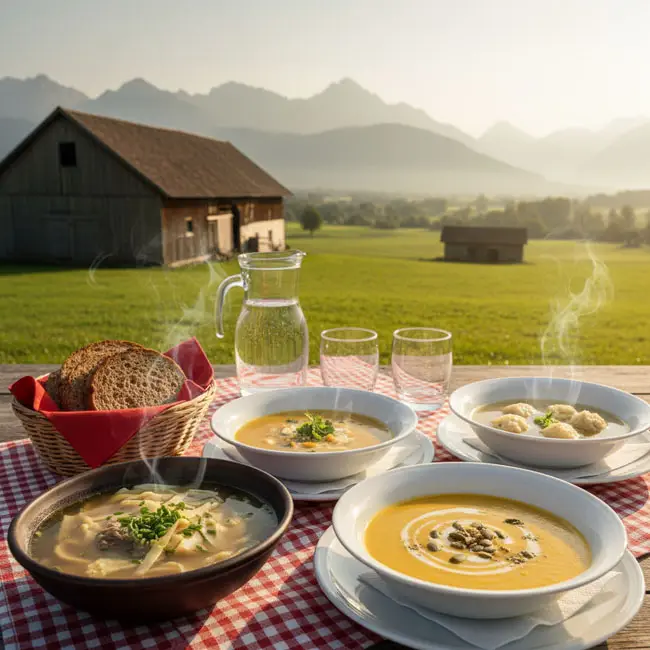
The Golden Elixir and the Hearty Soul of Vorspeise
Hey there, soup lovers! If you thought soup was just a casual starter, prepare to have your culinary world rocked. In Austria, particularly in the grand tradition of Viennese cuisine, soup isn't just an appetizer—it's the cornerstone of the meal, a sacred ritual, and a testament to the country's multi-layered history.
Walk into almost any traditional Gasthaus (inn) or fine dining restaurant in Austria, and the first question you’ll likely hear is: "Do you want soup with that?" The answer, if you want to eat like a local, should always be a resounding "Yes!"
Austrian soups are a fascinating blend of simplicity and complexity. They range from the crystal-clear, intensely flavored beef broths born in Imperial kitchens to the hearty, paprika-spiced stews that warm travelers in the Alpine mountains. Let's dive deep into the culture and the delicious heroes of the Austrian soup bowl!
🥣 The Cultural Foundation: Why Soup is Essential
To appreciate Austrian soup, you need to understand its role in the Austrian meal structure and culture.
The Role of the Vorspeise
Unlike in many Western countries where the starter (Vorspeise) might be a salad or a cold plate, in Austria, the meal traditionally begins with a steaming bowl of clear broth. This practice is rooted in the belief that a good, clear, warm soup aids digestion and gently prepares the appetite for the heavier main course (like a Wiener Schnitzel or Tafelspitz).
This is why, on most daily menus (Tagesmenü), the first course is almost always Tagessuppe (Soup of the Day), providing instant, deep comfort before the main event.
The Imperial Legacy: Rindsuppe as the Mother Broth
The most vital and foundational soup in all of Austria is the Rindsuppe (Clear Beef Broth).
- The Essence of Purity: Rindsuppe is a symbol of perfection in Viennese cooking. It is slow-simmered for hours with beef bones and meat (often using the Tafelspitz cut—Emperor Franz Joseph I's favorite boiled beef), along with root vegetables (carrots, celery root, parsnips) and a signature flame-toasted onion (which gives the broth its incredible golden color and subtle smokiness).
- The Test of a Chef: The clarity and depth of flavor in a restaurant’s Rindsuppe are often seen as the truest measure of a chef’s skill. A perfect Rindsuppe is translucent, rich, and deeply savory—a golden elixir that sets the tone for the entire meal.
The Melting Pot of the Habsburgs
Just like the desserts, Austrian soups reflect the vast reach of the former Austro-Hungarian Empire. The cuisine borrowed and blended flavors from Bohemia (Czech Republic), Hungary, and Italy. This is why you find both delicate Viennese broth variations and robust, paprika-heavy stews on the same national menu. Austrian soup culture is, essentially, Central European comfort food at its very best.
🥘 The Star Players: Iconic Broths and Hearty Soups
While Rindsuppe is the base, its many magnificent incarnations—known by their diverse, hearty fillings—are the true stars.
🌟 The Rindsuppe's Famous Fillings (Einlagen)
The joy of Rindsuppe is its versatility. The clear broth is rarely served plain; instead, it is customized with various Einlagen (fillings), each offering a different texture and flavor profile.
- Frittatensuppe (Pancake Soup): This one surprises foreigners, but it’s a national favorite! It’s simply the clear Rindsuppe with thin, savory pancakes (Frittaten—similar to crêpes) sliced into fine ribbons and scattered into the bowl. It's light, fun, and deeply satisfying.
- Leberknödelsuppe (Liver Dumpling Soup): A classic. The soup features one or more softball-sized dumplings made from ground liver (usually beef or pork), stale bread, herbs, and spices. These dumplings are substantial and rich, adding an incredible depth of flavor that is essential Alpine comfort food.
- Grießnockerlsuppe (Semolina Dumpling Soup): Another essential Einlage. These are light, fluffy dumplings made from semolina (a type of wheat flour) and egg, which swell beautifully when simmered in the broth. They are the perfect soft counterpoint to the golden liquid.
🌶️ The Alpine and Regional Heavyweights
Moving beyond the elegant Viennese broths, Austria boasts a range of thick, satisfying soups and stews that often serve as a main course, particularly in the colder mountain regions.
- Gulaschsuppe (Goulash Soup): Hailing from Hungarian influence but adapted with a distinct Austrian twist, this is a must-try. It's not a thin broth; it's a thick, hearty, paprika-rich soup (or thin stew) made with tender chunks of beef, onions, potatoes, and plenty of caraway and marjoram. You’ll find it served everywhere, from high-altitude ski Alms (huts) to city taverns, usually with a crusty roll (Semmel) for dipping.
- Kaspressknödelsuppe (Pressed Cheese Dumpling Soup): A specialty of the western Alpine regions (Tyrol, Salzburg), this is the quintessential mountain soup. The dumplings (Knödel) are made from stale bread, eggs, and strong, pressed mountain cheese (Bergkäse), then flattened and pan-fried until crispy. Served floating in a hot Rindsuppe, the savory, gooey cheese dumplings are a delicious contrast to the clear broth.
- Wiener Erdäpfelsuppe (Viennese Potato Soup): A creamy, comforting potato soup, often enriched with cream and seasoned with herbs like marjoram. Unlike the clear broths, this creamy variation offers a different kind of warmth, often featuring diced vegetables and sometimes small bits of smoked bacon for an extra layer of flavor.
🏔️ Eating Austrian Soups: The Gemütlichkeit of the Bowl
The culture around eating soup in Austria is all about Gemütlichkeit (a deep sense of comfort, coziness, and well-being).
- The Gasthaus Experience: Soup is an invitation to settle in. When you order soup at a traditional Gasthaus, it often arrives quickly, ready to warm you up after a day of hiking or skiing. The clear broth steams gently, and the aromas—of slow-cooked beef, toasted onion, and fresh chives—are instantly soothing.
- The Unspoken Rule: You never rush a good soup. The initial course gives everyone a moment to relax, chat, and transition from the outside world into the shared space of the table. It’s a very sociable starter.
- Regional Variations as Identity: Traveling through Austria means your soup will constantly change, acting as a small culinary passport. In Styria, you might find soups drizzled with deep green Pumpkin Seed Oil (Kürbiskernöl). In the Alps, it's the cheesy Kaspressknödel. This willingness to integrate local, hearty ingredients into the beloved broth demonstrates the regional pride within Austrian cuisine.
From the foundational Rindsuppe that binds all of Austria together to the robust, warming stews of the mountains, Austrian soups are a delicious and necessary exploration of the country’s heart. They are, quite simply, comfort in a bowl, perfected by centuries of tradition.
❓ Quick Bites: Austrian Soup FAQs
Q: Why is the beef broth (Rindsuppe) in Austria so clear and golden?
A: The clarity comes from careful and slow simmering without stirring, and meticulous skimming of the foam and fat. The distinct golden color is often achieved by adding a halved onion that has been charred black (not peeled!) directly on the stovetop before being dropped into the broth.
Q: Is Gulaschsuppe a soup or a stew?
A: It truly sits in the delicious middle! In Austria, it is definitely considered a soup (Suppe), often served as a hearty appetizer or a light main meal, especially at lunch or in a mountain hut. It is much thicker and richer than a typical clear broth, but more liquid and broth-heavy than a thick, main-course Gulasch stew (Gulasch).
Q: What is the most surprising thing Austrians add to their soup?
A: Arguably, the thin strips of savory pancakes in Frittatensuppe are the most unique addition. Close runners-up are Backerbsen (tiny, crunchy, fried savory 'peas' made from batter, used like croutons) or the rich, flavorful Leberknödel (liver dumplings), which definitely make the soup more of a meal!
Would you like me to now focus on the legendary main courses of Austria, such as Schnitzel and Tafelspitz, to complete your culinary content series?
🍲 The Ultimate Guide to Authentic Austrian Soups: Mastering 3 Classic Recipes at Home
| 🌐 🍲 < Back | 🇦🇹 🍷 < Previous | Next > 🥗 🇦🇹 |