
🏠 Home > 🗺️ Recipes > 🏛️🍖 Hearth-Roasted Mains > 🧱 Babylonian: Hearth-Roasted Mains Recipes > 🏛️🍖 1.Royal Babylonian Honey & Garlic Pit-Roasted Lamb
🏛️🍖 Unearthing Mesopotamia’s Pit-Roasting Secrets: A 4,000-Year-Old Culinary Journey
Published by Supakorn | Updated: July 2026
🧱 🏛️ Ancient Civilization Origins: Mesopotamia (Fertile Crescent)
🏺 The Storyteller’s Intro: 5,000 Years of Ancestral Flavors
Hey there, fellow food adventurers! Step into my time machine for a second. Imagine standing in the heart of the Fertile Crescent around 2000 BCE. The air is thick with the sweet aroma of smoldering fruitwood, toasted cumin, and slow-rendered fat dripping onto white-hot river stones. You aren't standing in a modern kitchen with shiny stainless-steel gadgets. You are looking down into a deep earthen trench, a pit carved straight into the clay soil of ancient Babylonia.
Long before modern ovens, gas burners, or digital smokers were ever drawn up on blueprints, the culinary architects of the ancient Near East perfected the art of pit-roasting. They didn't just cook food to survive—they treated fire, stone, and subterranean heat as a sacred ritual. They buried seasoned meats beneath coals and damp reed mats, letting the natural steam and smoke transform tough cuts into buttery, tender masterpieces.
This isn't just an old way of making dinner; it’s the original low-and-slow barbecue that sparked human civilization! When you recreate a Babylonian pit-roast today, you aren't just following a set of instructions. You are tapping into a 5,000-year-old tradition of gathering around the hearth, sharing stories, and honoring the wild flavors of the ancient earth.
🌍 The Global Value of Antique Heritage
Why should we care about cooking techniques from thousands of years ago? Well, if you look at almost every major food culture on Earth today, you will find the fingerprints of ancient Babylonia. From the subterranean pāca of the Andes to the Hawaiian imu, the Mexican barbacoa, and the classic pit-barbecue traditions of the American South, the science of baking meat inside the earth is universal.
The Babylonians were among the very first to systematically record these culinary methods. They documented spice pairings, meat marinades, and temperature controls on clay tablets. Preserving and reviving these heritage techniques allows us to reconnect with our shared human history. It reminds us that long before international trade routes and commercial processing, flavor was built with patience, pure embers, and raw earth. Bringing these techniques back to life honors the ingenuity of our ancestors and enriches our modern palates in a way no quick air-fryer recipe ever could.
🕯️ The Culinary Resurrection
For thousands of years, these recipes lay buried beneath desert sands, locked inside dense cuneiform script etched onto fragile clay tablets. Historians and archaeologists spent decades deciphering these ancient artifacts, often treating them purely as legal or agricultural records. But tucked away among tax logs and royal decrees were actual step-by-step recipes used by royal palace chefs in ancient Babylon.
Today, we are resurrecting these lost kitchen secrets! We are taking those translated tablet fragments, dusting off the centuries of obscurity, and adapting them for adventurous cooks who want to experience authentic antiquity. We’re stripping away the myth that ancient food was bland or primitive. Instead, we are uncovering a complex world of fragrant herbs, rich broths, sweet fruit glazes, and deep smokiness that will completely blow your mind.
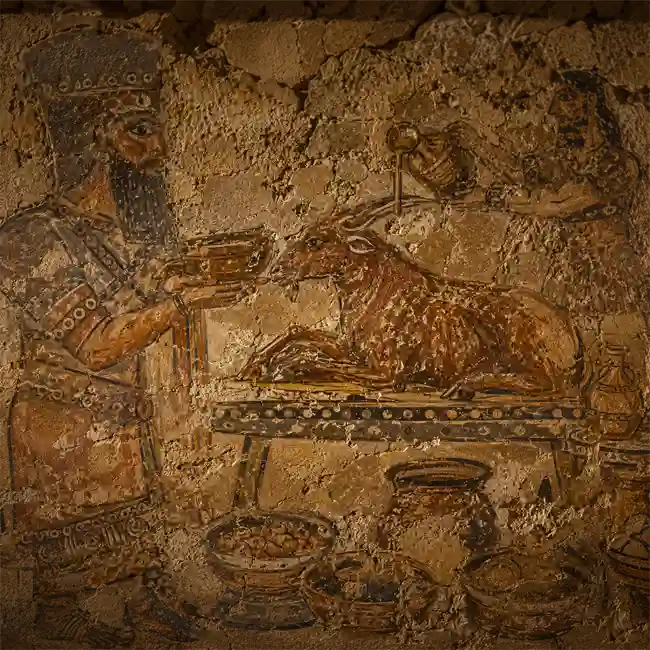
🍖 Recipe: Royal Babylonian Honey & Garlic Pit-Roasted Lamb
📜 Legends Behind This Excavated Secret
Legend has it that this specific method of pit-roasting was reserved for high festival seasons in ancient Babylon, particularly during celebrations honoring Ishtar and Marduk. Royal clay tablets excavated near the site of ancient Nippur and Babylon detail extravagant feasts where whole sheep and gazelles were marinated in fermented garlic, wild leeks, date syrup, and crushed coriander before being sealed underground for hours.
The secret to this dish lay in the heat retention of river stones and damp date-palm leaves. The steam trapped inside the pit kept the meat impossibly moist, while the slow-radiating heat caramelized the natural sugars in the date syrup and honey. It was said that the aroma rising from the earth when the pit was unsealed could draw crowds from miles away. Today, we bring that exact legendary feast right into your backyard!
🌿 Ingredients & The Noble Pantry
The Ancestral Staples
To truly understand this dish, we have to look at what grew along the banks of the Tigris and Euphrates rivers. The ancient Mesopotamian pantry was incredibly rich. Garlic, leeks, and onions formed the holy trinity of almost every savory dish. Sweetness didn't come from refined sugar; it came from raw wild honey and dark, sticky date syrup boiled down from fresh palm fruit. Wild herbs like coriander, cumin, thyme, and sumac provided a bright, earthy warmth. Animal fats, particularly rendered sheep tail fat or clarified butter, were used liberally to carry these aromatic flavors deep into the muscle fibers of the meat.
Modern Substitutes
You don't need access to an ancient Mesopotamian market to make this happen! Here is how you can easily source or substitute every component using modern grocery stores:
• Bone-in Lamb Shoulder or Leg: The ideal cut for slow pit-roasting. If you don't eat lamb, bone-in beef chuck roast or a whole pork shoulder work wonderfully with these exact same spices.
• Date Syrup: Readily available at Mediterranean markets or health food stores. If you can't find it, dark molasses mixed with a touch of prune juice makes a fantastic stand-in.
• Wild Leeks & Garlic: Standard supermarket garlic cloves and leeks or scallions give you that identical punchy onion-garlic depth.
• Crushed Coriander & Cumin Seeds: Whole seeds freshly toasted and crushed in a mortar and pestle give an authentic, rustic texture.
• Fig or Banana Leaves: Used to wrap the meat to protect it from direct flames and trap steam. You can buy frozen banana leaves at Asian or Hispanic markets, or simply use unbleached parchment paper wrapped tightly inside heavy-duty aluminum foil.
Ancient Proportions
Here is your exact formula for creating the ultimate Babylonian pit-roast paste and marinade:
• Main Protein: 4 to 5 pounds of bone-in lamb leg or shoulder (trimmed of tough silver skin, but leaving a generous layer of fat).
• Aromatic Base: 10 whole cloves of fresh garlic, peeled and finely mashed into a paste.
• Fresh Greens: 1 large leek, thoroughly cleaned and finely chopped (white and light green parts only).
• Sweetening Agents: 4 tablespoons of pure date syrup and 2 tablespoons of raw unprocessed honey.
• Acidity & Brightness: 3 tablespoons of raw apple cider vinegar or pomegranate juice (to mimic ancient sour fruit juices).
• Earthy Spices: 2 tablespoons of whole coriander seeds (lightly toasted and cracked), 1 tablespoon of ground cumin, and 1 teaspoon of ground sumac.
• Herbal Accent: 2 tablespoons of fresh thyme leaves, finely chopped.
• Rich Binder: 3 tablespoons of melted ghee (clarified butter) or extra-virgin olive oil.
• Seasoning: 1.5 tablespoons of coarse sea salt and 1 teaspoon of freshly cracked black pepper.
• Wrapping Material: 4 to 5 large banana leaves (or parchment paper and heavy aluminum foil) along with natural kitchen twine.
🔥 The Chef’s Ancient Ritual
Step into the shoes of an ancient Mesopotamian hearth-master. Follow these sacred steps to transform simple ingredients into a feast fit for kings!
[Step 1: Dig & Fire] ──> [Step 2: Spice Paste] ──> [Step 3: Leaf Wrap]
[Step 5: Unearth Feast] <── [Step 4: Buried Slow Cooking] <─────┘
• Step 1: Preparing the Subterranean Pit (Or Charcoal Grill Setup)
◦ The Pit Method: Dig a hole in well-drained soil about 2 feet wide and 1.5 feet deep. Line the bottom with smooth, dry river rocks (make sure they are completely dry to prevent cracking under heat). Build a hardwood charcoal fire directly on top of the stones. Let it burn down for about 1.5 to 2 hours until you have a thick bed of glowing, red-hot embers and scalding stones.
◦ The Modern Grill/Smoker Alternative: If digging up your backyard isn't an option, don't worry! Set your kettle grill or smoker for indirect heat at 275°F (135°C) using wood chunks like oak or applewood to recreate that rich earth-and-wood smoke.
• Step 2: Crafting the Royal Rub
◦ In a heavy stone mortar and pestle (or a food processor), crush the garlic cloves with the coarse sea salt until a smooth, fragrant paste forms.
◦ Toast your coriander and cumin seeds in a dry skillet over medium heat for 60 seconds until fragrant, then crush them coarsely.
◦ In a bowl, combine the garlic paste, crushed seeds, chopped leeks, date syrup, raw honey, fruit juice, sumac, thyme, and melted ghee. Stir until it forms a thick, dark, glossy spice paste.
• Step 3: Dressing and Wrapping the Meat
◦ Use a sharp knife to score deep diamond crisscross patterns into the fat cap of the lamb. This allows the marinade to penetrate deep into the meat.
◦ Rub the Babylonian spice mixture all over the lamb, working it into every slice and fold. Let it sit at room temperature for at least 45 minutes (or marinate overnight in the fridge for maximum flavor absorption).
◦ Soften your banana leaves by passing them briefly over an open flame until they become pliable and shiny.
◦ Wrap the seasoned lamb tightly in 3 to 4 overlapping layers of banana leaves, sealing all the juices inside. Tie the bundle securely with natural cotton twine. If using parchment and foil, wrap tightly in parchment first, then seal in 3 layers of heavy foil.
• Step 4: The Subterranean Burial
◦ Push the glowing embers in your pit slightly to the sides, leaving a hot bed of stones and shallow coals in the center.
◦ Place a damp layer of date-palm leaves or wet burlap directly over the coals to prevent scorching.
◦ Lay your wrapped lamb bundle gently onto the damp layer. Cover the bundle with another damp reed or cloth layer, then carefully shovel the hot embers and warm earth back over the top until the pit is completely sealed. No steam should escape!
◦ Let the earth do its magic for 4 to 5 hours undisturbed.
• Step 5: Unearthing and Serving
◦ Carefully shovel away the top layer of earth and coals. Use long tongs or heat-resistant gloves to lift the steaming leaf-wrapped bundle out of the pit.
◦ Let the parcel rest unopened for 20 minutes to allow the juices to redistribute through the meat.
◦ Snipping the twine and unfolding the leaves reveals a cloud of fragrant, herbal steam. The meat should be so tender it easily pulls away from the bone with just two forks. Serve hot alongside flatbreads, fresh herbs, and extra date syrup!
🛡️ Secrets of the Ancestral Hearth
Mastering subterranean fire cooking requires a bit of ancient intuition. Avoid common mistakes and elevate your roast with these crucial tips from the ancestors:
• Rock Selection Matters Greatly: Never use wet rocks or porous river stones collected directly out of a riverbed for your pit fire. Trapped moisture inside wet stones can heat up, expand, and shatter under high heat. Always select completely dry, dense volcanic rocks or standard firebricks.
• The Moisture Shield: The biggest risk with long pit roasting is drying out the meat or burning the exterior before the inside cooks through. The banana leaf or damp wrapping layer acts as a pressure cooker, turning the meat’s natural juices into recirculating steam while locking out ash and dirt.
• Managing the Embers: Don't lay your leaf-wrapped bundle directly onto raw, flaming logs! Flames will scorch through the wrapper in minutes. Always wait until the wood has burned completely down into soft, glowing coals covered in white ash.
• Resting is Non-Negotiable: When you dig up your roast, your instinct will be to tear into it immediately because it smells so good. Resist the urge! Opening the bundle too quickly causes precious steam and juices to evaporate instantly, leaving you with dry meat. Let it rest for a full 20 minutes.
• Flavor Layering: Don't skimp on the salt or acid! The deep sweetness of date syrup and honey needs the contrast of sea salt and sour fruit juice/vinegar to keep the flavor profile balanced and savory rather than dessert-like.
💬 Ancient Civilization Origins FAQ
Q1: Did ancient Babylonians really use pit roasting for everyday meals?
Daily meals for average citizens usually consisted of barley porridges, flatbreads, lentils, and dried fish cooked over simple clay stoves called tannours. Deep pit roasting was typically reserved for special events, temple offerings, royal banquets, and large community festivals where large cuts of meat or whole animals needed to be cooked evenly for crowds.
Q2: What if I don't have a backyard where I can dig a pit?
You can easily recreate these exact flavors using a standard home oven! Wrap the seasoned meat tightly in parchment paper and aluminum foil, place it in a deep roasting pan, and bake low-and-slow at 300°F (150°C) for about 4 hours. To get that touch of woodsmoke, add a dash of liquid smoke or smoked sea salt to your spice rub!
Q3: Why is date syrup used instead of sugar in this ancient recipe?
Cane sugar was unknown in ancient Mesopotamia during this era. Instead, date palms grew abundantly along the riverbanks, making dates the primary natural sweetener. Date syrup (known historically as dibis) adds a rich, dark, complex caramel flavor with subtle fruity notes that pair fantastically with gamey meats like lamb.
Q4: How did ancient people prevent dirt from getting into the food when buried?
They were masters of natural packaging! Meat was routinely wrapped in layers of clean animal skins, large broad leaves (like fig or vine leaves), or woven reed mats sealed with damp clay. This created a clean, airtight cooking chamber inside the dirt pit.
🏺 The Taste of Archeology
When you peel back those charred banana leaves and take your first bite of this Babylonian pit-roast, you are experiencing the exact sensory sensation enjoyed by ancient kings and citizens thousands of years ago. The sweetness of dates and honey hits your tongue first, followed by the pungent bite of garlic and wild leeks, all rounded out by deep, earthy cumin, citrusy sumac, and rich, smoky lamb fat.
It’s a flavor profile that feels both deeply familiar and wildly exotic. It bridges the gap between ancient history textbooks and your dinner plate, proving that great food is truly timeless.
🍽️ Final Thoughts: Bringing Antiquity to Your Modern Table
Cooking isn't just about nutrition; it's one of the most intimate ways we can connect with human culture and history. Recreating lost recipes like this Babylonian pit-roast breaks down the barriers of time. It proves that despite all our modern technology, smartphones, and smart appliances, the fundamental things that bring us joy haven't changed in 5,000 years: good fire, quality ingredients, time-honored patience, and sharing a hearty feast with people we care about.
So, this weekend, why not skip the usual quick weeknight dinner? Gather some friends, prep your spices, fire up your coals, and bring a taste of ancient Babylonia to your own backyard. You’ll not only serve an unforgettable meal, but you'll also have an incredible story to share around the fire.
🤝 The Golden Hook (The Sacred Union)
Are you fascinated by the forgotten flavors of lost empires? The world’s ancient archives are packed with thousands of forgotten recipes waiting to be deciphered, cooked, and tasted once again! We are on a mission to preserve and revitalize the world's oldest culinary traditions, making them accessible to home cooks everywhere.
If you believe that food history deserves to be remembered and tasted, join our community of culinary historians and open-fire cooks today! Subscribe to our newsletter, share your own ancient cooking attempts in the comments below, and help us keep the flame of ancestral knowledge burning bright for generations to come.
📜 Credit to the Keepers of the Culture (The Legacy)
This recipe is inspired by the ancient culinary archives and clay tablet inscriptions of Mesopotamia. We have carefully adapted the measurements for modern kitchens while preserving its sacred ancestral soul.
| 🧱 🏛️🍖 < Back |