
🏠 Home > 🗺️ Recipes > 🏛️🌾 Primitive Grains & Flatbreads > 🧱 Babylonian: Primitive Grains & Flatbreads Recipes
🧱 🏛️🌾 Babylonian: Primitive Grains & Flatbreads Recipes
Published by Supakorn | Updated: July 2026
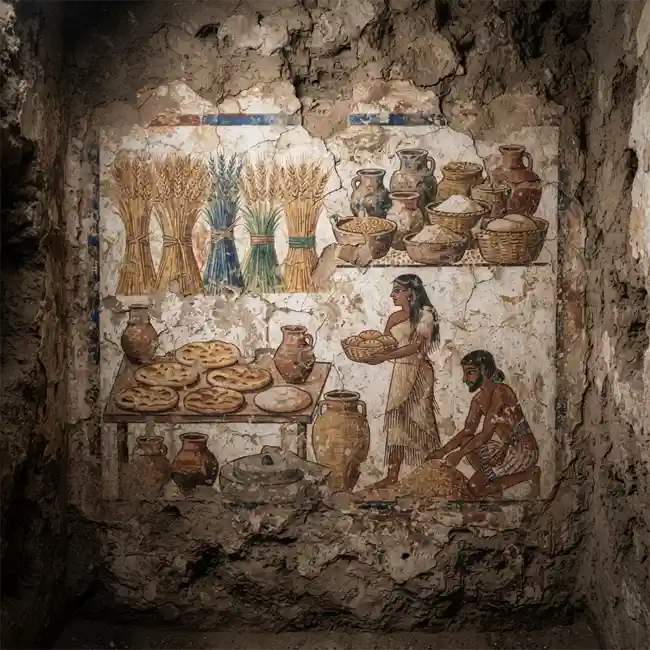
🧱 📜 The Storyteller’s Intro: 5,000 Years of Ancestral Flavors
Hey friend, let me take you back. Way, way back. Before ovens had dials, before cookbooks existed, before anyone even thought about writing down a recipe for fun. We are going to the place where it all started.
We are talking about Mesopotamia, the land between two rivers. The cradle of civilization itself. When we say Babylonian food is 5,000 years old, we are not exaggerating. We are talking about layers of history stacked like, well, like flatbreads.
• The Timeline Is Insane: This culinary story doesn't start with one king. It starts around 3500 BCE with the Sumerians, the original inventors. They were the first to figure out how to tame wild grains and turn them into something you could actually eat every day. Then came the Akkadians around 2300 BCE, who took Sumerian ideas and made them bigger and more organized. Finally, the Babylonians, from around 1894 BCE to 539 BCE, perfected it all. They turned survival food into culture, into status, into art.
• Why Grains Were Everything: In ancient Babylon, grain wasn't just food. It was money. It was power. Workers were literally paid in barley rations. A common laborer got about 2 liters of barley a day. If you were important, you got the good stuff: emmer wheat. Your wealth was measured by how full your granary was. No grain, no life. Simple as that.
• The First Foodies: The Babylonians were obsessed with documentation. Unlike other ancient cultures that left us only pictures, they left us actual recipes. Carved into clay tablets in cuneiform script. That means we don't have to guess what they ate. They told us. They were the first true foodies, and luckily for us, they were also the first food bloggers, just on clay instead of Instagram.
• More Than Just Survival: For a Babylonian, a meal was never just about filling your belly. It was about pleasing the gods, honoring your ancestors, and showing your place in the world. The way you ground your grain, the shape of your flatbread, the oven you used, it all said something about who you were. This is where food stopped being just fuel and started being civilization.
📜 Iconic Excavated Menus: From Clay Tablets to Pharaoh Tombs
Okay, this is where it gets really cool. Forget dusty museum stuff. This is real, tangible food history that archaeologists actually dug up. The stars of our show are the famous Yale Babylonian Tablets.
These three clay tablets, now sitting at Yale University, date back to around 1750 BCE. They are the oldest cookbooks in the world. And guess what? They are obsessed with grains and breads. Here are some of the most iconic, documented dishes we know by name:
• Ninda: The Daily Bread That Built an Empire: If you only remember one word, remember Ninda. It means bread in Sumerian and Babylonian. But it wasn't just one bread. There were over 300 different types of Ninda recorded! There was Ninda for common people, Ninda for the king, Ninda for the gods. This was the foundation of everything. A simple, round, primitive flatbread made from barley flour, water, and a little salt, baked on the hot walls of a clay oven.
• Ninda Kash: The Ancient Beer-Bread: Okay, don't worry, we are not talking about alcohol here. This was a special, twice-baked, super-hard flatbread made specifically for storage and travel. Think of it as the world's first energy bar or hardtack. It was made from fermented barley dough that was first baked and then dried in the sun. Caravan traders could carry it for months. When you needed to eat, you just crumbled it into water or broth to make a porridge.
• Gursu Flatbread: The Soldier's Fuel: This was the hearty, thick flatbread found in military ration lists. Archaeologists found tablets detailing how much Gursu was needed to feed an entire army. It was made from coarsely ground emmer wheat, which made it chewier and more filling. It was often baked with bits of pressed sesame or linseed for extra energy.
• Bappir: The Mother Dough: This one is fascinating. Bappir was a special bread that was not always meant to be eaten on its own. It was a twice-baked, crumbly, highly fermentable barley bread that was used as an ingredient. It was the base for making other foods and was a cornerstone of temple offerings. It shows they already understood complex fermentation 4,000 years ago.
• Ninda Lal: The Honey-Sweetened Temple Bread: Not all Babylonian bread was plain. For festivals and offerings to the gods like Marduk, they made sweetened flatbreads. Ninda Lal was made with emmer flour, date syrup, and wild honey. It was shaped into intricate rings and crescents and baked in special molds. Only priests and royalty got to eat this regularly.
• Shameshe Flatbread: The Sesame Jewel: The Babylonians loved sesame. The word Shameshe means sesame. This was a luxury flatbread sprinkled generously with toasted sesame seeds and a pinch of rock salt from the desert. The aroma of it baking in a tannour oven must have been incredible. Tablets describe it as a bread for celebrations and welcoming guests.
• Gazi-Grind Porridge Breads: Before flatbreads, there was porridge. The earliest form of grain consumption was a thick paste of coarsely ground barley and herbs. Over time, they started flattening this paste and baking it. Some tablets mention flatbreads mixed with wild herbs like cress and leeks, a sort of ancient herbed focaccia.
🗺️ 🏛️ Ancient Culinary Tourism: Mapping Flavors to Historic Landscapes
So, can you still taste ancient Babylon today? Absolutely. If you are a food traveler, a history nerd, or just someone who loves bread, this is the ultimate food pilgrimage. You can literally follow the grain trail.
• First Stop: Babylon, Iraq - The Heart of the Empire: Standing in front of the Ishtar Gate replica, you are standing where bread culture was perfected. The local markets around Hillah still sell flatbreads baked in ancient-style clay tannour ovens. The technique has not changed in 5,000 years. You watch the baker slap the dough onto the inner wall of the blazing oven, and you are watching history. The smell is smoky, earthy, and timeless.
• Second Stop: Nippur - The City of Scribes and Bakers: This is where many of the grain accounting tablets were found. It was the religious center, and thus, the center of temple bakeries. Temple bakeries were massive operations. Imagine 100 bakers working around the clock to feed the gods and the priests. Visiting the archaeological site gives you a real sense of the scale. The granaries here were as important as the temples.
• Third Stop: The Modern Tannour Bakeries of Baghdad and the South: To really understand Babylonian bread, you have to skip the fancy restaurants. Go to a neighborhood street bakery. The baker uses the same primitive grains: barley and emmer, which locals still call "ancient wheat." The bread is called Samoon and Khubz today, but the DNA is pure Babylonian. Eat it hot, torn by hand, with a little date syrup. That is the exact snack a Babylonian kid would have had after school 4,000 years ago.
How They Lived and Ate:
◦ Daily life revolved around the communal oven. Most homes did not have their own oven. Women would prepare the dough at home from their grain ration and bring it to the communal tannour to bake. It was the original social network.
◦ Meals were eaten sitting on mats on the floor. Bread was the spoon, the plate, and the food itself. You would use a piece of flatbread to scoop up lentil stews and mashed vegetables.
◦ Cleanliness was huge. Cuneiform tablets include instructions for washing hands before handling grain. Bread was considered sacred. Wasting it was an insult to the goddess Nissaba, the goddess of grain and writing.
🚣 🌊 The Tigris & Euphrates Sovereignty: Riverbed Agriculture
You cannot talk about Babylonian bread without talking about the two rivers that made it possible. This is the Fertile Crescent, my friend. The most important piece of farmland in human history.
• Why These Rivers Were Magic: The Tigris and Euphrates rivers flooded every year, but unlike the Nile, their floods were wild and unpredictable. The Babylonians had to become genius engineers to survive. They invented irrigation canals, levees, and reservoirs. This mastery of water is what allowed them to grow primitive grains on a massive scale in the middle of a desert.
The Holy Trinity of Ancient Grains:
◦ Barley (She): The king. The workhorse. Barley can grow in salty, poor soil and needs less water. It was the grain of the common people, the soldiers, the workers. About 80% of all grain grown was barley. It made the everyday Ninda.
◦ Emmer Wheat (Ziz): The luxury grain. Emmer is an ancient ancestor of modern wheat. It was harder to grow and harder to process because its husk is tough. But it made a much softer, tastier, and more nutritious bread. If you were rich, you ate emmer.
◦ Einkorn Wheat: The oldest of all. Even more primitive than emmer. Einkorn was the first wheat ever domesticated. It has tiny grains and low yield, but it is incredibly resilient. Archaeologists find its charred remains in the oldest fire pits in Mesopotamia.
◦ From Field to Flour: The process was pure labor. Grain was harvested with flint sickles, then threshed by having oxen walk over it. Then came the hard part: winnowing in the wind to separate grain from chaff, and finally grinding on a large, saddle-shaped quern stone. Grinding enough flour for one day's bread took a woman about 3 hours. Every single day. That is how precious flour was.
🏜️ 🐪 Oasis & Desert Trade Route Banquets: Caravan Luxuries
Babylon was not isolated. It was the center of the world. It sat right on the major trade routes that connected the desert, the mountains, and the sea. And bread was the passport.
• The Caravan Bread Economy: Imagine a caravan of donkeys loaded with lapis lazuli from Afghanistan, cedar wood from Lebanon, and copper from Oman, all passing through Babylon. What did the merchants all need? Bread that lasts. That is where Bappir and Ninda Kash became international currency. A merchant's success depended on his supply of hard flatbreads. They were light, nutritious, and did not spoil.
• The Oasis Stopovers: Along the desert trade routes, oases were not just about water. They were bakeries. Small settlements would bake thousands of flatbreads to sell to passing caravans. An oasis with a good tannour oven could become rich. They would trade fresh flatbreads for exotic goods. This is how Babylonian bread culture spread all the way to Egypt and the Indus Valley.
• Banquet Culture - When Bread Became Bling: For the Babylonian elite, a banquet was a display of agricultural power. A king would show off by serving dozens of different breads at one feast. Tablets from the palace of Mari describe banquets where guests were served 4 different types of flatbreads, each made from a different grain and shaped differently: round, concave, ring-shaped, and pillow-shaped. The more variety of bread you could offer, the more powerful you looked. Toppings like sesame, crushed dates, and wild herbs were the ancient equivalent of edible gold.
• The Sacred Exchange: Bread was also used to seal deals. Breaking bread together was a legally binding act. When two merchants agreed on a trade, they would break a piece of Ninda in half and each eat a piece. The oath was sealed. No grain, no deal.
📝 Ancient Civilization FAQ: Unlocking Palace Kitchen Mysteries
Q1.Was Babylonian flatbread like modern pita bread?
Kind of, but much more primitive and flavorful. Modern pita is made with refined white flour and commercial yeast, so it puffs up big and soft. Babylonian Ninda was made with coarsely ground, whole-grain barley or emmer flour and wild yeast from the air. So it was denser, chewier, nuttier, and had a slightly sour taste, more like a rustic sourdough flatbread. And it was baked directly on the scorching clay wall, so it had amazing smoky charred spots.
Q2.How did they make bread rise without modern yeast?
They were masters of wild fermentation, even if they did not know the science. They would keep a piece of old dough, the leaven, from the previous day. This old dough was full of wild yeasts and lactobacilli from the environment. Mixing it into fresh dough would make it rise slowly and give it that tangy flavor. They also used Bappir, that crumbly fermentable bread, as a starter culture. It was an early form of sourdough.
Q3.Did everyone in Babylon eat the same bread?
Not at all. Bread was a strict social marker. Your bread told everyone your status. Slaves and common workers ate coarse barley Ninda, often gritty with bits of stone from the grinding quern. Middle-class merchants and scribes could afford better-sifted barley bread and sometimes emmer. Priests and the royal family ate only fine, white emmer wheat bread, sometimes sweetened with date syrup and sprinkled with sesame. The type of grain in your bowl literally showed your rank in society.
Q4.Why did Babylonian civilization decline if their grain system was so advanced?
This is a tragic and important lesson. Their incredible irrigation system was both their success and their downfall. Over centuries of intensive irrigation in a hot climate without proper drainage, the soil became increasingly salty, a process called salinization. Barley can handle some salt, but eventually even barley struggled. Wheat yields collapsed first. You can actually see it in the clay tablets: over time, the records show more and more barley and less and less wheat being grown. The land slowly got tired, yields dropped, and it became harder to support the huge cities.
🧠 Final Thoughts: The Timeless Allure of Antique Gastronomy
So there you have it, friend. The story of Babylonian primitive grains and flatbreads is so much more than just old bread. It is the story of how we became us.
It is about human ingenuity. About taking a tiny, tough wild seed and turning it into the food that built the first cities, the first laws, the first poems. Every time you tear a piece of flatbread today, you are repeating a gesture that a Sumerian mother, a Babylonian baker, and a desert caravan trader did 5,000 years ago.
These were not primitive people making primitive food. They were brilliant, resourceful, and deeply connected to their land and rivers. They understood fermentation, they engineered rivers, and they knew that sharing bread is the most human thing we can do.
This is just the appetizer. We have only scratched the surface of the clay tablets. In the next deep dive, we will actually roll up our sleeves and recreate these ancient flatbreads step-by-step in a modern kitchen, from grinding emmer to baking in a homemade tannour.
Stay hungry for history.
🏛️ Credit to the Keepers of the Culture (The Legacy)
This article is written with deep respect and gratitude for the ancient Sumerians, Akkadians, and Babylonians who gifted us the culture of bread. Our knowledge comes from the tireless work of archaeologists, Assyriologists, and translators who dedicated their lives to deciphering cuneiform clay tablets.
Special credit to the preservation of the Yale Babylonian Collection at Yale University, and to the legacy of scholars like Jean Bottero, who first translated these 4,000-year-old recipes for the modern world. We also honor the modern Iraqi bakers and farmers in the land between the two rivers who have kept the tannour oven and ancient grain traditions alive through millennia.
All historical interpretations are based on publicly available archaeological research and museum records.
🏛️🌾 We Baked History: Recreating Babylon's 5000-Year-Old Barley Flatbreads at Home
👉 Explore Authentic Babylonian: Ancient Grains & Flatbreads
| 🌐 🏛️🌾 < Back | Next > 🍖 🧱 |