
🏠 Home > 🗺️ Recipes > 👑🍨 Grand Finales (Desserts) > 🇧🇷 Brazil Grand Finales (Desserts) Recipes > 👑🍨 1.Imperial Quindim (Royal Golden Coconut Custard)
👑🍨 The Imperial Kitchen Secrets: Unveiling Brazil’s Lost Royal Desserts
Published by Supakorn | Updated: September 2026
🤴🏰 The Forgotten Royal Legacy of Brazil: The House of Braganza & The Sugar Barons
📜 The Storyteller’s Intro
Imagine stepping back into the late 18th and early 19th centuries, inside the grand estate kitchens of colonial Bahia and Rio de Janeiro. Sunlight streams through arched stone windows onto thick wooden tables laden with mounds of freshly milled white sugar, massive earthen bowls of rich egg yolks, and grated coconut so fresh it smells like pure paradise. Behind heavy oak doors, master confectioners, Portuguese nuns, and talented kitchen artisans worked in secret to create desserts fit for high nobility. This was an era when sugar was literally called "white gold," and the royal court of the House of Braganza—alongside powerful sugar barons—spared no expense to create the most decadent, silky, and golden sweet treats the world had ever tasted.
🌐 The Global Value
For centuries, these extraordinary dessert recipes were closely guarded secrets. They were strictly reserved for aristocratic ballrooms, imperial banquets, and high-society gatherings. Unless you were royalty, a high-ranking diplomat, or a member of the elite landed nobility, you would never get a single taste of these golden creations. As time moved on, empires fell, and fast-paced modern life took over, many of these labor-intensive royal techniques were nearly forgotten. They became faint whispers in historic monastery archives and faded hand-written family journals, at serious risk of vanishing forever from global culinary history.
📜 The Collection
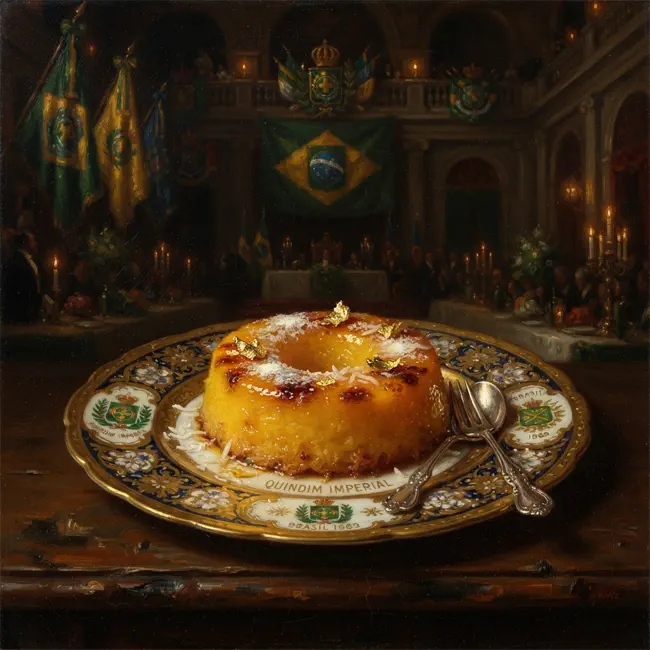
Today, we are opening the vault and bringing one of the most legendary lost royal desserts of imperial Brazil back to life: the iconic Imperial Quindim (pronounced keen-DEEM). Born from the sacred tradition of Portuguese conventual sweets and reimagined through the lush tropical bounty of Brazil, this shimmering, ruby-gold coconut custard jewel represents the absolute peak of imperial elegance. In this complete step-by-step guide, we will uncover its royal origins, share every single secret ingredient, breakdown modern substitutes, and reveal the exact kitchen techniques used by palace chefs so you can recreate this royal masterpiece right in your own kitchen!
🍮 Recipe: Imperial Quindim (Royal Golden Coconut Custard)
👑 About this Royal Secret
This luminous, sun-gold dessert was a personal favorite of Princess Isabel and Empress Teresa Cristina during the height of the Brazilian Empire in Rio de Janeiro. Served in delicate silver dishes during state dinners and afternoon royal tea ceremonies, Imperial Quindim was considered the ultimate symbol of wealth and hospitality. The bright yellow color was designed to mimic pure gold, showcasing the host's immense fortune and refined taste. When you cut into a properly made Quindim, it separates naturally into two distinct textures: a silky, translucent egg custard on top and a delightfully chewy, toasted coconut crust on the bottom. It’s pure history on a spoon!
🥚 Ingredients & The Aristocratic Touch
👑 The Royal Pantry
In the imperial era, every single ingredient was selected with extreme care. The egg yolks had to be intensely golden, sourced from free-roaming hens, and carefully strained through fine silk cloth multiple times to remove any trace of egg white or membrane. The sugar wasn't just any sweetener—it was pristine refined cane sugar produced directly from the rich soil of northeastern sugar plantations (engenhos). Fresh coconut was cracked open by hand on the very day of baking, releasing sweet coconut milk and providing a fresh texture that dried modern coconut could never match.
🔄 Modern Substitutes
You don't need a 19th-century plantation to make this royal treat today! Here is how you can match the quality of the palace pantry using accessible modern pantry items:
• Fresh Egg Yolks: Use farm-fresh large egg yolks. If you want that deep, imperial orange-yellow color, look for pasture-raised eggs or marigold-fed chicken eggs.
• Granulated White Sugar: Standard extra-fine granulated cane sugar works perfectly. Avoid raw sugar or brown sugar, as they will alter the brilliant golden color.
• Grated Coconut: Freshly grated unsweetened coconut (found in the frozen section of most Asian or Latin grocery stores) is ideal. If using dry unsweetened shredded coconut, rehydrate it with a few tablespoons of warm coconut milk before starting.
• Pure Unsalted Butter: High-fat European-style butter (82% butterfat) provides the exact rich, glossy finish that imperial chefs achieved.
⚖️ The Measurements
Here is the precise ratio required for an authentic, show-stopping Imperial Quindim batch (yields 12 individual molds or 1 large royal ring cake):
• Egg Yolks: 12 large egg yolks (passed gently through a fine-mesh sieve)
• Granulated Sugar: 250 grams (1 cup plus 2 tablespoons)
• Grated Unsweetened Coconut: 100 grams (approx. 1.25 cups of fresh or rehydrated coconut)
• Unsalted European Butter: 30 grams (2 tablespoons, fully melted and cooled)
• Pure Vanilla Extract: 5 milliliters (1 teaspoon, optional for a subtle modern floral aroma)
• Fine Sea Salt: 1 tiny pinch (less than 1 gram)
• For Coating the Molds: 20 grams of softened butter and 30 grams of granulated sugar for dusting
🍳 The Chef’s Ritual (Step-by-Step Instructions)
1.Preparing the Sacred Molds: Generously brush the inside of 12 muffin tins or ramekins (or one 8-inch bundt mold) with soft butter. Coat the entire interior with granulated sugar, tapping out any excess. This step is non-negotiable—it creates the famous glass-like, shimmering royal shine on the outside of your Quindim!
2.Straining the Yolks: Place a fine-mesh strainer over a glass bowl. Gently pop the 12 egg yolks into the strainer and let gravity push them through naturally. Crucial Rule: Do not force or scrape the yolks through with a spoon, as this will push the egg membranes through and create a bitter, egg-like odor.
3.Hydrating the Coconut: In a separate bowl, combine the grated coconut with the melted butter and granulated sugar. Mix gently with a wooden spoon and let it rest for 15 to 20 minutes. This allows the coconut to absorb the sweet oils and soften completely.
4.Combining the Royal Mixture: Slowly pour the strained egg yolks and a tiny pinch of fine sea salt into the sweetened coconut mixture. Add the pure vanilla extract. Gently fold everything together using a rubber spatula just until combined. Do not whisk violently! Incorporating air bubbles will ruin the smooth, mirror-like custard texture.
5.The Imperial Rest (The 30-Minute Secret): Cover the bowl and let the mixture sit at room temperature for 30 to 45 minutes. During this rest period, the heavy grated coconut naturally floats up to the surface while the silky liquid egg yolk custard settles at the bottom. This separation is what creates the famous double-layer effect!
6.Filling and Bain-Marie Setup: Pour the rested mixture evenly into your prepared sugar-lined molds, filling them almost to the top. Place the molds inside a deep baking pan. Pour boiling water into the pan until it reaches halfway up the sides of your dessert molds (a hot water bath, or Bain-Marie).
7.Baking with Patience: Bake in a preheated oven at 175°C (350°F) for 30 to 40 minutes (or 50 to 60 minutes for one large mold). The Quindim is ready when the coconut top turns a lovely light golden-brown color and the center is set but still slightly jiggles when shaken.
8.Cooling and Unmolding the Treasure: Remove the baking pan from the oven and carefully take the molds out of the hot water bath. Allow them to cool down to room temperature completely, then refrigerate for at least 4 hours (overnight is even better). Run a thin knife around the upper edge, place a plate over the top of the mold, invert quickly, and watch your golden imperial dessert slide out effortlessly!
💡 Secrets of the Palace Kitchen (Tips & Mistakes to Avoid)
• Never Whisk Egg Yolks Aggressively: Royal pastry chefs were instructed to fold egg yolks slowly. Whisking introduces air bubbles, which cause holes and a spongy texture inside what should be a dense, velvety custard.
• The Membrane Secret: The smell of "egginess" in bad custards comes entirely from the thin vitelline membrane surrounding the yolk. Passing yolks gently through a strainer without tearing or pressing the membrane guarantees a clean, delicate aroma.
• Skip the Water Bath at Your Own Risk: Baking Quindim directly without a hot water bath will scramble the eggs and burn the sugar crust. The steam from the Bain-Marie keeps the baking temperature gentle and even.
• Patience with Unmolding: Never try to unmold a hot or warm Quindim! The custard structure relies on chilled butter and set yolks. Attempting to flip it early will cause your royal masterpiece to collapse into a warm puddle.
🕌🤴 Royal FAQ
Q1: Can I make this dessert ahead of time for a dinner party?
Answer: Absolutely! Imperial Quindim actually tastes significantly better after chilling in the refrigerator for 24 hours. The flavors meld together, and the texture becomes even silkier. You can keep it refrigerated in an airtight container for up to 5 days.
Q2: Why did my Quindim turn out cloudy instead of bright yellow and shiny?
Answer: Cloudiness usually happens if you grease your baking molds with flour or oil instead of butter and granulated sugar. The sugar layer caramelizes slightly during the water bath, creating that signature wet-glaze look when inverted.
Q3: What can I do with the 12 left-over egg whites?
Answer: Don't waste them! Historical palace kitchens used egg whites for clarifying broths or making delicate meringues and angel food cakes. You can freeze the whites in a sealed container for up to 3 months.
Q4: Can I freeze cooked Quindim?
Answer: Yes! Wrap individual cooled Quindims tightly in plastic wrap and freeze them for up to 2 months. Thaw slowly in the refrigerator overnight before serving to preserve the delicate texture.
👑 The Taste of History
Taking your first bite of an Imperial Quindim is a sensory journey back in time. Your spoon slides effortlessly through the brilliant top layer of translucent, melt-in-your-mouth egg custard before hitting the crisp, pleasantly chewy base of toasted tropical coconut. The rich warmth of eggs and butter blends seamlessly with the sweet exotic aroma of sugarcane, leaving a lingering taste of true 19th-century royal indulgence. It is rich, elegant, visually stunning, and undeniably unique.
💎 Final Thoughts: Bringing History to Your Table
🌟 The Encouragement
Cooking historical recipes can sometimes feel intimidating, especially when they carry titles like "Imperial" or "Royal." But as you've seen today, the beauty of imperial Brazilian cuisine lies in its brilliant simplicity—taking humble, high-quality natural ingredients like eggs, sugar, and coconut and transforming them through care and precise technique. You don't need a team of palace servants or rare equipment to recreate this ancient dessert. With just a little patience and the step-by-step guidance above, you can easily serve a genuine piece of South American imperial history right at your own dinner table tonight!
📢 The Call to Action
If you fell in love with this journey through historical flavors, don't let the legacy stop here! Share this guide with your fellow foodie friends, pin this recipe to your favorite dessert boards, and join our community of culinary explorers dedicated to preserving the world's most incredible lost recipes. Got a question about the baking process? Drop a comment below and let's keep the art of ancient royal cooking alive together!
🏛️ Credit to the Keepers of the Culture
We extend our deepest respect and appreciation to the generations of Brazilian home cooks, historians, and monastic keepers of culture who protected these heritage recipes across centuries. From the historic conventual kitchens of Portugal to the vibrant engenhos and imperial courts of Bahia and Rio de Janeiro, their dedication, artistic skill, and culinary brilliance created an enduring legacy that continues to sweeten our world today.
| 🇧🇷 👑🍨 < Back |