
🏠 Home > 🗺️ Recipes > 👑🥘 Signature Royal Sauces (Sauces) > 🇧🇷 Brazil Signature Royal Sauces (Sauces) Recipes
🇧🇷 👑🥘 Brazil Signature Royal Sauces (Sauces) Recipes
Published by Supakorn | Updated: September 2026
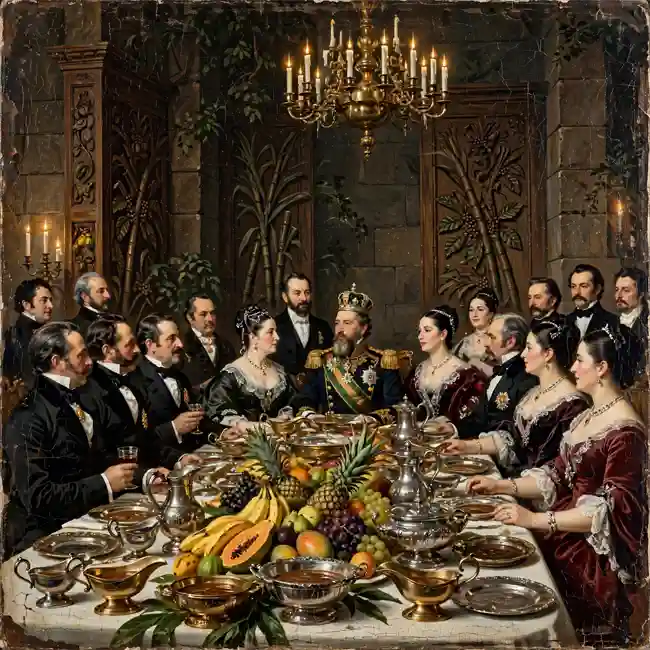
🇧🇷 🏟️📜 The Storyteller’s Intro: Secrets Once Whispered Behind Brazil’s Grand Dining Room Doors
Imagine walking through the entrance of an old Brazilian estate centuries ago.
Beyond the heavy doors, there are gardens filled with herbs, kitchens warmed by wood-fired stoves, cooks preparing ingredients brought from forests, farms, rivers, and distant coastlines, and long dining tables where social status could be expressed through the smallest details on a plate.
Brazilian food history is not the story of one palace, one aristocratic family, or one single culinary tradition.
It is much bigger than that.
Brazil is a country where Indigenous knowledge, African culinary traditions, Portuguese colonial influences, immigrant communities, regional agriculture, tropical landscapes, and later elite dining culture all met in the kitchen. That makes the idea of Brazil Signature Aristocratic Sauces especially fascinating.
Rather than imagining a single secret royal cookbook hidden inside a palace vault, it is more accurate—and honestly more interesting—to imagine centuries of kitchens where different worlds gradually shaped Brazilian taste.
The oldest culinary roots behind many Brazilian ingredients stretch back far beyond 1,000 years through Indigenous food knowledge. Meanwhile, the European colonial and aristocratic dining traditions associated with Brazil developed mainly from the sixteenth century onward. Later, the Brazilian Empire, which lasted from 1822 until 1889, added another important chapter to elite domestic dining and ceremonial food culture.
So, when exploring roughly 200 to 1,000 years of culinary heritage, Brazil can be understood through several major historical layers:
• 🌿 Ancient Indigenous Food Traditions — centuries of knowledge involving cassava, native peppers, forest herbs, roots, fruits, fish, and regional preservation techniques.
• ⚓ Colonial Brazilian Kitchens — beginning in the sixteenth century, when Portuguese ingredients and cooking habits encountered Indigenous ingredients and techniques.
• 🏡 Plantation and Estate Cuisine — large households and regional estates developed elaborate food traditions, although this history must be understood honestly within Brazil’s complex social and labor history.
• 👑 Imperial-Era Elite Dining — nineteenth-century urban and aristocratic households developed formal dining traditions influenced by both Brazilian regional ingredients and European culinary fashions.
• 🌎 Modern Heritage Cuisine — contemporary chefs, historians, families, and regional cooks continue to reinterpret older traditions while protecting local culinary identity.
And sauces sit right in the middle of this story.
A sauce can reveal where a household lived.
It can reveal whether ingredients came from the Atlantic coast, an inland farm, a mountain region, or the Amazon. It can show the influence of Indigenous pepper traditions, African seasoning methods, Portuguese culinary techniques, or later international dining fashions.
That is why Brazilian heritage sauces are more than something poured over food.
They are edible geography.
They are history in motion.
And sometimes, the most fascinating culinary secrets are not hidden in a locked palace kitchen at all. They survive in family memories, regional markets, old cookbooks, rural kitchens, and traditional cooking practices passed from one generation to another.
🥘 What Makes an Aristocratic Brazilian Sauce Different?
The phrase “aristocratic sauce” should not mean that only wealthy people created important food traditions.
Quite the opposite.
Brazilian elite dining was built within a much broader culinary world shaped by Indigenous communities, African-descended cooks and food traditions, farmers, fishers, market vendors, household cooks, and regional families.
What made elite dining distinctive was often the presentation, scale of the meal, access to imported ingredients, formal service, and the combination of regional products with fashionable cooking techniques.
Some historical Brazilian sauce traditions that fit beautifully into this heritage story include:
• 🌶️ Molho de Pimenta Heritage Styles — regional pepper sauces shaped by local ingredients and long-standing Indigenous knowledge of native peppers.
• 🥥 Bahian Coconut-Based Sauces — rich, aromatic sauces connected to the coastal food culture of Bahia.
• 🌿 Green Herb Sauces of Estate Kitchens — fresh combinations of local herbs, garlic, peppers, and garden ingredients.
• 🍅 Colonial Tomato and Pepper Preparations — sauces reflecting the gradual blending of local and introduced ingredients.
• 🧅 Slow-Cooked Onion and Herb Sauces — rustic but refined preparations that could appear in formal household dining.
• 🌽 Cassava-Based Gravies and Thickened Sauces — preparations showing the importance of cassava in Brazilian culinary identity.
• 🦐 Coastal Seafood Sauces — deeply connected to fishing communities and historic Atlantic trade routes.
• 🍋 Citrus and Herb Dressings — bright sauces that celebrate Brazil’s tropical and subtropical agricultural landscapes.
The secret is that Brazilian culinary elegance does not always look like European palace food.
Sometimes elegance is found in simplicity.
A perfectly balanced pepper sauce.
Fresh herbs crushed at the right moment.
A thick cassava-based preparation.
A coastal sauce built around local seafood.
A slow-cooked mixture that turns ordinary ingredients into something unforgettable.
That is the real magic behind the hidden world of Brazilian aristocratic gastronomy.
🗺️ The Aristocratic Culinary Tourism: Mapping Flavors to Historic Landscapes
If you want to understand Brazilian heritage sauces, you should not begin with a restaurant menu.
Begin with the map.
Brazil is enormous, and each region tells a completely different culinary story. The flavors of the northeast are not identical to those of the southeast. The Amazon has ingredients and food traditions unlike those found in historic mining towns. Coastal cooking follows different rhythms from inland ranching communities.
This is why culinary tourism in Brazil can become a journey through several centuries of history.
🏛️ Historic Salvador and the Flavors of Bahia
Salvador is one of the most important destinations for travelers interested in Brazilian food heritage.
The city carries powerful connections to colonial history, African-Brazilian culture, Atlantic trade, and regional cooking traditions.
For sauce lovers, Bahia offers an extraordinary world of aromatic ingredients.
Coconut, peppers, herbs, seafood, roots, and other regional ingredients create sauces with bold personalities. These are not quiet flavors.
They are expressive.
They are warm, fragrant, and deeply connected to place.
Travelers exploring historic Salvador can connect architecture, markets, coastal landscapes, and food traditions in one journey. A heritage-focused culinary trip may include:
• Visiting historic neighborhoods and colonial-era architecture.
• Exploring traditional markets and regional ingredients.
• Learning about Afro-Brazilian culinary heritage.
• Discovering the role of peppers, herbs, and coconut in Bahian cooking.
• Exploring coastal communities where seafood traditions remain important.
The most valuable lesson is simple: food tourism becomes more meaningful when travelers understand who created the traditions and how those traditions developed.
⛪ Minas Gerais: Where Historic Kitchens Meet Mountain Landscapes
Minas Gerais offers another fascinating chapter in the story of Brazilian heritage cuisine.
Historic towns, old farms, mountain landscapes, and mining-era architecture create a powerful atmosphere for culinary tourism.
The food traditions of Minas Gerais are often associated with farmhouse cooking, preserved ingredients, cheeses, vegetables, herbs, and the practical wisdom of rural kitchens.
Sauces here may feel less theatrical than tropical coastal preparations, but they can be deeply comforting and complex.
Imagine slow cooking, garden herbs, peppers, onions, cassava, and carefully prepared ingredients served in historic homes.
This is the kind of food culture that reminds us that aristocratic dining was not always about luxury ingredients.
Sometimes the greatest prestige came from quality.
Fresh produce.
Skilled preparation.
Generous hospitality.
And recipes refined over generations.
For culinary travelers, Minas Gerais is especially interesting because historic architecture and food traditions often feel closely connected. A visitor can explore old towns and then discover regional dishes that reflect the agricultural world surrounding them.
🌆 Rio de Janeiro and the Evolution of Formal Dining
Rio de Janeiro offers a different perspective.
During the nineteenth century, the city became an important center of political, social, and cultural life during the Brazilian Empire.
Formal dining traditions evolved alongside urban development, international influences, and Brazilian regional ingredients.
Elite households could embrace European culinary fashions while still depending on Brazilian markets and local products.
This creates an interesting question:
What happens when European-style formal dining meets a tropical country filled with completely different ingredients?
The answer is adaptation.
Sauces and accompaniments could become places where international techniques met Brazilian identity.
Herbs, citrus, peppers, local fruits, seafood, and agricultural products gave cooks opportunities to create flavors that could never belong entirely to Europe.
For travelers, historic Rio provides a chance to think about food not simply as a list of recipes, but as part of changing urban society.
🌳 The Amazon: A Living Library of Native Flavor
No exploration of Brazilian culinary heritage would be complete without the Amazon.
This region represents one of the world's great reservoirs of biodiversity and Indigenous culinary knowledge.
It is important, however, not to treat the Amazon merely as an exotic source of ingredients for elite cuisine.
Its food traditions belong to living communities and knowledge systems.
Many ingredients now celebrated by modern gastronomy have long histories of local use and cultural importance.
For travelers interested in culinary history, the Amazon offers a completely different understanding of sauce.
A sauce can be built around native peppers.
It can highlight fruits, herbs, roots, fish, or forest ingredients.
It can be light and bright.
It can be earthy.
It can be intensely aromatic.
The region reminds us that the deepest roots of Brazilian culinary knowledge are not found only in aristocratic dining rooms.
They are also found in Indigenous traditions that existed long before colonial society.
🚣 Cradle of Aristocratic Delicacies: Rivers, Coasts, and the Atlantic Kitchen
Brazil's rivers and coastlines have shaped its food culture for centuries.
Waterways moved people, ingredients, and culinary ideas.
The Atlantic coast connected Brazil to Europe and Africa while also supporting local fishing traditions and coastal communities.
For anyone searching for the origins of Brazil Signature Aristocratic Sauces, the coast is an essential part of the journey.
🌊 Bahia’s Historic Coastal Sauce Culture
The coast of Bahia is one of Brazil's great flavor landscapes.
Seafood and tropical ingredients naturally influenced the development of local sauces.
Coconut-based preparations became especially important in the regional culinary imagination, while peppers and herbs added depth and personality.
For visitors, a coastal food journey can connect:
• Historic port cities.
• Traditional markets.
• Fishing communities.
• Colonial architecture.
• Afro-Brazilian culinary heritage.
• Regional pepper traditions.
The experience becomes even more interesting when you stop thinking about “secret recipes” as mysterious formulas and instead see them as cultural archives.
A family sauce may carry decades or generations of adaptation.
The ingredients might be familiar, but proportions, timing, preparation, and local knowledge create something unique.
🐟 River Kitchens and Inland Culinary Routes
Brazil's great river systems also played a major role in shaping regional food.
River fish, native plants, cassava products, and local seasonings created distinct culinary identities.
For historical travelers, river landscapes can offer a fascinating connection between geography and gastronomy.
The ingredients available to a household depended heavily on its environment.
A coastal kitchen had different possibilities from a river settlement.
An inland estate had different gardens and agricultural resources.
This is one reason Brazilian sauces are difficult to reduce to one national formula.
Brazilian cuisine is plural.
There is no single Brazilian sauce tradition.
There are many.
And that diversity is precisely what makes the subject so exciting.
⛰️ Kingdom of Wild Aromatics & Heritage: Mountains, Forests, and Historic Estates
Brazil may be famous internationally for beaches and tropical coastlines, but its mountains, forests, highlands, and interior landscapes are equally important to its culinary story.
Historic estates and rural communities often developed close relationships with the land around them.
Gardens supplied herbs.
Farms supplied vegetables and dairy products.
Local forests and ecosystems influenced available ingredients.
Markets connected rural producers with growing towns.
🌿 Minas Gerais and the Art of Slow Flavor
In the mountains and historic interior of Minas Gerais, food often carries a sense of patience.
Slow cooking is not just a technique.
It is a lifestyle.
Sauces and gravies may develop gradually through careful preparation, allowing onions, herbs, vegetables, and other ingredients to build depth.
For travelers interested in heritage food, the region offers an opportunity to explore:
• Historic colonial towns.
• Rural farms.
• Traditional food markets.
• Local cheese traditions.
• Family-style cooking.
• Garden ingredients and regional herbs.
The aristocratic connection here is not about pretending every rural dish belonged to nobility.
Instead, it is about understanding how wealthy households, estates, towns, farms, and ordinary kitchens existed within the same regional food ecosystem.
Influence moved in multiple directions.
Elite dining borrowed from local traditions.
Local cooks adapted fashionable techniques.
Families preserved what worked.
And over time, food became heritage.
🌳 Forest Ingredients and the Forgotten Power of Native Plants
Brazilian culinary history becomes even more fascinating when we look at native ingredients.
For centuries, Indigenous communities developed deep knowledge about plants, roots, fruits, and seasonings.
Later culinary traditions could incorporate or adapt some of these ingredients in new contexts.
This is where modern heritage cuisine has an important responsibility.
Celebrating Brazilian food should include respect for the communities that developed and preserved culinary knowledge.
A truly sophisticated approach to Brazilian aristocratic gastronomy does not erase those roots.
It acknowledges them.
It asks where an ingredient came from.
Who used it first?
Who preserved the knowledge?
How did it travel from forests and villages into cities and formal dining rooms?
These questions make food history much more interesting than simply calling something “royal.”
🔍 The Hidden Signature Sauces Worth Discovering
The following names can serve as fascinating chapters in a future exploration of Brazil's hidden sauce heritage. They are not presented as identical recipes from a single palace archive, but as culinary themes inspired by regional Brazilian traditions and historical food culture.
🌶️ The Heritage Pepper Sauce Tradition
Brazilian peppers have deep cultural roots.
A heritage pepper sauce can represent Indigenous knowledge, regional agriculture, household cooking, and personal taste.
Its greatest secret may be balance.
Heat should not destroy flavor.
It should reveal it.
🥥 The Coastal Coconut Sauce
Along Brazil's northeastern coast, coconut-based preparations became part of a rich culinary landscape.
The result can feel luxurious, fragrant, and deeply connected to tropical geography.
🌿 The Old Garden Herb Sauce
Imagine the kitchen gardens of historic estates.
Fresh herbs.
Peppers.
Garlic.
Citrus.
Leaves and seasonings selected according to the season.
A green herb sauce represents the intimacy of garden-to-table cooking.
🧅 The Slow Onion and Herb Sauce
This type of sauce reminds us that culinary sophistication does not require rare ingredients.
Time itself can become an ingredient.
Slow cooking transforms simple products into deeper flavors.
🌽 The Cassava Heritage Sauce
Cassava is one of the great foundations of Brazilian food history.
Any exploration of Brazilian heritage cuisine without acknowledging cassava would feel incomplete.
Cassava-based preparations demonstrate how Indigenous food traditions influenced generations of Brazilian cooking.
🍋 The Citrus and Garden Dressing
Brazilian citrus can bring freshness and brightness to richer foods.
Combined with herbs and regional ingredients, citrus-based sauces reflect the country's agricultural abundance.
These sauce traditions show why Brazil deserves to be explored region by region.
There is always another landscape.
Another market.
Another historic kitchen.
Another forgotten family story.
🤴👸 Aristocratic FAQ: Unlocking Brazil’s Historic Kitchen Mysteries
Q1.Did Brazil Have Royal Sauces?
Brazil has a complex historical relationship with monarchy.
The country was once home to the Portuguese royal court after its relocation to Rio de Janeiro in the early nineteenth century, and Brazil later became an empire from 1822 until 1889.
However, when discussing Brazilian sauce traditions, it is more accurate to use the broader term aristocratic and imperial-era culinary heritage rather than claiming that every historic sauce was a formal royal recipe.
Many important Brazilian flavors developed outside royal households and were shaped by Indigenous, African, rural, coastal, and regional communities.
Q2.What Makes Brazilian Heritage Sauces Unique?
Brazilian sauces can be unique because of their geographical diversity.
A sauce from the northeast may use completely different flavor ideas from one associated with the Amazon or the historic interior.
Common themes may include:
• Native and regional peppers.
• Cassava-based ingredients.
• Tropical fruits.
• Fresh herbs.
• Coconut.
• Citrus.
• Seafood traditions.
• Garden produce.
The diversity is the secret.
Q3.Are Ancient Brazilian Sauce Recipes Still Preserved?
Some historical food knowledge survives through family traditions, regional cooking, old culinary records, and living food cultures.
However, it is important not to claim that every modern recipe is an unchanged version from centuries ago.
Food evolves.
Ingredients change.
Techniques travel.
Families adapt.
That evolution is part of culinary history.
Q4.Why Should Travelers Explore Brazil Through Its Sauces?
Because sauces can act like edible maps.
They tell you about climate.
Agriculture.
Trade.
Migration.
Indigenous knowledge.
Coastal life.
Mountain communities.
Historic cities.
And changing social traditions.
Taste a regional sauce, and you are often tasting the story of a place.
🧠 Final Thoughts: The Timeless Allure of Aristocratic Gastronomy
The greatest mystery behind Brazil Signature Aristocratic Sauces is not hidden inside one lost palace cookbook.
It is hidden across an entire country.
In historic streets.
In mountain kitchens.
In coastal markets.
In Indigenous food knowledge.
In Afro-Brazilian culinary traditions.
In rural gardens.
In old family homes.
In the memory of cooks who understand that the smallest detail can change an entire dish.
Brazilian aristocratic gastronomy becomes truly fascinating when we stop searching for a fantasy of one perfect royal kitchen.
Instead, we discover a country where elite dining traditions interacted with much older and broader culinary cultures.
That is the real secret.
The story is layered.
The flavors are regional.
And the history is still alive.
This guide is only the beginning.
Think of it as a culinary map with several destinations already marked.
📍 Salvador and its aromatic coastal traditions.
📍 Minas Gerais and its historic mountain kitchens.
📍 Rio de Janeiro and its imperial-era dining culture.
📍 The Amazon and its extraordinary Indigenous culinary heritage.
Each destination opens another door.
And behind each door is another story waiting to be told.
In future pages, individual Brazilian heritage sauces can be explored one by one—through their ingredients, regional origins, historical context, cultural importance, and the techniques that give each preparation its distinctive personality.
For now, the journey begins with curiosity.
Because sometimes the most unforgettable culinary secrets are not lost.
We simply have not listened to their stories yet.
👑 Credit to the Keepers of the Culture: The Legacy Behind Every Flavor
Brazilian culinary heritage belongs to many communities.
Any respectful exploration of historic Brazilian sauces should recognize the contributions of Indigenous peoples, Afro-Brazilian communities, farmers, fishers, rural families, regional cooks, market vendors, historians, chefs, and generations of home cooks.
Their knowledge created the foundation upon which Brazilian cuisine continues to grow.
The language of aristocratic or imperial gastronomy should never erase the people whose labor, creativity, agricultural knowledge, and culinary traditions shaped the country's food.
Instead, it should encourage us to look deeper.
Who preserved the ingredients?
Who cultivated the gardens?
Who understood the forests?
Who developed regional pepper traditions?
Who kept family recipes alive?
Who passed techniques from one generation to another?
These are the true keepers of culinary culture.
Brazil's food heritage is strongest when its many voices are recognized.
That is why the future of historic gastronomy should not be about claiming ownership of the past.
It should be about respect.
Respect for origins.
Respect for communities.
Respect for living traditions.
And respect for the remarkable people whose knowledge transformed Brazil's extraordinary landscapes into unforgettable flavors.
The next chapter of Brazil Signature Aristocratic Sauces is waiting.
And somewhere between the historic coast, the mountain kitchens, the great rivers, the tropical forests, and the old cities, another hidden culinary story is ready to be discovered. 🇧🇷🥘🌿
👑🥘 Unveiling the Lost Aristocratic Brazil Court Sauce Secrets
👉 Indulge in Signature Brazilian Royal Sauces
| 🌐 👑🥘 < Back | 🇧🇷 👑🍱 < Previous |