
🏠 Home > 🗺️ Recipes > 🍨 Desserts > 🇧🇳 Brunei Desserts
🇧🇳 🍨 Brunei Desserts Recipes
Published by Supakorn | Updated: February 2026
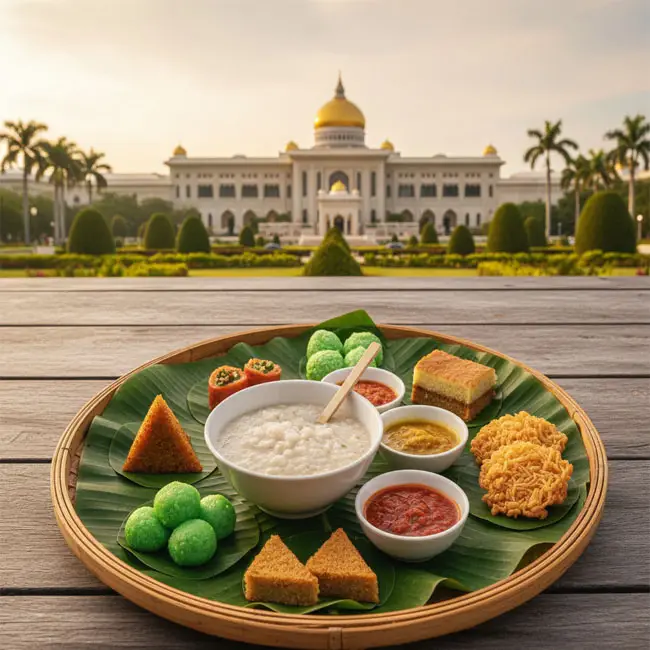
If you’ve got a sweet tooth that just won’t quit, you’ve officially hit the jackpot. Welcome to the "Sweet Side" of the Abode of Peace! When people think of Brunei, they often think of grand mosques and lush rainforests, but for those of us who live for the finale of a meal, Brunei is a hidden paradise of sugar, spice, and everything coconut.
In Brunei, dessert isn't just a course; it’s a gesture of hospitality. Whether you’re visiting a water village home in Kampong Ayer or attending a high-society wedding, you will be greeted with a vibrant array of sweets. It’s a culture where "too much sugar" isn't a complaint—it’s a celebration!
🥥 The Soul of Sweetness: Brunei’s Dessert Philosophy 🇧🇳 🍨
To understand Brunei desserts, you have to understand the ingredients that the land provides. We aren't talking about heavy dairy or chocolate here. Instead, the Bruneian palate is built on a foundation of "The Big Three": Coconut (milk and flesh), Pandan (the vanilla of the East), and Gula Melaka (dark, smoky palm sugar).
🌿 A Tropical Symphony
Most traditional desserts, known locally as Kuih, are steamed rather than baked. This gives them a unique, bouncy, or "gedig-gedig" (wobbly) texture that is incredibly refreshing in the tropical heat. These treats are designed to be enjoyed slowly, often paired with a warm cup of tea or coffee during minum petang (afternoon tea).
🤝 The Communal Spirit
Bruneians rarely eat sweets alone. Desserts are meant to be shared from large platters. There’s a beautiful tradition of sedekah (giving), where neighbors often exchange plates of homemade sweets during religious festivals or family milestones. When you bite into a Bruneian dessert, you’re tasting centuries of community bonding.
🍮 The "Kuih" Kingdom: Bite-Sized Perfection
In Brunei, the word Kuih covers a massive family of snacks, cakes, and puddings. They are the colorful jewels of the afternoon tea table. If you walk into a local tamu (market), the rainbow of Kuih will be the first thing to catch your eye.
🟢 Kuih Malaya: The King of Comfort
If Brunei had a national pancake, this would be it. Kuih Malaya is a thick, fluffy, golden-brown griddle cake. It’s crispy on the outside and airy on the inside. The magic lies in the filling—usually a generous dusting of crushed peanuts, sugar, and creamy sweet corn. It’s served warm, and the way the sugar melts into the peanuts is pure bliss. It’s the ultimate "comfort" dessert.
🥥 Kuih Kosui: The Dark Delight
Don’t let its humble appearance fool you. This saucer-shaped steamed cake is made with a deep, dark infusion of palm sugar. It has a sticky, jelly-like texture that clings to the palate in the best way possible. It’s always served with a mountain of freshly grated, slightly salted coconut. The saltiness of the coconut cuts through the rich sweetness of the palm sugar perfectly.
🌈 Kuih Lapis: The Rainbow Challenge
This is the dessert that tests your patience! Kuih Lapis literally means "layered cake." It’s a steamed pudding made of rice flour and coconut milk, colored in vibrant pinks, greens, and whites. The fun part? Many locals (and kids especially) love to peel it apart layer by layer. Each layer is silky smooth and carries a subtle scent of pandan.
🍯 Royal & Traditional Specialties
Brunei is a sultanate with a long royal history, and some desserts carry that regal air. These are the treats you see during Hari Raya (the celebration after Ramadan) or royal banquets.
🥞 Penyaram: The UFO Cake
Also known as Kuih UFO because of its distinct shape, Penyaram is a deep-fried masterpiece. It has a thick, chewy center and thin, crispy, "frilly" edges. Made primarily from rice flour and brown sugar, it has a deep caramel flavor. Achieving the perfect "frill" is a mark of a true Bruneian kitchen master.
🍚 Wajid: The Sticky Staple
Wajid is a classic made from glutinous rice, coconut milk, and palm sugar. It’s dense, sticky, and incredibly rich. In Brunei, you might find Wajid Temburong, which is famous for its specific texture and high-quality rice. It’s often wrapped in dried leaves, which infuses the sweet rice with a rustic, earthy aroma.
🍮 Putu Mayam
Though it has roots in South India, the Bruneian version of Putu Mayam (string hoppers) has become a beloved sweet breakfast or dessert. These delicate, lacy nests of steamed rice flour noodles are served with a mix of grated coconut and orange-colored palm sugar. It’s light, airy, and melts in your mouth.
🍨 Refreshing Cold Treats
Because Brunei is warm and humid year-round, cold desserts are a survival necessity! These are the bowls of goodness you seek out after a long walk through the capital.
🍧 ABC (Air Batu Campur)
This is the ultimate Southeast Asian shaved ice. In Brunei, an ABC is a mountain of ice drizzled with colorful syrups and evaporated milk. But the real treasures are hidden at the bottom: grass jelly, sweet corn, red beans, and sometimes scoops of attap chee (palm fruit). It’s a texture party in a bowl.
🥣 Cendol
A simpler but equally iconic cousin to the ABC. Cendol features those famous worm-like green jellies made from rice flour and pandan. They swim in a pool of ice-cold, thick coconut milk sweetened with liquid Gula Melaka. It’s the perfect drink-dessert hybrid.
🧺 Living & Eating: The Sweet Way of Life
How do Bruneians enjoy these treats? It’s all about the setting.
• The Friday Routine: After Friday prayers, families often gather for a massive spread. Desserts aren't just an afterthought; they are a centerpiece. You’ll see grandfathers and toddlers alike reaching for the same plate of Kuih.
• The Gadong Experience: If you want to see dessert culture in action, go to the Gadong Night Market. You’ll see vendors flipping pancakes, steaming puddings, and shaving ice with lightning speed. The smoke from the satay grills mixes with the sweet scent of sugar—it’s a sensory overload.
• Pristine Ingredients: Because Brunei has preserved so much of its natural forest, the quality of coconut and local fruits (like Durian or Cempedak, which often find their way into desserts) is top-tier. Everything tastes "fresher" here.
🌟 Modern Twists on Tradition
While tradition is king, the younger generation in Brunei is getting creative! You’ll now find:
• Pandan Cheesecakes: Combining the grassy aroma of pandan with Western-style cream cheese.
• Gula Melaka Lattes: While not a food, this flavor profile has taken over the cafe scene.
• Tapai Ice Cream: Using fermented glutinous rice (Tapai) as a topping for modern vanilla soft serve.
❓ FAQ: Satisfying Your Sweet Curiosity
Q1. Are Brunei desserts mostly gluten-free?
Actually, many of them are! Because traditional Kuih relies heavily on rice flour, glutinous rice, and tapioca starch rather than wheat flour, many of these treats are naturally gluten-free. Always double-check, but the "rice and coconut" base is very friendly to those avoiding gluten.
Q2. Which Brunei dessert is the best for beginners?
If you’re new to these flavors, start with Kuih Malaya. It’s familiar enough (like a thick pancake) but offers that unique Southeast Asian twist with the peanut and sweet corn filling. It’s a guaranteed crowd-pleaser!
Q3. Why are so many Brunei desserts green?
The green color comes from the Pandan leaf. It’s extracted by pounding the leaves and squeezing out the juice. Not only does it provide a beautiful emerald hue, but it also gives the desserts a sweet, nutty, and floral aroma that is essential to the region's identity.
🍨 Guilt-Free Delights: Mastering Low-Carb Bruneian Sweets at Home
👉 Indulge in 3 Low-Carb Brunei Desserts
| 🌐 🍨 < Back | 🇧🇳 🍝 < Previous | Next > 🍷 🇧🇳 |