
🏠 Home > 🗺️ Recipes > 🥘 Sauces > 🇰🇭 Cambodia Sauces > 🥘 Tuk Meric (Lime & Pepper Dipping Sauce) , Prahok Ktis (Fermented Fish, Pork & Coconut Dip) , Teuk Trey Pa'em (Classic Sweet & Sour Fish Sauce)
🥘 Authentic Khmer Dipping Sauces: 3 Essential Recipes You Can Master at Home
Published by Supakorn | Updated: February 2026
The Heart of Khmer Cooking: The Underrated Magic of Cambodian Sauces
Hey, fellow food lover! If you’ve ever tried Cambodian food, you know that the true soul of the cuisine lives in its subtleties and its supporting cast of flavors. But to truly understand Khmer flavor, you have to look down at the tiny bowls sitting next to every dish: the dipping sauces.
Cambodian food, or Khmer cuisine, is often characterized by its beautiful balance: a subtle approach to spice, a deep use of aromatic pastes called kroeung (made from lemongrass, galangal, and turmeric), and a powerful anchor of flavor from fermented fish paste, or prahok. While main courses like Fish Amok or Beef Lok Lak get most of the international spotlight, the meal is never complete without the crucial condiments.
These sauces aren't just mere afterthoughts; they are flavor transformers. They elevate a simple piece of grilled fish, turn a pile of raw vegetables into a satisfying appetizer, and are utterly indispensable for dishes like Lok Lak (shaking beef) and fresh spring rolls. They represent the Khmer principle of praheu—the perfect marriage of sweet, sour, salty, and spicy.
Ready to unleash these incredible, authentic flavors in your own kitchen? We've handpicked three of the most essential and beloved Cambodian sauces for you to master. Whether you’re a seasoned Southeast Asian food fan or a home cook looking for a new adventure, these recipes will bring a serious wow factor to your kitchen:
1.Tuk Meric (Lime & Pepper Dipping Sauce): The simplest, most ubiquitous table condiment, built on the global star—Kampot Pepper.
2.Prahok Ktis (Fermented Fish, Pork & Coconut Dip): A rich, creamy, and complex dip that perfectly balances intense savory flavor with smooth coconut.
3.Teuk Trey Pa'em (Classic Sweet & Sour Fish Sauce): The endlessly versatile sauce that provides the perfect sweet, salty, and tangy dip for spring rolls and fried snacks.
Let's get cooking!
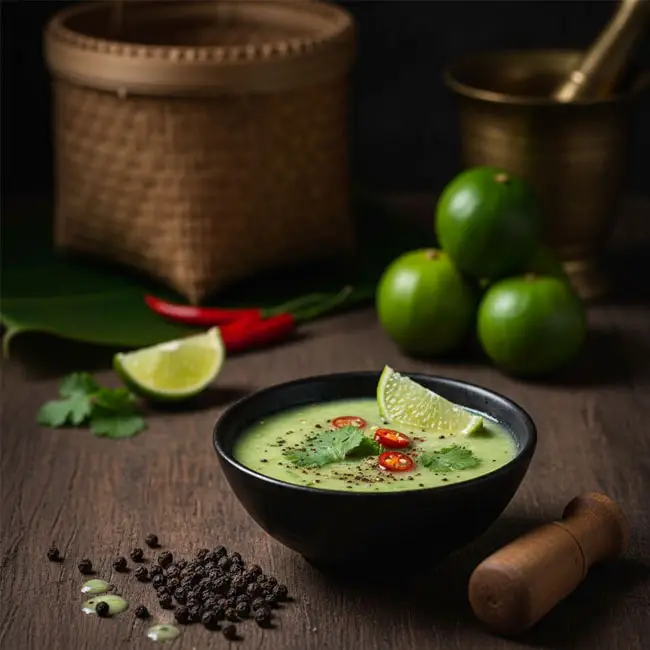
🔹 Recipe 1: Tuk Meric (The Iconic Lime & Pepper Dipping Sauce)
About this Recipe: The Essence of Kampot
This sauce is the definition of "simple but brilliant." Tuk Meric (sometimes spelled Tirk Meric) is perhaps the most fundamental and universally loved table sauce in all of Cambodia. It's the equivalent of salt and pepper on a Western table, but with a vibrant lime kick.
Tuk Meric literally translates to "Pepper Water" (Tuk means liquid, Meric means pepper). Its star ingredient is traditionally Kampot Pepper, famous worldwide for its intense, complex aroma. If you can get authentic Kampot pepper, please do—it’s worth the splurge. This sauce is the soulmate for anything grilled or seared, especially Lok Lak and fresh seafood.
Ingredients & Measurements
(Makes 2 servings)
- Fresh Lime Juice (30 ml / 2 tbsp) - Must be fresh-squeezed!
- Sea Salt (1 tsp) - Use fine salt or crush coarse salt
- Black Pepper (1 tsp) - Preferably freshly cracked Kampot pepper
- Sugar (optional) (1/2 tsp) - For a smoother balance, only if desired
- Water (optional) (1 tsp) - To dilute if the lime is too intense
Step-by-Step Instructions
1.Prep the Spices: In a small, individual dipping bowl, combine the sea salt and the freshly cracked black pepper. Use the back of a spoon to lightly crush them together to release the pepper's full aroma.
2.Add the Lime: Pour in the fresh lime juice.
3.Mix and Taste: Stir everything together vigorously until the salt is mostly dissolved. Taste it! It should be intensely salty, sour, and peppery.
4.Adjust: If it’s too strong, add a tiny splash of water (1/2 teaspoon) to mellow the acidity. If you find the balance too sharp, stir in the optional 1/2 teaspoon of sugar.
5.Serve: Serve immediately with your favorite grilled meats or seafood.
Tips & Mistakes to Avoid
- DON'T Use Bottled Lime Juice: I can’t stress this enough. The artificial, metallic taste of bottled lime juice will ruin the pure, clean flavor of Tuk Meric. Use only freshly squeezed lime juice.
- The Pepper is Key: Use the best quality black pepper you can find. The intense fragrance is what makes this sauce spectacular. Grind it coarsely for texture and flavor.
- Mix Tableside: For the most authentic experience, set out the ingredients and let everyone mix their own!
- Make it Spicy: For a serious kick, finely mince a fresh bird’s eye chili and stir it into the mix.
FAQ
Q: Can I make a big batch?
A: Not really. It’s best when mixed fresh right before use. The fresh lime juice loses its punch and vibrancy quickly.
Q: What does it taste best with?
A: Lok Lak (Cambodian Shaking Beef), grilled fish or shrimp, boiled crab, or grilled chicken wings.
Summary
Tuk Meric is pure, simple perfection. It's the ultimate table condiment that brings a refreshing, bright, and spicy/peppery contrast to rich meats and seafood. Go make it now—it's that easy!
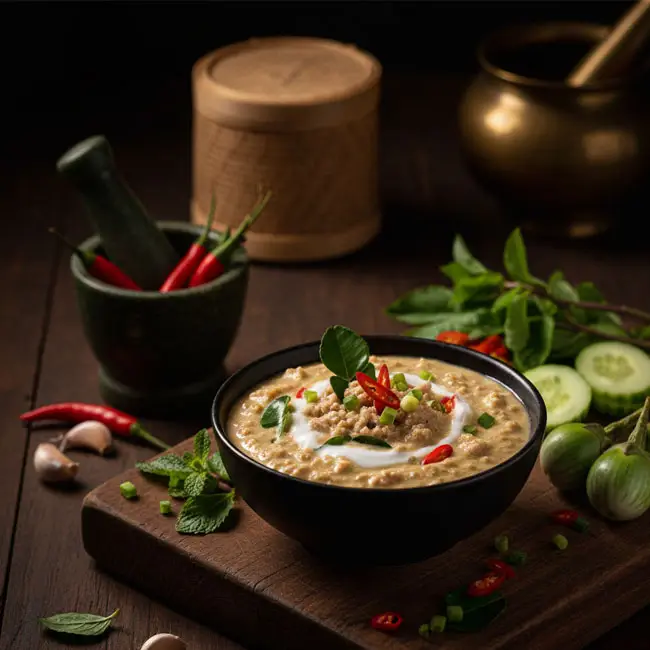
🔹 Recipe 2: Prahok Ktis (Fermented Fish, Pork & Coconut Dip)
About this Recipe: The Soul of Khmer Flavor
If Tuk Meric is the beginner’s gateway, Prahok Ktis (sometimes spelled Prahok K'tis) is the true immersion course into Cambodian cuisine. This creamy, rich, and intensely savory dip is a cultural icon. It takes the potent, pungent flavor of Prahok (fermented fish paste) and mellows it beautifully with creamy coconut milk and aromatic kroeung (lemongrass paste). It’s not a sauce you pour, but a thick, hearty dip you scoop.
The name Prahok Ktis translates roughly to "Prahok (in) Coconut Milk." The Prahok offers a deep, salty umami flavor that, when cooked down with fragrant kroeung and smooth coconut cream, transforms into something heavenly. It's traditionally served with a platter of crunchy, fresh raw vegetables like cucumber, cabbage, eggplant, carrots, and long beans.
Ingredients & Measurements
(Serves 4–6 as a dip)
- Ground Pork (250 g / 1/2 lb) - Use ground pork with some fat (20%) for richness
- Prahok (Fermented Fish Paste) (2 tbsp) - Start with 1 tbsp if new to the flavor
- Yellow Kroeung Paste (3 tbsp) - Essential aromatic base (buy or make your own)
- Coconut Cream/Milk (200 ml / 7 oz - about 3/4 cup) - Use cream for a richer dip
- Palm Sugar (1 tsp) - Or substitute with brown sugar
- Tamarind Water/Paste (1 tsp) - Adds a subtle tanginess
- Oil (1 tbsp) - Neutral oil like vegetable or coconut
- Kaffir Lime Leaves (4 leaves) - Center vein removed, finely sliced (julienned)
- Bird’s Eye Chilies (optional) (2–3 ) - Sliced, for heat
- Pea Eggplants (optional) (1/4 cup) - Adds a lovely, slightly bitter texture
Step-by-Step Instructions
1.Prep the Prahok: If your prahok is in chunks, chop or mash it into a paste.
2.Sauté Aromatics: Heat the oil in a pan over medium heat. Add the Yellow Kroeung Paste and the sliced chilies (if using). Stir and fry for 1–2 minutes until very fragrant. This is crucial for "blooming" the spices.
3.Add Pork & Prahok: Add the ground pork and break it up. Cook until it’s about halfway done. Now, stir in the Prahok. Cook and stir until the pork is fully cooked and the prahok has dissolved and coated the meat.
4.Introduce Coconut: Pour in about half of the Coconut Cream/Milk. Stir well to combine, scraping the bottom of the pan. Bring it to a gentle simmer.
5.Season & Finish: Stir in the Palm Sugar and Tamarind Water. Add the pea eggplants (if using) and the finely julienned Kaffir Lime Leaves. Continue to simmer gently for about 5 minutes, allowing the sauce to thicken and the flavors to meld. If the dip gets too thick, add the rest of the coconut cream/milk until you reach a creamy, spoonable consistency.
6.Taste and Adjust: Taste the dip. It should be rich, savory, slightly sweet, and tangy. Adjust for saltiness with a tiny splash of fish sauce if needed, or more sugar for sweetness.
7.Serve: Transfer to a serving bowl. Drizzle with a little extra coconut cream and a garnish of fresh chili. Serve warm with a generous platter of fresh, crisp vegetables and rice.
Tips & Mistakes to Avoid
- Prahok Intensity: Prahok is very salty and pungent. If you’re a beginner, start with one tablespoon of prahok and taste before adding the second.
- Quality Kroeung: The quality of your kroeung paste dictates the flavor. It should be bright yellow (from fresh turmeric) and intensely fragrant with fresh lemongrass.
- Don't Rush the Simmer: The simmering time allows the coconut cream to cut through the sharpness of the prahok and kroeung, resulting in a smooth, balanced, and luxurious dip.
FAQ
Q: What can I use instead of Prahok?
A: You can use Thai Pla Ra (fermented fish) as a substitute, but the flavor will be slightly different. For a milder but still savory flavor, a high-quality shrimp paste is an option, though it is not authentic.
Q: How is this different from a curry?
A: It’s a dip! It’s much thicker and richer than a curry. It’s meant to be scooped up with fresh vegetables or spooned over rice, not eaten as a soup.
Summary
Prahok Ktis is a bold, beautiful, and deeply satisfying dip that is a non-negotiable part of the Khmer culinary tradition. Give this one a try—it's a flavor profile you won't soon forget!
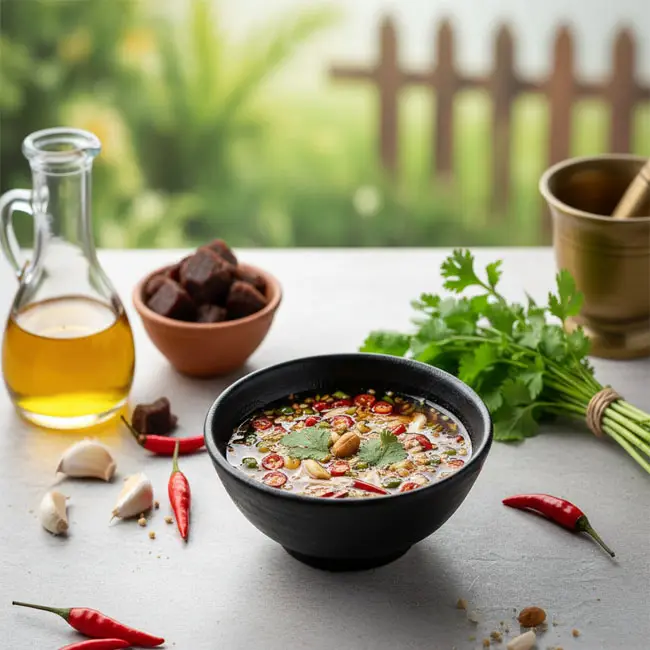
🔹 Recipe 3: Teuk Trey Pa'em (Classic Sweet & Sour Fish Sauce)
About this Recipe: The Versatile Crowd-Pleaser
Every Southeast Asian country has its own version of a sweet and sour fish sauce, and Cambodia’s Teuk Trey Pa'em (Teuk Trey meaning fish sauce, Pa'em meaning sweet) is a classic for a reason. It's the perfect condiment for anything fried, fresh, or wrapped, providing a salty, tangy, and sweet backdrop that makes other flavors pop.
This sauce is your go-to for many of the most popular Cambodian dishes, particularly anything that is deep-fried or served fresh. Think of it as the dipping sauce for Naem Cho (fresh spring rolls), Caw (braised pork and egg), and countless fried snacks. Its delicate dance between the saltiness of the fish sauce, the tartness of the lime, and the sweetness of the sugar is what makes it so versatile and addictive.
Ingredients & Measurements
(Makes about 1 cup)
- Warm Water (120 ml / 1/2 cup) - Helps dissolve the sugar quickly
- Palm Sugar (3 tbsp) - Or substitute with white granulated sugar
- Fish Sauce (4 tbsp) - Use a good quality brand
- Distilled Vinegar (2 tbsp) - Or use fresh lime juice for more tang
- Fresh Lime Juice (2 tbsp) - Added at the end for fresh flavor
- Garlic (2 cloves) - Finely minced
- Bird’s Eye Chilies (1–3) - Sliced finely (adjust to your spice preference)
- Grated Carrot (optional) (1 tbsp) - For color and slight sweetness
Step-by-Step Instructions
1.Dissolve the Sugar: In a small saucepan, combine the warm water and the Palm Sugar. Heat gently over low-medium heat, stirring until the sugar is completely dissolved. Remove from the heat and let it cool slightly.
2.Add Liquids: Once the sugar solution is warm (not hot), whisk in the Fish Sauce and the Distilled Vinegar.
3.The Fresh Stuff: Add the finely minced garlic, the sliced Bird’s Eye Chilies, and the grated carrot (if using).
4.Balance the Flavor: Stir in the Fresh Lime Juice. Now, taste it! The goal is a perfect balance: sweet, sour, salty, and a little heat. Adjust as needed: more sugar for sweetness, more lime/vinegar for tartness, or a splash more fish sauce for saltiness.
5.Rest and Serve: Cover the sauce and let it sit for at least 15–20 minutes at room temperature (or in the fridge for a few hours). This allows the flavors of the garlic and chili to properly infuse into the sauce. Serve cold or at room temperature.
Tips & Mistakes to Avoid
- Order of Operations: Dissolving the sugar in the water before adding the fish sauce is key. This ensures a smooth, clear sauce base.
- The Lime Boost: Use vinegar for the main sour base if you want to make a large batch that lasts longer, but always finish with a touch of fresh lime juice for that bright, vibrant flavor.
- Finely Mince the Aromatics: The garlic and chili should be minced very finely so their flavor can fully infuse the liquid evenly.
FAQ
Q: How long will it last?
A: Stored in an airtight container in the fridge, the version made with vinegar can last for several weeks. The version made with only lime juice is best consumed within a week.
Q: Is this the same as Vietnamese Nuoc Cham?
A: They are very similar! They share the same roots and core ingredients, but the exact proportions of sugar, water, and lime/vinegar, and the optional addition of carrots, give Teuk Trey Pa'em its distinct Khmer character.
Summary
Teuk Trey Pa'em is the ultimate utility player in the world of Cambodian sauces. Make a large batch and keep it refrigerated—it’ll be your favorite new all-purpose dipping sauce for nearly everything!
Final Thoughts
See? Diving into the world of authentic Cambodian sauces isn't just about trying something new; it's about connecting with a rich, flavorful culture that prioritizes freshness, balance, and simple, honest ingredients.
Each of these three recipes—from the simple, zesty perfection of Tuk Meric to the creamy, savory depth of Prahok Ktis, and the perfectly balanced Teuk Trey Pa'em—offers a unique window into the daily life of Cambodia. They prove that the most essential dishes are often the ones you mix yourself at the table.
The best part is that these are surprisingly approachable to master once you source a few key ingredients like palm sugar, good fish sauce, and perhaps a kroeung paste.
Don't be intimidated by the strong flavors of ingredients like prahok! Head to your local Asian market, grab what you need, and start with the recipe that calls to you most. You might want to start with the easy, instant Tuk Meric first, or dive right into the full, complex experience of the Prahok Ktis dip.
Once you’ve made your first one, you’ll realize how easily these incredible Cambodian flavors can become a treasured part of your regular cooking rotation.
Now it’s your turn! Which one of these vibrant Cambodian classics are you going to try first? Let me know!
| 🇰🇭 🥘 < Back |