
🏠 Home > 🗺️ Recipes > 🥘 Sauces > 🇰🇭 Cambodia Sauces
🇰🇭 🥘 Cambodia Sauces Recipes
Published by Supakorn | Updated: February 2026
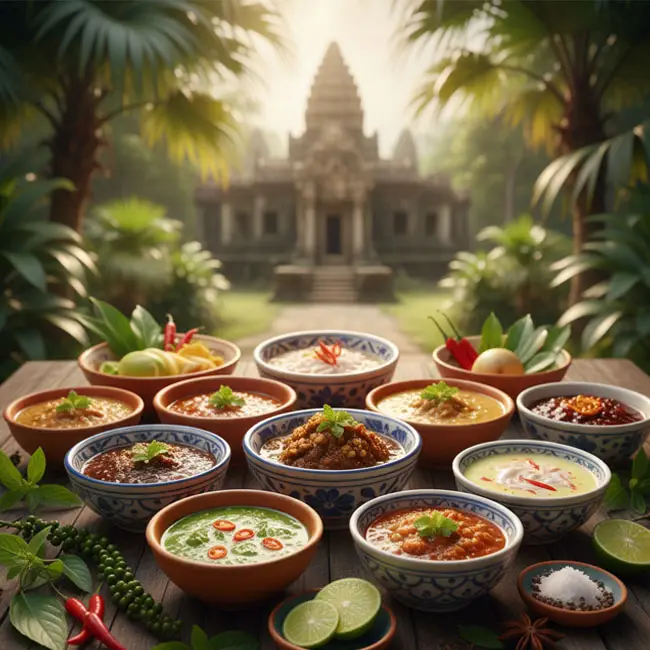
🌶️🍋 Decoding the Flavor: Essential Cambodian Sauces and Pastes
Hey food fanatics! Want to know the real secret behind that incredible, balanced flavor explosion in authentic Khmer cuisine? It's not just the cooking technique; it's what goes into the pot, or more accurately, what is meticulously pounded in the mortar and pestle. We're diving into the heart of the Cambodian kitchen: the essential Cambodian sauces and pastes.
These flavor pillars—from the highly aromatic Kroeung to the famously pungent Prahok—are the Cambodian flavor base that distinguishes their food from all other regional cuisines. They emphasize freshness, savory depth, and a delicate balance over aggressive spice. Understanding these three pillars is like getting a master key to unlock the wonderful, subtle complexity of true Cambodian cooking. Let’s get blending!
🌿 The Flavor Foundation: Three Essential Pillars
Every great Cambodian dish starts here. These ingredients aren't just seasoning; they are the literal foundation of the dish’s character and identity.
🌱 Kroeung (The Herbal Paste)
This is the aromatic soul of the kitchen—the defining ingredient for almost every complex Khmer dish.
Why it's essential: Kroeung simply translates to "ingredients" or "spices," but it’s really a vibrant, fresh-pounded herb paste. It's the flavor engine for classics like Fish Amok and Samlor Kari. What makes it so special is the freshness—it relies on immediately-harvested roots and leaves. The basic trio is always lemongrass, galangal, and kaffir lime zest, blended with turmeric and garlic. You can tell a lot about a Cambodian dish by the type of Kroeung used:
• Yellow Kroeung: Rich in turmeric, used in milder curries.
• Red Kroeung: Contains more red chili and paprika, used in richer, red-colored stews.
• Green Kroeung: Rich in leafy ingredients like fresh mint or slek krao (a local herb), often used for marinades.
The careful pounding of these fresh ingredients releases oils that infuse the broth or protein with an aroma that is profoundly earthy, citrusy, and comforting. It's truly the signature of authentic Khmer sauces.
🐟 Prahok (Fermented Fish Paste)
The famous, infamous, and utterly irreplaceable Umami Bomb of Cambodia.
Why it's essential: Prahok is a salty, pungent, and intensely flavorful paste made from ground, salted, and fermented freshwater fish. It’s deeply intertwined with the identity of Khmer cuisine. For centuries, it was the primary seasoning agent for rural families, acting as a vital source of protein and salt.
The Secret: Don't be deterred by the strong, raw aroma! When cooked, a small spoonful of Prahok dissolves into a soup or stew, lending an unbelievable, deep, savory richness and complexity that cannot be replicated by simple fish sauce or salt alone. It provides that unique, aged umami that anchors many dishes, especially soups like Samlor Machu. It’s also often mixed with coconut cream, garlic, and chili to create Prahok Ktis—a rich, powerful dipping sauce for raw vegetables. It is truly the powerful, savory heart of Cambodian flavor base.
🍋 Teuk Trey (Fish Sauce-Based Dipping Sauce)
The highly customizable, zesty flavor finisher found at every table.
Why it's essential: Teuk Trey literally means "fish water" (fish sauce), but it refers to the entire family of thin, translucent dipping sauces that appear at every Cambodian meal. While the base provides the fundamental saltiness and umami, the sauce is always balanced according to the classic Khmer principles:
• Salty: From the fish sauce itself.
• Sour: From generous amounts of fresh lime juice.
• Sweet: From dissolved palm sugar.
• Heat: From sliced bird’s eye chilies.
This bright, invigorating sauce is used everywhere: drizzled over omelets, used to dip grilled meats (Sach Ko Ang), poured over fresh spring rolls, and added to noodle soups like Kuy Teav. It's the most personal flavor-enhancer, allowing the diner to adjust the final taste of their meal perfectly.
🍽️ The Culture of Sauces: Eating and Customization
The way Cambodians use sauces reflects their collaborative approach to dining and their preference for fresh, customizable flavors.
🧂 Sauces as a Shared Experience
Unlike many Western dishes where sauces are pre-applied, the most zesty and flavorful Cambodian dipping sauces are served on the side in small communal bowls.
• Dipping and Sharing: Grilled items, rolls, and raw vegetables are meant to be dipped into a shared bowl of Teuk Trey or Prahok Ktis. This encourages the communal aspect of eating, allowing everyone to gather around and enjoy the meal together.
• The Condiment Tray: Whenever you order a noodle soup (Kuy Teav) or a market snack, it is almost always served with a tray of fresh garnishes and flavor boosters: lime wedges, sliced chilies, sugar, and a small bowl of fish sauce. This tradition ensures that every diner is the final chef of their own bowl, adjusting the salty, sweet, sour, and spicy levels to their exact preference.
🏺 The Pounding Ritual: Kroeung and the Mortar
The preparation of Kroeung is not just a cooking step; it’s a daily ritual in many homes and a testament to the dedication to freshness.
Traditional Technique: The fresh ingredients must be pounded using a heavy stone mortar and pestle. This method bruises the fibers of the lemongrass, galangal, and kaffir lime, releasing their potent oils far more effectively than a food processor. This intense, fresh aroma is what elevates Khmer sauces and pastes above their dried counterparts. If a dish is made with hand-pounded Kroeung, you can genuinely taste the difference!
🌟 The Uniqueness of Khmer Sauces: Layers, Not Loudness
What makes the Cambodian flavor base truly special is its focus on layering complex, fresh aromas rather than relying on a single dominant flavor.
• Balance Over Heat: While chilies are present, they rarely dominate the flavor profile. The emphasis is on the citrusy fragrance of the Kroeung and the deep savoriness of the Prahok. The heat is typically there to enhance, not overpower.
• Triple Flavor Foundation: A classic Khmer dish often uses all three pillars in harmony:
1.Aromatic Base: Kroeung is sautéed first.
2.Depth/Umami: Prahok is added to season the soup/stew.
3.Finish/Zest: Teuk Trey (lime/sugar/chili) is added at the table.
• Health and Freshness: Because the primary components are fresh herbs, roots, and fermented fish, these sauces are inherently packed with natural flavors and nutrients, highlighting the healthy, resourceful nature of Cambodian food culture.
Whether you're exploring the aromatic layers of Kroeung, embracing the powerful depth of Prahok, or customizing your perfect spoonful of Teuk Trey, you are truly tasting the heart and soul of Cambodia’s generous and sophisticated cuisine.
❓ FAQ: Your Quick Cambodian Sauce Questions Answered
Q1: Is Kroeung the same as Thai curry paste?
No. While they share some ingredients, Khmer Kroeung is generally milder, uses less chili, and tends to feature more turmeric and galangal. Importantly, authentic Kroeung does not contain shrimp paste, a staple in many Thai pastes, giving Kroeung a distinctively earthy, citrusy, and non-seafood flavor (unless fish is later added).
Q2: Can I substitute Prahok with anything else?
For the savory-salty base, you can use a high-quality fish sauce or a pungent fermented shrimp paste. However, the unique, complex aged flavor of Prahok is truly irreplaceable; any substitute will only approximate the taste, not the depth.
Q3: Is Teuk Trey always spicy?
No. The sauce is served as a condiment, and the chili component is highly customizable and added based on personal heat preference. The core balance of lime, fish sauce, and palm sugar remains the defining flavor.
Q4: Which sauce is essential for the national dish, Fish Amok?
The most essential sauce/paste for Fish Amok is Kroeung (specifically Red Kroeung). This aromatic base is what blends with the coconut milk to create the dish’s signature, fragrant custard texture.
🥘 Authentic Khmer Dipping Sauces: 3 Essential Recipes You Can Master at Home
| 🌐 🥘 < Back | 🇰🇭 🍱 < Previous |