
🏠 Home > 🗺️ Recipes > 🍲 Soups > 🇩🇰 Denmark Soups Recipes
🇩🇰 🍲 Authentic Denmark Soups: Hygge Kitchen & Nordic Harbor Style
Published by Supakorn | Updated: November 2026
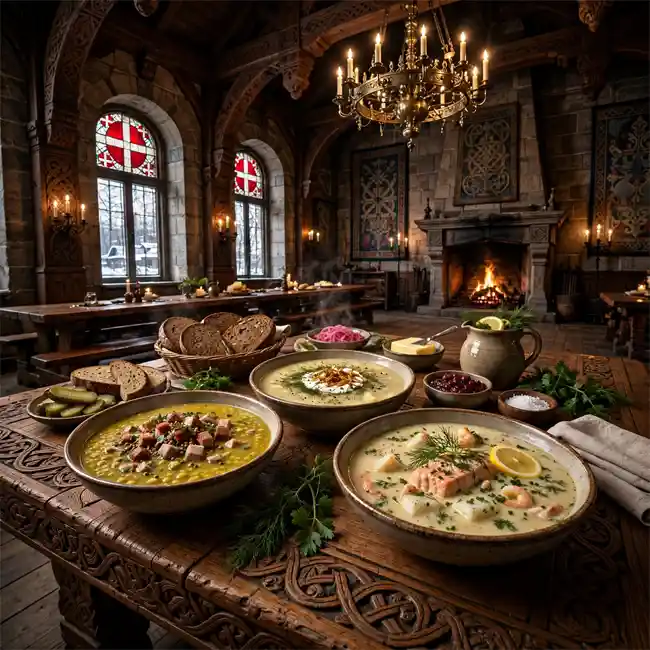
🇩🇰📜 Introduction: The Cultural Heritage of Denmark Soups
Let's be honest. When most people think about Danish food, they picture open-faced rye sandwiches, flaky pastries, or maybe a fancy New Nordic tasting menu in Copenhagen. Soup doesn't usually come up first. Spend a cold, windy evening in Denmark, though, and you'll see that soup sits right at the heart of Danish home cooking.
Denmark soups say a lot about the country. They're humble and practical, made for long dark winters and short bright summers. Many of these recipes come from farm kitchens, where nothing went to waste and one big pot could feed a whole family, and sometimes the neighbors too. A pot of soup was never just food. It was warmth, survival, and togetherness all at once.
Here's what makes traditional Danish soups special:
• They follow the seasons. Hearty split pea soups in winter, delicate chervil and asparagus soups in spring, and cold, creamy buttermilk soup in summer.
• Some are full meals. Several classic Danish soups are served in two courses: first the broth, then the meat and vegetables that cooked in it.
• Sweet soups are a real thing. Danes have a long tradition of fruit and berry soups, eaten warm or cold, sometimes as dessert and sometimes as a light meal.
• They're built on simple ingredients. Root vegetables, dried peas, salted pork, chicken, fish, dairy, and fresh herbs do most of the work.
• They come with stories. Many recipes are passed down from grandmothers and are tied to holidays, family gatherings, and regional celebrations.
So pull up a chair. We're going on a cozy tour of Danish soup culture, from countryside kitchens to busy harbor towns.
🕯️ The Art of Denmark Dining Culture & Social Eating
You can't talk about Danish food without talking about hygge. The word doesn't translate neatly, but it roughly means a warm, comfortable, content feeling, usually shared with people you care about. Think candles on the table, a pot of something steaming on the stove, and nobody in a hurry to leave.
Soup fits right into that feeling. Here's how it shows up in everyday Danish life:
• Dinner is family time. Most Danish families eat dinner fairly early, often around 6 pm, and sitting down together is treated as important. A big pot of soup makes that easy.
• Candles are always on. Danes go through a lot of candles, especially from October to March. A candlelit bowl of soup on a gray Tuesday is about as Danish as it gets.
• Rye bread is the constant companion. Dense, dark rugbrød sits next to nearly every savory Danish soup, usually with butter, to soak up the broth.
• Soup is for sharing. Big holiday soups like the festive soups of Southern Jutland are made in huge batches for weddings, birthdays, and community events.
• The workplace lunch (frokost) is social too. Many Danish offices have shared lunch tables, and on cold days a warm soup sits right next to the open sandwiches.
• Cold soup means summer. When the first warm days arrive, families start buying buttermilk and crunchy biscuits in bulk. Kids especially love it.
What I love most is how unpretentious it all is. No one is trying to impress you. The point is to sit down, slow down, and enjoy the company.
🗺️ Where Culture Meets Flavor: Iconic Food Tourism Spots
If you're planning a food trip and want to taste Denmark soups at their best, here are some places worth your time:
• Copenhagen's food markets. The capital's covered market halls are packed with stalls selling everything from fish soups to seasonal vegetable soups. Great for a cozy lunch after a morning walk along the canals.
• Copenhagen's street food scene. Waterfront street food areas in the city often have Nordic comfort food stalls, and in the colder months you'll find warming bowls next to international dishes.
• Aarhus. Denmark's second city has a lively food market culture and plenty of cafés serving traditional Danish soup with a modern twist.
• Skagen. At the very northern tip of Jutland, where two seas meet, Skagen is famous for its fishing heritage. A bowl of creamy Skagen-style fish soup by the harbor is something you'll remember.
• Bornholm. This Baltic island is known for its traditional smokehouses, and smoked fish shows up in local soups and dishes. The island's rocky coastline and quiet villages make it a food lover's dream.
• Southern Jutland (Sønderjylland). This region has a proud and distinct food identity, including its famous festive soup and its legendary coffee table tradition with dozens of cakes. If you ever get invited to a local celebration here, say yes.
• Funen (Fyn). Often called "the Garden of Denmark," Funen is rich in fresh produce like apples, berries, and vegetables. That makes it a great place to try seasonal vegetable soups and fruit soups.
• Lammefjorden. This reclaimed land in Zealand is famous across Denmark for its sweet carrots and potatoes, key ingredients in many classic Danish soups.
Travel tip: Visit in late autumn or winter for the heartiest soups, and in early summer for cold buttermilk soup season and fresh asparagus soups.
🥣 Top Iconic Denmark Soups Specialties
Here's the fun part: the soups you really need to try. Some are savory, some are sweet, and all of them are proudly Danish.
🟡 Gule Ærter (Danish Yellow Pea Soup)
◦ Probably the most iconic winter soup in Denmark.
◦ Made from dried yellow split peas cooked slowly with salted pork, root vegetables, and herbs like thyme.
◦ Usually served in two courses: first the thick pea soup, then the meats (salted pork and Danish sausages) with strong mustard and rye bread.
◦ Some families eat it on the same day each year, and many restaurants run special "pea soup nights" during the cold months.
◦ Hearty, filling, and very old-school. This is real Scandinavian farmhouse food.
🐔 Hønsekødssuppe med Boller (Danish Chicken Soup with Meatballs and Dumplings)
◦ A clear, golden chicken broth loaded with vegetables, small pork meatballs (kødboller), and soft flour dumplings (melboller).
◦ One of the most loved comfort foods in Danish homes. Many Danes say it's the soup their grandmother made when they were sick.
◦ Often served at family gatherings, and sometimes as a starter before big holiday meals.
◦ The chicken itself is often served afterward with a creamy horseradish or mustard sauce.
🎉 Sønderjysk Suppe (Southern Jutland Festive Soup)
◦ A large, rich beef broth soup from Southern Jutland, traditionally made for weddings, confirmations, and big celebrations.
◦ Filled with meatballs, dumplings, and vegetables, and served in generous portions.
◦ It's a symbol of hospitality in the region. Making a pot of it means you're feeding a crowd and celebrating something important.
🥛 Kærnemælkskoldskål (Danish Cold Buttermilk Soup)
◦ The ultimate Danish summer treat. Every Dane seems to have a strong opinion about it.
◦ A cold, sweet, slightly tangy soup made with buttermilk, eggs, sugar, vanilla, and lemon.
◦ Topped with small crunchy biscuits called kammerjunkere, plus fresh strawberries if you're lucky.
◦ Eaten as a light dinner, dessert, or afternoon snack on warm days. When supermarkets start stocking ready-made koldskål, Danes know summer has arrived.
🍒 Sødsuppe & Frugtsuppe (Danish Sweet Fruit Soup)
◦ A traditional sweet soup made with dried fruits like prunes and raisins, often thickened with sago pearls.
◦ Served warm, sometimes as a starter or dessert, especially in older family traditions.
◦ It may seem unusual to newcomers, but it's an old part of Danish food heritage and many older Danes remember it fondly.
🍇 Hyldebærsuppe (Danish Elderberry Soup)
◦ A deep purple, sweet-tart soup made from elderberries, popular in late summer and autumn.
◦ Often served warm with small dumplings or crisp rusks.
◦ A lovely example of how Danes make good use of wild, foraged ingredients.
🌿 Kørvelsuppe (Danish Chervil Soup)
◦ A classic spring soup, traditionally linked to Easter.
◦ Made with fresh chervil, a delicate herb with a slight anise flavor, usually in a light broth with halved boiled eggs and sometimes small meatballs.
◦ Fresh, green, and a welcome change after a long winter.
🤍 Aspargessuppe (Danish White Asparagus Soup)
◦ When Danish asparagus season arrives in late spring, this creamy, velvety soup appears on tables everywhere.
◦ Made from asparagus and its cooking liquid, enriched with cream and sometimes served with small dumplings or chopped herbs.
◦ An elegant soup that often shows up at spring lunches and family celebrations.
🍈 Tomatsuppe med Boller (Danish Tomato Soup with Meatballs)
◦ A kid favorite in Danish homes and school canteens.
◦ A smooth tomato soup served with little meatballs, dumplings, or pasta.
◦ Simple, cozy, and great for everyday family dinners.
🐟 Fiskesuppe (Danish Fish Soup)
◦ Coastal Denmark has many local versions, from creamy harbor-style soups in Skagen to soups featuring smoked fish on Bornholm.
◦ Common ingredients include cod, salmon, shrimp, mussels, leeks, dill, and cream.
◦ One of the best soups to try in Denmark if you love seafood.
🥔 Kartoffel-Porresuppe (Danish Potato and Leek Soup)
◦ A creamy, budget-friendly everyday soup that Danes make all the time.
◦ Often finished with crispy bacon bits, fresh chives, and, of course, a slice of rye bread.
◦ A perfect example of the "simple ingredients, great results" approach in Danish cooking.
👅 Flavor Profile: What Makes Denmark Soups Unique?
If you've never tried Danish soup, here's what to expect:
◦ Mild and comforting, not fiery. Danish soups aren't about heavy spice. They're about gentle, well-rounded flavor and warmth.
◦ Clean, clear broths. Chicken and beef soups are often clear and golden, showing that the stock was made slowly and carefully.
◦ Salty and savory depth. Cured and salted pork gives soups like gule ærter a rich, smoky, savory backbone.
◦ A little sweetness here and there. Root vegetables like carrots and parsnips add natural sweetness, and the sweet fruit soups go all in.
◦ Fresh herb notes. Dill, parsley, chervil, chives, and thyme bring brightness to rich soups.
◦ Dairy creaminess. Cream, butter, and buttermilk play a big role, whether in a velvety asparagus soup or a tangy cold koldskål.
◦ Sharp condiments on the side. Strong mustard and horseradish cut through rich meats in two-course soups.
◦ Texture matters. Fluffy dumplings, tender meatballs, crunchy biscuits, and chewy rye bread make every bowl more interesting.
In short, Denmark soups feel like a warm blanket: soft, satisfying, and quietly delicious.
🧺 Essential Ingredients & Traditional Cooking Techniques
To really understand traditional Danish soup, you need to look at what goes into the pot and how it gets cooked. This is where Denmark's farming roots and coastal life come through.
🌱 Signature Spices & Local Ingredients
Danish cooking isn't spice-heavy, but it leans on a reliable set of local ingredients:
◦ Dried yellow split peas. The heart of gule ærter, and a pantry staple that kept families fed through winter.
◦ Salted and cured pork. Gives deep savory flavor. Pork has been central to Danish farming for centuries.
◦ Root vegetables. Carrots, celeriac, parsnips, leeks, onions, and potatoes. Lammefjorden carrots are especially famous.
◦ Chicken and beef. Used for slow-simmered stocks that become the base for meatball and dumpling soups.
◦ Fresh fish and seafood. Cod, salmon, plaice, shrimp, mussels, and smoked herring from Denmark's long coastline.
◦ Buttermilk and cream. Dairy is huge in Denmark, and buttermilk is the star of summer koldskål.
◦ Dill. Probably the most Nordic herb, perfect with fish and potato soups.
◦ Thyme and bay leaf. Classic flavors in pea soups and slow-cooked broths.
◦ Chervil and parsley. Fresh spring herbs that brighten lighter soups.
◦ Allspice and whole peppercorns. Gentle warm spices often added to broths.
◦ Dried fruits. Prunes and raisins for traditional sweet soups.
◦ Wild berries. Elderberries, blueberries, and black currants for seasonal fruit soups.
◦ Sago pearls. Used to thicken sweet soups and give them a silky texture.
◦ Strong mustard and horseradish. Not in the soup, but essential next to it.
◦ Rye bread (rugbrød). The bowl's best friend at nearly every savory soup meal.
🔥 Time-Honored Cooking Methods
Danish soup-making is all about patience and getting the most out of every ingredient. Here are the techniques that define it:
◦ Slow simmering. Broths are cooked gently for hours to pull out flavor while keeping them clear. Rushing is not the Danish way.
◦ The two-course soup tradition. Meat and vegetables are cooked in the broth, then served separately after the soup. One pot, two courses, no waste. Very practical and very Danish.
◦ Making melboller (flour dumplings). A simple dough of butter, flour, water, and eggs is cooked on the stove, then shaped with spoons and gently poached. Getting them light and fluffy is a point of pride.
◦ Hand-rolled meatballs. Small pork meatballs (kødboller) are shaped by hand and poached directly in the broth, soaking up all that flavor.
◦ Salting and curing. Historically used to preserve pork through winter, and still essential to the flavor of classic pea soup.
◦ Smoking fish. Especially on Bornholm, where traditional smokehouses have operated for generations. Smoked fish adds incredible depth to soups.
◦ Soaking dried peas. Peas are soaked overnight before cooking, an old habit that's part of the weekend soup routine in many homes.
◦ Thickening with a roux (opbagning). Butter and flour are cooked together, then whisked into soups like asparagus or vegetable soup for a smooth, creamy texture.
◦ Cold whisking for koldskål. Eggs, sugar, and vanilla are whisked until fluffy, then mixed with cold buttermilk. Today most people use pasteurized eggs or ready-made versions for food safety.
◦ Seasonal foraging. Picking elderberries, wild herbs, and berries is still a beloved family activity that ends up in the soup pot.
🚢❓ Frequently Asked Questions (FAQ)
Q1: What is the most famous soup in Denmark?
The most famous traditional Danish soup is probably gule ærter, a hearty yellow split pea soup with salted pork and sausages, usually served in two courses with mustard and rye bread. A close second is kærnemælkskoldskål, the cold buttermilk soup Danes love in summer.
Q2: What is Danish cold buttermilk soup made of?
Danish cold buttermilk soup (koldskål) is made from buttermilk, eggs, sugar, vanilla, and lemon. It's served chilled and topped with small crunchy biscuits called kammerjunkere, often with fresh strawberries. It works as a light dinner, dessert, or snack on warm days.
Q3: Do Danes really eat sweet soups?
Yes. Sweet soups have a long history in Denmark. Classic examples include sødsuppe made with prunes, raisins, and sago, and hyldebærsuppe made with elderberries. They're less common in modern everyday cooking but still loved as nostalgic and seasonal treats.
Q4: Where can I try authentic Danish soups as a traveler?
Start at Copenhagen's food markets and cozy traditional restaurants, then explore Aarhus, Skagen for harbor fish soup, Bornholm for smoked fish dishes, and Southern Jutland for its famous festive soup. For the most hearty options, visit during autumn and winter.
🙏 Culinary Heritage & Credit to Denmark Traditions
Before we finish, it's worth pausing to appreciate where these soups come from. Denmark soups aren't the creation of a single chef or restaurant. They come from generations of farmers, fishermen, homemakers, and grandparents who turned simple ingredients into meals that fed families through hard winters and celebrated life's big moments.
Here's what deserves real credit:
• Danish farm kitchens. For centuries, rural families developed resourceful ways to use every ingredient, from salted pork to dried peas, creating soups that were filling, affordable, and delicious.
• Coastal fishing communities. Towns like Skagen and the villages of Bornholm shaped Denmark's seafood traditions, including its smoking methods and creamy fish soups.
• Regional pride. Southern Jutland's festive soup, Funen's orchard-fresh produce, and Lammefjorden's famous vegetables show how much local identity lives in Danish food.
• Grandmothers and family recipes. Many of the best soups in Denmark are still made from handwritten recipe cards and family memory. Every household has its own version of chicken soup with dumplings, and they're all "the right one."
• The hygge philosophy. Danish soup culture reminds us that food is about more than taste. It's about warmth, comfort, and the people sitting around the table with you.
• Modern Danish cooks. Today's chefs and home cooks keep these traditions alive while giving them fresh, seasonal twists, so classic Danish soups stay loved by new generations.
Out of respect for these traditions, it's always worth tasting Danish soups the way locals do: slowly, with good bread, in good company, and maybe by candlelight. Whether you're eating a steaming bowl of yellow pea soup on a snowy evening in Copenhagen or a cold buttermilk soup on a sunny afternoon in Jutland, you're tasting a little piece of Danish history.
Velbekomme! (That's the Danish way of saying "enjoy your meal.") 🇩🇰🍲
🍲 Cozy Danish Soup Classics, Lightened Up: Low-Carb Hønsekødssuppe with Meatballs & Dumplings
| 🌐 🍲 < Back | 🇩🇰 🍷 < Previous | Next > 🥗 🇩🇰 |