
🏠 Home > 🗺️ Recipes > 🍲 Soups > 🇬🇲 Gambia Soups > 🍲 Plasas (The Savoury Spinach Stew) , Superkanja (The Savoury Okra Stew) , Fish Yassa (The Tangy Onion-Lemon Stew)
🍲 Warming the Soul: Simple Gambian Soups and Stews for the Home Cook
Published by Supakorn | Updated: February 2026
Introduction
If there’s one thing to know about Gambian cuisine, it's this: everything delicious, everything nourishing, and everything comforting happens in the pot. Forget the fleeting trends; the true stars of West African cooking are the hearty, flavour-packed stews and "soups" (a term often used interchangeably with thick stews or sauces) that simmer slowly and are served generously over a staple like rice or fufu.
The Gambia, often called The Smiling Coast, sits right in the heart of West Africa, and its cuisine is a vibrant mash-up of regional influences, driven by foundational ingredients like leafy greens, palm oil, tomatoes, and potent spices. These dishes are hugely popular globally, especially among those who appreciate complex, layered flavours that are rich, satisfying, and totally unique.
While some traditional preparations can be time-consuming, this guide is dedicated to bringing you the easy, beginner-friendly versions. We’re going to show you how to recreate three of the country's most iconic and comforting "soups" right in your kitchen, without needing a full-time chef's schedule.
Get ready to master three Gambian classics that will change the way you think about stews forever:
1.Plasas: The deeply savoury, nutrient-rich Spinach (or leafy green) Stew.
2.Superkanja: The classic "slimy" and deeply savoury Okra Soup.
3.Fish Yassa: A bright, tangy, and satisfying Onion-Lemon Stew.
Grab your largest pot and your sense of adventure—it’s time to cook some soul food!
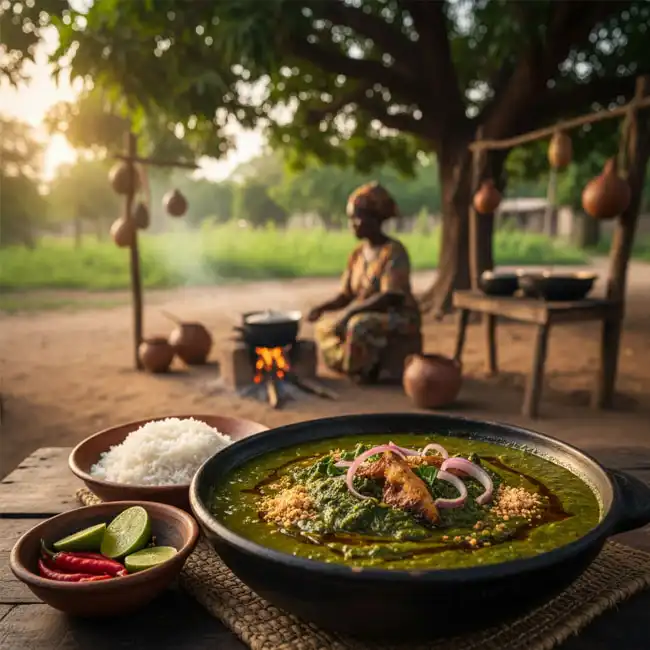
🔹 Recipe 1: Plasas (The Savoury Spinach Stew)
About this Recipe
Plasas is a vibrant, earthy, and protein-packed green stew that is incredibly popular in The Gambia. Its main ingredient is always a leafy green—most commonly spinach, cassava leaves, or potato leaves—slowly cooked down with palm oil (which gives it a beautiful orange colour and distinct nutty flavour), various proteins (often smoked fish and stewing meat), and a base of aromatics.
Unlike the richness of peanut stew, Plasas is defined by its deep, savoury, almost fermented-tasting notes, often achieved through traditional seasonings like locust bean (netetou) or simply high-quality bouillon. It’s a phenomenal way to eat your greens, as the spinach cooks down into a velvety, satisfying, thick sauce. It is typically served with white rice or a starchy side like fufu to soak up the intense flavour.
Ingredients & Measurements
- 2 Tablespoons Red Palm Oil (or Vegetable Oil, see Tip)
- 1.5 pounds (approx. 700g) Stewing Beef or Lamb (cut into 1-inch cubes) OR Chicken Thighs
- 1 medium Yellow Onion, chopped
- 2 cups Water or Meat Stock
- 2 pounds (approx. 900g) Fresh Spinach (or 2-3 bags of frozen spinach), roughly chopped/thawed
- 1/2 pound (approx. 225g) Smoked Fish (e.g., Smoked Mackerel or Haddock), shredded, bones removed
- 1 Scotch Bonnet or Habanero Pepper, left whole (optional)
- 2 Tablespoons Natural, Unsweetened Peanut Butter (optional, for thickening)
- 1 teaspoon Bouillon Powder (e.g., Maggi or Knorr)
- Salt and Black Pepper to taste
Step-by-Step Instructions
1.Prep the Meat: Season the beef/lamb cubes or chicken thighs generously with salt and pepper.
2.Start the Meat Base: Heat the Red Palm Oil (or vegetable oil) in a large, heavy-bottomed pot or Dutch oven over medium heat. Add the seasoned protein and brown on all sides.
3.Sauté Aromatics: Add the chopped Onion to the pot. Sauté for 5-7 minutes until soft. If using, stir in the Bouillon Powder/Cube.
4.Simmer the Meat: Pour in the Water or Meat Stock. Add the whole Scotch Bonnet pepper (if using). Bring to a boil, then reduce heat, cover, and simmer for 45-60 minutes, or until the stewing meat is nearly tender. If using chicken, reduce simmer time to 30 minutes.
5.Add the Greens: Stir in the fresh or thawed Spinach. If the pot seems too full, add the spinach in batches, waiting for the first batch to wilt down before adding more. Cover and let the spinach cook down for 15-20 minutes.
6.Thicken and Finish (Optional Peanut Butter): If you are using peanut butter for a thicker sauce, mix the 2 Tablespoons of Peanut Butter with a small amount of warm water until smooth, then stir it into the stew.
7.Final Touches: Gently fold in the shredded Smoked Fish. Simmer, uncovered, for another 10 minutes to allow the stew to thicken slightly and the fish to heat through.
8.Serve: Remove the Scotch Bonnet pepper. Adjust salt and pepper to taste. Serve the Plasas hot over white rice or pounded yam (fufu).
Tips & Mistakes to Avoid
- Tip: The Power of Palm Oil: Red Palm Oil is traditional and gives Plasas its signature colour and a unique, deep flavour. If you choose not to use it, the dish will still be delicious, but use a high-quality vegetable oil (like avocado or coconut oil).
- Mistake: Not Washing the Spinach: If using fresh spinach, wash it extremely well, as greens can sometimes carry sand or dirt that ruins the texture of the stew.
- Tip: The Smoked Fish is Crucial: The intense, salty, umami flavour from the smoked fish (or dried shrimp/fish powder) is essential for authenticity and depth. Don't skip this ingredient!
FAQ
Q: Can I use frozen spinach?
A: Yes! Frozen chopped spinach is a perfect, easy substitute. Make sure to thaw it and squeeze out as much excess water as possible before adding it to the pot to prevent the stew from becoming watery.
Q: Where can I find locust bean (Netetou)?
A: Netetou (also Soumbala or Iru) is a fermented seasoning found in African specialty stores. It adds a strong, unique umami. If you can't find it, using a quality Bouillon Powder offers a simple, accessible way to boost the deep, savoury flavour.
Q: What is the ideal consistency?
A: Plasas should be a thick, velvety stew, not a soup. The spinach should be fully cooked down and the sauce should cling easily to the rice. If it’s too watery, simmer uncovered for longer.
Summary
Plasas is a celebration of West African ingenuity, turning simple leafy greens into a powerhouse of flavour. It’s hearty, healthy, and offers a rich, savoury contrast to the other dishes in this guide.
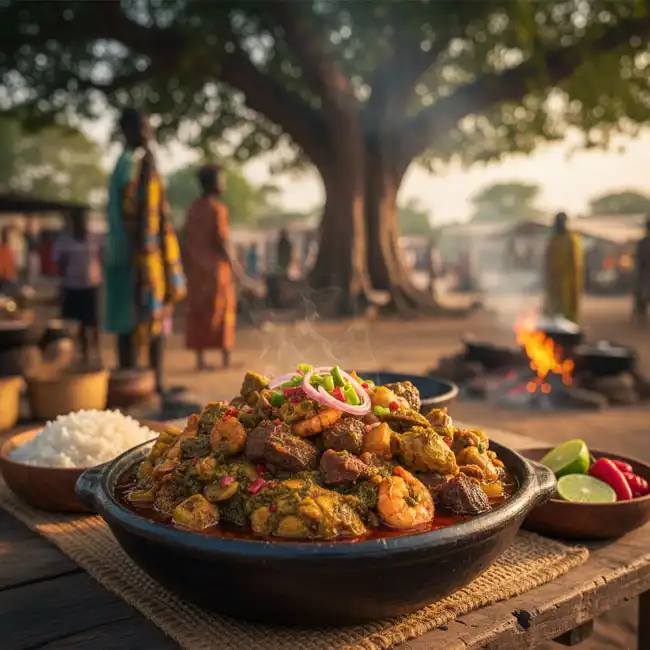
🔹 Recipe 2: Superkanja (The Savoury Okra Stew)
(The content for Superkanja remains the same, providing a contrast in texture with its characteristic viscosity.)
About this Recipe
Superkanja (or Okra Soup) is one of the most traditional and unique Gambian dishes. It is a dense, deeply savoury stew, often made with assorted smoked fish, beef, and palm oil, where the primary vegetable is okra. Okra provides the characteristic slimy (or viscous) texture that is highly prized in West African cuisine, as it helps the stew coat the rice or fufu wonderfully.
While the thought of "slimy" food might put some people off, the texture is an essential part of the experience, balancing the powerful, umami-rich flavours from the dried/smoked fish and often, fermented locust beans (netetou). Our recipe simplifies the protein and focuses on developing that rich, umami flavour base that makes Superkanja so iconic.
Ingredients & Measurements
- 2 Tablespoons Palm Oil (optional, for authentic colour and flavour) or Vegetable Oil
- 1 large Yellow Onion, chopped
- 4 cups (approx. 400g) Fresh Okra, tops and tails trimmed, sliced into ¼-inch rounds
- 2 cloves Garlic, minced
- 2 cups Fish or Vegetable Stock
- 1 cup Chopped Tomatoes (or diced canned tomatoes)
- 1/2 pound (approx. 225g) Smoked White Fish (such as Smoked Mackerel or Haddock), shredded, bones removed
- 1/2 pound (approx. 225g) Beef or Lamb (cubed), optional
- 1 teaspoon Locust Bean Powder (Netetou) or a small piece of Bouillon Cube (e.g., Maggi)
- 1/2 Teaspoon Baking Soda (optional, helps increase sliminess)
- Salt and Hot Pepper to taste
Step-by-Step Instructions
1.Sauté the Base: Heat the Palm Oil (or vegetable oil) in a large pot or Dutch oven over medium heat. Add the chopped Onion and sauté for about 5 minutes until soft.
2.Add Protein (If Using Beef/Lamb): If using beef or lamb, add it now and brown it lightly for 5-7 minutes.
3.Build Umami: Add the minced Garlic, Chopped Tomatoes, and Locust Bean Powder/Bouillon Cube. Stir well and cook for 5 minutes, allowing the tomatoes to break down slightly and the flavours to deepen.
4.Introduce Okra and Liquid: Pour in the Fish or Vegetable Stock. Bring the mixture to a boil. Once boiling, add the sliced Okra and the Baking Soda (if using). Stir well.
5.Simmer and Thicken: Reduce the heat immediately to a gentle simmer. Cook, uncovered, for 30-40 minutes. The okra will start to break down and release its natural thickener (mucilage), creating the stew's characteristic viscous texture. Do not cover the pot entirely; letting it simmer uncovered helps some of the water evaporate.
6.Add Fish and Finish: Gently fold in the shredded Smoked White Fish during the last 10 minutes of cooking. Season with salt and pepper/hot pepper to your taste.
7.Serve: Serve hot over white rice, or traditionally, with a side of fufu or banku (fermented corn or cassava dough).
Tips & Mistakes to Avoid
- Tip: Embrace the Slime: The mucilaginous (slimy) texture of okra is the main feature of Superkanja. If you want more slime, blend about a quarter of the okra before adding it to the pot, or slice the okra very thinly.
- Mistake: Overcooking the Fish: Smoked fish is already cooked. Add it only towards the end to heat through, as overcooking it can make it too chewy or cause it to completely disintegrate.
- Tip: Palm Oil Note: Palm oil gives the stew its beautiful reddish-orange hue and a distinctive flavour. If you choose not to use it, the dish will taste slightly different but will still be very flavourful.
FAQ
Q: Is the slimy texture unavoidable?
A: It is the nature of the dish. If you absolutely prefer less viscosity, you can try soaking the sliced okra in vinegar water for 30 minutes, rinsing it, and then patting it dry before adding it to the stew, though this sacrifices some authenticity.
Q: Where can I find smoked white fish?
A: Look for smoked mackerel, smoked haddock, or even pre-packaged smoked fish fillets in the refrigerated or frozen sections of specialty supermarkets.
Q: What is the best way to get the netetou flavour?
A: If you can’t find netetou, a good quality beef or chicken bouillon cube/powder is the best substitute to achieve that strong, savoury, umami depth that the dish requires.
Summary
Superkanja is a bold, flavourful dive into authentic West African texture and taste. With smoked fish and okra as the stars, this savoury stew is a staple for a reason, promising a satisfying and nutrient-rich meal.
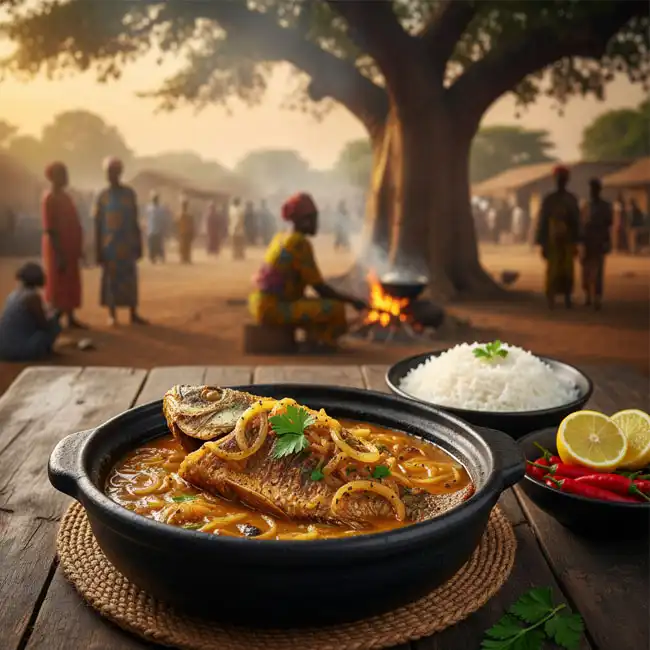
🔹 Recipe 3: Fish Yassa (The Tangy Onion-Lemon Stew)
(The content for Fish Yassa remains the same, providing a contrast in flavour profile with its characteristic brightness.)
About this Recipe
Yassa is technically a dish from Senegal, but it is enormously popular throughout the Senegambia region and is a staple in The Gambia. Unlike the thick, rich texture of Plasas or Superkanja, Yassa is defined by a bright, pungent, and tangy sauce created by slowly braising copious amounts of onions in a marinade of mustard, lemon juice, and hot pepper.
While Yassa is often made with chicken, the Fish Yassa version is incredibly popular along the coast and makes for a lighter, faster stew. The fish is often marinated first, then seared or fried before being smothered in the sweet-and-sour onion sauce. This dish is perfect for beginner cooks because the ingredients are simple and the steps are straightforward, delivering a sophisticated flavour with minimal effort.
Ingredients & Measurements
- 4 (approx. 150g each) Fish Fillets (such as Tilapia, Snapper, or Hake)
- 3 large Yellow Onions, thinly sliced
- 1/2 cup Fresh Lemon Juice
- 1/4 cup Vegetable Oil
- 2 Tablespoons Dijon Mustard
- 2 cloves Garlic, minced
- 1 Tablespoon Fresh Ginger, grated
- 1 Scotch Bonnet or Habanero Pepper, pierced whole (optional)
- 1/2 teaspoon Black Pepper
- Salt to taste
Step-by-Step Instructions
1.Marinate the Fish: In a shallow dish, whisk together half of the Lemon Juice, Mustard, minced Garlic, grated Ginger, and a pinch of salt and pepper. Add the fish fillets, turning to coat them evenly. Marinate in the refrigerator for at least 30 minutes (but not more than 2 hours, as the lemon juice can start to "cook" the fish).
2.Sauté the Onions: Heat the Vegetable Oil in a large pot or skillet over medium heat. Add the thinly sliced Onions, a pinch of salt, and the Black Pepper. Sauté slowly for 15-20 minutes, stirring frequently until the onions are very soft and deeply caramelised—this is the base of the flavour!
3.Build the Sauce: Stir the remaining half of the Lemon Juice into the softened onions. Add the whole Scotch Bonnet (if using) and cook for 5 more minutes. Taste and adjust the seasoning (it should be tangy and savoury).
4.Sear the Fish: While the onions are simmering, quickly sear the marinated fish in a separate pan until golden brown on both sides. Do not cook it through.
5.Braise the Fish: Nestle the seared fish fillets into the onion mixture in the pot. Spoon some of the onion sauce over the fish. Cover the pot and simmer gently for 10-15 minutes, or until the fish is flaky and cooked through.
6.Serve: Remove the whole pepper before serving. Adjust seasoning if necessary. Serve the Fish Yassa immediately, topped with the rich onion sauce, over couscous or plain white rice.
Tips & Mistakes to Avoid
- Mistake: Rushing the Onions: The secret to authentic Yassa flavour is slow-cooked, caramelised onions. If you rush this step, the sauce will taste raw and aggressive. Cook them slowly until they are deeply golden and very soft.
- Tip: The Marinade is Key: Don't skip the marinating step. The acid from the lemon tenderises the fish, and the mustard-ginger combination gives the fish a wonderful flavour even before it hits the sauce.
- Tip: Don't Over-Braise the Fish: Fish cooks quickly! Only simmer it in the sauce long enough for it to become cooked through and flaky, usually about 10-15 minutes, to avoid turning it into mush.
FAQ
Q: Can I use different protein for Yassa?
A: Absolutely. Chicken Yassa is the most common variation. Use bone-in chicken thighs, which can be marinated and then braised for longer (40-50 minutes) until fall-off-the-bone tender.
Q: Is it supposed to taste sour?
A: Yassa should be tangy and bright, balancing the sweetness of the caramelised onions and the richness of the fish/chicken. If it's too sour, a pinch of sugar can help balance the lemon juice.
Q: What type of fish works best?
A: Any firm, white fish fillet (like Tilapia, Cod, or Snapper) works great, as it holds its shape well during the braising process.
Summary
Fish Yassa provides a fantastic contrast to the other stews, offering a zesty, bright, and tangy flavour profile. It's a testament to how simple ingredients, when cooked correctly, can produce an incredibly complex and satisfying dish.
Final Thoughts
There you have it—three iconic Gambian soups and stews that are not only delicious but genuinely manageable for any home cook, regardless of your experience level.
We’ve travelled from the earthy, satisfying density of Plasas, through the savoury, texture-rich world of Superkanja, and ended with the tangy brightness of Fish Yassa. What they all have in common is a foundation of simple, quality ingredients and a focus on slow, flavour-building techniques that deliver a truly authentic taste of West Africa.
Cooking these Gambian staples isn't complicated; it just requires a bit of patience and a willingness to embrace new textures and flavour combinations. We recommend trying them one by one. Once you master the foundational base of one stew, you'll feel confident tackling the next.
Which one will you try tonight? Will it be the powerful, smoky flavour of Plasas, or the bright, zingy kick of the Fish Yassa?
Go ahead, try a recipe, share your kitchen victories (and lessons learned!) with us, and most importantly, enjoy the warm, rich flavours of The Smiling Coast! Happy cooking!
| 🇬🇲 🍲 < Back |