
🏠 Home > 🗺️ Recipes > 🍞 Breads > 🇬🇼 Guinea-Bissau Breads > 🍞 Mango Sticky Rice , Pão de Batata Doce (Sweet Potato Bread) , Cuscuz de Milho (Sweet Steamed Cornmeal Pudding)
🍞 Beyond the Loaf: Mastering Traditional Guinea-Bissau Breads at Home
Published by Supakorn | Updated: February 2026
Introduction
Hello, bread lovers and adventurous home bakers!
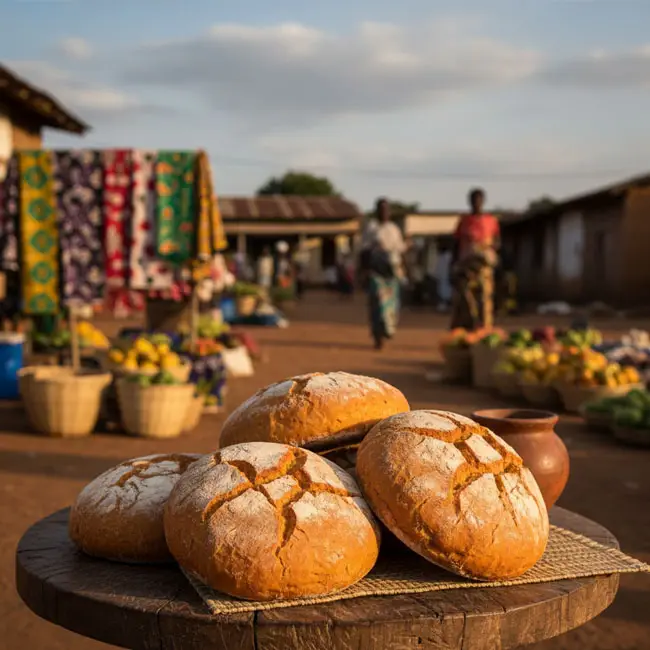
When we think of African cuisine, our minds often jump to vibrant stews (caldos) and grilled meats (cafriela). But today, we're diving into the heart of the meal: the amazing, comforting world of breads and starchy staples from Guinea-Bissau. In this West African nation, "bread" is more than just a wheat loaf; it encompasses the rustic, traditional staples that serve as the foundation for every meal, thanks to a beautiful culinary mix of local grains (like corn and cassava) and the lasting legacy of Portuguese baking.
While you might not find long lines for sourdough starters in Bissau, you will find incredibly flavorful, often slightly sweet, and delightfully soft baked goods. These recipes are highly adaptable, relying on local crops like sweet potato and cornmeal to create unique textures that are surprisingly easy for any beginner to master.
We've gathered three of the most popular and accessible "bread" recipes for you to try tonight:
- 🔹 Recipe 1: Pão Simples Caseiro (Simple Homemade Bread) – The basic, everyday Portuguese-style yeast bread.
- 🔹 Recipe 2: Pão de Batata Doce (Sweet Potato Bread) – A wonderfully soft, naturally sweet loaf using local tubers.
- 🔹 Recipe 3: Cuscuz de Milho (Sweet Steamed Cornmeal Pudding) – A hearty, quick-to-prepare staple that functions like a dense bread.
Get your flour, your cornmeal, and your kneading hands ready!

🔹 Recipe 1: Pão Simples Caseiro (Simple Homemade Bread)
About this Recipe
Pão Simples Caseiro translates to "Simple Homemade Bread." This is the foundational yeast bread found in many Lusophone countries, and it’s the standard, comforting white loaf baked in Guinea-Bissau’s bakeries. It’s a versatile, slightly rustic bread that is perfect for breakfast with jam, soaking up stews, or making simple sandwiches. Unlike highly refined commercial loaves, this version has a satisfying chew and a classic yeast-risen flavor. If you’re a beginner baker, this is a great recipe to start with to practice your yeast skills!
Ingredients & Measurements (Makes 1 large loaf)
- 1 1/2 cups (360ml) warm water (about 105°F / 40°C)
- 2 1/4 teaspoons (1 packet) active dry yeast
- 1 tablespoon granulated sugar
- 1 teaspoon salt
- 3 tablespoons olive oil, plus extra for greasing
- 3 1/2 to 4 cups (420g to 480g) all-purpose flour, plus more for dusting
Step-by-Step Instructions
1.Activate the Yeast: In a large mixing bowl, combine the warm water and sugar. Sprinkle the yeast over the top. Let it sit for 5-10 minutes until a foamy layer forms on the surface. This confirms the yeast is active and ready to go!
2.Mix Wet Ingredients: Stir the salt and olive oil into the activated yeast mixture.
3.Add Flour: Add 3 1/2 cups of flour, one cup at a time, mixing with a wooden spoon or spatula until a shaggy dough forms.
4.Knead: Turn the dough out onto a lightly floured surface. Knead the dough for 8-10 minutes. If the dough is very sticky, add the remaining 1/2 cup of flour, 1 tablespoon at a time, until the dough is smooth, elastic, and no longer sticks to your hands.
5.First Rise (Bulk Fermentation): Lightly oil a clean bowl. Place the dough in the bowl, turning it once to coat. Cover the bowl tightly with plastic wrap or a clean kitchen towel. Let the dough rise in a warm, draft-free place for 1 to 1.5 hours, or until it has doubled in size.
6.Shape and Second Rise: Gently punch down the risen dough to release the air. Shape it into a loaf or a round. Place the shaped dough onto a baking sheet lined with parchment paper. Cover loosely and let it rise again for 30-45 minutes.
7.Bake: Preheat your oven to 375∘F or 190∘C. Bake the loaf for 30-35 minutes, or until the crust is golden brown and the loaf sounds hollow when tapped on the bottom.
8.Cool: Transfer the bread to a wire rack immediately to cool completely before slicing.
Tips & Mistakes to Avoid
- Tip: The temperature of the water is vital. If it’s too cold, the yeast won't activate; if it’s too hot, it will kill the yeast. Aim for body temperature.
- Mistake: Not kneading long enough. Kneading develops the gluten structure, which gives the bread its springy texture. Don't stop until the dough feels smooth and can stretch without easily tearing.
- Tip: For a crispy crust, place a shallow pan of water on the bottom rack of your oven while preheating and baking. The steam helps the crust form.
- Mistake: Cutting into hot bread. Always let yeast bread cool completely—otherwise, the steam trapped inside will escape, leaving the loaf gummy and dense.
FAQ
Q: Why did my dough not rise?
A: This is usually due to one of two things: dead yeast (check the expiration date) or the water being too hot or too cold.
Q: Can I add seeds to this?
A: Of course! Mix in 1/4 cup of sesame seeds, sunflower seeds, or millet (a common West African grain) during the final stages of kneading.
Q: How do I store leftovers?
A: Store at room temperature in an airtight container or bread bag for up to 3 days.
Summary
The Pão Simples Caseiro is a beautiful introduction to Guinea-Bissau's baking heritage. It’s a straightforward, satisfying loaf that provides the perfect, versatile base for any meal.
🔹 Recipe 2: Pão de Batata Doce (Sweet Potato Bread)
About this Recipe
Pão de Batata Doce means "Sweet Potato Bread." Tubers like sweet potato are abundant in Guinea-Bissau and are often incorporated into bread doughs not only to extend the flour but also to add incredible moisture and a subtle, natural sweetness. This bread is famous for its super-soft, fluffy texture and a delightful golden color. It’s a denser loaf than the Pão Simples but is far softer and stays fresh longer thanks to the sweet potato purée. It’s absolutely wonderful with butter for breakfast or served alongside a savory peanut stew.
Ingredients & Measurements (Makes 1 medium loaf)
- 1 cup (220g) sweet potato purée (cooked, peeled, and mashed)
- 1/2 cup (120ml) warm milk (or water)
- 2 teaspoons active dry yeast
- 1/4 cup (50g) granulated sugar
- 1/2 teaspoon salt
- 1 large egg, lightly beaten
- 3 tablespoons vegetable oil or melted butter
- 3 to 3 1/2 cups (360g to 420g) all-purpose flour
Step-by-Step Instructions
1.Prepare the Sweet Potato: Peel, boil, or steam your sweet potato until very soft. Mash it thoroughly until completely smooth. Measure out 1 cup of the warm purée and set aside.
2.Activate Yeast: In a small bowl, dissolve the yeast and 1 teaspoon of the sugar in the warm milk. Let it sit for 5 minutes until frothy.
3.Combine Wet Ingredients: In a large bowl, whisk together the warm sweet potato purée, the remaining sugar, salt, beaten egg, and oil/melted butter.
4.Mix the Dough: Add the activated yeast mixture to the sweet potato mix. Gradually add the flour, mixing first with a spoon and then by hand. Add just enough flour to form a soft, slightly sticky dough.
5.Knead: Turn the dough onto a lightly floured surface and knead for 6-8 minutes. The dough will feel wonderfully smooth and soft due to the sweet potato starch.
6.First Rise: Place the dough in a lightly oiled bowl, cover, and let rise in a warm place for 1 to 1.5 hours, or until doubled in size.
7.Shape and Second Rise: Gently punch down the dough. Shape it into a long log and place it in a lightly greased 9x5 inch loaf pan. Cover and let rise again for 30-45 minutes.
8.Bake: Preheat your oven to 375°F ( 190°C ). Bake for 30-40 minutes, or until the top is a deep golden brown. If the top starts to brown too quickly, loosely cover it with foil.
9.Cool: Cool completely on a wire rack before slicing.
Tips & Mistakes to Avoid
- Tip: The key to great texture is to ensure the sweet potato purée is completely smooth, with no lumps, before adding it to the mix.
- Mistake: Using canned sweet potato purée that is heavily spiced (like pumpkin pie filling). Ensure it is pure, unseasoned sweet potato.
- Tip: Brushing the loaf with a little melted butter or an egg wash before baking will give it a beautiful, shiny, golden crust.
- Mistake: Over-flouring. The dough should remain quite soft and slightly tacky—the sweet potato provides most of the structure, so don't be tempted to add too much extra flour.
FAQ
Q: Can I use pumpkin or squash instead of sweet potato?
A: Yes, any smooth, starchy, cooked squash or pumpkin purée can be used as a substitute, yielding a very similar result.
Q: Can I use whole wheat flour?
A: Yes, but the loaf will be denser and require slightly more liquid. I recommend replacing only half the all-purpose flour with whole wheat for a softer result.
Q: How can I make it sweeter?
A: You can increase the sugar content to 1/3 or 1/2 cup for a dessert-style sweet bread.
Summary
The Pão de Batata Doce is a delightful, uniquely West African twist on baking. It's guaranteed to be the softest loaf you've ever made and a massive crowd-pleaser.

🔹 Recipe 3: Cuscuz de Milho (Sweet Steamed Cornmeal Pudding)
About this Recipe
In the West African and Lusophone context, "Cuscuz" is very different from the Moroccan version. Cuscuz de Milho in Guinea-Bissau is a thick, dense, and slightly sweet steamed cornmeal pudding that is served warm for breakfast or as an accompaniment to a savory dish. It acts as a bread substitute, meant to be cut into wedges and topped with butter, milk, or even a savory sauce. It's incredibly simple, relying on the steam cooking method to create a moist, hearty "bread" without yeast or lengthy baking times.
Ingredients & Measurements (Serves 4-6)
- 2 cups (300g) fine cornmeal (Fubá) or corn flour (not corn starch)
- 1/2 cup (100g) granulated sugar (or to taste)
- 1/2 teaspoon salt
- 1 1/2 cups (360ml) hot water, plus extra for steaming
- Optional: 1/2 teaspoon ground cinnamon (common in Guinean recipes)
- Optional: 1/4 cup (25g) cassava flour or fine semolina (for texture)
Step-by-Step Instructions
1.Prepare the Mixture: In a large bowl, whisk together the cornmeal, sugar, salt, cinnamon, and cassava flour (if using).
2.Hydrate the Cornmeal: Gradually pour in the 1 1/2 cups of hot water, stirring constantly until a thick, uniform paste forms. The consistency should be like a very thick, wet dough. Cover the bowl and let the mixture sit for 10-15 minutes to allow the cornmeal to fully hydrate.
3.Prepare the Steamer: Traditional Cuscuz is steamed in a specific clay pot (binde), but a regular steamer or pot with a metal strainer will work perfectly. Fill a large pot with 1-2 inches of water and bring it to a boil.
4.Shape and Steam: Lightly grease a steamer basket or a deep, heatproof bowl that fits securely inside your steaming pot. Scoop the cornmeal mixture into the basket/bowl, pressing it down lightly and smoothing the top.
5.Cook: Place the basket/bowl over the boiling water, ensuring the water does not touch the cornmeal. Cover the pot tightly with a lid or a cloth-covered lid to trap the steam. Steam for 30-45 minutes, or until the Cuscuz is firm to the touch and a knife inserted into the center comes out clean.
6.Serve: Carefully remove the Cuscuz from the steamer and let it cool slightly. Invert it onto a plate to unmold. Serve warm, sliced into wedges.
Tips & Mistakes to Avoid
- Tip: A clean, slightly damp kitchen towel placed over the steamer basket before putting the lid on will help prevent condensation from dripping onto the Cuscuz, ensuring a drier top.
- Mistake: Using coarse cornmeal (polenta). You need fine cornmeal (fubá or corn flour) for the correct, dense, pudding-like texture.
- Tip: The traditional accompaniment is a simple pat of butter and a splash of milk (sometimes sweetened condensed milk) poured over the warm slice.
- Mistake: Letting the water boil away during steaming. Check the water level halfway through the cooking process and carefully add more hot water if necessary.
FAQ
Q: What is the texture supposed to be?
A: It should be dense, moist, and firm—similar to a rich steamed cake or a thick polenta.
Q: Can I add fruit?
A: Yes, you can stir in 1/4 cup of raisins or dried coconut flakes into the mixture before steaming.
Q: Is this couscous?
A: No. While the name is similar, this is a steamed cornmeal preparation, whereas traditional North African couscous is small steamed semolina granules.
Summary
The Cuscuz de Milho is a historic, nourishing staple that serves as Guinea-Bissau's simple "bread." It’s incredibly easy to make and offers a dense, comforting base for a variety of toppings, savory or sweet.
Final Thoughts
You’ve just added three incredible, yet simple, staples from Guinea-Bissau to your baking repertoire!
From the classic, spongy yeast loaf of Pão Simples Caseiro to the gorgeously soft and naturally sweet Pão de Batata Doce, and finally, the hearty, textured, and fast-cooking Cuscuz de Milho, you now have a versatile set of recipes that honor West African and Portuguese culinary traditions.
These recipes prove that great bread doesn't require a commercial kitchen or years of experience. They rely on the simple magic of local ingredients and classic techniques.
I hope you feel inspired to get your hands messy with some dough! Pick one to try this weekend—perhaps the Pão de Batata Doce for a soft treat—and let us know how it goes! Did you serve your Cuscuz with butter or with a savory caldo? Share your success and your delicious photos below! Happy baking!
| 🇬🇼 🍞 < Back |