
🏠 Home > 🗺️ Recipes > 🍞 Breads > 🇬🇼 Guinea-Bissau Breads
🇬🇼 🍞 Guinea-Bissau Breads Recipes
Published by Supakorn | Updated: February 2026
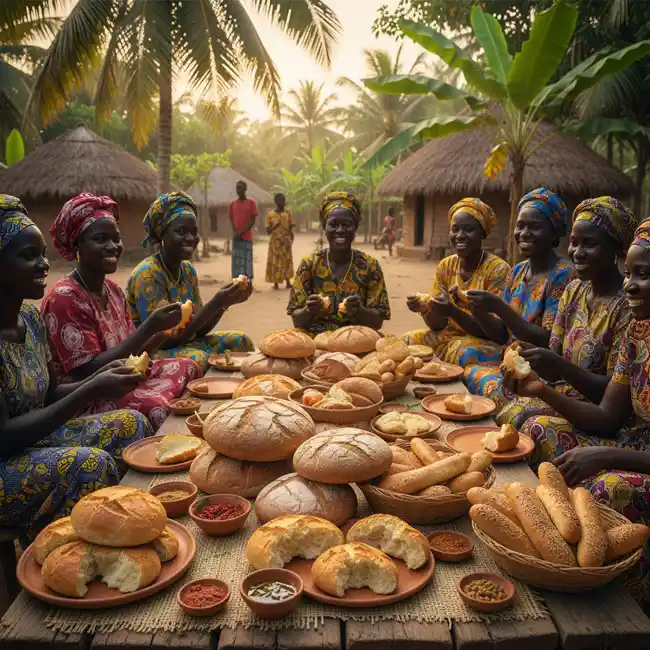
🥖 A Deep Dive into the Culture, Colonial Legacy, and Starchy Staples
Hey there, fellow food explorers! Grab a seat, because we're about to embark on a culinary journey that’s going to redefine everything you thought you knew about "bread." When you think of the world’s great baked goods, maybe your mind goes to French baguettes, Italian focaccia, or perhaps a hearty sourdough. But let's be honest, that’s just one slice of the global bread-scape.
In the vibrant, diverse nation of Guinea-Bissau, the concept of "bread" is infinitely more complex, fascinating, and deeply rooted in local agriculture, historical trade, and the lingering presence of a colonial past. Here, the word doesn't always refer to a loaf you slice with a knife; it refers to the soul of the meal—the starch that carries the flavor.
Forget the simple flour and water recipe for a moment. In this corner of West Africa, "bread" is less about a yeast-risen loaf and more about the fundamental staple—the carbohydrate that provides the bulk of the calories, the neutral canvas, and the essential tool for soaking up rich, soulful stews (caldos). We are talking about a food culture that has learned to thrive by blending indigenous tubers with imported techniques.
🤝 Welcome to the Bissau-Guinean Carb Story: Where "Bread" Gets a Whole New Meaning
In Guinea-Bissau, if you haven't eaten your "bread" (your staple), you haven't eaten. It is the foundation of energy for the hardworking farmers in the interior and the fishermen along the coast. But why is it so different from Western bread?
Statistics show that in many West African nations, including Guinea-Bissau, over 60% of daily caloric intake comes from these starchy staples. Because wheat doesn't grow well in the tropical humidity of West Africa, the people here have become master innovators. They’ve looked at their land—rich with cassava, sweet potatoes, and rice—and said, "This is our flour."
This is a true deep dive, perfect for anyone looking to understand the nuanced role of starches in West African cuisine. We'll be exploring three main pillars:
1.The Sweet Star: Baked goods born from colonial adaptation.
2.The True Pillars: Indigenous starches like rice, cassava, and millet.
3.The Street Dough: Fried favorites that fuel the everyday rhythm of Bissau life.
🍠 Pão de Batata Doce: The Golden Bridge Between Cultures
If there is one item that stands out as the quintessential Bissau-Guinean "bread," it is Pão de Batata Doce—the Sweet Potato Bread. This is where the country’s agricultural bounty meets the baking techniques introduced by the Portuguese.
🏛️ The Birth of a Local Masterpiece: Adapt or Import?
During the colonial era, wheat flour was an expensive, often unreliable import. Locals needed to create something similar to the European loaf but using ingredients that were cheap, plentiful, and sustainable. Since Guinea-Bissau produces thousands of tons of tubers annually, the sweet potato was the perfect candidate.
The genius of Pão de Batata Doce lies in this simple substitution: mashed sweet potato replaces a significant portion of the costly wheat flour. This isn't just a recipe; it's culinary resilience. It shows how a community can take a foreign influence and make it better, cheaper, and more delicious.
• Texture and Flavor: The sweet potato does magic to the dough. It introduces a subtle, earthy sweetness and a huge boost of moisture. The resulting loaf is unbelievably soft, with a dense, fine crumb that stays fresh longer than a typical wheat loaf—a major advantage in a climate where food spoils quickly in the heat.
• The Experience: Imagine waking up in Bissau, the air thick with the smell of woodsmoke and salt, and tearing into a warm piece of golden-hued bread. It’s perfect for breakfast with a cup of local herbal tea, or sliced thin to accompany a savory peanut stew.
🍚 The True Staple Kings: Rice, Cassava, and Millet – The Functional "Breads"
To truly understand the Bissau-Guinean table, you have to shift your focus away from the oven and toward the communal pot. In the vast majority of meals, the function of "bread" is served by the three main staple starches.
🌊 Rice (Arroz): The Coastal Lifeblood
For the ethnic groups living near the coast, rice (arroz) is indispensable. It is the dominant food crop and the primary accompaniment to nearly every main dish. In many local dialects, the word for "food" and "rice" is actually the same!
• The Bread Role: Here, rice is the "neutral foundation." A massive mound of fluffy rice is served, and the rich caldo (like Caldo de Mancarra) is spooned directly over it. The rice acts exactly like bread—it absorbs the oils, the spices, and the juices, ensuring not a single drop of the precious sauce is wasted.
• Ceremonial Weight: Rice isn't just food; it's a social currency. It’s used in marriages, rites of passage, and funerals. Protecting local "Creole rice" strains is considered a matter of national heritage and food security.
🌳 Cassava (Manioc) Dough and Tô: The Interior’s Hearty Base
As you move inland, particularly among the Fulani and Mandinka communities, the reliance shifts to tubers and hardier grains.
• The Cassava Connection: Cassava is transformed into a dense, neutral-flavored, sticky dough. This dough is often referred to by the regional terms fufu or tô.
• A Utensil You Can Eat: This is the most fascinating "bread substitute." You don't use a fork; you use the dough. Diners pinch a small piece of the dough, form an indentation with their thumb to create a "edible spoon," scoop up the stew, and swallow. It is a beautifully efficient and entirely gluten-free way to eat that has sustained millions for centuries.
🌾 Millet and Sorghum: Sustaining the Savanna
In the drier northern regions, millet and sorghum step in. These grains are ancient—they have been grown in West Africa for over 4,000 years. They are ground into flour and steamed into couscous or cooked into a thick porridge. They provide the slow-release energy needed for long days of agricultural labor under the sun.
🍩 Street Food Dough Delights: Fidjós, Donetes, and Kuduro Bread
Beyond the main meal staples, the dynamic street food scene in Guinea-Bissau offers its own charming, doughy snacks. These are the quick, accessible "breads" that keep the city moving.
🍌 Fidjós: The Beloved Tropical Fritter
Fidjós are the country’s beloved fritters. They represent the sweet, casual side of Bissau-Guinean dough culture.
• The Vibe: These are small, deep-fried drops of joy. While a simple flour version exists, the Fidjós de Banana is the local favorite. Using overripe bananas makes them fragrant and naturally sweet.
• The Daily Rhythm: You’ll see women sitting behind large cauldrons of shimmering oil at dawn, frying these up for workers on their way to the docks or the market. Served in a recycled paper cone, they are the ultimate "grab-and-go" breakfast.
🥖 Kuduro and Donetes: The Urban Baker’s Contribution
In the bustling capital of Bissau, you’ll find Donetes (local doughnuts) and the basic white loaf known as Kuduro Bread.
• Kuduro’s Role: The name "Kuduro" implies something "hard" or "stiff." This bread is a simple, inexpensive white loaf. It’s the workhorse of the city. Recently, the price of this bread has become a major talking point in local economics. When wheat prices fluctuate globally, the price of a Kuduro loaf in Bissau can determine whether a family can afford breakfast. This highlights the complex link between global trade and the local dinner plate.
🌿 The Culinary Legacy: Heritage and Health in the Starchy Story
The story of Guinea-Bissau’s "breads" is a powerful testament to history. It’s a narrative of necessity as the mother of invention (Pão de Batata Doce), ancient tradition (rice and cassava), and modern pressures.
🌱 Naturally Gluten-Free and Sustainable
Interestingly, while the Western world is currently obsessed with gluten-free diets, the people of Guinea-Bissau have been eating this way for millennia.
• Indigenous Grains: Staples like Fonio (Fundi) are gaining global attention. Fonio is one of the world's fastest-growing grains and is packed with amino acids. In Guinea-Bissau, it’s a "prestige" grain, often served to honored guests.
• Sustainability: Because these starches are grown locally, they have a much lower carbon footprint than imported wheat. By supporting local "breads," Bissau-Guineans are supporting their own farmers and preserving their environment.
❓ FAQ: Your Quick Guide to Guinea-Bissau Staples
Q1: What is the main carbohydrate staple in Guinea-Bissau?
A: While wheat bread exists in cities, Rice (Arroz) is the king of staples. It fulfills the role of bread by acting as the base for all stews. In rural areas, Cassava dough and Millet are the primary "functional breads."
Q2: Why is Pão de Batata Doce so popular?
A: It’s a win-win! It uses local sweet potatoes (which are cheap) to stretch expensive imported flour. The result is a bread that is softer, sweeter, and lasts longer in the tropical heat than plain white bread.
Q3: Is there a "street food" bread I should try?
A: Definitely look for Fidjós de Banana. They are sweet banana fritters that are a staple of the Bissau morning routine. Cheap, hot, and delicious!
Q4: Are these breads healthy?
A: Many of them are! Traditional staples like boiled cassava, fonio, and millet are whole foods, gluten-free, and rich in fiber. They provide sustained energy without the heavy processing found in industrial loaves.
🌟 Conclusion: What Your Staple Represents
By understanding the culture behind the food—why a sweet potato loaf is preferred, why a boiled root vegetable is considered "bread," and why a simple rice dish carries ceremonial weight—we gain a much deeper appreciation for the resilient and delicious traditions of Guinea-Bissau.
The next time you sit down to a meal, look at the starch on your plate. Is it just a side dish, or is it the "bread" that holds your story together? In Guinea-Bissau, it’s always the latter.
🍞 Beyond the Loaf: Mastering Traditional Guinea-Bissau Breads at Home
👉 Explore 3 Guinea-Bissau Breads
| 🌐 🍞 < Back | 🇬🇼 🥗 < Previous | Next > 🍱 🇬🇼 |