
🏠 Home > 🗺️ Recipes > 🍨 Desserts > 🇮🇩 Indonesia Desserts > 🍨 1.Silky Bubur Sumsum (Rice Flour Porridge) , 2.Festive Es Doger (Pink Coconut Shaved Ice) , 3.Dadar Gulung (Pandan Crepes with Coconut Filling)
🍨 Vibrant and Simple Sweets from the Heart of Indonesia
Published by Supakorn | Updated: February 2026
Hello, fellow dessert lover! If you’ve ever walked through a traditional market in Bali or Jakarta, you know that Indonesian desserts are a feast for the eyes before they ever hit your tongue. We are talking about bright greens, deep purples, and rich caramel browns. The best part? While they look like exotic works of art, many of these treats are surprisingly quick to whip up in your own kitchen!
Indonesian sweets, often called Pencuci Mulut or Jajanan Pasar, have gained massive popularity overseas. Foodies from New York to London are obsessed with the creamy textures of coconut milk and the floral aroma of pandan. People love that our desserts are often lighter than heavy Western cakes, focusing on natural ingredients like rice flour, tropical fruits, and palm sugar.
In this cozy guide, I’m going to share three of my favorite "quick and colorful" recipes that you can make right now. We are going to explore:
🔝 • Recipe 1. Silky Bubur Sumsum (Rice Flour Porridge) — Bubur Sumsum: A silky white coconut pudding topped with liquid gold (palm sugar syrup).
🔝 • Recipe 2. Festive Es Doger (Pink Coconut Shaved Ice) — Es Doger: A pink, festive shaved ice dessert that is basically a party in a glass.
🔝 • Recipe 3. Dadar Gulung (Pandan Crepes with Coconut Filling) — Dadar Gulung: Bright green pandan crepes stuffed with sweet, juicy coconut.
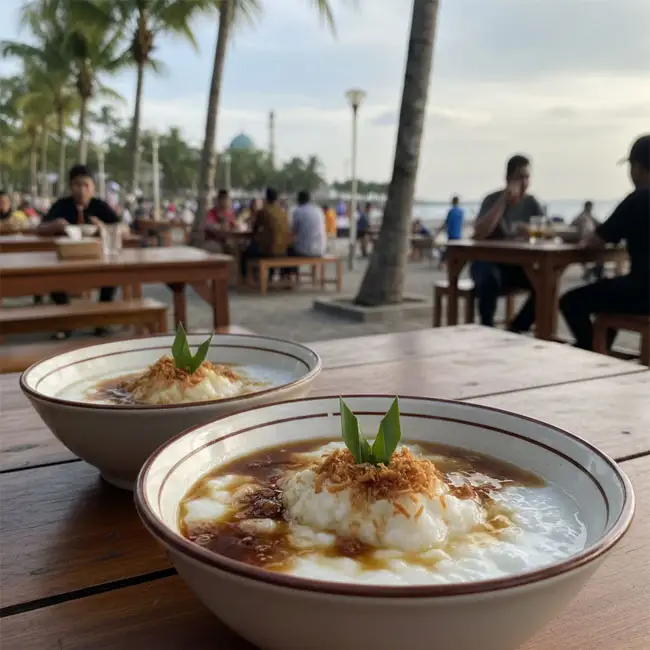
🍮 Recipe 1: Silky Bubur Sumsum (Rice Flour Porridge)
🥥 About this Recipe
Bubur Sumsum is the ultimate comfort food. It’s a velvety, savory-sweet porridge made from rice flour and coconut milk. The name "Sumsum" refers to bone marrow because the texture is so incredibly smooth and white. It is traditionally served warm and is often the go-to dish for Indonesians when they want something gentle on the stomach but high in flavor. It’s a beautiful contrast between the salty white pudding and the deep, smoky sweetness of the palm sugar syrup.
🛒 Ingredients & Measurements
For the White Pudding:
• 100 grams of rice flour
• 800 ml of thin coconut milk (or a mix of 400ml thick coconut milk and 400ml water)
• 1 teaspoon of salt
• 2 pandan leaves, tied into a knot (or 1/2 teaspoon of pandan extract)
For the Palm Sugar Syrup (Kencana):
• 200 grams of palm sugar or dark brown sugar, chopped
• 200 ml of water
• 1 pandan leaf, tied into a knot
• A tiny pinch of salt
👨🍳 Step-by-Step Instructions
1.Make the Syrup: Combine the palm sugar, water, salt, and pandan leaf in a small saucepan. Bring to a boil over medium heat until the sugar is completely dissolved. Let it simmer for 5 minutes until it thickens slightly into a syrup. Strain and set aside to cool.
2.Mix the Pudding Base: In a medium pot (off the heat), whisk together the rice flour, salt, and half of the coconut milk until no lumps remain.
3.Add the Rest: Pour in the remaining coconut milk and drop in the pandan leaf.
4.Cook with Love: Turn the heat to medium-low. This is the important part: stir constantly with a wooden spoon or whisk. Do not stop!
5.Watch for the Change: After about 5–8 minutes, the mixture will suddenly thicken and become glossy and translucent-white. Continue stirring for another 2 minutes to ensure the flour is fully cooked.
6.Serve: Ladle the warm pudding into bowls. Drizzle a generous amount of the palm sugar syrup over the top.
💡 Tips & Mistakes to Avoid
• Lump Alert: If you add the flour directly to hot coconut milk, you will get lumps. Always mix the flour with cold or room-temperature liquid first.
• Don't Stop Stirring: If you walk away, the bottom will burn and the texture will become grainy.
• The Salt Factor: Don't skip the salt in the pudding! It’s the saltiness that makes the coconut milk flavor "pop" against the sweet syrup.
• Thickness Control: If the pudding is too thick for your liking, whisk in a little more warm coconut milk at the end.
❓ FAQ
Q1.Can I eat this cold?
While it's traditionally served warm, it’s actually quite delicious chilled! It will firm up like a panna cotta in the fridge.
Q2.What if I can't find pandan leaves?
You can use a drop of vanilla extract, but the flavor will be different. Pandan gives it that authentic "Indonesian" smell.
📝 Summary
Bubur Sumsum is the perfect "beginner" Indonesian dessert. It only takes about 15 minutes and uses very few ingredients, but it looks incredibly elegant when served in a glass bowl.
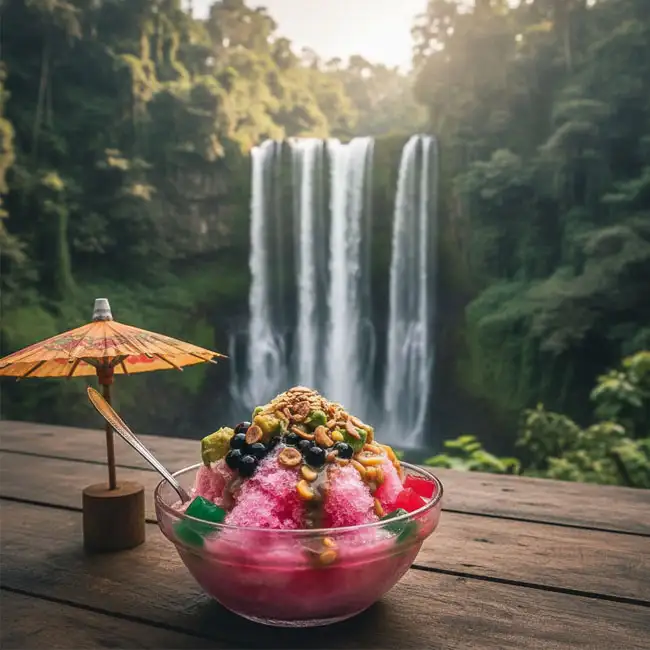
🍧 Recipe 2: Festive Es Doger (Pink Coconut Shaved Ice)
🌸 About this Recipe
Es Doger is the "pinkest" and most festive dessert on the Indonesian streets. Originating from Cirebon in West Java, its name actually comes from "Dorong Gerobak" (Pushing the Cart). It’s a refreshing shaved ice dessert flavored with coco-pandan syrup, giving it a beautiful pastel pink color. It’s loaded with textures—chewy pearls, soft fermented cassava, and creamy avocado. It’s essentially a tropical sundae but way more exciting!
🛒 Ingredients & Measurements
The Pink Ice Base:
• 500 grams of shaved ice (or crushed ice)
• 100 ml of thick coconut milk
• 150 ml of Coco-Pandan syrup (you can find this at Asian grocers)
• 1/4 teaspoon of salt
The Toppings:
• 1 ripe avocado, cubed
• 100 grams of fermented cassava (Tape Singkong), pieces removed from the core
• 100 grams of cooked black glutinous rice (optional)
• 50 grams of small red sago pearls (cooked)
• 2 slices of white bread, cut into small cubes
• Sweetened condensed milk for drizzling
👨🍳 Step-by-Step Instructions
1.Prep the Ice Base: In a bowl, mix the thick coconut milk, coco-pandan syrup, and salt. Stir until combined.
2.Infuse the Ice: If you have a shaved ice machine, shave the ice into a large bowl. Pour the pink mixture over the ice and fold it gently until all the ice turns pink. If using crushed ice, just stir it all together until it looks like a pink slushie.
3.Layer the Glass: Grab a tall glass or a bowl. Start by putting a spoonful of sago pearls and fermented cassava at the bottom.
4.Add the Pink Coldness: Scoop the pink ice mixture into the glass until it's nearly full.
5.The Goodies: Arrange the avocado cubes and bread cubes on top of the ice.
6.The Finale: Drizzle a generous amount of sweetened condensed milk over the top. Serve immediately with a spoon and a straw!
💡 Tips & Mistakes to Avoid
• The Syrup Substitute: If you can't find coco-pandan syrup, you can use grenadine mixed with a drop of pandan essence, but the authentic stuff is worth the hunt!
• Tape Singkong: The fermented cassava adds a "tangy" fermented kick that balances the sugar. If you can't find it, you can skip it, but the dish will be much sweeter.
• Don't Let it Melt: Since the ice is mixed with coconut milk, it melts faster than plain ice. Assemble it right before you want to eat it.
❓ FAQ
Q1.Can I use a blender?
Yes! You can blend the ice, syrup, and coconut milk together to create a "pink cloud" texture.
Q2.Is this a drink or a dessert?
In Indonesia, we call it a dessert bowl, but honestly, it’s both!
📝 Summary
Es Doger is a showstopper. If you’re hosting a party, laying out the toppings and letting people build their own pink bowls is a guaranteed hit. It’s colorful, fun, and tastes like a tropical vacation.
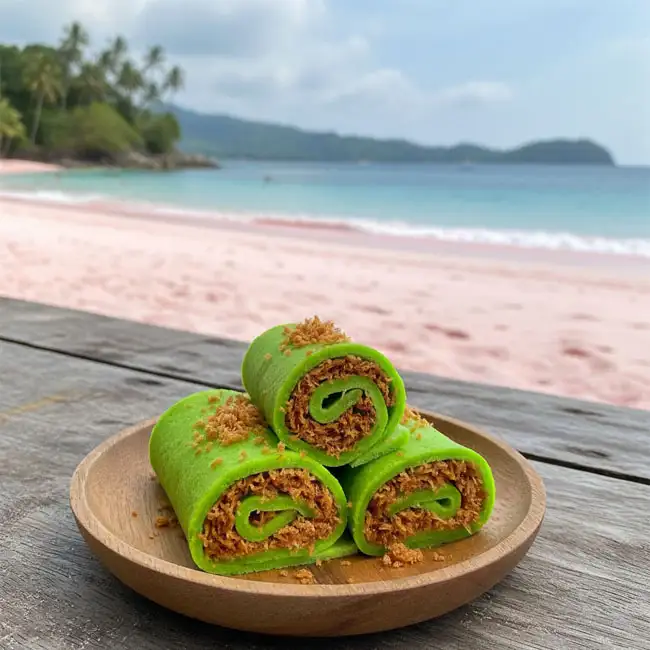
🥞 Recipe 3: Dadar Gulung (Pandan Crepes with Coconut Filling)
🟢 About this Recipe
Dadar Gulung is perhaps the most iconic "Kue" (cake) in Indonesia. "Dadar" means omelet or crepe, and "Gulung" means to roll. These are bright green crepes made with pandan juice, giving them a beautiful earthy aroma and a striking color. Inside is a mixture called Unti—grated coconut cooked with dark palm sugar. It’s juicy, sweet, and has a wonderful "chew" to it.
🛒 Ingredients & Measurements
For the Sweet Coconut Filling (Unti):
• 200 grams of shredded coconut (fresh is best, but unsweetened desiccated works too)
• 150 grams of palm sugar, chopped
• 50 ml of water
• 1 pandan leaf
• 1/4 teaspoon of salt
For the Pandan Crepes:
• 150 grams of all-purpose flour
• 1 large egg
• 300 ml of thin coconut milk
• 1/2 teaspoon of pandan paste (for that vibrant green color)
• 1/4 teaspoon of salt
• A little oil for the pan
👨🍳 Step-by-Step Instructions
1.Cook the Filling: In a small pan, combine palm sugar, water, salt, and the pandan leaf. Simmer until the sugar is melted and syrupy. Stir in the shredded coconut. Cook over low heat, stirring constantly, until the coconut has absorbed all the syrup but is still moist. Set aside to cool.
2.Make the Batter: In a bowl, whisk the flour and salt. Add the egg and slowly pour in the coconut milk while whisking to avoid lumps. Add the pandan paste and stir until the batter is a uniform bright green.
3.Strain for Smoothness: Pass the batter through a fine mesh strainer to ensure there are no tiny flour clumps.
4.Cook the Crepe: Lightly grease a non-stick pan (about 20cm) and heat it over medium-low. Pour a small ladle of batter and swirl the pan to create a thin, even circle.
5.Look for the "Skin": Cook for about 1–2 minutes until the top is dry and the edges pull away. You only need to cook one side! Flip it onto a plate.
6.The Roll: Place a tablespoon of the coconut filling on the lower third of the crepe. Fold the bottom over the filling, tuck in the sides, and roll it up like a small burrito.
💡 Tips & Mistakes to Avoid
• The "Lace" Effect: If your pan is too cold, the crepe will be smooth. If the pan is just right, you’ll see tiny little holes or a "lacy" texture on the skin, which is the hallmark of a perfect Dadar Gulung.
• Batter Consistency: The batter should be thin like heavy cream. If it’s too thick, the crepes will be gummy; if too thin, they will tear.
• Keep them Moist: Once rolled, keep them covered with plastic wrap or in a container, as the crepes can dry out and crack if left in the air too long.
❓ FAQ
Q1.Can I use frozen coconut?
Yes, just thaw it out first and squeeze out any excess water before cooking it with the sugar.
Q2.Why are my crepes breaking?
You might be flipping them too early, or your batter needs one more tablespoon of flour for strength.
📝 Summary
Dadar Gulung is a masterpiece of texture and color. It’s a bit more hands-on than the other recipes, but the result is a professional-looking dessert that is quintessentially Indonesian.
😊 Final Thoughts
Can you believe how easy it is to bring a taste of the tropics to your table? Indonesian desserts are all about taking simple, earth-grown ingredients like rice, coconut, and palm sugar and turning them into something magical.
What I love most about these three recipes is that they don't require an oven, they are naturally dairy-free (using coconut milk instead of cow's milk), and they are incredibly fun to make with family or friends. Whether you’re looking for the warm comfort of Bubur Sumsum, the icy refreshment of Es Doger, or the beautiful craft of Dadar Gulung, you’re exploring a sweet heritage that spans centuries.
Don't be afraid to experiment! Maybe you like your Bubur Sumsum with extra syrup, or your Es Doger with extra avocado—there are no rules in an Indonesian kitchen, only flavors. Try making them one at a time and see which one becomes your new favorite. If you do make them, share your colorful creations with your friends; I promise they’ll be impressed by your "exotic" pastry skills!
| 🇮🇩 🍨 < Back |