
🏠 Home > 🗺️ Recipes > 🍝 Main Dishes > 🇮🇩 Indonesia Main Dishes
🇮🇩 🍝 Indonesia Main Dishes Recipes
Published by Supakorn | Updated: February 2026
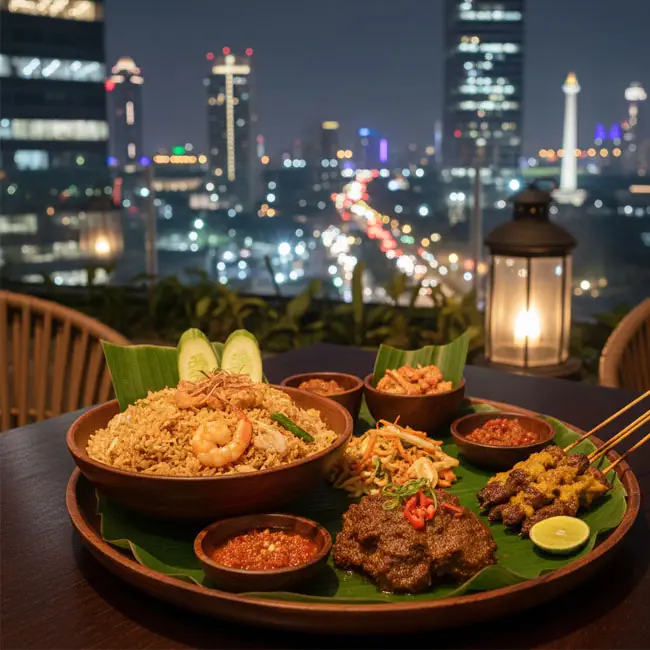
Indonesia is one of the most food-diverse countries in the world. With more than 17,000 islands, hundreds of ethnic groups, and a deep connection between food, family, and daily life, Indonesian main dishes are not just meals — they are stories served on a plate.
From steaming rice at the center of every table to rich spice pastes passed down through generations, Indonesian food reflects geography, climate, religion, and community values. In this guide, we’ll explore Indonesia’s main dishes through culture, lifestyle, and regional identity — without diving into cooking recipes — so you can truly understand how Indonesians eat and live.
🍚 The Heart of Indonesian Meals – Rice as Daily Life
Rice is not just food in Indonesia; it is life itself. Most Indonesians grow up believing that a meal without rice is not a real meal. Morning, afternoon, and evening, rice appears in almost every main dish, whether steamed, fried, or shaped into cakes.
Rice represents stability, gratitude, and togetherness. Families often cook a large pot of rice in the morning and use it throughout the day, pairing it with different side dishes. This habit shapes Indonesian main dishes to focus less on large portions of meat and more on balance, variety, and shared eating.
🏡 How Indonesians Eat – Daily Habits & Lifestyle
Eating in Indonesia is deeply social. Meals are often shared, with multiple dishes placed in the center of the table. Each person takes small portions of rice and adds side dishes according to taste.
Street food culture also plays a big role. Many Indonesians eat breakfast or lunch outside the home, especially in cities. Small food stalls, local eateries, and traditional markets serve hearty main dishes that are affordable, filling, and familiar.
Food is rarely rushed. Even simple meals carry emotional value, reminding people of home, childhood, and family traditions.
🌶️ Flavor Identity – Spices, Heat, and Balance
Indonesian main dishes are famous for their bold flavors. Instead of focusing on a single dominant taste, Indonesian cuisine balances spicy, savory, slightly sweet, and aromatic elements.
Spice pastes form the foundation of many dishes. These pastes are carefully prepared and vary from region to region. Heat levels can range from mild to very spicy, but spice is never used just for intensity — it always adds depth.
Importantly, Indonesians respect personal taste. Many meals are served with optional condiments, allowing each person to adjust flavors.
🍛 Iconic Indonesia Main Dishes You Should Know
Below are some of the most recognized Indonesian main dishes, known both locally and internationally. These dishes are deeply tied to culture and daily life rather than special occasions only.
🍗 Nasi Goreng – Indonesia’s Everyday Favorite
Nasi Goreng is often described as Indonesia’s national dish. It’s commonly eaten for breakfast, lunch, or dinner, making it one of the most flexible main dishes in the country.
What makes Nasi Goreng special is how personal it is. Every household, food stall, and region has its own version. It represents creativity, simplicity, and comfort — a dish that adapts to whatever ingredients are available.
🍲 HRendang – Slow-Cooked Tradition from West Sumatra
Rendang is more than a main dish; it’s a symbol of patience and respect for tradition. Originating from West Sumatra, Rendang reflects ceremonial culture and communal cooking.
It is often associated with important gatherings and family events, but many Indonesians also enjoy simplified versions in everyday meals. Rendang showcases how Indonesian cuisine values depth of flavor developed over time.
🥘 Soto – Comfort in a Bowl
Soto refers to a family of soup-based main dishes found across Indonesia. Each region has its own interpretation, but all versions share a comforting, home-style feeling.
Soto is commonly eaten for breakfast or lunch and is especially popular during rainy days. It represents warmth, simplicity, and everyday nourishment.
🍡 Satay – Shared Food, Shared Moments
Satay is a social dish. Often eaten together with friends or family, it’s commonly found at street stalls in the evening.
Satay reflects Indonesia’s love for communal dining. People gather, chat, and enjoy food slowly. It’s less about formality and more about connection.
🥗 Gado-Gado – Balance on a Plate
Gado-Gado highlights Indonesia’s appreciation for balance. It combines various components into one satisfying main dish.
This dish is popular among people looking for lighter meals, yet it remains filling and comforting. Gado-Gado shows that Indonesian main dishes don’t always rely on heaviness to be satisfying.
🗺️ Regional Diversity in Indonesian Main Dishes
Indonesia’s geography heavily influences its food. Coastal areas, mountainous regions, and fertile plains all produce different ingredients, leading to unique regional dishes.
🌋 Java – Sweet, Savory, and Familiar
Javanese main dishes often lean toward gentle flavors. Meals are comforting and family-oriented, reflecting daily life in both rural and urban areas.
Food in Java emphasizes harmony — nothing too extreme, everything balanced.
🌴 Sumatra – Bold Flavors and Strong Identity
Sumatran cuisine is known for its intensity. Main dishes here often feature rich textures and deep flavors.
Food plays an important role in ceremonies and social gatherings, showing respect for tradition and heritage.
🏝️ Eastern Indonesia – Simplicity and Nature
In eastern regions, main dishes are often simpler and closely tied to natural surroundings.
Meals reflect availability rather than excess, highlighting the Indonesian value of gratitude for what nature provides.
👨👩👧👦 Family, Tradition, and Home Cooking
Home cooking remains central to Indonesian life. Many people learn about food from watching parents and grandparents rather than reading recipes.
Main dishes are often cooked early and shared throughout the day. This practice strengthens family bonds and keeps traditions alive.
Food also acts as a way to care for others. Cooking for someone is a sign of respect and affection.
🕌 Cultural Values Behind Indonesian Main Dishes
Indonesian food culture emphasizes togetherness, respect, and moderation. Meals are not just about feeding the body but also about nurturing relationships.
Food is often shared during religious and community events, reinforcing social harmony. Even simple dishes carry meaning beyond taste.
🌍 Indonesian Main Dishes in Modern Life
Today, Indonesian main dishes continue to evolve. Urban lifestyles introduce faster eating habits, but traditional foods remain deeply loved.
Many people still prefer local main dishes over international fast food, showing strong cultural pride. Indonesian cuisine adapts without losing its roots.
✈️ Why Indonesian Main Dishes Attract the World
Travelers often remember Indonesia through its food. Main dishes offer a direct connection to culture, history, and daily life.
Each dish tells a story — of islands, families, and shared experiences. That storytelling quality is what makes Indonesian food unforgettable.
❓ FAQ: Indonesia Main Dishes
Q1: What is the most important staple in Indonesian main dishes?
Rice is the central staple and is considered essential to most meals.
Q2: Are Indonesian main dishes always spicy?
Not always. Spice levels vary by region and personal preference.
Q3: Do Indonesians usually eat together?
Yes, shared meals are a common and important part of daily life.
Q4: Are Indonesian main dishes mostly home-cooked?
Many are home-cooked, but street food and local eateries are also very popular.
Q5: What makes Indonesian cuisine unique globally?
Its regional diversity, cultural depth, and strong connection between food and community.
🍝 Title เพจย่อย+3สูตร Main Dishes
👉 Cook 3 Quick Indonesia Main Dishes
| 🌐 🍝 < Back | 🇮🇩 🥪 < Previous | Next > 🍨 🇮🇩 |