
🏠 Home > 🗺️ Recipes > 🍱 Snacks > 🇮🇩 Indonesiad Snacks
🇮🇩 🍱 Indonesia Snacks Recipes
Published by Supakorn | Updated: February 2026
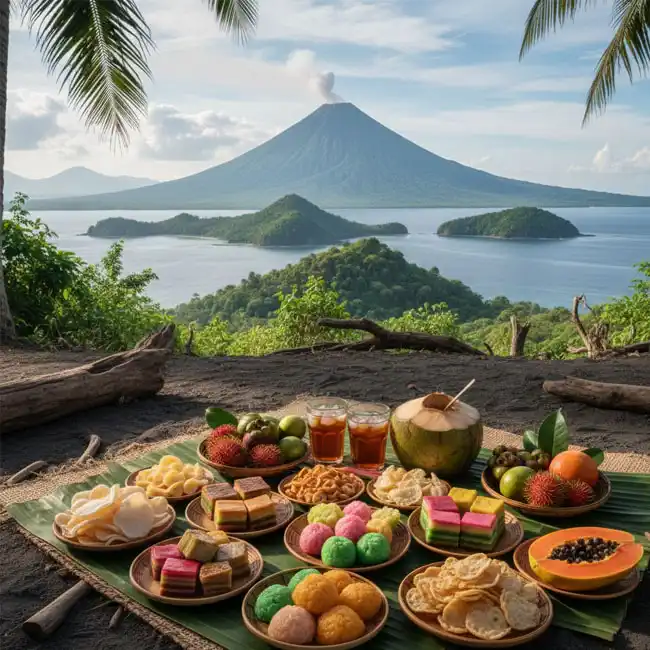
Snacking in Indonesia is not just about eating between meals — it’s a lifestyle. Indonesian snacks are woven into daily routines, social moments, and cultural traditions. From early morning markets to late afternoon street stalls, snacks are everywhere, shaping how people eat, gather, and connect.
Unlike the idea of packaged snacks eaten alone, Indonesian snacks are often freshly prepared, shared with others, and enjoyed slowly. They reflect local ingredients, regional creativity, and the strong sense of community that defines Indonesian food culture.
This guide explores Indonesian snacks through culture, daily life, and iconic snack names — without diving into recipes — so you can understand why snacking in Indonesia feels warm, social, and meaningful.
🌴 What Snacks Mean in Indonesian Daily Life
In Indonesia, snacks are not considered junk food. They are real food — just eaten in smaller portions.
People enjoy snacks:
• Between breakfast and lunch
• In the afternoon with family or friends
• During social visits
• At markets and street stalls
• At home as comfort food
Snacks help bridge the gap between meals and are often chosen for familiarity rather than novelty.
🕰️ Snacking as a Daily Rhythm
Indonesians tend to eat multiple times a day, but not always large meals. Snacks play an important role in keeping energy steady throughout the day.
Afternoon snacking is especially common. Around this time, people take a break, chat, and enjoy small bites together. This habit turns snacks into social glue rather than just personal cravings.
🏡 Home, Markets, and Street Snacks
Indonesian snacks live in three main places:
• Homes
• Traditional markets
• Street food stalls
At home, snacks are often homemade or bought fresh from nearby vendors. Markets offer a wide variety of traditional snacks made daily. Street stalls bring snacks directly into neighborhoods, schools, and offices.
This accessibility makes snacks part of everyday life rather than special treats.
🍌 Ingredients Rooted in Local Life
Indonesian snacks reflect local agriculture and natural resources. Many are built around ingredients that are easy to grow and widely available.
Common elements include:
• Natural starches
• Tropical produce
• Local grains
• Traditional sweeteners
Because of this, snacks feel connected to place and season, not mass production.
🧑🌾 Traditional Knowledge Behind Indonesian Snacks
Many snack traditions are passed down informally. People learn from watching parents, grandparents, and neighbors.
There is no strict recipe culture. Instead, snacks are made by feeling, experience, and memory. This gives Indonesian snacks a strong sense of identity and emotional connection.
🍘 Iconic Indonesian Snacks You Should Know
Indonesia has hundreds of traditional snacks. Below are some of the most recognizable and culturally important ones, enjoyed across generations.
🍌 Pisang Goreng – Everyday Comfort Snack
Pisang Goreng is one of the most beloved snacks in Indonesia. It is eaten at home, sold on streets, and enjoyed by people of all ages.
This snack represents simplicity and comfort. Many Indonesians associate it with home, family, and relaxed moments.
🍡 Klepon – Sweet Surprise in a Small Bite
Klepon is a traditional snack known for its playful eating experience.
It is commonly found in markets and traditional snack stalls. Klepon reflects Indonesian creativity in turning simple ingredients into joyful food experiences.
🥥 Onde-Onde – Festive and Familiar
Onde-Onde is a snack often associated with celebrations and family gatherings.
Its presence at special occasions shows how snacks play a role beyond daily hunger — they help mark moments and memories.
🍠 Getuk – Heritage from Local Roots
Getuk is a traditional snack closely tied to regional identity.
It represents resourcefulness and tradition, showing how Indonesian snacks often come from practical, local solutions that became cultural symbols.
🍘 Kerupuk – Crunch in Every Meal and Snack
Kerupuk is everywhere in Indonesia. It is eaten as a snack on its own and also alongside meals.
Kerupuk represents texture, fun, and familiarity. Its presence adds joy to everyday eating.
🌽 Bakwan – Savory Street Favorite
Bakwan is a popular savory snack found in many neighborhoods.
It reflects Indonesia’s love for affordable, filling snacks that can be enjoyed anytime, anywhere.
🍰 Kue Tradisional – A World of Small Bites
“Kue” refers to a wide range of traditional Indonesian snacks.
These snacks are colorful, diverse, and deeply rooted in tradition. They are often enjoyed in assortments, showing Indonesia’s love for variety and sharing.
🏙️ Street Snack Culture in Indonesia
Street snacks are an essential part of Indonesian food life.
Vendors often stay in the same spots for years, building relationships with regular customers. Buying snacks becomes a daily interaction, not just a transaction.
Children, students, workers, and elders all share the same snack spaces, making street snacks a powerful social equalizer.
👨👩👧👦 Snacks and Family Life
Snacks are closely tied to family routines.
Families often:
• Share snacks in the afternoon
• Bring snacks when visiting relatives
• Serve snacks to guests
• Prepare snacks together
Offering snacks is a way to show care and hospitality. Even simple snacks carry emotional value.
🕌 Cultural Meaning of Indonesian Snacks
Snacks reflect Indonesian values such as:
• Togetherness
• Simplicity
• Sharing
• Moderation
• Respect for tradition
They are rarely eaten alone or in a rush. Snacks invite pause, conversation, and connection.
🌍 Indonesian Snacks in Modern Life
Modern life has introduced packaged snacks, but traditional snacks remain deeply loved.
Many people still prefer fresh snacks from markets and street stalls because they feel more authentic and comforting.
Traditional snacks continue to adapt without losing their identity, showing the strength of Indonesian food culture.
✈️ Why Indonesian Snacks Attract Global Interest
Visitors often remember Indonesian snacks as much as main meals.
These snacks offer:
• Unique textures
• Cultural stories
• Social experiences
• Local identity
They show that small bites can carry big meaning.
🌱 Indonesian Snacks as Cultural Expression
For Indonesians, snacks are part of who they are.
They represent:
• Childhood memories
• Home
• Community
• Cultural continuity
Snacks may be small, but their role in Indonesian life is powerful.
❓ FAQ: Indonesia Snacks
Q1: Are Indonesian snacks eaten every day?
Yes, snacking is a normal part of daily life in Indonesia.
Q2: Are Indonesian snacks mostly sweet or savory?
Both are equally popular, depending on time and preference.
Q3: What makes Indonesian snacks unique?
Their cultural depth, social role, and connection to everyday life.
🍱 Title เพจย่อย+3สูตร Snacks
👉 Enjoy 3 Best Quick Indonesia Snacks
| 🌐 🍱 < Back | 🇮🇩 🍞 < Previous | Next > 🥘 🇮🇩 |