
🏠 Home > 🗺️ Recipes > 🏛️🍖 Hearth-Roasted Mains > 🏝️ Kingdom of Kerma: Hearth-Roasted Mains Recipes
🏝️ 🏛️🍖 Kingdom of Kerma: Hearth-Roasted Mains Recipes
Published by Supakorn | Updated: October 2026
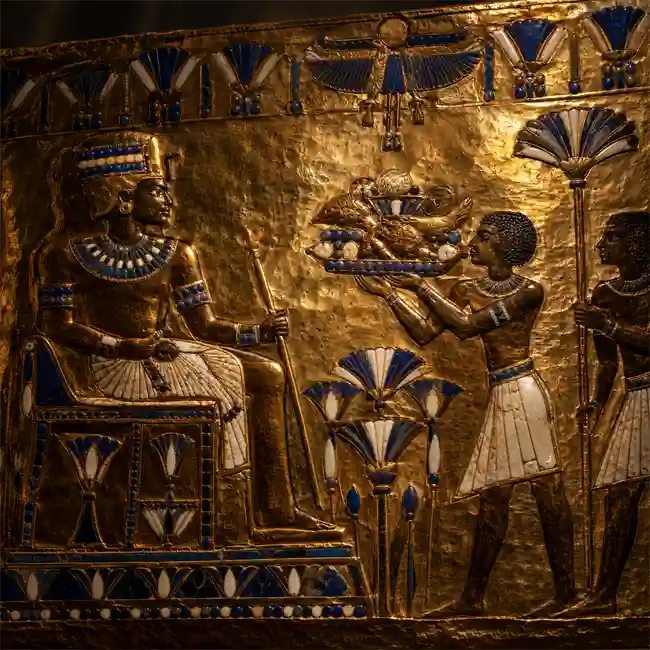
🛕📜 The Storyteller’s Intro: 5,000 Years of Ancestral Flavors
Picture a settlement where the Nile’s fertile surroundings meet the dry landscapes of Upper Nubia. Herds, stored grain, pottery, and the demands of feeding a household connect daily life to the wider world. This is the setting for exploring the Kingdom of Kerma’s food culture: an ancient African civilization whose culinary story survives through archaeology rather than a collection of written recipes.
“Hearth-roasted mains” offers an inviting theme for that exploration, but it needs an honest introduction. Archaeologists have evidence for livestock, cereal consumption, fishing, and other food resources. That does not mean they have recovered a named Kerma roast, its seasoning mixture, or instructions for preparing it. Here, the hearth is a way into the story—not proof of an excavated cookbook.
And what about those 5,000 years? Kerma’s deeper background reaches into earlier farming and herding communities, while the kingdom itself is generally dated to approximately 2500–1500 BCE. Its beginnings therefore lie roughly 4,500 years ago. A five-millennia perspective works for the broader ancestral landscape, provided we distinguish that background from the kingdom’s conventional chronology.
⏳ Three Main Phases of Kerma’s Story
✦ Early Kerma, approximately 2500–2000 BCE: This phase marks the kingdom’s early development. Food production, livestock keeping, and increasingly organized settlement life formed part of the foundation for its growth.
✦ Middle Kerma, approximately 2000–1750 BCE: Kerma developed within a landscape of agricultural communities, pastoral activity, and regional exchange. Its food history belongs to these interconnected systems, not simply to exceptional meals enjoyed by powerful people.
✦ Classic Kerma, approximately 1750–1500 BCE: The kingdom reached its greatest prominence. Archaeological research also reveals changes in animal consumption across its history, reminding us that “Kerma cuisine” was not one unchanging menu.
These dates are approximate archaeological divisions. Earlier pre-Kerma communities and later post-Kerma developments extend the wider story, but the three phases above provide the clearest framework for understanding the kingdom itself.
🌾 Before the Feast Came the Food Supply
An earlier settlement described by the Kerma archaeological mission contained approximately 40 huts around a storage area with almost 500 cereal granaries. That is a striking introduction to ancient food culture: before imagining a dramatic roast, imagine the planning involved in maintaining food reserves.
Those storage features belong to a particular earlier settlement, not a pantry inventory for every period of the kingdom. Even so, they show why grain storage deserves a place beside livestock in this story. Food security, preparation, and collective organization were as important as anything placed near a fire.
📜 Iconic Excavated Food Evidence: What Survives Instead of Menus
Here is the essential distinction: the sources consulted for this article do not identify surviving Kerma recipe texts or securely attested ancient dish names. Calling invented titles “excavated menus” would turn an appealing food story into misleading history.
Instead, the categories below highlight archaeologically supported food resources. Their headings are modern descriptive labels, not translations of ancient menu entries. They provide a responsible foundation for discussing ancient Nubian cuisine—and for developing clearly identified interpretations later.
🐄 Cattle-Based Foods
Cattle occupy a central place in Kerma’s archaeological story. Research on animal remains indicates that cattle were especially abundant in earlier periods. Their importance also extended beyond food, making them a powerful connection between subsistence, wealth, and cultural life.
For a hearth-roasted mains collection, beef is therefore a relevant ingredient to investigate. What remains uncertain is the finished dish: the evidence presented here does not establish a particular roasting arrangement, cut, seasoning, or serving occasion.
The useful takeaway is simple. “Cattle were important at Kerma” is a supported historical statement. “This is the exact beef roast served at Kerma” would require evidence we do not currently have in these sources.
🐑 Sheep-Based Foods
Sheep belong to the livestock economy documented for Kerma. Archaeozoological research reports that caprines—the category encompassing sheep and goats—became the principal animal protein source in the studied material during Classic Kerma.
That change makes sheep particularly interesting when exploring food culture during the kingdom’s later flourishing. It also cautions against presenting cattle as the only meaningful animal food throughout a thousand years of history.
We should not automatically translate “sheep remains” into a precise lamb dish. The animal’s age, the selected portion, and the cooking method require their own evidence. A future sheep-based interpretation can be historically informed without claiming to reproduce a documented ancient recipe.
🐐 Goat-Based Foods
Goats were another component of the region’s livestock keeping. Their inclusion helps broaden the picture beyond a monumental civilization and its grandest objects: Kerma also depended on the practical work of managing animals and sustaining communities.
Sheep and goats are sometimes discussed together because their remains can be difficult to distinguish. Where research uses the combined category “caprines,” it is better to preserve that uncertainty than invent separate consumption figures.
Goat is consequently a reasonable subject for a Kerma-inspired main course, but an authentic ancient name or specific preparation cannot be supplied from the evidence consulted.
🐟 Fish and River Foods
Fishing forms part of the subsistence picture described by the Kerma archaeological mission. The Nile’s contribution to food culture therefore went beyond supporting crops and providing water for people and livestock.
Fish help balance a meat-centered introduction. Ancient meals were shaped by available environments, and the river offered resources distinct from those supplied by herds.
However, evidence for fishing does not establish a particular fire-roasted fish dish. Species, preparation, preservation, and frequency of consumption should remain open questions unless supported by more specific findings.
🌾 Cereal-Based Foods
Cereals deserve a prominent place, even in an article about mains. Storage evidence and research noting cereal consumption show that the food system cannot be understood through animal remains alone.
Grain-based accompaniments are an important direction for future investigation, but their exact forms should not be assumed. A cereal find does not independently tell us whether people prepared a particular bread, thick porridge, or another food.
This is where archaeology becomes especially engaging: modest fragments can establish ingredients while leaving the cook’s final decisions beyond our reach.
🍖 Kingdom of Kerma: Hearth-Roasted Main Course Ideas
Historical note: These are modern, Kerma-inspired menu names—not recorded ancient dish names or recovered recipes. Cattle, sheep, and goats are documented in Kerma’s archaeological record; the cuts, cooking methods, and serving styles below are creative interpretations.
🔥 1. Kerma-Inspired Hearth-Roasted Beef
Description: A rustic beef centerpiece imagined with a deeply browned exterior and a rich, savory interior. Inspired by the importance of cattle in ancient Kerma, this modern interpretation puts the meat itself at the heart of the plate.
🐑 2. Upper Nubian Ember-Roasted Mutton
Description: Full-flavored mutton envisioned with gently rendered fat and an appealing roasted crust. This Kerma-inspired main draws attention to sheep within the kingdom’s livestock economy, offering a hearty alternative to a beef-centered menu.
🐐 3. Kerma-Inspired Slow-Roasted Goat
Description: A generous goat roast imagined with tender meat, browned edges, and a deeply savory character. Its inspiration comes from the goats raised in ancient Kerma, while the slow-roasted preparation is a modern culinary choice rather than a documented ancient technique.
🍖 4. Nile Valley Hearth-Roasted Beef Ribs
Description: A sharing-style centerpiece of beef ribs, envisioned with crisp edges and succulent meat close to the bone. This contemporary menu concept connects the appeal of a substantial roast with the wider story of cattle in Kerma’s Nile Valley setting.
🏺 5. Kerma-Inspired Roasted Sheep Shoulder
Description: A substantial sheep shoulder imagined with a golden-brown surface and a rich, satisfying texture. Designed as a modern heritage-inspired main, it highlights an animal that became increasingly prominent in the archaeological record during Classic Kerma.
🌾 6. Kerma-Inspired Roast Beef and Grain Platter
Description: Slices of roasted beef served alongside a simple cooked-grain accompaniment create a balanced, comforting main course. The concept brings together two documented parts of Kerma’s food economy—livestock and cereals—without claiming that this particular pairing survives as an ancient recipe.
🔥 Ancient Hearth Cooking: An Honest Way to Imagine the Meal
🍖 Why the Hearth-Roasted Theme Works
◦ Fire, food preparation, and gathering make a compelling framework for introducing the Kingdom of Kerma. A hearth-centered article invites readers to think about heat management, fuel, working space, and the effort behind a meal.
◦ Still, the theme should remain broader than a claim about one proven cooking technique. Animal bones establish different things from cooking installations, residues, or food remains. Even burned material needs careful interpretation; exposure to fire does not automatically demonstrate roasting for consumption.
◦ Think of “Kingdom of Kerma: Hearth-Roasted Mains” as a historically grounded editorial collection. Its strength comes from using documented resources while clearly identifying any later culinary reconstruction as modern.
🏺 Pottery Adds Texture, Not a Complete Recipe
◦ Kerma pottery offers a tangible connection to the people behind the food story. Museum collections preserve Kerma vessels, including beakers and bowls, that make the civilization’s material culture easier to appreciate.
◦ A vessel’s shape can raise useful questions about handling, presentation, and use. Yet a beautiful bowl does not reveal everything once placed inside it, and a museum object should not become evidence for an invented meal.
◦ This distinction actually makes the story richer. We can admire skilled craftsmanship while recognizing that food history depends on context: where an object was found, what accompanied it, and whether traces of its contents survive.
🗺️ Eating and Living in Upper Nubia: Following Kerma’s Cultural Landscape
🏘️ Everyday Food Was a Community Achievement
◦ Ancient food culture began long before serving time. Herding, cultivating, collecting, storing, processing, and distributing resources all contributed to the possibility of a meal. Kerma’s history becomes more human when we look beyond rulers and consider those everyday tasks.
◦ The archaeological mission describes livelihoods involving cattle and caprines, plant resources, hunting, and fishing. Together, these activities suggest a varied subsistence economy rather than a civilization sustained by one iconic food.
◦ That does not tell us exactly who performed each task or how every household divided its work. Assigning fixed roles without evidence would add a familiar modern story where the ancient record remains incomplete.
🍽️ Was Everyone Eating the Same Thing?
◦ Probably not in identical quantities or circumstances, but differences must be demonstrated rather than imagined. Settlement remains, burial deposits, and exceptional objects represent different contexts; none should automatically stand for everyone’s dinner.
◦ A useful food-history question is not merely “What did Kerma eat?” It is “Which people, in which period, at which location, and on what occasion?” Those questions help separate ordinary provisioning from unusual deposits.
◦ They also prevent an easy mistake: treating the most spectacular archaeological discoveries as a typical household menu. Everyday food can leave less dramatic traces while remaining essential to understanding the civilization.
🧭 A Heritage Journey, Not a Ready-Made Itinerary
◦ Kerma lies in present-day Sudan, within the historical region of Upper Nubia. Following its culinary heritage begins with understanding that geography and recognizing Sudanese communities as custodians of the landscape—not treating the site as a disconnected ancient curiosity.
◦ Museum collections, archaeological publications, and heritage interpretation can support that journey without requiring an immediate visit. This article is cultural background, not a statement about current accessibility or travel safety.
◦ Anyone considering travel should consult current official advice and reliable local information first. Site access, conservation needs, and practical conditions should never be inferred from an evocative description of the past.
🚣 The Nile Basin Food Story: Fields, Herds, and Connections
🌊 More Than a River Beside a City
◦ The Kerma archaeological mission places the city within a fertile basin and at the meeting point of routes connecting Egypt, the Red Sea, and Africa’s interior. That setting helps explain why food history here is inseparable from geography.
◦ River resources, agricultural land, livestock management, and exchange belonged to a connected landscape. The city’s prosperity was not simply a matter of possessing impressive buildings; it also depended on access to resources and productive communities.
◦ For readers exploring ancient Nile Valley diets, Kerma offers an important shift in perspective. The Nile’s history includes distinctive Nubian societies whose food cultures deserve attention on their own terms.
🌾 Storage Is Part of the Culinary Story
◦ A store of grain may sound less exciting than sizzling meat, but it represents foresight. Stored food changes the relationship between harvest and consumption, creating possibilities for managing supplies across time.
◦ Kerma’s earlier granary evidence encourages us to ask how food was protected, accessed, and organized. Those questions connect archaeology to familiar concerns: keeping enough food, limiting loss, and preparing for periods when fresh supplies are less available.
◦ What we should not do is convert the number of granaries into an exact population, ration schedule, or feast size without the necessary research.
🐄 Movement Did Not Mean a Single Shared Cuisine
◦ Regional connections could move animals, materials, and knowledge, but contact alone does not prove that a particular dish traveled along a route. Food exchange needs evidence just as architectural or technological exchange does.
◦ Kerma’s connections are therefore best understood as opportunities for interaction, not permission to import ingredients from every neighboring cuisine. Its ancient food identity should emerge from its own record.
🏜️ Desert Horizons: Understanding Kerma Beyond the Green Riverbanks
🐐 Between Cultivation and Herding
◦ The contrast between fertile river surroundings and drier terrain provides a useful framework for understanding the region. Agricultural and pastoral activities could draw on different resources, making the wider landscape important to food production.
◦ Rather than imagining an isolated desert kitchen, picture relationships among settlements, fields, grazing areas, and routes. The details varied through time, but the broader lesson is clear: a meal depended on places beyond the household.
◦ This perspective also keeps the desert from becoming mere scenery. It was part of the geographical setting within which people organized movement, livelihoods, and connections.
🧂 Avoiding the “Exotic Spice” Shortcut
◦ A modern writer can easily make an ancient roast sound irresistible by adding a fragrant spice blend. The problem is that a delicious description can quietly become a false historical claim.
◦ No specific Kerma seasoning combination is established by the sources used here. Salt levels, aromatic additions, marinades, and finishing touches should therefore remain unspecified in an introductory historical article.
◦ Future recipes can still be enjoyable and creative. They simply need labels such as “Kerma-inspired” or “modern interpretation,” alongside a clear distinction between documented ingredients and choices made for today’s kitchen.
❓⚔️ Ancient Civilization FAQ: Unlocking Palace Kitchen Mysteries
Q1:Have Archaeologists Discovered Written Kerma Recipes?
The sources consulted here do not identify surviving Kerma recipe texts or a securely documented list of ancient dish names. The food story instead draws on animal remains, storage features, plant evidence, pottery, and settlement archaeology. These reveal important aspects of provisioning and consumption without preserving a complete cookbook.
Q2:Can We Call Roasted Beef Kerma’s Signature Dish?
Not as an established historical fact. Cattle were important, but importance is not the same as proof of a signature preparation. “Kerma-inspired roasted beef” can describe a modern interpretive dish; “Kerma’s documented national roast” would overstate the evidence and apply a modern culinary category too confidently.
Q3:Did Food Preferences Change Across Kerma’s History?
The animal evidence indicates change. Research describes greater cattle abundance in earlier periods and a later prominence of sheep and goats as animal protein sources in Classic Kerma material. That supports a changing consumption picture, although it does not independently explain every cause or describe every household.
Q4:Can We Reconstruct an Exact Palace Banquet?
Not from the evidence summarized here. A convincing reconstruction would need securely associated information about ingredients, preparation, serving, location, and date. An imaginative banquet can be presented as interpretation, but neither impressive architecture nor exceptional deposits supply an exact palace menu on their own.
🧠 Final Thoughts: The Timeless Allure of Antique Gastronomy
Kerma’s culinary appeal does not depend on pretending that a complete recipe survived. Its real fascination lies in the relationship between people and resources: cattle and caprines, cereals and storage, river foods and fertile land, pottery and the practical demands of nourishment.
Looking closely also changes what counts as an ancient culinary secret. Sometimes it is not a mysterious seasoning. It is the organization behind a granary, the changing importance of livestock, or the skill embodied in a vessel.
A future collection of hearth-roasted mains can build on that foundation, introducing carefully labeled interpretations rather than fictional discoveries. For now, the invitation is to appreciate the civilization behind the imagined plate—and to return for full recipes that keep creativity and evidence clearly distinguished.
🏛️ Credit to the Keepers of the Culture: The Legacy
🔸 Sudanese and Nubian communities: Kerma belongs to a living cultural landscape. Respect for its heritage begins with the people whose histories, communities, and stewardship connect the ancient site to the present.
🔸 The Kerma archaeological mission: Its published historical overview informs this article’s discussion of earlier settlement, cereal storage, livelihoods, and the city’s geographical connections.
🔸 Archaeozoological scholarship: Research published by Louis Chaix and collaborators provides essential context for cattle, sheep, goats, and changes in animal consumption.
🔸 Museum collections: The British Museum and the Metropolitan Museum of Art preserve Kerma pottery that supports public engagement with the civilization’s material heritage.
🔸 Historical transparency: No invented dish name is presented here as an ancient discovery. Documented food resources, uncertain cooking practices, and future modern interpretations remain separate—because cultural respect includes being honest about what the evidence can tell us.
🏛️🍖 Echoes of Ancient Nubia: Recreating Kerma’s Herbal Beef Tradition
👉 Explore Kingdom of Kerma's Hearth-Roasted Mains
| 🌐 🏛️🍖 < Back | 🏝️ 🌾 < Previous | Next > 🍲 🏝️ |