
🏠 Home > 🗺️ Recipes > 🏛️🍖 Hearth-Roasted Mains > 🏝️ Kingdom of Kerma: Hearth-Roasted Mains Recipes > 🏛️🍖 1.Ancient-Inspired Nubian Herbal Cured Dried Beef
🏛️🍖 Echoes of Ancient Nubia: Recreating Kerma’s Herbal Beef Tradition
Published by Supakorn | Updated: October 2026
🦛🕌 Ancient Civilization Origins: The Kingdom of Kerma, Ancient Nubia
🔥 The Storyteller’s Intro: Echoes of Five Thousand Years of Ancestral Flavors
Imagine standing beside the Nile thousands of years ago. The sun hangs over the golden landscape, the river moves steadily through the fertile land, and somewhere near an ancient settlement, people prepare food for the days ahead. Fresh meat is valuable, herbs fill the air with earthy aromas, and practical knowledge passes from one generation to the next.
Welcome to the world of the Kingdom of Kerma, one of the great early civilizations of ancient Nubia, in what is now northern Sudan.
Kerma flourished for centuries, becoming a powerful political and trading center south of ancient Egypt. Its people developed distinctive traditions, built impressive settlements, and lived in a landscape shaped by the Nile. Food was more than a daily necessity. It connected families, supported travelers, sustained workers, and helped communities prepare for changing seasons.
Now, imagine bringing a small piece of that ancient world into your modern kitchen.
This journey explores the idea of herbal cured dried beef through the lens of ancient Nubian food history. The recipe that follows is a modern, historically inspired reconstruction, not a verified recipe recovered from a Kerma archaeological site. That distinction matters because the surviving evidence does not establish a specific Kerma formula for herb-cured beef.
Still, the ingredients and techniques offer an engaging way to explore the broader human story of preserving food before refrigerators, freezers, and modern packaging existed.
So, sharpen your curiosity, gather your ingredients, and let's explore how an ancient-inspired beef recipe can connect today's kitchen with the distant past.
🌍 The Global Value of Antique Heritage
Ancient food traditions are valuable because they reveal how people adapted to their environments. Before modern refrigeration, communities relied on knowledge of seasons, available resources, drying conditions, and methods of keeping food usable for longer periods.
In the Nile Valley, agriculture, livestock, fishing, and regional trade all contributed to different foodways. The exact combination varied by community, social status, season, and access to resources. There was no single ancient Nubian diet, just as there is no single modern Sudanese cuisine.
The Kingdom of Kerma deserves a place in this wider story. Its archaeological remains demonstrate the complexity of a civilization that developed its own identity and maintained important relationships with neighboring societies.
Although we cannot confidently assign this particular dried beef recipe to Kerma's ancient kitchens, exploring a carefully labeled reconstruction encourages us to ask useful questions. How did people manage perishable foods? Which local plants might have influenced flavor? How did geography shape everyday cooking?
These questions connect culinary creativity with historical curiosity.
For modern home cooks, the global value of heritage cooking lies in more than reproducing an old flavor. It is about understanding the relationship between people, land, ingredients, and the practical knowledge that keeps traditions alive.
✨ The Culinary Resurrection
Recreating ancient-inspired food does not require pretending that every ingredient or measurement comes directly from an archaeological discovery.
Instead, the goal is to combine historical context with transparent modern cooking practices. We can draw inspiration from the Nile Valley's agricultural environment, use familiar herbs and spices that evoke a warm, earthy flavor profile, and adapt traditional drying concepts to a safe contemporary kitchen.
Beef is a useful starting point because it can be sliced thinly, seasoned in layers, and transformed into a portable food when properly processed. Herbs add aroma, while carefully controlled drying changes the texture and concentrates the savory character.
Our version is designed for modern readers who want a practical recipe alongside a story about ancient Nubia.
Think of it as a culinary tribute rather than a recovered artifact: a new creation inspired by an old world, prepared with respect for what history tells us and honesty about what remains unknown.
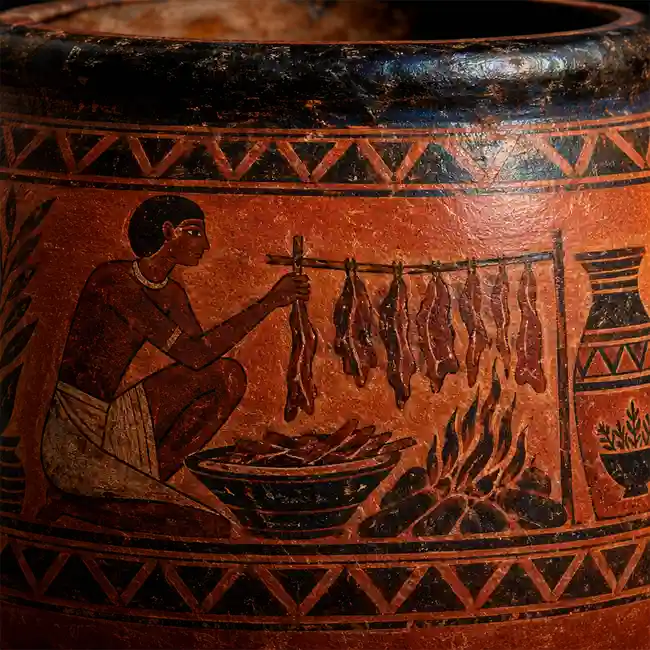
🍖 Recipe: Ancient-Inspired Nubian Herbal Cured Dried Beef
📜 Legends Behind This Excavated Secret
Picture a bundle of seasoned beef prepared for a long journey along the Nile. Its surface carries the fragrance of crushed coriander, the warmth of cumin, and the sharp, green scent of herbs. The meat is compact, savory, and easy to carry.
It is an evocative scene, but we should separate imagination from evidence. No verified archaeological discovery establishes the precise ingredients, proportions, or preparation steps of a traditional Kerma herbal dried beef recipe. The following dish is therefore a modern interpretation inspired by ancient Nubia's environment and the broader history of meat preservation.
Drying meat is one of humanity's practical responses to a simple challenge: fresh food does not remain fresh forever. Removing moisture can help limit spoilage, although safe preservation depends on more than dryness alone. Salt, temperature, sanitation, and controlled processing all matter.
Our recipe combines lean beef with aromatic seasonings to create a flavorful, jerky-style food. Coriander and cumin provide a warm, earthy foundation, while thyme and garlic contribute familiar savory notes. A little vinegar adds brightness and helps distribute the seasoning.
These are modern culinary choices, not a claim that every ingredient was used in Kerma during a particular historical period. Some ingredients and spice combinations have long histories across different regions, but their exact use in Kerma cannot be assumed without direct evidence.
The result is a delicious way to explore an ancient-inspired flavor profile while keeping the historical story honest.
🧺 Ingredients & The Noble Pantry
🌾 The Ancestral Staples
In any historical food reconstruction, ingredients tell a story about the landscape. The Nile supported farming and settlements, while livestock contributed food and other valuable resources. Regional exchange also helped connect communities across northeastern Africa.
For this modern recipe, choose ingredients that produce a robust, balanced flavor rather than claiming to reproduce an exact ancient pantry.
The most important ingredient is lean beef. Less fat generally makes dried meat easier to prepare and store because fat can become rancid over time. Choose a lean cut with minimal visible connective tissue, and keep it chilled until preparation.
Ground coriander brings a gentle citrus-like aroma. Cumin adds a deep, earthy character, while thyme provides a dry herbal fragrance. Garlic and black pepper round out the seasoning with familiar savory notes.
Salt is essential to the recipe's flavor, but it should not be treated as a guarantee of safe preservation. Vinegar adds acidity and flavor, yet a quick marinade does not make raw beef safe to dry at room temperature.
For a reliable modern result, use a food thermometer and a controlled oven or food dehydrator. Historical inspiration should never mean sacrificing food safety.
🧂 Modern Substitutes
Here is what you will need for a small home batch.
◦ Lean beef: 500 grams of lean round or another lean cut suitable for slicing. Trim away visible fat.
◦ Salt: 10 grams of salt, approximately 1½ teaspoons depending on the grain size.
◦ Ground coriander: 2 teaspoons for a warm, lightly citrusy aroma.
◦ Ground cumin: 1 teaspoon for a deeper, earthy flavor.
◦ Dried thyme: 1 teaspoon for a gentle herbal note.
◦ Garlic powder: 1 teaspoon for savory depth.
◦ Black pepper: ½ teaspoon for mild heat.
◦ Apple cider vinegar: 2 tablespoons to brighten the seasoning.
◦ Water: 1 tablespoon, if needed, to help distribute the mixture evenly.
These measurements are a modern recipe formulation, not documented Kerma-era proportions.
You can adapt the seasoning to your taste. If thyme is unavailable, a small amount of dried oregano makes a reasonable modern substitute. If ground coriander is unavailable, use a little crushed coriander seed. Fresh herbs are less convenient for this particular recipe because they introduce additional moisture.
For a milder result, reduce the black pepper. For a more aromatic profile, slightly increase the coriander while keeping the salt measured rather than adding it by eye.
Avoid adding extra oil. It is unnecessary for this preparation and can interfere with the texture and storage quality of dried beef.
⚖️ Ancient Proportions
The following proportions are designed for 500 grams of beef. They are practical modern measurements inspired by the idea of an ancient herb-seasoned food, not measurements discovered in an ancient kitchen.
◦ Beef: 500 grams.
◦ Salt: 10 grams.
◦ Ground coriander: 2 teaspoons.
◦ Ground cumin: 1 teaspoon.
◦ Dried thyme: 1 teaspoon.
◦ Garlic powder: 1 teaspoon.
◦ Black pepper: ½ teaspoon.
◦ Apple cider vinegar: 2 tablespoons.
◦ Water: Up to 1 tablespoon, only if needed.
Keep the balance simple. Coriander should lead, cumin should provide depth, and thyme should remain in the background. The salt should season the meat without overwhelming the herbs.
A useful trick is to mix the dry seasonings first. This helps distribute the smaller quantities evenly before they touch the beef.
If you want to experiment with another batch, change only one or two seasonings at a time. That way, you can identify which flavors contribute most to the finished result.
🔥 The Chef’s Ancient Ritual
Think of the preparation as a modern kitchen ritual inspired by the resourcefulness of ancient food makers. Take your time, keep everything clean, and let the aroma of the herbs set the mood.
🥩 Step 1: Prepare the Beef
Place the beef in the freezer for approximately 30 to 60 minutes, just until it firms up enough to slice more easily. It should remain partially frozen, not frozen solid.
Using a clean knife and cutting board, slice the beef into strips approximately 6 millimeters thick. Aim for consistent thickness so that the pieces cook and dry at a similar rate.
For a chewier texture, cut with the grain. For a more tender bite, cut across the grain.
Trim away visible fat and discard any pieces that have an unusual smell or appearance. Keep the beef refrigerated whenever you are not actively handling it.
🌿 Step 2: Awaken the Herbs
In a clean bowl, combine the salt, coriander, cumin, thyme, garlic powder, and black pepper.
Add the vinegar and a tablespoon of water if necessary. Stir until the seasonings form a loose paste.
Add the beef strips and turn them until each piece is evenly coated. Cover the bowl and refrigerate for 4 to 12 hours.
This resting period allows the seasonings to spread across the meat. It does not make the beef shelf-stable, and it should not be used as a substitute for proper heating and drying.
♨️ Step 3: Apply a Safe Heat Treatment
Before drying, the beef needs an appropriate heat treatment to reduce the risk from harmful bacteria.
Arrange the strips in a single layer in a preheated oven. Heat them until the thickest pieces reach an internal temperature of 71°C (160°F), checking with a food thermometer.
Avoid crowding the strips, and handle them with clean utensils. If your equipment or strip thickness makes the temperature difficult to verify, use a validated jerky preparation method that provides a reliable heat-treatment step.
This modern safety measure is essential. Ancient-style presentation is no reason to skip contemporary food-safety precautions.
🌬️ Step 4: Dry the Seasoned Beef
Transfer the heat-treated strips to a food dehydrator or a suitable oven setup that maintains a consistent drying temperature. Follow the appliance manufacturer's guidance for making beef jerky.
Arrange the strips with space between them so warm air can circulate. Turn them as needed if your equipment dries unevenly.
Continue drying until the beef is firm and dry, with no visibly wet or raw-looking center. Properly dried jerky should bend and crack slightly rather than feel soft and juicy. Dryness alone, however, does not prove that the product is safe for room-temperature storage.
Drying time varies with the cut, thickness, humidity, airflow, and appliance. It may take several hours, so judge the result by the recommended preparation method and the finished texture rather than relying on a fixed time.
🏺 Step 5: Cool and Serve
Once the beef is fully dried, allow it to cool in a clean area. Avoid leaving it exposed for extended periods or handling it with unwashed hands.
Taste a small piece. You should notice the savory beef first, followed by coriander, earthy cumin, and the gentle fragrance of thyme.
For this home-prepared version, refrigerate the finished beef promptly in a clean, airtight container. For longer storage, freeze it. Do not assume that homemade dried beef is safe to store at room temperature simply because it feels dry.
Serve small pieces as a savory snack, pack them for a day trip with appropriate temperature control, or slice them into a modern grain bowl with vegetables.
The finished dish is ready to tell its story: an ancient-inspired flavor created with modern knowledge.
🛡️ Secrets of the Ancestral Hearth
The difference between a disappointing batch and a memorable one often comes down to a few small decisions. These tips will help you make the recipe more consistent without confusing culinary inspiration with proven ancient technique.
◦ Choose lean meat. Excess fat can shorten storage life and create an unpleasant texture. Trim visible fat before slicing.
◦ Keep the strips uniform. Pieces of similar thickness dry more evenly. Very thick strips can remain moist inside even when the outside looks finished.
◦ Season with intention. Coriander, cumin, and thyme work best when their flavors remain balanced. More seasoning does not automatically mean better flavor.
◦ Do not rely on vinegar alone. A flavorful marinade is not a validated preservation process. Refrigerate the beef during marination and use an appropriate heat treatment before drying.
◦ Measure temperatures, not appearances. Color changes do not reliably establish that beef has reached a safe internal temperature. Use a food thermometer.
◦ Control the drying environment. Excess humidity and weak airflow can slow moisture removal. Follow your dehydrator's instructions and use a tested method for jerky.
◦ Avoid sealing warm beef. Allow the finished product to cool in a clean environment before packing it. Trapped condensation can reintroduce moisture.
◦ Store conservatively. Keep homemade jerky refrigerated or frozen unless you have followed a validated process specifically designed to produce a shelf-stable product.
◦ Respect the historical record. Describe this dish as ancient-inspired rather than claiming it is an authentic 5,000-year-old Kerma recipe. That small distinction makes the story more trustworthy.
The most valuable secret is patience. Good flavor develops through careful seasoning, while safe dried meat depends on controlled preparation and handling.
🐄❓ Ancient Civilization Origins FAQ
Q1:Was herbal cured dried beef really eaten in the Kingdom of Kerma?
The exact recipe presented here has not been verified as a Kerma dish. Meat preservation is a useful subject for exploring ancient food practices, but a specific herbal beef formula should not be attributed to Kerma without supporting archaeological or historical evidence.
Q2:Which herbs were used in ancient Nubian cooking?
The precise herbs used in everyday Kerma kitchens remain difficult to establish for a particular recipe. This modern version uses coriander, cumin, and thyme to create an earthy flavor inspired by the wider culinary landscape of northeastern Africa. These ingredients are recipe choices, not a confirmed historical ingredient list.
Q3:Can I make this ancient-inspired dried beef without a dehydrator?
Yes. A suitable oven can be used if it can maintain the temperatures required by a reliable beef jerky preparation method. Use a food thermometer to verify the required heat treatment, and follow your appliance's instructions for drying. Do not rely on sunlight or room-temperature air drying for this home recipe.
Q4:How long does homemade dried beef last?
Storage life depends on moisture content, processing, handling, and packaging. For this home-prepared recipe, refrigerate the finished beef promptly or freeze it for longer storage. Do not assume that homemade jerky is shelf-stable without a validated preservation process.
👅 The Taste of Archeology
The first bite brings the savory richness of beef, followed by the warm earthiness of cumin and the bright aromatic character of coriander. Thyme adds a subtle herbal finish, while garlic and black pepper provide a familiar depth.
The texture is firm and pleasantly chewy, making each small piece something to savor rather than rush through.
What makes this recipe interesting is not the claim that it reproduces an untouched ancient formula. It is the connection between a modern cooking experience and a much older human challenge: making food useful beyond the moment it is prepared.
Every ingredient contributes to that experience. The beef represents the importance of livestock in many historical food systems. The seasoning creates a layered flavor, and the drying process demonstrates how food preparation can transform texture and concentration.
Kerma's real history is fascinating enough without embellishment. By combining careful research with thoughtful culinary experimentation, we can celebrate that history while giving modern home cooks something practical and enjoyable to prepare.
🏡 Final Thoughts: Bringing Antiquity to Your Modern Table
Exploring the ancient Kingdom of Kerma through food is an invitation to look beyond familiar recipes and discover the ingenuity of people who lived along the Nile thousands of years ago.
Their world was different from ours, but the basic challenges of feeding families, managing resources, and preparing for tomorrow remain recognizable. Food connected people to their environment, and practical knowledge helped communities make the most of what they had.
This herbal cured dried beef recipe offers a small, approachable way to explore those themes. Its combination of lean beef, aromatic herbs, and controlled drying produces a modern snack with a distinctive flavor and a story worth sharing.
You do not need an ancient oven or a collection of rare ingredients to take part. A clean kitchen, a few everyday seasonings, and careful preparation are enough to begin.
Make the recipe, adjust the flavor to your liking, and share the experience with friends or family. You can even compare different herb combinations and discuss how geography and available resources influence food traditions around the world.
Above all, remember that historical cooking is most rewarding when curiosity and accuracy go hand in hand. We can imagine the atmosphere of an ancient kitchen while remaining honest about what archaeological evidence does and does not tell us.
✨ The Golden Hook: The Sacred Union
What if every recipe could open a window into a civilization that once shaped its corner of the world?
The Kingdom of Kerma reminds us that ancient Africa was home to complex societies, distinctive traditions, and rich cultural histories. Exploring food through that lens helps bring the past into conversations around today's dinner table.
If you enjoy discovering lost ancient recipes, forgotten culinary traditions, and the everyday ingenuity of early civilizations, join us on this journey. Try this modern Nubian-inspired beef recipe, share your own ideas, and keep asking questions about the people behind the food.
Leave a comment with the ancient civilization whose culinary traditions you would most like to explore next. Would you choose ancient Nubia, Egypt, Mesopotamia, or another fascinating part of the ancient world?
Together, we can celebrate cultural heritage through thoughtful storytelling, practical cooking, and respect for historical evidence.
🤝 Credit to the Keepers of the Culture: The Legacy
This article is a modern culinary interpretation inspired by the history and archaeological heritage of the Kingdom of Kerma in ancient Nubia, located in present-day Sudan.
Respect is due to the communities of Sudan and Nubia whose cultural heritage, historical landscapes, and living traditions continue to enrich our understanding of the past. Ancient civilizations should be appreciated on their own terms, rather than reduced to mysterious legends or unsupported claims.
The recipe in this article is an original modern preparation. It is not presented as an authenticated archaeological recipe, nor does it claim that the exact combination of beef, herbs, and proportions described here was used by the people of Kerma.
By acknowledging these limits, we can celebrate ancient food history responsibly and encourage further exploration of archaeological research, regional culinary knowledge, and cultural preservation.
May every meal inspire curiosity, every historical discovery deepen understanding, and every shared recipe help keep the world's culinary heritage alive.
| 🏝️ 🏛️🍖 < Back |