
🏠 Home > 🗺️ Recipes > 👑🥗 Aristocratic Garden Greens (Salads) > 🇱🇦 Laos Aristocratic Garden Greens (Salads) Recipes
🇱🇦 👑🥗 Laos Aristocratic Garden Greens (Salads) Recipes
Published by Supakorn | Updated: July 2026
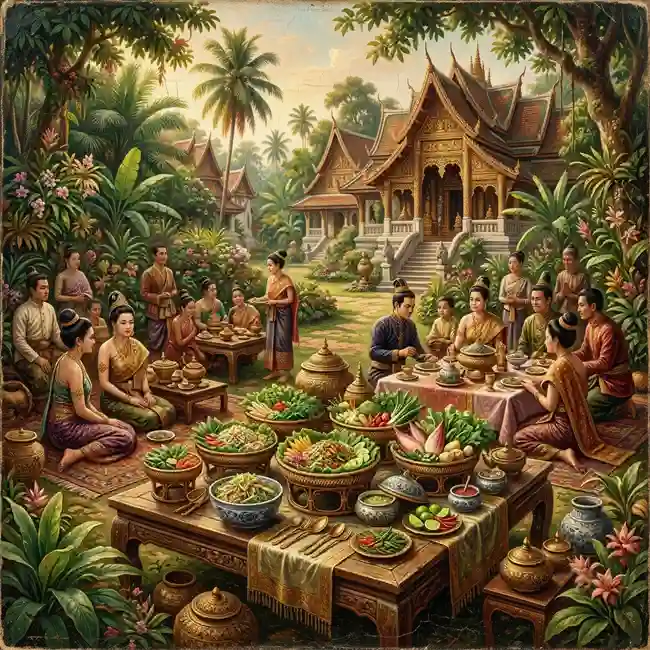
🇱🇦 📜 The Storyteller’s Intro: The Whispering Leaves of the Forbidden Courtyards
Have you ever looked at a simple plate of fresh greens and thought, “Hey, this could literally be a well-kept state secret”? Well, grab a seat and let me tell you a story. When most people think about vibrant, herb-packed salads, they think of casual, everyday street food. But if we peel back the layers of history—spanning anywhere from 200 to over 1,000 years—the truth is much more fascinating. Long before modern restaurants existed, the elite of Laos turned the gathering of garden greens into a highly sophisticated, deeply secretive art form. We are talking about the ultimate culinary flex of the old aristocracy, where a salad wasn't just a side dish; it was a carefully coded symbol of power, refinement, and deep botanical knowledge.
To understand how these aristocratic garden greens came to be, we have to look at the historical timeline of the region. Lao high cuisine evolved through three major golden eras, each leaving a distinct mark on how the nobility ate:
◦ The Lan Xang Imperial Era (14th to 17th Century): This was the grand foundation. During the height of the Kingdom of Lan Xang (The Kingdom of a Million Elephants), the courtly style of eating was established. Food was about abundance, but also extreme precision. The elite didn't just eat what grew in their backyard; they employed master foragers who knew exactly which wild leaf, hidden deep in the pristine rainforests, could balance the rich flavors of river fish or wild game. Salads from this era were complex, bitter, medicinal, and incredibly aromatic.
◦ The Regional Aristocratic Split (18th to 19th Century): As the kingdom split into regional powers—centered around Luang Prabang, Vientiane, and Champasak—the noble houses developed their own hyper-local culinary identities. The court of Luang Prabang, in particular, became the epicenter of aristocratic refinement. Here, eating became a theatrical, slow-paced ritual. This is where the delicate balance of sweet, sour, bitter, and umami was perfected, using rare forest herbs that regular citizens couldn't easily access.
◦ The Colonial & Cosmopolitan Fusion (Late 19th to Mid-20th Century): When external influences brushed against the old ways, the noble kitchens didn't surrender; they adapted. They subtly integrated foreign aesthetics while fiercely guarding their ancestral flavor profiles. It was during this period that the presentation of aristocratic salads reached its peak of visual perfection, turning raw ingredients into edible, hand-carved sculptures.
Living as a Lao aristocrat meant living in complete harmony with the seasons, but with an added layer of extreme luxury. The old nobility didn't just gorge on heavy meats. True status was shown through the ability to consume the rarest, freshest, and most difficult-to-source botanicals. The daily life of a noble household revolved around the rhythm of the Mekong River and the surrounding mountains.
Meals were served on elevated woven trays called Pha Khao, crafted from fine rattan or precious woods, and eaten while seated elegantly on hand-woven silk mats. A single salad recipe could require up to thirty different types of hand-selected leaves, each clipped at a specific time of dawn when the morning dew was still fresh on the petals. The secret recipes we are diving into today were never written down in standard cookbooks; they were passed down via hushed whispers from master palace chefs to chosen apprentices, kept safely within the walls of grand estates.
🗺️ The Royal Culinary Tourism: Mapping Flavors to Historic Landscapes
If you want to truly experience the soul of these aristocratic garden greens, you can’t just sit in a modern dining room. You have to travel to the places where these recipes were born. Today, a new wave of mindful travelers and culinary historians are tracing the footsteps of the old nobility, using food as a literal map to explore the historic landscapes of Laos.
This isn't your typical sight-seeing vacation. Culinary tourism here is an immersive, sensory journey. Imagine walking through ancient, mist-shrouded temple grounds, tracking down the exact varietals of wild watercress, indigenous mint, and rare ginger blossoms that once graced the plates of high lords.
By connecting the flavors of these hidden salads to the geography of the land, you begin to understand why certain ingredients were prized above all else. The soil, the microclimates of the river valleys, and the high-altitude air of the northern peaks all play a part. When you travel to these historic regions, you aren't just looking at old monuments; you are tasting a living, breathing lineage that has survived centuries of change.
🚣 Cradle of Royal Delicacies - The Lifeline of the Lowlands & River Valleys
The lowlands along the sweeping curves of the Mekong River served as the ultimate pantry for the Lao aristocracy. This fertile river valley environment, with its nutrient-rich soil and seasonal flooding, gave rise to a highly sophisticated style of salad preparation that leaned heavily on aquatic plants, crisp river greens, and delicate, sweet-and-sour dressings.
◦ The Luang Prabang Valley: The crown jewel of aristocratic food culture. Nestled at the confluence of the Mekong and Nam Khan rivers, this UNESCO World Heritage town was the playground of kings. The microclimate here produces the legendary Phak Nam (Luang Prabang Watercress), a crisp, peppery green that thrives only in clean, fast-flowing mountain spring water. The noble salads of this region are famous for their intricate balancing act—using creamy, slow-cooked dressings made from artisanal ingredients, contrasted with the sharp, fiery crunch of fresh local greens.
◦ The Vientiane Plains: Historically a seat of immense wealth and agricultural abundance. The salads that originated in the Vientiane courtly circles made brilliant use of cultivated estate gardens. Think of rare heirloom varieties of long beans, aromatic holy basil, and delicate banana blossoms, all shredded with surgical precision to create light, refreshing textures that offered relief during the hot tropical afternoons.
◦ The Lost Menu - Phak Nam Sawan (The Celestial Watercress Assembly): This legendary salad is a closely guarded secret of the old Luang Prabang elite. It features crisp watercress paired with a silky, cooked egg-yolk dressing that is emulsified with infused herbal oils, completely avoiding any modern heavy fats. It represents the perfect harmony of crunchy river greens and rich, velvety textures.
◦ The Lost Menu - Yam Hua Chuak Chao (The Nobleman’s Shredded Blossom Salad): A masterpiece of textural contrast. This salad utilizes the innermost, tender heart of wild banana blossoms, soaked in citrus-infused spring water to retain a pristine white color. It is tossed gently with poached river delicacies and a dressing made from roasted aromatics that takes hours to prepare.
⛰️ Kingdom of Wild Aromatics & Heritage - The High-Altitude Forest Sanctuaries
As you move away from the river banks and climb up into the rugged, misty mountain ranges of northern and southern Laos, the culinary style shifts dramatically. The high-altitude aristocrats and regional governors ruled over vast, deep-forest territories. Their salads weren't about manicured garden vegetables; they were a celebration of the wild, untamed, and deeply aromatic treasures of the jungle.
◦ The Phongsaly and Xieng Khouang Highlands: These cool, mountainous regions provided a completely different terroir. The air is crisp, and the forests are packed with wild tea trees, medicinal roots, and bitter forest shoots. The elite of these northern realms prized bitterness and intense aromatics above all else, believing that a great salad should cleanse the body, sharpen the mind, and heal the spirit.
◦ The Bolaven Plateau (The Southern Highlands): Known for its rich volcanic soil and cool climate, this southern oasis allowed for the cultivation of unique herbs that couldn't grow anywhere else. The aristocratic style here combined the earthy, robust flavors of the forest floor with sophisticated, fiery dressings that showcased the incredible depth of local spices.
◦ The Lost Menu - Khao Yam Pa Dong (The Deep-Forest Botanical Medley): A legendary salad that contains zero cultivated vegetables. Instead, it relies entirely on a secret combination of wild, young tree leaves, sour forest fruits, and shaved medicinal barks. The flavor profile is an unforgettable explosion of tart, bitter, and ultra-aromatic notes that instantly transports you to the high-mountain mist.
◦ The Lost Menu - Phak Kup Khun Nang (The Governor’s Wild Aromatic Parcel): This dish is as much about presentation as it is about taste. It features a curated selection of rare, serrated jungle herbs and wild pepper leaves, served alongside a warm, pounded paste of roasted mountain shallots, charred galangal, and secret forest seeds. Diners would use the wild leaves to wrap the aromatic paste, creating a perfect, self-contained bite of high-altitude heritage.
🤴 Royal FAQ: Unlocking Palace Kitchen Mysteries
Q1: Why are Lao aristocratic salads so heavily focused on bitter and astringent flavors compared to Western salads?
A: In the ancient Lao court, food was deeply intertwined with traditional medicine and holistic wellness. Bitterness (Khom) and astringency (Fat) were highly prized because they were believed to cool the blood, aid digestion, and balance the body's internal energies, especially during the humid monsoon seasons. While western salads often use neutral greens like iceberg lettuce as a base, Lao aristocratic kitchens viewed neutral greens as lazy. Every single leaf selected had to have a distinct personality, a medical benefit, and a specific flavor profile that contributed to the overall harmony of the dish.
Q2: What is the secret behind the unique texture of these ancient salads?
A: Knife skills were everything in a noble kitchen. The texture was never achieved by simply chopping or blending. Master chefs used specific techniques like Zis (ultra-fine hand-shredding along the natural grain of the leaf) and Sub (a delicate, rapid manual mincing using a heavy, razor-sharp blade). This precise handling ensured that the cellular walls of the herbs were bruised just enough to release their essential oils without making the greens soggy, allowing the dressing to cling perfectly to every microscopic ridge.
Q3: How did the nobility keep these recipes secret for hundreds of years?
A: Culinary knowledge within the Lao aristocracy was treated exactly like a family heirloom or a royal decree. Recipes were intentionally kept unwritten to prevent them from being stolen by rival noble houses or foreign courts. Cooking was taught through oral tradition, rhythmic chanting, and hands-on, repetitive practice. A young apprentice might spend five years just learning how to properly wash and sort leaves before being allowed to mix the secret components of a signature palace dressing.
🧠 Final Thoughts: The Timeless Allure of Aristocratic Gastronomy
There is something undeniably magical about realizing that a plate of wild greens can carry the weight of a thousand years of history. The aristocratic salads of Laos are a testament to the fact that true luxury isn't about importing expensive, foreign ingredients; it is about achieving absolute mastery over the natural world that surrounds you. It is about knowing which leaf to pick at sunrise, how to slice a banana blossom so it never darkens, and how to balance flavors in a way that feels like poetry on the tongue.
As we look to the future, these ancient culinary secrets are finally ready to step out from the shadows of the past. But don't worry, we aren't going to leave you hanging with just the history. Think of this as the ultimate appetizer for your mind. We are currently unlocking the vault, translating ancient oral traditions, and preparing to drop the definitive, step-by-step master formulas for these legendary dishes. Keep your eyes locked right here, because very soon, we will be releasing the exact, unedited recipes for these forgotten garden masterpieces, allowing you to recreate the authentic flavors of the Lao courts right in your own kitchen. Trust me, you won't want to miss what’s coming next.
👑 Credit to the Keepers of the Culture (The Legacy)
This exploration into the hidden world of Lao aristocratic cuisine would be absolutely impossible without honoring the true guardians of this heritage. We owe an immense debt of gratitude to the surviving elders of the historic noble houses, the independent culinary archivists of Luang Prabang, and the local foraging communities who have kept these botanical traditions alive through generations of oral history.
By preserving the ancient names of these wild herbs and refusing to let these complex preparation techniques fade into obscurity, they have protected a priceless piece of global culinary art. It is through their dedication, memory, and love for their heritage that these ancient palace secrets can finally be shared with food lovers and historians across the world today.
👑🥗 Unveiling the Lost Flavors of Luang Prabang: The Ultimate Guide to the Sacred Lao Aristocratic Salad
👉 Unlock Royal Lao Garden Greens
| 🌐 👑🥗 < Back | 🇱🇦 👑🍲 < Previous | Next > 🍞👑 🇱🇦 |