
🏠 Home > 🗺️ Recipes > 👑🍲 Royal Court Broths (Soups) > 🇱🇦 Laos Royal Court Broths (Soups) Recipes
🇱🇦 👑🍲 Laos Royal Court Broths (Soups) Recipes
Published by Supakorn | Updated: July 2026
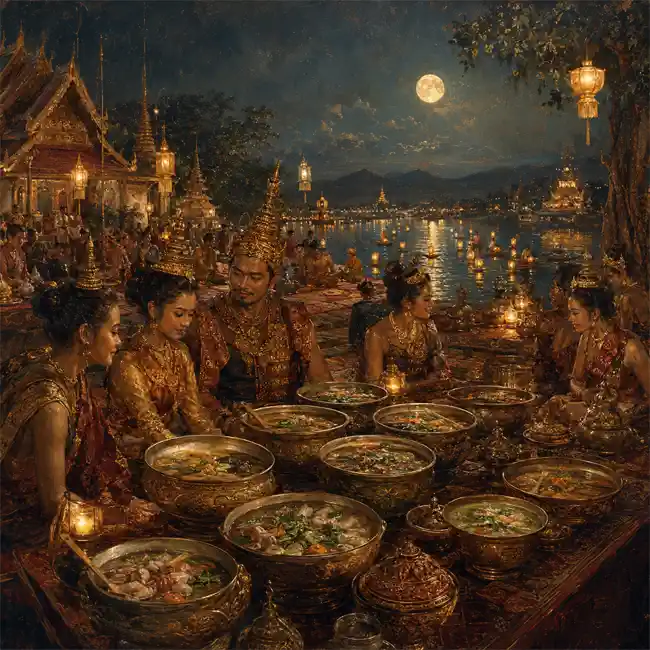
🇱🇦 📜 The Storyteller’s Intro: Whispers from a Thousand-Year-Old Ladle
Pull up a chair, friend. We’re about to slip past the temple bells and silk curtains of Laos, straight into kitchens that haven’t changed much in 1,000 years. Since Laos didn’t keep a single unbroken royal line for a full millennium, we’re talking “aristocratic” in the truest sense here — the food of kings, princes, high ministers, and the noble families who shaped the Lan Xang Kingdom and later, the Royal Court of Luang Prabang.
So how far back do we go? Let’s break it into 3 major eras that shaped these royal broths:
1. The Lan Xang Golden Age (1353–1707)
This is where it all starts. When King Fa Ngum unified the Lao principalities into “The Land of a Million Elephants,” the palace in Luang Prabang became a magnet for cooks, herbalists, and spice traders from Siam, Vietnam, China, and Khmer lands. Broths weren’t just food — they were diplomacy. A well-balanced or lam or royal keng could cool tempers during tense negotiations. Palace kitchens ran on hierarchy: “Mother of the Ladle” supervised dozens of cooks, each responsible for one element: bitter greens, smoke, char, or sacred herbs only found after three days’ trek.
2. The Three Kingdoms & Luang Prabang Court Era (1707–1893)
When Lan Xang split into Luang Prabang, Vientiane, and Champasak, each court developed its own broth identity. Luang Prabang, as the spiritual capital, leaned hardest into ritual. Aristocratic meals followed Buddhist calendar days, seasonal forest yields, and strict rules of balance — hot, cool, bitter, sour, aromatic. Nobles ate seated on low platforms, with broths always served first to cleanse the palate and show respect to guests. A royal meal without a clear, aromatic soup? Unthinkable. It was considered rude, like forgetting to greet your elders.
3. The French Protectorate & Late Royal Era (1893–1975)
Under French influence, Lao royals kept their culinary identity fiercely intact. While baguettes appeared at breakfast, the palace broths never changed. In fact, Queen Khamphoui and the court ladies documented recipes on palm leaf manuscripts to protect them. These broths became quiet acts of cultural resistance — served in French limoges bowls, yes, but brewed with sakhan stem, wild rattan, and river fish exactly as they were 500 years earlier.
How did the aristocracy live and eat?
Think “elegant simplicity with hidden complexity.” A noble’s day started before dawn with khao piak sen — but not the street version. The royal court’s was simmered in pheasant bone, scented with lemongrass from the palace garden, and finished with hand-torn chicken that was massaged, not chopped. Meals were never rushed. Broths were sipped between courses of mok pa, jeow, and sticky rice rolled by hand into perfect orbs. Leftovers? Never. Each broth was made for that meal, that season, that guest. To waste it was to disrespect the forest and the farmers who brought the ingredients.
What makes these broths “secret”? Three things: ingredients you can’t buy, techniques passed only by whisper, and timing tied to the moon, the rains, and the monks’ chants. Today, a handful of Luang Prabang’s old noble families still keep these recipes alive — and they’re finally letting us peek into the steam.
🗺️ The Royal Culinary Tourism: Mapping Flavors to Historic Landscapes
Here’s the cool part: you can literally taste history by walking through Laos. The royal broths aren’t museum pieces. They’re tied to real rivers, mountains, and towns you can visit today. This is culinary tourism with a 1,000-year-old map.
Luang Prabang – The Ceremonial Spoon
The UNESCO town isn’t just pretty temples. It’s the last living royal capital of Laos. Start at dawn at the morning market. Look for sakhan — a woody vine stem that looks like dried sticks but transforms broth with a peppery, numbing aroma. Palace cooks used it only for honored guests. Then head to the former Royal Palace Museum. The old royal kitchen out back still has the massive clay stoves where Or Lam Luang was simmered for hours. Local saying: “If you haven’t had broth with sakhan in Luang Prabang, you haven’t met the soul of the city.”
Mekong River Bends – The Lifeline of Flavor
Royal broths follow the Mekong like a spine. In Pak Ou, where the Ou River meets the Mekong, nobles once stopped during river pilgrimages to brew Keng No Mai Sai Yanang — bamboo broth with yanang leaf extract. The technique? Bamboo must be harvested before sunrise, or the soup turns bitter. Today, you can take a slow boat, visit the cave temples, and have a riverside lunch with a family who cooked for the court’s boatmen.
Plain of Jars, Xieng Khouang – The Misty Kettle
This mysterious highland was a royal retreat during hot season. The cold climate gave rise to Sien Pa Lao Luang, a smoked buffalo broth with wild mushrooms and jungle ginger. The aristocrats believed mountain mist made the broth “whisper.” Visit during December–February, and homestays in Nong Het will serve you a version descended from court cooks who fled there in the 1800s.
When you travel for these broths, you’re not just eating. You’re tracing the footsteps of princesses, monks, and ministers who believed soup could carry memory, medicine, and manners in one bowl.
🚣 Cradle of Royal Delicacies - Mekong River Basin & Tributary Lands
The Mekong isn’t a backdrop in Laos. It’s the original kitchen. For the Lao aristocracy, the river dictated the broth of the day, and every bend had a signature.
1. Keng Pa Luang – The Royal River Fish Broth
This is the crown jewel. Not your everyday keng pa. The court version uses only fish caught at dawn from deep Mekong pools near Luang Prabang, where the water runs clear over stone. The secret? The fish is never boiled aggressively. It’s “calmed” in water infused with galangal, kaffir lime leaf, and phak tam nin — a peppery river herb nobles grew in palace gardens. Served during New Year and for welcoming foreign envoys, this broth was believed to bring clarity of mind. Today, food heritage tours in Luang Prabang take you to the same pools at 5 AM with fishermen whose grandfathers supplied the palace.
2. Or Lam Khou Nyai – The Minister’s Sticky Broth
Or lam is now famous, but the aristocratic take is thicker, darker, and layered. It uses mai sakhan, eggplant, wood ear mushrooms, and smoked buffalo skin — all slow-simmered until the broth coats the spoon. Court records say it was a favorite of 19th-century ministers because it “stuck to the ribs” during long debates. The real secret ingredient? Nam pu — a pungent wild bean paste made only in specific villages along the Nam Ou. You can visit those villages today near Nong Khiaw, where the old fermentation huts still stand.
3. Khao Piak Sen Chao Nang – The Princess’s Rice Noodle Soup
Street khao piak is chicken and noodles. The palace version? Hand-pulled rice noodles in a quail broth, scented with lemongrass and finished with crispy shallots fried in pork lard from black pigs raised in the palace. It was breakfast for unmarried daughters of the court, meant to keep their skin clear and energy steady. The best place to try a modern descendant? The night market in Luang Prabang, from vendors who trace their recipes to former palace cooks. Ask for “the old way” and watch their eyes light up.
Travel tip: Time your trip with Boun Ok Phansa in October. The end of Buddhist Lent was when the royal family held broth feasts on the Mekong banks. Some guesthouses recreate the feast with recipes from court descendants.
⛰️ Kingdom of Wild Aromatics & Heritage - Mountains & Deep Forests of Northern Laos
If the Mekong gave Lao broths their body, the mountains gave them their soul. The aristocracy prized ingredients that couldn’t be farmed — only foraged by expert trackers during specific moons.
1. Gaeng Nor Mai Sai Bai Yanang – The Forbidden Bamboo Broth
This isn’t the bitter bamboo soup you might know. The royal version uses only baby bamboo shoots harvested from Phou Si mountain before the first cicada sings. They’re balanced with bai yanang juice — a dark green extract that removes bitterness and adds a deep, herbal base. In the 1700s, this dish was served to appease forest spirits before the rainy season. The technique of extracting yanang by hand-pounding and straining through cloth is still done in Luang Prabang’s Xieng Muan district. Cultural tours there let you pound your own.
2. Tom Sien Pa – The Smoked Forest Meat Broth
When nobles went on retreat to the highlands of Xieng Khouang or Houaphanh, they ate Tom Sien Pa. Wild mushrooms, jungle cardamom, and smoked deer or buffalo are simmered until the broth turns the color of teak. The smoke isn’t from wood — it’s from mak kee seeds, a forest pepper that gives a citrusy burn. This broth was considered medicine for “cold bones” and was only served after sunset. You can hike with Hmong guides in the Nam Et-Phou Louey area who still make it in bamboo tubes, just like court hunting parties did.
3. Keng Hed Pa Luang – The Royal Wild Mushroom Elixir
Served only in rainy season, this broth was a luxury because the mushrooms — hed phor, hed cone, hed khao — appear for just 2 weeks a year in deep forest. Palace herbalists believed each mushroom fed a different organ. The broth is crystal clear but intensely aromatic, with no chili. Just salt, lemongrass, and the essence of the forest floor. Today, eco-lodges near Nam Ha NPA offer “mushroom foraging and royal broth” experiences in July–August, led by elders who remember which mushrooms the Queen preferred.
Why it matters: These mountain broths are disappearing because the foraging knowledge takes 20 years to master. Eating them isn’t just tourism. It’s preservation.
👸❓ Royal FAQ: Unlocking Palace Kitchen Mysteries
Q1.Why were broths, not solid dishes, the centerpiece of Lao royal meals?
Broths were philosophy in a bowl. Lao aristocracy followed the Buddhist and animist belief in balance — yin/yang, hot/cool, forest/garden. A broth could be adjusted for the weather, the guest’s health, or the political mood. Serving a clear, balanced soup first showed refinement, control, and respect. It told guests: “We have time, we have care, we have harmony.” Solid dishes came after. Broth was the handshake.
Q2.Did Lao nobles really have “secret ingredients” or is that a myth?
Yes, and they were secret for good reason. Sakhan stem, nam pu bean paste, and mak kee forest pepper were all micro-regional. They grew in one valley, or were fermented by one family. The palace created “culinary monopolies” — if you wanted to impress, you needed access. Recipes were memorized, not written, and passed to one daughter or nephew. Many died with the last court cooks in the 1970s. The ones we have now survived because a few cooks quietly taught village apprentices.
Q3.How did the aristocracy eat differently from common Lao people?
It’s not about fancy ingredients. It’s about restraint and sequence. Common meals mix everything together. Royal meals were staged: broth first, then mok, then jeow, then rice, then fruit. No chili was added to the pot — it was served on the side, so each person controlled their own heat. Bones were never served. Meat was shredded. The goal was “clean eating” — no mess, no noise, no sweat. A noble could finish a 7-course meal without needing to wash their hands.
Q4.Are any of these broths still served to Lao dignitaries today?
Absolutely. While Laos is now a People’s Democratic Republic, cultural heritage is huge. State dinners in Vientiane and Luang Prabang often feature Keng Pa Luang or Or Lam made by chefs trained by former palace staff. During Pi Mai Lao, hotels in Luang Prabang host “Royal Lao Cuisine” nights. The difference? You no longer need a royal invitation — just a reservation and a respect for the story in your spoon.
🧠 Final Thoughts: The Timeless Allure of Aristocratic Gastronomy
These broths survived wars, colonization, and revolution because they were never just food. They were edible archives. Every sip of Keng Pa Luang carries the Mekong’s memory. Every spoon of Or Lam holds the smoke of 300-year-old kitchen fires.
The allure isn’t luxury — it’s time. In a world of instant noodles, these soups demand you slow down. They ask you to wait for the bamboo season, to respect the fisherman’s dawn, to learn why sakhan can’t be rushed.
So here’s your map, friend. Start in Luang Prabang. Find the market aunties who still pound yanang by hand. Take the boat to Pak Ou. Hike for mushrooms in the rain. The full recipes? They’re coming. We’re working with the families who guard them to share one royal broth at a time — tested, translated, and honored.
Follow along, and soon you’ll be simmering a 1,000-year-old secret in your own kitchen. Until then, keep your ladle ready. The palace is still serving.
👑 Credit to the Keepers of the Culture (The Legacy)
This living heritage belongs to the people of Laos — especially the elder cooks, foragers, and noble families of Luang Prabang who safeguarded these techniques through upheaval. Deep respect to the community historians, Buddhist temples, and cultural preservationists at the Traditional Arts and Ethnology Centre in Luang Prabang, whose work ensures these flavors aren’t lost.
We are guests in this story. If you cook these broths, speak their names with care, source ingredients ethically, and remember: the real secret was never the recipe. It was the respect. Khop chai lai lai — thank you very much — to the keepers of the ladle.
👑🍲 500 Years of Simmered Soul: The Aristocratic Lao Broths Time Almost Forgot
👉 Savor Secret Lao Royal Court Broths
| 🌐 👑🍲 < Back | 🇱🇦 👑🍷 < Previous | Next > 🥗👑 🇱🇦 |