
🏠 Home > 🗺️ Recipes > 👑🍨 Grand Finales (Desserts) > 🇱🇦 Laos Grand Finales (Desserts) Recipes
🇱🇦 👑🍨 Laos Grand Finales (Desserts) Recipes
Published by Supakorn | Updated: July 2026
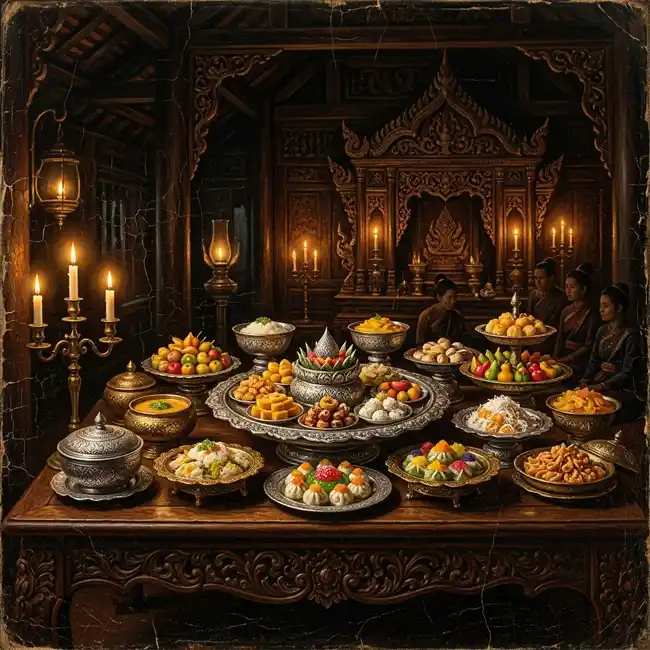
🇱🇦 📜 The Storyteller’s Intro: Secrets from the Silk-Curtained Pavilions of Lan Xang
Hey there, fellow food adventurer! Pull up a hand-woven silk cushion, clear your mind, and let’s take a trip back in time. When you think of Lao food, your mind probably jumps straight to a fiery, lime-drenched larb or a beautifully charred, herb-stuffed fish grilled over hot coals. But what if I told you that behind the closed doors of the old mansions in Luang Prabang, away from the bustling night markets, lies a secretive, hyper-refined world of sweets? Welcome to the ultimate chronicle of Laos Grand Finales—the aristocratic desserts that have sweetened the lips of the elite for centuries.
This isn't your average street-side mango sticky rice. We are unlocking a vault containing 200 to 1,000 years of culinary history. To truly understand these desserts, we have to look at the three great historical epochs that shaped the sweet tooth of Lao nobility:
• The Golden Age of Lan Xang (14th – 17th Century): The "Kingdom of a Million Elephants" was a massive, wealthy empire. During this time, sweets were deeply spiritual and ceremonial. The aristocratic class demanded treats that featured pure coconut cream, indigenous wild honey, and aromatic floating candles (thian op). These weren't eaten daily; they were culinary offerings for high-ranking monks and visiting foreign dignitaries to showcase the kingdom's immense wealth.
• The Split Kingdoms & Regional Aristocracies (18th – 19th Century): When the empire fractured into regional kingdoms like Luang Prabang, Vientiane, and Champasak, the dessert culture became highly competitive. The old aristocratic families developed their own hyper-local, guarded recipes. Court chefs in Luang Prabang vied with those in Champasak to see who could weave the finest egg threads or extract the most vibrant blue from butterfly pea flowers.
• The Early Modern Fusion & Protectionist Era (Late 19th – 20th Century): As French influences touched Indochina, the Lao elite adapted. However, instead of abandoning their heritage, they integrated subtle Western techniques while fiercely guarding their ancestral formulas. This created a highly exclusive, secretive dessert culture that was passed down strictly through oral traditions and whispered kitchen diaries from mothers to daughters in noble households.
For the old Lao aristocracy, eating wasn't just about survival or satisfaction; it was a slow, meditative ritual. They believed that the texture of a dessert reflected the refinement of your soul. A noble family would never serve a sweet that was coarsely cut or overly sugary. The flavor profile had to be complex, balanced, and subtly fragrant.
Every bite was designed to soothe the palate after a heavily spiced meal, relying on the natural creaminess of freshly pressed coconut milk, the earthy sweetness of palm sugar, and the delicate perfume of night-blooming jasmine flowers soaked in rainwater overnight.
🗺️ The Royal Culinary Tourism: Mapping Flavors to Historic Landscapes
If you want to truly experience these legendary desserts, you have to pack your bags and travel with your taste buds. Laos is a land where geography and history are deeply intertwined. The old aristocratic families didn't just invent recipes out of thin air; they crafted them using the exact ingredients provided by their immediate surroundings.
By mapping these historic flavors, we can unlock a totally unique form of culinary tourism. Imagine walking through the ancient, UNESCO-protected streets of Luang Prabang, watching the orange-robed monks on their morning alms walk, and knowing that the very air you're breathing is the same air that infused the delicate pandan wrappers of the elite centuries ago.
This journey takes you from the mist-shrouded northern river valleys down to the volcanic plains of the south. As you move across the map, the textures change from light, floral, steaming textures to richer, starchier, and more comforting bites. For the modern luxury traveler, following this sweet trail offers an intimate glimpse into the high-society living rooms of a bygone era.
🚣 Cradle of Royal Delicacies - The Mighty Mekong River Basin
Let’s start our journey along the lifeblood of the country: the Mekong River valley. This low-lying, fertile basin is where the aristocratic kitchens of Luang Prabang and Vientiane flourished. The slow-moving waters and rich riverbanks provided an abundance of ingredients that required extreme precision to harvest and prepare.
• The Ancient Riverside Capital Culture: The Mekong wasn't just a trade route; it was a source of culinary prestige. The proximity to trade networks brought refined ingredients like high-grade cane sugar and exotic spices to the doorsteps of noble estates. The humidity of the river valley also meant that desserts were designed to be refreshing, often incorporating chilled coconut broths and fragrant water.
• The Secretive Khao Niew Moon of the Elites: While everyday citizens ate regular sticky rice, the aristocracy perfected a highly classified version of sweet coconut sticky rice. The secret lay in using a specific variety of heirloom grain grown only in dedicated river plots, polished by hand, and steamed over a water bath infused with wild pandan leaves. It was then folded with the first press of coconut cream, yielding a glossy, pearl-like finish that never felt heavy.
• The Lost Legend of Sangkhaya Mak Fak (The Aristocratic Pumpkin Custard): This is the crown jewel of Mekong high society. Chefs would select perfectly symmetrical, small pumpkins from the river banks, hollow them out with silver tools, and fill them with a rich, silky custard made from duck eggs and pure palm sugar. The secret to its elite status? The custard had to be completely devoid of air bubbles, requiring the mixture to be strained through multiple layers of fine Lao silk before steaming.
• The Fragrant Waters of Nam Dok Mai: Aristocratic families along the Mekong would harvest fresh jasmine, ylang-ylang, and white rose petals at dusk when their scent was most potent. These petals were floated on pristine rainwater inside covered silver bowls. This naturally perfumed water became the base for light, clear syrups used to douse cooling rice-flour drops, creating a sensory experience that refreshed the body in the tropical heat.
⛰️ Kingdom of Wild Aromatics & Heritage - The Mountainous Interior
Now, let’s turn our eyes toward the dramatic, mist-covered peaks and deep jungles of the northern and southern highlands. This rugged landscape created a completely different style of aristocratic gastronomy. When the noble families retreated to their country estates or sought ingredients from the highland forests, they turned to wild, rare, and deeply comforting elements.
• The Highland Forest Terroir: The mountainous regions provided ingredients that couldn't be cultivated in the valleys. We are talking about wild-harvested roots, rare mountain honey, fragrant barks, and uniquely starchy tubers that grew deep in the rich, unpolluted mountain soil. Desserts here were richer, denser, and deeply grounding.
• The Secret Enigma of Khao Lam Khun Nang (The Nobleman's Bamboo Sweet): Forget the standard street-food version. The aristocratic version of this dessert used specific green bamboo stalks cut from high-altitude forests. The interior of the bamboo tube is lined with a naturally sweet, paper-thin membrane. Filled with rare black sticky rice, wild mountain honey, and young coconut meat, it was roasted slowly over wild cherrywood embers, imparting an intoxicating, smoky, woody aroma that defined highland luxury.
• The Forgotten Kanom Man Ton (The Silken Cassava Cake): In the highland estates, the humble cassava root was transformed into a masterpiece fit for a governor. The roots were grated by hand, pressed repeatedly to remove any bitterness, and mixed with thick, rich coconut cream and wild honey. Baked in earth ovens, the result was a dessert with a caramelized, golden crust and an interior so soft and velvety it melted on the tongue like snow.
• The Wild Taro and Purple Yam Confections: The rich volcanic soils of the Bolaven Plateau in the south yielded incredibly flavorful yams and taro. Aristocratic chefs would slow-cook these vibrant purple and white tubers with palm sugar until they achieved a glossy, paste-like consistency, shaping them into delicate, artistic molds that resembled sacred lotus flowers or protective amulets.
🙋♂️ Royal FAQ: Unlocking Palace Kitchen Mysteries
Q1.What made Lao aristocratic desserts different from everyday sweets?
The main differences were the extreme precision of preparation, the quality of the ingredients, and the subtle flavor balancing. While everyday sweets were rustic, quick, and hearty, aristocratic desserts required hours of meticulous labor, such as hand-filtering liquids through silk, carving intricate patterns into fruits, and using rare, imported, or wild-harvested ingredients. They also focused heavily on floral aromas rather than just pure sweetness.
Q2.Why are these ancient recipes so hard to find today?
For centuries, these recipes were treated as highly guarded family secrets. They were never written down in public cookbooks; instead, they were passed down orally from the head chef or the matriarch of a noble family to her chosen successor. During various periods of political upheaval and modernization in the 20th century, many of these families dispersed, and their secret culinary diaries were either lost or kept strictly within private family circles.
Q3.How did the concept of "aroma" play a role in elite Lao sweets?
To the Lao aristocracy, a dessert that only tasted sweet was considered primitive. A truly great dessert had to engage the sense of smell. They used specialized techniques like thian op (scenting with a traditional culinary candle infused with frankincense, beeswax, and essential oils) and soaking ingredients in water infused with overnight-blooming forest flowers to create layers of aroma that unravel as you eat.
Q4.Are these desserts naturally gluten-free and vegan?
Interestingly, yes! Because ancient Lao gastronomy relied primarily on coconut milk, palm sugar, rice flours, and native starchy tubers rather than wheat flour or dairy milk, the vast majority of these historic desserts are naturally gluten-free. While some recipes use duck or chicken eggs for rich custards, many of the ancestral highland recipes rely purely on plant-based ingredients and wild honey.
🧠 Final Thoughts: The Timeless Allure of Aristocratic Gastronomy
There is something incredibly magical about tasting history, isn't there? The fact that these delicate flavors have survived through generations of whispers, hidden diaries, and changing times is a testament to the sheer brilliance of the creators. These Lao Grand Finales are not just food; they are edible poetry, a living connection to a world of absolute elegance, refinement, and artistic passion.
But guess what? This is only the beginning of our culinary adventure. We have set the stage, mapped out the landscapes, and teased your senses with the fragrant mysteries of the old palaces. Now, the real magic is about to happen.
Keep your eyes locked on this space, because very soon, we are going to throw open the heavy wooden doors of the kitchen archives. We will be dropping the exclusive, step-by-step masterclass recipes for these individual, ultra-rare aristocratic desserts. You’ll learn exactly how to recreate that silk-strained pumpkin custard, master the art of floral water infusion, and bring the luxurious sweet notes of old Luang Prabang right into your own home kitchen. Stay tuned, because you won't want to miss a single drop of this sweet legacy!
👑 Credit to the Keepers of the Culture (The Legacy)
We want to extend our deepest respect, gratitude, and reverence to the true guardians of Lao cultural heritage. This journey would be entirely impossible without the resilience and dedication of the remaining elders, culinary historians, and descendants of the old families of Luang Prabang, Vientiane, and Champasak.
By holding onto their ancestral kitchen journals, remembering the spoken formulas of their grandmothers, and continuing to practice these slow, meticulous cooking methods, they have preserved a priceless piece of global gastronomic art. We honor their dedication to keeping the spirit of the old Kingdom of Lan Xang alive, ensuring that the brilliant, sweet finish of Lao history is never forgotten by the world.
👑🍨 The Rebirth of Luang Prabang’s Hidden Sweet: A Journey into Lao Aristocratic Culinary History
👉 Indulge in Iconic Lao Grand Finales
| 🌐 👑🍨 < Back | 🇱🇦 👑🍝 < Previous | Next > 🍷👑 🇱🇦 |