
🏠 Home > 🗺️ Recipes > 👑🍷 Noble Elixirs & Teas (Drinks) > 🇱🇦 Laos Noble Elixirs & Teas (Drinks) Recipes
🇱🇦 👑🍷 Laos Noble Elixirs & Teas (Drinks) Recipes
Published by Supakorn | Updated: July 2026
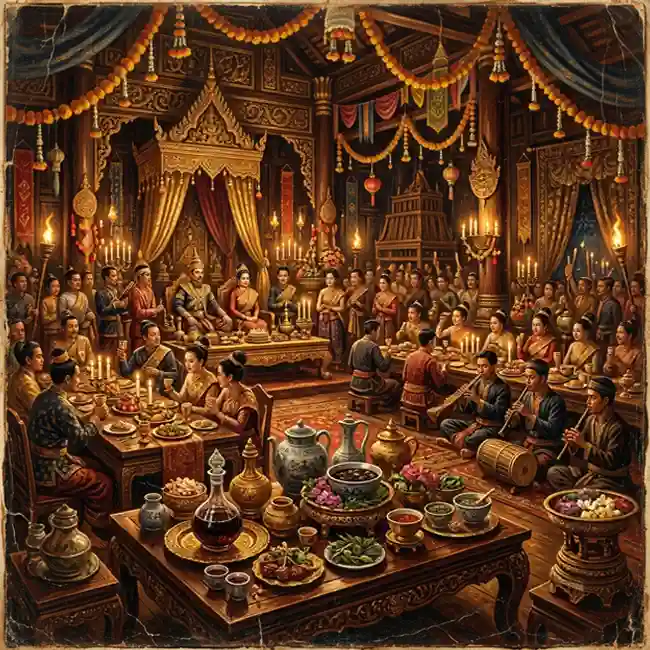
🇱🇦 📜 The Storyteller's Intro: Secrets Once Whispered in the Houses of Lao Nobles
This is the hidden manuscript of aristocratic drinks and noble refreshments that quietly evolved across the kingdoms of Laos over the past 200 to 1,000 years.
When people think about Laos, they often imagine sticky rice, riverside markets, and Buddhist temples. Yet behind those famous images lies another story—a world of elegant drinks, fragrant herbal infusions, and ceremonial teas once enjoyed by noble households, respected elders, scholars, and influential families.
Laos did not always have a single unified kingdom. Instead, its history unfolded through several remarkable periods that shaped the country's culinary identity.
🌿 The Era of Early River Kingdoms (Around 1000–1300 CE)
Communities along the Mekong River developed sophisticated knowledge of local herbs, flowers, roots, and forest plants. Drinking traditions emerged from practical wisdom and spiritual beliefs. Herbal brews were often prepared to welcome guests, support meditation, and accompany important gatherings.
🏯 The Kingdom of Lan Xang (1353–1707)
Known as the "Kingdom of a Million Elephants," Lan Xang became one of Southeast Asia's great powers. During this era, noble households cultivated refined customs surrounding food and beverages.
Palace kitchens and aristocratic residences valued drinks made from:
◦ Fragrant pandan leaves
◦ Forest honey
◦ Ginger and galangal
◦ Lemongrass
◦ Jasmine flowers
◦ Indigenous herbs gathered from mountain regions
◦ Aromatic citrus leaves
These beverages were appreciated not because they were extravagant but because they represented balance, seasonality, and harmony with nature.
🌸 The Regional Kingdom Period (1707–1893)
Following the division of Lan Xang into several kingdoms, regional drinking traditions became even more diverse.
The noble families of:
◦ Luang Prabang
◦ Vientiane
◦ Champasak
all cultivated distinct beverage preferences.
Some favored delicate flower infusions. Others preferred warming herbal drinks with roots and spices gathered from forests and mountains. Certain recipes remained family treasures passed from one generation to another.
🕯️ The Colonial and Early Modern Era (1893–20th Century)
As trade expanded, new ingredients entered noble kitchens. However, many aristocratic households continued preserving older recipes. Morning tea ceremonies, herbal refreshments after religious observances, and cooling botanical drinks during hot seasons remained deeply respected traditions.
The lifestyle of Lao noble society revolved around moderation.
Meals were rarely rushed.
Guests were welcomed with beverages before conversations began.
Herbal drinks often accompanied storytelling, poetry, religious festivals, and family ceremonies.
A drink was never merely something to consume. It represented hospitality, respect, and cultural memory.
🗺️ The Royal Culinary Tourism: Mapping Flavors to Historic Landscapes
The noble drinks of Laos cannot be separated from the landscapes that nurtured them.
Traveling through Laos is like exploring an open-air library of flavors.
🌊 Along the Mekong River
The mighty Mekong shaped agriculture and trade routes for centuries.
River communities cultivated:
◦ Fragrant herbs
◦ Citrus varieties
◦ Edible flowers
◦ Medicinal plants
Many noble beverages originated from ingredients gathered along these fertile riverbanks.
🛕 Temple Cities and Ancient Capitals
Historic cities became centers of culinary refinement.
Traditional drinks were prepared during:
◦ Religious festivals
◦ Seasonal celebrations
◦ Ceremonial gatherings
◦ Community feasts
◦ Family milestones
The atmosphere of ancient temples and wooden houses still reflects these traditions today.
🌿 Forest Villages and Highland Settlements
Deep forests supplied ingredients that rarely appeared outside aristocratic kitchens.
Some ingredients were collected only during specific seasons and prepared according to traditional knowledge.
For culinary travelers, discovering Laos means exploring how geography and culture became inseparable from the nation's beverage traditions.
🚣 Cradle of Royal Delicacies - The Mekong Basin and Historic River Regions
The Mekong River is the heart of Lao civilization.
For centuries, noble households relied upon river valleys not only for agriculture but also for botanical treasures.
🌺 Noble Drinks Linked to the Mekong Region
🍃 Nam Bai Toei
A fragrant pandan leaf infusion known for its refreshing aroma.
🍋 Mak Nao Herbal Citrus Brew
A gentle citrus beverage featuring local aromatic ingredients.
🌼 Dok Champa Blossom Tea
An elegant floral infusion inspired by Laos' beloved national flower.
🌿 Lemongrass and Ginger Noble Tisane
A warming botanical drink associated with hospitality and comfort.
🍯 Forest Honey Herbal Infusion
A lightly sweetened drink combining mountain herbs and natural honey.
These drinks are connected to some of Laos' most beautiful destinations.
📍 Luang Prabang
Ancient temples, riverside scenery, and traditional neighborhoods provide visitors with an atmosphere remarkably similar to the environments where many aristocratic beverage customs flourished.
📍 Vientiane
The capital preserves memories of courtly traditions and refined dining practices. Traditional drinks remain an important part of welcoming guests and celebrating cultural events.
📍 Champasak
Historic landscapes and river communities continue preserving botanical traditions that have influenced local beverages for generations.
Travelers often discover that every cup tells a story of geography, memory, and cultural continuity.
⛰️ Kingdom of Wild Aromatics & Heritage - The Mountains and Deep Forests of Laos
Beyond the rivers lie another world entirely.
Northern and eastern Laos are rich in forests, mountains, and remarkable biodiversity.
For noble households, these landscapes represented living pantries of aromatic treasures.
🌿 Ingredients Once Gathered from Highland Regions
◦ Wild ginger
◦ Forest mint
◦ Aromatic bark
◦ Mountain flowers
◦ Indigenous herbs
◦ Rare leaves and roots
◦ Fragrant blossoms
Many preparations remained known only within certain families or local communities.
🍵 Notable Aristocratic Mountain Beverages
🌸 Mountain Flower Tea
Prepared using seasonal blossoms collected from elevated regions.
🌿 Forest Herb Elixir
An aromatic blend of leaves and herbs valued for its refreshing qualities.
🌱 Wild Ginger Infusion
A warming drink appreciated during cooler seasons.
🍃 Sacred Leaf Tea
A simple but elegant beverage prepared using carefully selected leaves.
🌼 Highland Botanical Brew
A fragrant infusion celebrating the abundance of Lao mountain ecosystems.
These beverages reveal an important aspect of Lao noble culture.
Sophistication did not require imported ingredients or luxurious excess.
True refinement often meant understanding nature deeply and appreciating seasonal ingredients at their peak.
Travelers exploring northern Laos frequently encounter communities where this knowledge still survives.
Mountain markets continue displaying herbs and flowers that have been appreciated for centuries.
Every fragrant leaf and blossom offers another clue to the hidden world of Lao aristocratic gastronomy.
🧐 Royal FAQ: Unlocking Palace Kitchen Mysteries
Q1.Why were herbal drinks so important in noble Lao society?
Because beverages represented hospitality, social harmony, and respect. Offering a carefully prepared herbal drink was considered an elegant expression of welcome.
Q2.Did Lao noble families have secret recipes?
Yes. Certain blends of herbs, flowers, and aromatic plants were passed down privately within households and often associated with family traditions.
Q3.Why do so many traditional drinks use flowers and herbs?
Laos possesses extraordinary botanical diversity. Noble cuisine developed by embracing local ingredients and celebrating their natural aromas.
Q4.Can travelers still experience these traditions today?
Absolutely. Markets, cultural festivals, historic towns, and family-run culinary experiences continue showcasing many ingredients and customs connected to Laos' aristocratic beverage heritage.
🧠 Final Thoughts: The Timeless Allure of Aristocratic Gastronomy
The noble elixirs and teas of Laos remind us that culinary heritage is not always hidden inside grand banquets.
Sometimes it lives quietly inside a fragrant herbal infusion served beside a river.
Sometimes it survives in the memory of a family that still gathers mountain flowers every season.
Sometimes it appears in a simple cup of tea shared during conversation.
These beverages represent centuries of accumulated knowledge, environmental understanding, and cultural identity.
For curious travelers and food historians, the hidden drinks of Laos offer an invitation to explore a different kind of luxury—one rooted in simplicity, nature, and human connection.
The story is far from finished.
Behind every aromatic leaf and every floral infusion lies another recipe, another family tradition, and another chapter waiting to be rediscovered.
Future explorations into individual recipes and regional specialties promise to reveal even more of the extraordinary world of Laos Noble Elixirs & Teas.
👑 Credit to the Keepers of the Culture (The Legacy)
This article respectfully honors the generations of Lao communities, traditional households, artisans, herbal knowledge keepers, historians, and cultural custodians who have preserved the memory of Laos' noble beverage traditions.
Their understanding of plants, seasons, hospitality, and culinary craftsmanship continues to inspire modern appreciation for Lao gastronomy.
The noble teas and elixirs of Laos are more than historical drinks.
They are living expressions of identity.
They are stories preserved in fragrance.
They are landscapes transformed into flavor.
And they remain among the most enchanting hidden treasures of Laos' cultural heritage.
👑🍷 Rediscovering 200-Year-Old Lao Noble Elixirs from Aristocratic Kitchens
👉 Sip Signature Lao Noble Elixirs & Teas
| 🌐 👑🍷 < Back | 🇱🇦 👑🍨 < Previous | Next > 🍲👑 🇱🇦 |