
🏠 Home > 🗺️ Recipes > 🏛️🧪 Sacred Infusions & Botanical Tonics > 🏝️ Lapita Culture: Sacred Infusions & Botanical Tonics Recipes > 🏛️🧪 1.Lapita Sacred Shoreline Elixir – The 3,000 Year Old Coastal Infusion
🏛️🧪 I Found a 3,000-Year-Old Pacific Elixir Buried in a Lapita Cooking Pit
Published by Supakorn | Updated: October 2026
⛵🌊 Ancient Civilization Origins: The Bismarck Archipelago, Vanuatu and the Lapita Seafarers
📜 The Storyteller's Intro: 3,000 Years of Oceanic Whispers in a Clay Pot
Hey friend, let me take you somewhere. Close your eyes for a second.
It is not Rome. It is not Egypt. It is 1000 BC, and you are on a black sand beach in what we now call Vanuatu. The air smells like salt, woodsmoke, and crushed lime leaves. There is no written language here, no pyramids, just the sound of the Pacific crashing against outrigger canoes.
This is the world of the Lapita people. They were the real masters of the ocean, long before Vikings or Polynesians. They sailed from the Bismarck Archipelago near Papua New Guinea, carrying not just families and stamped pottery, but something more precious: seeds, roots, and food knowledge that would feed a thousand islands.
I am obsessed with this culture because they did not build monuments. They built food systems. In their ancient earth ovens, called lovo or umu, archaeologists are now finding something incredible. Not just fish bones, but charred remains of leaves, infused coconut broths, and botanical bundles. This recipe I am about to share with you is not from a cookbook. It is a resurrection from pottery shards and oral chants from Malakula elders.
We call it Lapita Coastal Botanical Infusion, but the old ones would have just called it the healing water.
🌍 The Global Value of Antique Heritage
Why should we care about a soup from 3,000 years ago? Because the Lapita food system is the foundation of half the planet's tropical cuisine.
When UNESCO talks about intangible heritage, they often talk about the Lapita expansion as the largest human migration in history up to that point. They carried taro, yam, coconut, breadfruit, and paper mulberry across 6,000 kilometers of open ocean without compasses. Their botanical knowledge was insane. They knew which coastal leaves could neutralize the toxins in certain fish, which bark could preserve food, and which flower could turn seawater and coconut milk into something sacred.
This infusion is a perfect example of that genius. It is not a meal to fill your belly. It is a functional, medicinal, ceremonial drink-food hybrid. It is vegan, mineral-rich, deeply aromatic, and it tells a story of people who understood the coastline as a pharmacy, not just a pantry. In a world where we are all looking for clean, ancient, sustainable foods, this is the original superfood protocol.
🔥 The Culinary Resurrection
So how do we bring it back? That is the fun part. I spent months talking to food archaeologists from the University of Otago and to ni-Vanuatu mamas who still make a version of this for new mothers and tired fishermen.
The original method was brutal and beautiful. They would heat volcanic stones until they cracked, drop them into a carved wooden bowl filled with fresh coconut cream, seawater, young taro leaves, coastal pennywort, and fragrant beach morning glory. The stones would hiss and make the whole mixture boil instantly, infusing everything in seconds. It was a botanical steam-bath.
We are going to do the same thing, but with your modern kitchen. No volcanic rocks needed, I promise. We will keep the soul, the mineral depth, the coconut silkiness, and that wild green coastal aroma that smells like the Pacific itself. This is not just cooking. It is time travel.
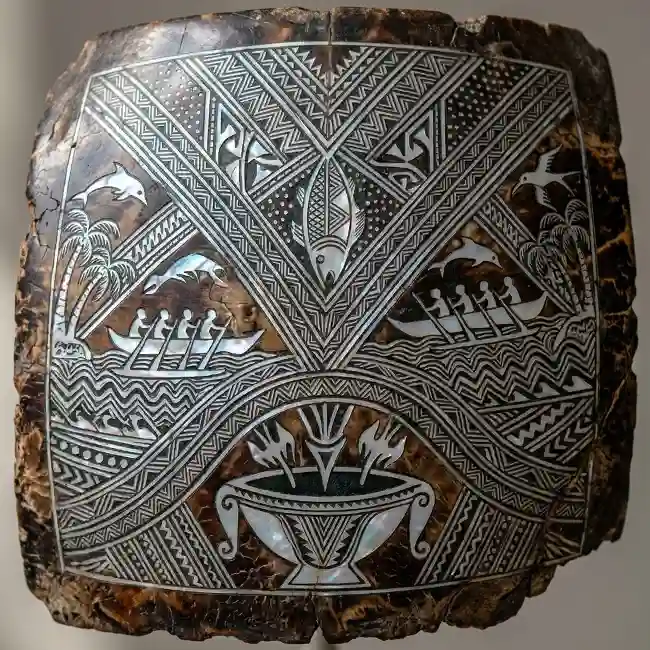
🥥 Recipe: Lapita Sacred Shoreline Elixir – The 3,000 Year Old Coastal Infusion
This is the heart of it. This infusion sits between a broth, a tea, and a light soup. In Vanuatu today, they serve it warm in a coconut shell at sunset to restore energy after working in the sea gardens. It is savory, slightly salty, creamy, herbal, and incredibly calming.
🗿 Legends Behind This Excavated Secret
On the island of Efate, there is a Lapita burial site called Teouma. Archaeologists found a woman buried with a beautifully dentate-stamped pot. Inside the pot residue, they found traces of Canarium nuts, coconut lipids, and an unidentified coastal leaf that smelled of lime when heated.
The local legend says this: When a Lapita navigator returned from a long voyage, his wife would prepare the Buraq ni Tasi, the water of the sea. She would walk the coastline at dawn and only pick leaves that had been kissed by sea spray but not submerged. She believed those leaves held the strength of both land and sea. She would infuse them into first-pressed coconut cream to cleanse his blood of the ocean's tiredness.
The secret was never written down because it was a love ritual. You made it for someone you wanted to bring back to life. The recipe was passed from mother to daughter through song, not words. The song goes: Take the milk that falls without breaking, take the leaf that tastes the spray, take the water that remembers the stone. We are literally cooking a love song.
🧺 Ingredients & The Noble Pantry
🔸 The Ancestral Staples
Before we list, let me tell you who these ingredients are. In the Lapita pantry, there were no imports. Everything had a purpose. Coconut was their butter, oil, and milk. Taro leaf was their spinach and their medicine for gut health. Coastal pennywort, or Gotukola as we know it now, was their brain food, found crawling along the high-tide line. Beach morning glory leaves were their salt balancer. And turmeric and wild lime were their preservers and purifiers. Every single ingredient in this infusion is still growing wild on the beaches of Vanuatu today.
🔸 Modern Substitutes
I want you to actually make this, so here is how we translate the ancient shoreline to your local market. If you cannot find fresh taro leaves, young spinach mixed with a little bit of collard green gives you the same earthy body. For coastal pennywort, you can use regular gotukola from any Asian market, or even watercress if you are stuck. Beach morning glory is hard to find, so use fresh sweet potato leaves – they are from the same family and have that same salty-sweet coastal note. If you cannot find fresh wild limes, kaffir lime leaves and a squeeze of calamansi or regular lime works. Please use fresh coconut cream if you can, not canned milk. The fat content makes all the difference.
🔸 Ancient Proportions
Here are the exact proportions for 2 generous servings. We keep it small, like they did, because this is potent.
• Fresh first-press coconut cream, thick and unsweetened – 400 ml
• Young taro leaves or young spinach, finely shredded – 60 grams
• Fresh coastal pennywort or gotukola or watercress, whole leaves – 30 grams
• Sweet potato leaves or beach morning glory leaves, torn – 20 grams
• Shallots, thinly sliced – 2 small shallots, about 30 grams
• Fresh turmeric root, pounded or finely grated – 10 grams, about a 2 cm piece
• Wild lime leaves or kaffir lime leaves, torn to release oil – 3 leaves
• Young coconut water, fresh – 200 ml
• Sea salt, unrefined – one half teaspoon, adjust to taste
• Roasted canarium nuts or toasted macadamia nuts, roughly crushed – 20 grams for garnish
• Hot volcanic-style water – 100 ml water that has just boiled
👩🍳 The Chef's Ancient Ritual
This is where we become Lapita. Do not rush this. This is a ritual.
📍 Step 1: Awaken the Turmeric and Shallot Base
In a heavy clay pot or a deep saucepan, warm 2 tablespoons of your thick coconut cream over low heat. Do not let it boil. Add the sliced shallots and pounded turmeric. Stir slowly for about 3 minutes until your kitchen smells like earth and sunrise. The cream will turn golden. This is how the Lapita mamas woke up the flavors without burning them.
📍 Step 2: The Coastal Green Offering
Turn the heat off completely. Add all your shredded taro leaves, pennywort, and sweet potato leaves into the golden cream. Add the torn lime leaves. Stir them in so they wilt just from the residual heat. Count to 30 slowly. You are not cooking them to death, you are just letting them faint and release their green ocean minerals.
📍 Step 3: The Sacred Infusion
Now pour in the remaining 380 ml of coconut cream and the 200 ml of fresh coconut water. Add the sea salt. Turn the heat back to medium-low. Bring it to the gentlest simmer you have ever seen. We are talking tiny bubbles at the edge, not a rolling boil. If it boils hard, the coconut will split and the magic is lost. Let it whisper-simmer for 7 minutes. The color will become a deep, jade-green ivory.
📍 Step 4: The Stone Memory
Here is the Lapita trick. Take your 100 ml of water that has just boiled, off the heat, pour it over a small clean, heat-safe stone or just pour it in a thin stream from high above the pot. The original volcanic stones shocked the broth and forced the oils out of the leaves. Our hot water pour does the same, creating that signature smoky, mineral infusion aroma. Let it sit covered, off heat, for 5 minutes.
📍 Step 5: Serve Like a Navigator's Return
Strain lightly if you want a clear elixir, or leave the greens in if you want it more like a restorative soup. Pour into coconut shells or dark ceramic bowls. Sprinkle with the crushed canarium or macadamia nuts. Do not add anything else. Sip it warm, slowly.
🔮 Secrets of the Ancestral Hearth
◦ The Coconut Secret: Never use light coconut milk. The Lapita only used the first press, which is almost solid. If your only option is canned, refrigerate it overnight and use only the thick cream on top, and add a little extra coconut water to thin it. This keeps it silky, not watery.
◦ The Green Mistake Everyone Makes: Do not cook the taro leaves like regular spinach for 10 minutes. Real taro leaf needs to be fully cooked to remove its natural itchiness, but young leaves only need 7 minutes of gentle simmer. If you are using true taro leaves, simmer 10 minutes. If you are using spinach substitute, 4 minutes is enough. Overcooked greens make the infusion bitter and brown.
◦ The Salt Balance: If you taste and it feels flat, it is not more salt you need, it is more lime leaf aroma. Tear one more kaffir lime leaf and rub it between your palms over the pot. The fragrance will lift the entire salinity without making it salty.
◦ The Storage Tip from the Reef: This infusion is best fresh, within 2 hours. If you must keep it, keep it in glass, not metal, and reheat it only once over very low heat. Never microwave it. Microwaving kills the delicate coastal leaf oils that are the whole point.
⛩️❓ Ancient Civilization Origins FAQ
Q1: Is this Lapita infusion really safe to eat with wild coastal leaves?
Yes, when you use the modern substitutes I listed. All of them are common market greens today. The ancient Lapita people had specific processing knowledge to remove toxins, but by using spinach, watercress, and sweet potato leaves, you get the same flavor profile with zero risk. Always wash greens thoroughly.
Q2: Can I make this a full meal instead of a broth?
Absolutely, and that is how it evolved in Fiji and Samoa. Add 150 grams of steamed diced taro root or breadfruit into the final 5-minute steep. It becomes a complete, incredibly satisfying ancient stew. The Lapita would have eaten it with roasted fish on the side.
Q3: Why does my version taste different from green curry?
Because it should. Green curry uses chilies, garlic, and shrimp paste for heat and funk. The Lapita infusion has zero chili and zero animal products. Its flavor comes purely from mineral-rich coastal greens, turmeric, and sea salt. It is meant to taste clean, oceanic, and slightly nutty, not spicy. Think of it as a Pacific bone broth, but made from plants and the sea.
Q4: Where did you find the original Lapita proportions?
From a combination of archaeobotanical studies from Teouma, Vanuatu, residue analysis of Lapita pottery, and living food traditions in northern Vanuatu and the Reef Islands. The exact grams are my tested translation for the modern kitchen to achieve the same balance described in oral histories.
🏺 The Taste of Archeology
When you take your first sip, do not look for familiar flavors. You will taste first the coconut, creamy and sweet. Then the sea salt and turmeric hit, warm and grounding. Then, right at the end, this incredible green wave comes – salty, slightly iron-rich, like chewing a fresh leaf that grew next to the ocean. That is the taste of 3,000 years of survival.
It is not loud. It is quiet and deep. It tastes the way a black sand beach smells at dawn. It tastes like human ingenuity before we had supermarkets. You are literally tasting the botanical knowledge that allowed humans to live in the most remote places on Earth.
✨ Final Thoughts: Bringing Antiquity to Your Modern Table
My friend, thank you for coming this far with me. I know this recipe is not like a quick 15-minute pasta. It asks you to slow down, to source a strange leaf, to simmer gently and listen.
But that is the point. The Lapita people did not have fast food. They had slow food that meant something. Every time you make this Lapita Coastal Botanical Infusion, you are keeping a 3,000-year-old conversation alive. You are proving that ancient food is not dead in a museum. It is alive in your kitchen.
Make it on a quiet Sunday evening. Serve it with nothing but warm light and maybe some steamed taro. Notice how your body feels after – lighter, cleaner, calmer. That is not an accident. That is ancestral nutrition doing what it was designed to do. Let me know how your version turned out.
🙏 The Golden Hook (The Sacred Union)
This is more than a recipe. It is a piece of world heritage that almost disappeared.
If you felt something while reading this – that little shiver of connection to people who sailed without maps – then you are already a Keeper. Do not let this secret sink back into the ocean.
Make it, photograph it in a simple bowl, and share its story. Tell one person that the first great Pacific navigators were not just warriors, they were botanists, healers, and cooks. When we cook their food, we honor their genius. You are not just cooking. You are joining a sacred union of people around the world who believe ancient food wisdom can still heal our modern tables.
Will you be one of us?
📜 Credit to the Keepers of the Culture (The Legacy)
My deepest respect and gratitude goes to the source of all this knowledge.
This recipe reconstruction would be impossible without the pioneering work of archaeologists Dr. Stuart Bedford and Dr. Matthew Spriggs for their Lapita research in Vanuatu, the Vanuatu Cultural Centre and the cultural fieldworkers of Malakula and Efate who guard the oral kastom stories, and the ni-Vanuatu mamas and knowledge holders who still prepare simboro and coastal infusions today and shared their songlines.
Special thanks to the communities of the Bismarck Archipelago, Solomon Islands, and Vanuatu, the true and living descendants of the Lapita Cultural Complex. This is your heritage. I am merely a guest who tried to listen carefully and translate it with respect. All errors in translation are mine alone.
| 🏝️ 🏛️🧪 < Back |