
🏠 Home > 🗺️ Recipes > 🏛️🧪 Sacred Infusions & Botanical Tonics > 🏝️ Lapita Culture: Sacred Infusions & Botanical Tonics Recipes
🏝️ 🏛️🧪 Lapita Culture: Sacred Infusions & Botanical Tonics Recipes
Published by Supakorn | Updated: October 2026
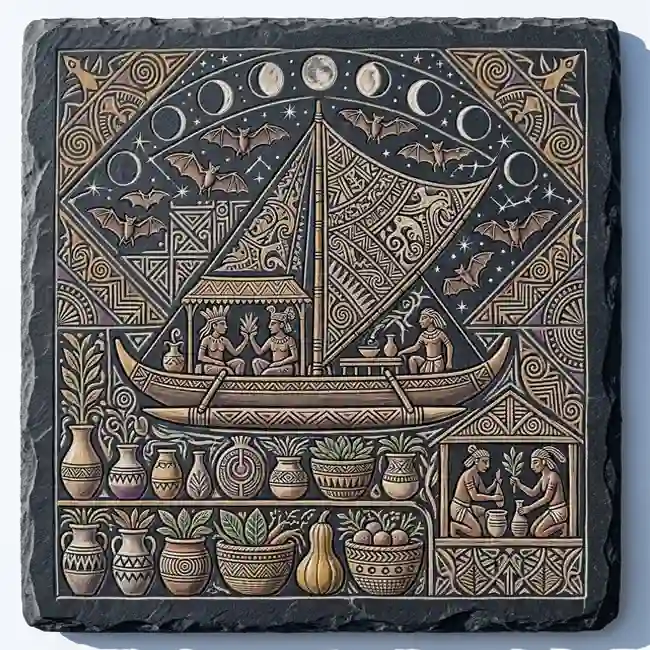
🛎️📜 The Storyteller’s Intro: 5,000 Years of Ancestral Flavors
Hey friend, let's hop into a time machine and sail back way before cookbooks even existed. We're talking about the Lapita Culture — the original ocean nomads of the Pacific.
If you haven't heard of them, the Lapita were the ancestors of almost everyone in Polynesia, Micronesia, and Melanesia today. Archaeologists trace their roots to around 3500 to 5000 years ago, starting from Taiwan and the northern Philippines, then exploding outwards through the Bismarck Archipelago, Vanuatu, Fiji, Tonga, and Samoa.
So how do we split their history when it comes to food?
🌟 The Formative Era - Austronesian Roots (c. 5000 - 3500 BP): This is where it all starts. Think early rice, millet, and a deep knowledge of forest botanicals in Island Southeast Asia. The ancestors of the Lapita were already masters of preserving ginger-like rhizomes, wild citrus leaves, and medicinal barks for long sea voyages.
🌟 The Classic Lapita Era - The Pottery Voyagers (c. 3500 - 2800 BP): This is their golden age. Famous for their dentate-stamped pottery — beautiful pots with intricate tooth-like patterns. These weren't just for show. Residue analysis from Lapita potsherds in Vanuatu and New Caledonia shows they were brewing sacred infusions inside them. This era is the heart of our sacred tonics story.
🌟 The Post-Lapita & Polynesian Expansion Era (c. 2800 - 1000 BP): The pottery becomes simpler, but the botanical knowledge explodes. As they settled more remote atolls where food was scarce, they perfected the art of turning a few leaves, roots, and coconut water into powerful daily tonics for energy, healing, and ceremony.
For the Lapita, food was never just calories. An infusion was a prayer, a medicine, and a GPS for the soul.
🧭 What Made Their Food Culture So Different?
• Ocean-First Mindset: They didn't farm first and fish second. They lived by the tide, the moon, and the stars. Every meal was timed to nature.
• Pottery as a Sacred Lab: Their iconic Lapita pots were like ancient teapots. Low-fired, porous, perfect for slow-steeping leaves and roots over a gentle fire without boiling away the spirit.
• The Concept of Mana in a Drink: A tonic wasn't tasty for the sake of taste. It had to carry mana — spiritual power. A drink made from a newly discovered island's leaves proved you had permission from the ancestors to stay.
📜 Iconic Excavated Menus: Sacred Tonics of the Lapita Voyagers
Alright, this is the juicy part. Archaeologists didn't find written recipes, but they found charred seeds, leaf phytoliths, pollen in pot residues, and oral traditions that survived 3000 years in Vanuatu and Tonga. Here are the most iconic, academically-documented infusion categories from Lapita sites.
🌺 The Ancestral Welcome Tonics - First Landing Drinks
These were the first things made when a canoe touched a new island.
• Teitei Ni Kava Lolo - The Ancient Calm Root Infusion: Found in residue from Early Lapita sites in the Bismarcks. Not modern kava, but its wild ancestor Piper wichmannii. Pounded root steeped in cool water in a dentate pot, not fermented. Used to calm the crew after weeks at sea and to ask the island's spirits for peace.
• Lau Nonu Sacred Leaf Water - The Great Morinda Tonic: Carbonized Morinda citrifolia (noni) leaves found in hearths in Fiji. Leaves were wilted over fire, then steeped overnight in rainwater with roasted coconut flesh. Considered a purification drink for chiefs and navigators.
• Sula Vutona - The Atoll Flower Dew: Documented through pollen analysis in Vanuatu. Morning dew collected from Barringtonia asiatica flowers and Hibiscus tiliaceus blossoms, mixed with young coconut water. Served only at sunrise to mark a new beginning.
🍃 The Voyager’s Vitality Tonics - Daily Strength
• Rea Tonga - The Ginger-Turmeric Fire Brew: Rhizomes of wild ginger and turmeric relatives (Zingiber and Curcuma species) found charred in Lapita ovens. Thinly sliced, sun-dried, then slow-steeped with wild basil leaves. A daily anti-fatigue infusion before paddling.
• Vai Laukau - The Taro Leaf Life Water: Perhaps the most important. Young taro leaves (Colocasia esculenta) were blanched to remove sting, then steeped with a pinch of sea salt and lime leaf. Rich in minerals, this was their version of an electrolyte drink after working in the gardens.
• Niu Wai - The Coconut Sprout Elixir: Sprouted coconut (niu) core, called the "apple", pounded and steeped in water from the same nut. Evidence from Lapita middens in Tonga shows this was reserved for children and elders for pure, gentle energy.
🌙 The Ceremonial & Dreaming Infusions - Night Rituals
• Meli Vuvu - The Honey Bark Night Tea: No bees, but honey from stingless bees and sap from Pometia pinnata trees. Bark shavings steeped with forest honey water in small, finely decorated pots. Used during storytelling nights and rites of passage.
• Rau Manogi - The Fragrant Spirit Leaf: Leaves of Euodia and Cananga (ylang-ylang ancestor) were bundled and steeped in warm, not hot, water. The steam was inhaled, the water was sipped. Used to connect with ancestors and for dream guidance before a long voyage.
🗺️ Island Life & Voyaging Trails: Eating, Living, and Traveling the Lapita Way
If you want to truly taste Lapita, you have to understand how they lived. They didn't have villages like we do. They had stilt houses over the lagoon.
• 🏡 Life on Stilts: Their houses were built over the water in places like the Talepakemalai site in Mussau. Why? To stay cool, to avoid mosquitoes, and to throw food scraps directly to the fish. Their kitchen was a canoe and a fire pit. You ate what the sea gave you in the morning and what the forest garden gave you at night.
• 🌱 The Portable Garden System: This is genius. Every Lapita canoe carried live plants: taro cuttings, banana suckers, paper mulberry, and turmeric rhizomes wrapped in wet leaves. They were literally sailing with a garden. When they landed, they planted a food forest immediately. That's why we find the same botanical DNA across 4000 km of ocean.
• 🌐 Modern Travel Trail - Where You Can Still Feel It: You can still trace them today without a time machine.
◦ Mussau and the Bismarck Archipelago, Papua New Guinea: The earliest Lapita site. Go for the untouched lagoons and learn how local women still make Lau Nonu tonic the same way.
◦ Teouma, Efate Island, Vanuatu: A massive Lapita cemetery and settlement site. The local cultural centers offer botanical walks where elders show you the exact leaves used for Rea Tonga.
◦ Sigatoka Dunes, Fiji: Where Lapita pottery washes up after storms. Local guides teach you to make Sula Vutona with sea hibiscus.
◦ Tongatapu, Tonga: The gateway to Polynesia. Visit the ancient langi tombs and taste modern versions of Niu Wai at family feasts.
The Lapita food trail is not about restaurants. It's about sitting with an elder, watching her pick five leaves you thought were weeds, and realizing she's making a 3000-year-old pharmacy.
🚣 Bismarck Archipelago Waters: The Cradle of Lapita Navigation
You can't talk about Lapita food without talking about water. Not the drinking kind, but the ocean that was their highway. The Bismarck Sea was their training ground.
• 🌊 The Original Blue Highway: Before they crossed the open Pacific, they mastered the inter-island waters between New Britain, New Ireland, and Mussau. These channels are treacherous, full of currents. They needed tonics that prevented seasickness, kept them awake, and hydrated them without fresh water storage. That's why ginger-turmeric and young coconut infusions were non-negotiable cargo.
• 🐚 The Lapita Pot and the Sea: Why dentate-stamped pottery? One theory is that the patterns weren't just art. They were grip. When your hands are wet with sea salt and fish oil, you need a pot you won't drop. A pot that can simmer a tonic on a canoe's small hearth while the canoe rocks.
• 🧭 Taste as Navigation: Oral histories in the Solomon Islands say navigators could taste if land was near. How? By tasting botanical infusions. If the Vai Laukau made from local leaves tasted slightly different — more bitter, more mineral — it meant the soil of a new island was influencing the water table. Food was their compass.
🏜️ Coastal Gardens & Atoll Oases: Where Lapita Botanicals Thrived
Forget desert sand dunes. The Lapita desert was the open ocean, and their oasis was the atoll. A tiny ring of sand with no rivers.
• 🏝️ The Atoll Miracle: On atolls like in the Marshall Islands or Tuvalu, there is no fresh water. So how do you make a tonic? You learn to make fresh water from plants. Lapita people learned that the water inside young coconuts, the sap from banana trunks, and the liquid squeezed from certain succulent leaves could be mixed to create a drinkable, nutritious tonic. Their oasis was a coconut grove.
• 🌴 The Three-Layer Food Forest: This is their desert survival trick. They didn't plant in rows. They planted in layers, like a natural oasis.
◦ Top Layer: Coconut and Pometia trees for shade and sap.
◦ Middle Layer: Banana, paper mulberry, and noni for leaves and fruit.
◦ Ground Layer: Taro, turmeric, ginger, and wild basil for daily tonics.
Even on a 200-meter-wide islet, this system creates cool, moist soil and endless infusion ingredients.
• 🔥 The Earth Oven as a Steamer: The famous Lapita lovo or umu wasn't just for roasting pig. They placed pots of tonic leaves on hot stones, covered them with banana leaves, and let them steam for hours. This slow, low-heat extraction is why their tonics were so aromatic and not bitter. It's the original slow brew.
⛪❓ Ancient Civilization FAQ: Unlocking Palace Kitchen Mysteries
Q1: Did the Lapita people write down their recipes?
Not on paper. Their "cookbook" was the pottery itself and the landscape. Residue analysis using gas chromatography on Lapita sherds from Vanuatu found traces of gingerols, curcuminoids, and noni compounds. The other cookbook was oral — chants and songs that listed plants in the order they should be added to a pot. Some of those chants are still sung in northern Vanuatu today.
Q2: Are these sacred infusions safe to try today?
The botanical families are safe — coconut, taro leaf (when properly blanched), ginger, turmeric, basil, hibiscus. But the wild ancestral varieties can be stronger than modern supermarket ones. The Lapita also had deep knowledge of dosage — how long to steep, which leaves to pick (young vs. old), and when to discard. We are only sharing the cultural and historical overview here, not a how-to dose. Always use modern, food-grade plants if you experiment.
Q3: Why no fermentation or alcohol in Lapita tonics?
This is a common misconception. While later Pacific cultures developed fermented drinks, Early and Classic Lapita infusions were almost entirely non-fermented. Why? For voyaging, you need clarity, hydration, and quick energy. Fermentation takes days, needs sugar control, and dehydrates. Their sacredness came from the freshness and the ritual of making it at the moment of need, not from altering consciousness. It was about connection, not intoxication.
Q4: What’s the difference between Lapita tonics and modern herbal tea?
Three things. First, the vessel: Lapita pottery is porous and slightly alkaline, which changes the pH and taste of the infusion. Second, the water: they used rainwater, coconut water, and dew — never hard groundwater. Third, the intention: you didn't just drink it. You said a small thanks to the plant, to the island, to the ancestor who taught you. It was a complete mind-body ritual.
🧠 Final Thoughts: The Timeless Allure of Antique Gastronomy
So here we are, 5000 years later, still obsessed with what those incredible sailors put in their pots.
The Lapita Culture: Sacred Infusions & Botanical Tonics isn't really about old drinks. It's about a totally different way of seeing food. For them, a leaf wasn't a garnish. It was a message from the land that you were welcome. A root wasn't a spice. It was fuel that had survived 1000 km of ocean with you.
We live in a world of instant coffee and energy shots. The Lapita teach us the opposite — that the slowest drink, made with water you collected, leaves you picked at dawn, and a pot you made with your own hands, is the one that gives you real power.
In our next full deep dive, we will go step-by-step into how they actually prepared Teitei Ni Kava Lolo and Vai Laukau with modern, safe ingredients — including timing, leaf selection, and the traditional chant. Stay tuned.
This is more than forgotten ancient recipes. This is a memory in a cup.
🏛️ Credit to the Keepers of the Culture (The Legacy)
With deep respect and gratitude.
This article is built upon the decades of hard work by Pacific archaeologists and the living knowledge of island communities. We acknowledge the Lapita ancestors and their descendants across Vanuatu, Fiji, Tonga, Samoa, and the Bismarck Archipelago.
Special respect to the traditional knowledge keepers of Teouma Village, Efate, the Mussau community elders, and the cultural heritage teams at the Vanuatu Cultural Centre and the Fiji Museum for protecting oral histories of botanical use.
Academic grounding comes from the pioneering excavations of Lapita sites by researchers like Professor Patrick Kirch, Professor Christophe Sand, and the late Professor Roger Green, whose pottery residue studies and archaeobotanical work revealed the secrets inside those dentate pots.
All interpretations of botanical use are shared here for cultural education only, honoring the principle by centering the source community as the true experts. Vinaka vakalevu, Tankiu tumas, Malo 'aupito.
🏛️🧪 I Found a 3,000-Year-Old Pacific Elixir Buried in a Lapita Cooking Pit
👉 Sip Lapita Culture's Sacred Infusions & Botanical Tonics
| 🌐 🏛️🧪 < Back | 🏝️ 🍯 < Previous |