
🏠 Home > 🗺️ Recipes > 🏛️🍖 Hearth-Roasted Mains > 🏝️ Lapita Culture: Hearth-Roasted Mains Recipes > 🏛️🍖 1.Lapita-Inspired Deep Sea Fish Earth Oven Roast
🏛️🍖 Lapita Deep Sea Fish Roast: An Ancient Pacific Feast Reimagined
Published by Supakorn | Updated: October 2026
⛩️🌊 Ancient Civilization Origins: The Lapita Culture of the Pacific Islands
🗿 The Storyteller’s Intro: Echoes of 3,000 Years of Ancestral Flavors
Imagine standing on a tropical Pacific shoreline thousands of years ago. The morning sun rises above a blue horizon, waves break against a reef, and smoke curls gently from a cooking fire near a small coastal settlement. Nearby, families prepare the day's catch while others gather plant foods, tend their gardens, repair fishing equipment, and share stories about the sea.
This is the world that inspires our Lapita deep sea fish roast.
The Lapita culture flourished across parts of the western Pacific roughly 3,300 to 2,800 years ago, with its origins connected to earlier movements of people and traditions across Island Southeast Asia and the Pacific. Lapita communities became renowned for their distinctive decorated pottery, seafaring knowledge, and role in the settlement of many islands in Oceania.
Food was central to this way of life. Fishing connected communities to reefs and open waters, while cultivated plants and gathered resources provided essential nourishment. Cooking was more than a practical task. It brought people together, supported community relationships, and transformed the resources of the island environment into shared meals.
Our featured dish, Lapita Deep Sea Fish Roast, is a modern culinary interpretation inspired by this ancient Pacific setting. It is not a recovered historical recipe with a verified Lapita name. Instead, it brings together plausible regional ingredients, traditional earth-oven techniques, and the atmosphere of an ancestral coastal feast.
The goal is to create something you can prepare in a modern kitchen while imagining the remarkable journey of Pacific communities who learned to live with the ocean rather than simply beside it.
🌍 The Global Value of Antique Heritage
Lapita heritage matters far beyond the islands where archaeological remains have been discovered. It offers a window into the history of human movement, environmental knowledge, craftsmanship, and cultural exchange across one of the world's largest ocean regions.
For generations, Pacific communities developed sophisticated ways to navigate open water, recognize seasonal patterns, locate productive fishing grounds, and maintain relationships between neighboring islands. Their knowledge of winds, currents, reefs, and marine life helped make long-distance settlement possible.
Food was part of that achievement.
A fish brought ashore represented the work of those who understood the sea. Root crops and other cultivated plants reflected knowledge of soil, rainfall, and growing seasons. Cooking methods adapted to available materials and local conditions, allowing families to prepare meals without modern ovens or manufactured cookware.
Archaeologists study pottery fragments, animal remains, plant traces, cooking features, and other evidence to reconstruct parts of ancient life. These discoveries can reveal what people ate and how their environments changed, although they do not always identify exact recipes or cooking instructions.
That distinction is important. We can celebrate the ingenuity of Lapita communities without pretending that every modern Pacific dish existed in precisely the same form thousands of years ago.
For today's curious home cook, this heritage offers a meaningful invitation: explore ancient foodways with imagination, respect, and an appreciation for the people whose knowledge continues to shape Pacific food culture.
📚 The Culinary Resurrection
The idea of bringing an ancient meal back to the table begins with a simple question: how might a coastal community have transformed a freshly caught fish into a memorable shared feast?
An earth oven provides an evocative answer.
Across many Pacific societies, earth-oven cooking developed into an important culinary tradition. A typical method uses heated stones, plant materials, food wrapped or covered with leaves, and earth or another covering to retain heat. The enclosed environment cooks ingredients gently and helps preserve moisture.
However, earth-oven traditions differ between islands and communities. The familiar Polynesian umu, Hawaiian imu, and other regional cooking practices should not automatically be treated as identical or assigned to every Lapita settlement.
For our interpretation, the essential principles are gentle enclosed heat, moisture, natural aromatic ingredients, and patient cooking.
A modern version can use a covered roasting dish or a tightly wrapped parcel in an oven. Fresh fish provides the centerpiece, while coconut milk, ginger, citrus, leafy greens, and root vegetables create a flavorful Pacific-inspired combination.
These ingredients are selected for a practical contemporary recipe, not claimed as a definitive archaeological inventory of a single Lapita meal.
The result is a dish that connects modern cooking with a much older story: the relationship between ocean, land, fire, and community.
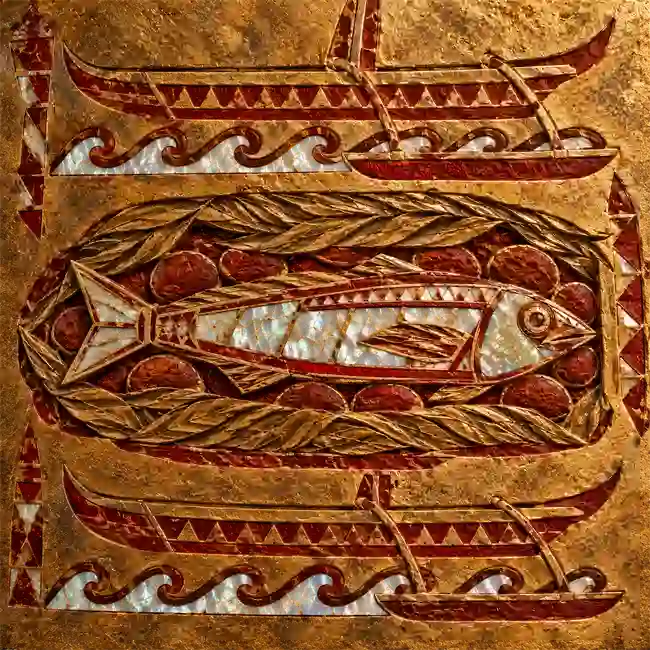
🐟 Recipe: Lapita-Inspired Deep Sea Fish Earth Oven Roast
🏺 Legends Behind This Excavated Secret
Picture a gathering near the shore after a successful fishing trip. The day's catch is brought back to the settlement, and the community begins preparing a meal. Some people clean the fish, others collect suitable leaves or prepare vegetables, while the cooking area is readied for a slow, enclosed roast.
There is no surviving Lapita cookbook that tells us exactly how this meal was seasoned, arranged, or served. Its story is therefore not a literal translation of an excavated recipe. It is a culinary reconstruction inspired by the maritime environment, archaeological heritage, and wider Pacific traditions of cooking with fire and earth.
The deep sea fish in our modern version represents the importance of marine resources to island life. The earth oven symbolizes the ingenuity of cooking with locally available materials. Aromatic leaves and vegetables bring the ingredients together without requiring complicated equipment or elaborate techniques.
Imagine the fish emerging from its warm enclosure, its flesh tender and moist, its natural sweetness balanced by fragrant ginger, citrus, and coconut. Vegetables soften alongside it, absorbing the savory juices released during cooking.
This is the heart of our ancestral-inspired feast: a dish designed to celebrate the sea, the landscape, and the communal spirit of food.
A note on authenticity: The name Lapita Deep Sea Fish Earth Oven Roast is a contemporary descriptive title. It should not be mistaken for a documented ancient dish, and the particular ingredient combination below is a modern Pacific-inspired interpretation.
🥥 Ingredients & The Noble Pantry
🌿 The Ancestral Staples
In a Pacific-inspired kitchen, ingredients tell a story of their environment. Fish connects the meal to coastal waters, root vegetables provide substance, and aromatic plants contribute fragrance and freshness.
The following pantry combines practical modern ingredients with a cooking approach inspired by traditional Pacific earth-oven methods. It is intended for four people.
🧺 Modern Substitutes
• Deep sea fish — 800 g to 1 kg: Choose a firm-fleshed fish such as grouper, snapper, or cod. Fresh fish is ideal, but properly thawed frozen fillets can also work. The recipe is inspired by Pacific maritime foodways rather than a claim that one particular species was eaten at every Lapita settlement.
• Coconut milk — 200 ml: Adds richness and helps keep the fish moist. Use unsweetened coconut milk rather than a sweetened beverage.
• Fresh ginger — 20 g: Provides gentle warmth and aromatic depth. Finely grated ginger is convenient when fresh ginger is unavailable.
• Garlic — 2 cloves, approximately 8 g: Adds savory character to the modern seasoning. It is optional and should not be presented as a verified ingredient in a particular Lapita recipe.
• Lime juice — 2 tablespoons: Brings a fresh, bright flavor that balances the coconut milk. Lemon juice can substitute if lime is unavailable.
• Fresh leafy greens — 150 g: Banana leaves are useful for wrapping the fish if available and suitable for cooking. Otherwise, use cabbage leaves inside a covered roasting dish, or simply line the dish with baking parchment.
• Sweet potato — 400 g: Provides a hearty accompaniment. Cut into evenly sized chunks so that the pieces cook consistently. Other locally available root vegetables can be substituted.
• Spring onions — 3 stalks: Add a mild onion flavor and a fresh finish. Ordinary green onions work equally well.
• Sea salt — 1 teaspoon, approximately 5 g: Enhances the natural flavor of the fish. Adjust according to the fish, portion size, and dietary needs.
• Black pepper — ½ teaspoon: An optional modern seasoning that gives the dish a gentle bite. It is not included as an established ingredient of ancient Lapita cooking.
• Fresh herbs — 2 tablespoons, finely chopped: Use coriander or another suitable fresh herb for a lively finish. Treat this as a modern addition rather than an archaeological certainty.
• Water — 100 ml: Helps create moisture inside the roasting dish and supports even cooking, particularly when using a conventional oven.
⚖️ Ancient Proportions
These measurements are designed for a practical home-cooking experience. They are not recovered Lapita measurements; ancient cooks would have relied on experience, the size of the catch, available ingredients, and observation rather than standardized measuring equipment.
For four servings, use the following proportions:
• Fish: 800 g to 1 kg, forming the main part of the meal.
• Coconut milk: 200 ml, enough to coat the fish lightly without drowning it.
• Ginger: 20 g, finely grated for an even distribution of flavor.
• Garlic: 2 cloves, crushed or finely chopped.
• Lime juice: 2 tablespoons, added to brighten the seasoning.
• Leafy greens: 150 g, for wrapping or lining the cooking vessel.
• Sweet potato: 400 g, cut into medium-sized chunks.
• Spring onions: 3 stalks, sliced.
• Sea salt: 1 teaspoon, adjusted to taste.
• Black pepper: ½ teaspoon, optional.
• Fresh herbs: 2 tablespoons, reserved for the final presentation.
• Water: 100 ml, added to the bottom of the covered roasting dish when needed.
The guiding principle: Keep the fish as the centerpiece, use the coconut mixture as a light aromatic coating, and let the vegetables provide substance. The finished dish should taste like fish first, with supporting notes of coconut, ginger, and fresh citrus.
🍳 The Chef’s Ancient Ritual
The cooking process below recreates the atmosphere of an enclosed ancestral hearth using a modern oven. It offers a practical alternative to building an actual earth oven, which requires appropriate outdoor space, equipment, and fire safety precautions.
🐟 Step 1: Prepare the Catch
Rinse the fish as appropriate for your preparation method and pat it dry with clean paper towels. If using whole fish, make sure it has been properly cleaned and scaled. For fillets, check carefully for remaining bones.
Place the fish in a shallow dish. Make a few shallow cuts in the skin of thicker portions to help the seasoning spread more evenly, taking care not to cut deeply into the flesh.
This stage represents the beginning of the meal's transformation: a fresh catch becomes food prepared for sharing.
🥥 Step 2: Awaken the Aromatics
In a bowl, combine the coconut milk, grated ginger, crushed garlic, lime juice, salt, and optional black pepper.
Stir until the mixture is evenly blended. Taste a small amount of the seasoning and adjust the salt or citrus if needed.
Pour the mixture over the fish, turning the pieces gently to coat them. Allow the fish to rest in the refrigerator for approximately 15–20 minutes while you prepare the vegetables.
Avoid leaving raw fish at room temperature for extended periods. Keep it chilled until you are ready to cook.
🍠 Step 3: Prepare the Earth-Oven Layers
Preheat a conventional oven to 375 degrees Fahrenheit ( 190 degrees Celsius ).
Arrange the sweet potato chunks in a roasting dish. Add the sliced spring onions and leafy greens. If using banana leaves, choose leaves specifically suitable for food preparation, clean them thoroughly, and prepare them according to safe culinary practice.
Place the fish on top of the vegetables. Pour the remaining coconut mixture over the fish, then add approximately 100 ml of water around the vegetables if the dish needs extra moisture.
Cover the roasting dish tightly with a lid or suitable oven-safe foil. The purpose is to retain moisture and create a gentle, enclosed cooking environment reminiscent of the principle behind an earth oven.
🔥 Step 4: Let the Hearth Do Its Work
Roast for approximately 20–30 minutes for many fillets, depending on their thickness. Larger or whole fish may require longer. Check the fish early enough to avoid overcooking.
The sweet potato should become tender, while the fish should separate easily into flakes. For food safety, cook fish to an internal temperature of 145 degrees Fahrenheit / 63 degrees Celsius, measured at the thickest part with a food thermometer.
If the vegetables need additional time, carefully remove the cooked fish and continue cooking the vegetables until tender. Avoid relying on cooking time alone, as different fish species, portion sizes, and ovens behave differently.
When the dish is ready, remove it from the oven and let it rest briefly before serving.
🌿 Step 5: Reveal the Feast
Open the covered dish carefully, directing the steam away from your face and hands. The first impression should be a gentle fragrance of warm coconut, ginger, cooked vegetables, and fish.
Scatter the fresh herbs over the top. Serve the fish with the softened sweet potatoes and spoon some of the flavorful cooking juices over each portion.
For a shared-meal presentation, place the roasting dish in the center of the table and let everyone serve themselves. For individual portions, arrange the fish and vegetables on plates lined with clean serving leaves if desired.
The modern kitchen has now produced its own version of an ancestral-inspired feast: simple ingredients, enclosed heat, and a meal that invites people to gather.
🔥 Secrets of the Ancestral Hearth
The difference between a memorable fish roast and a dry, disappointing one often comes down to moisture, timing, and how the ingredients are arranged. These practical tips help preserve the spirit of traditional enclosed cooking while making the dish reliable for a modern home cook.
• Keep the cooking environment moist. A tightly covered roasting dish helps prevent the fish from drying out. If the dish looks unusually dry before cooking, add a little water rather than pouring in excessive coconut milk.
• Choose the right fish for the method. Firm-fleshed fish is generally easier to handle because it holds together during roasting. Very thin fillets cook quickly, so check them early.
• Do not over-marinate. The lime juice adds brightness, but prolonged exposure to acidic ingredients can change the texture of fish. A short refrigerated marinade is sufficient for this recipe.
• Avoid excessive seasoning. Too much garlic, pepper, or citrus can overpower the natural flavor of the fish. The aim is a balanced meal, not a heavily seasoned modern seafood casserole.
• Cut root vegetables evenly. Pieces of similar size are more likely to cook at the same rate. If your sweet potatoes are particularly large or firm, cut them smaller or give them a head start in the oven.
• Treat banana leaves as a cooking material, not a decorative shortcut. Use food-safe leaves and prepare them appropriately before wrapping ingredients. Never place unknown leaves or untreated materials directly against food.
• Do not mistake traditional inspiration for historical proof. An earth-oven technique found in one Pacific community does not automatically establish how every Lapita settlement prepared fish. Different islands developed distinct food traditions.
• Prioritize food safety. Keep raw fish refrigerated, prevent contact between raw seafood and ready-to-eat foods, and clean preparation surfaces thoroughly. Cook the fish to 145 degrees Fahrenheit / 63 degrees Celsius at its thickest point.
The most important secret is patience. Enclosed cooking works best when you allow the heat to circulate, preserve moisture, and resist the temptation to uncover the dish repeatedly.
⛵ Ancient Civilization Origins FAQ
Q1. What Was the Lapita Culture?
The Lapita culture was an archaeological culture associated with communities that spread across parts of the western Pacific roughly 3,300 to 2,800 years ago. It is particularly recognized for distinctive decorated pottery, maritime connections, and its place in the history of settlement across Oceania.
Q2. Did the Lapita People Really Cook Deep Sea Fish in Earth Ovens?
Fishing and the use of marine resources were important in many Pacific island communities, and earth-oven cooking is well established in later and living Pacific culinary traditions. However, this particular deep sea fish roast is a modern reconstruction, not a verified Lapita recipe. The precise combination of fish, coconut milk, ginger, and lime cannot be claimed as a documented ancient preparation.
Q3. Can I Make This Ancient-Inspired Fish Roast Without an Earth Oven?
Absolutely. A covered roasting dish in a conventional oven recreates some of the moisture-retaining principles of enclosed cooking. You can use a suitable lidded casserole or oven-safe dish and adjust the cooking time to suit your fish.
Q4. Why Is Lapita Food Heritage Important Today?
Lapita heritage helps us explore the connections between migration, maritime knowledge, local environments, and the development of Pacific communities. Reconstructing ancient-inspired meals can make these histories more approachable, provided we clearly distinguish archaeological evidence from modern interpretation.
👅 The Taste of Archeology
The first bite of this Lapita-inspired deep sea fish roast should be gentle and savory. The fish provides the main flavor, while coconut milk adds a creamy texture without requiring a heavy sauce. Ginger brings warmth, lime offers a fresh contrast, and the sweet potatoes provide a naturally sweet, satisfying accompaniment.
Because the fish cooks in a covered dish, it can retain much of its moisture. The vegetables soften in the surrounding cooking juices, creating a simple meal in which the individual ingredients complement one another.
There is also a sensory connection to the landscape behind the dish. Fish evokes the Pacific shoreline, coconut suggests the tropical island environment, and the enclosed cooking method recalls the ingenuity required to prepare food with limited equipment.
Of course, no modern recipe can reproduce the exact taste of a meal eaten by a Lapita family thousands of years ago. The original fish species, seasonings, cooking materials, and serving customs would have varied according to location and circumstances.
That uncertainty is part of the fascination. Archaeology can reveal traces of ancient life, while carefully framed culinary experimentation allows us to engage with the past through smell, texture, and taste.
This is not a lost recipe restored word for word. It is an invitation to imagine how food, environment, and human ingenuity have always belonged together.
🌅 Final Thoughts: Bringing Antiquity to Your Modern Table
You do not need a tropical island, an open shoreline, or a traditional earth oven to appreciate the culinary heritage of the Pacific. A few fresh ingredients, a covered roasting dish, and a little curiosity are enough to begin.
The Lapita-inspired deep sea fish roast is designed to make that connection tangible. It transforms a familiar home-cooked meal into an opportunity to explore the relationship between ancient communities and the environments that sustained them.
As you prepare the dish, think about the many kinds of knowledge hidden behind a simple meal: recognizing edible resources, understanding heat, preserving moisture, and sharing food with others. These practical skills have supported human communities across countless generations.
You can also make the recipe your own. Choose locally available fish, substitute suitable vegetables, and adjust the seasoning to suit your taste. The key is to preserve the central idea of a moist, gently roasted fish dish rather than claiming that every ingredient reproduces a specific prehistoric meal.
Perhaps that is the most rewarding part of cooking with ancient inspiration. The past becomes more than a collection of dates, pottery fragments, and archaeological discoveries. It becomes a starting point for thoughtful exploration in your own kitchen.
✨ The Golden Hook: The Sacred Union
Every ancient food tradition carries a story larger than the meal itself. Behind the ingredients are landscapes, communities, journeys, and generations of knowledge passed from one person to another.
The Lapita story reminds us that the Pacific was never simply an empty expanse of water. It was a world of movement, connection, adaptation, and remarkable maritime achievement. Food was one of the everyday ways people responded to that world.
By preparing an ancient-inspired fish roast, you become part of a broader conversation about how humanity has learned to live with its surroundings. You can explore that story without claiming ownership of the culture or inventing traditions that the evidence cannot support.
Cook with curiosity. Explore with respect. Share the story behind every dish.
If this recipe inspires you, bring it to your table, discuss the history with friends, and continue discovering the remarkable food heritage of Pacific island communities. The most meaningful culinary secrets are not those we keep hidden forever, but those we preserve responsibly and pass on with care.
🙏 Credit to the Keepers of the Culture: The Legacy
This recipe is dedicated to the Indigenous peoples and cultural communities of Oceania whose knowledge, creativity, and relationships with the land and sea have sustained Pacific food traditions across generations.
The Lapita archaeological record provides valuable insights into the region's distant past, but it does not represent every later Pacific culture, nor does it preserve a complete account of ancient cooking practices. Modern Pacific communities possess their own distinct histories, identities, and living traditions that deserve recognition on their own terms.
This article's fish roast is an original, contemporary culinary interpretation inspired by the broader setting of ancient Pacific life. Its ingredients and measurements have been adapted for present-day home kitchens; they should not be understood as an authenticated archaeological recipe.
Respect for culinary heritage means acknowledging what is known, being honest about what remains uncertain, and recognizing the communities whose cultural knowledge continues to shape the world's understanding of Pacific history.
May every meal inspired by the ancient world encourage deeper curiosity, responsible storytelling, and appreciation for the people who keep cultural traditions alive.
| 🏝️ 🏛️🍖 < Back |