
🏠 Home > 🗺️ Recipes > 🏛️🍖 Hearth-Roasted Mains > 🏝️ Lapita Culture: Hearth-Roasted Mains Recipes
🏝️ 🏛️🍖 Lapita Culture: Hearth-Roasted Mains Recipes
Published by Supakorn | Updated: October 2026
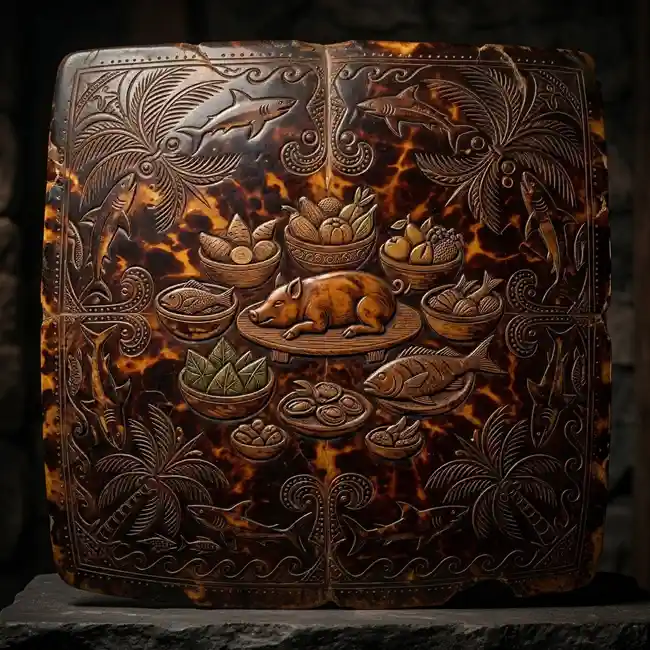
⛵📜 The Storyteller’s Intro: 3,000 Years of Ancestral Flavors
Imagine standing beside a coastal settlement somewhere in the ancient Pacific, thousands of years before modern kitchens, metal cookware, or written cookbooks existed. The air carries the scent of warm earth, smoky wood, and freshly prepared food. Nearby, families gather around a cooking area, preparing the ingredients gathered from the surrounding land and sea. Children watch, adults share their knowledge, and the evening meal becomes much more than a way to satisfy hunger. It becomes a moment of connection.
Welcome to the world of Lapita Culture, one of the most fascinating archaeological traditions in the history of the Pacific Islands.
Although the idea of a 5,000-year-old Lapita kitchen sounds captivating, the established archaeological record places the emergence of Lapita communities at approximately 3,500 years ago, around 1500 BCE. Their distinctive cultural tradition developed in the western Pacific, with early evidence associated with the Bismarck Archipelago northeast of New Guinea. From there, Lapita communities expanded eastward across parts of Melanesia and into the islands of western Polynesia.
Their story is not simply about where people lived. It is also about how they adapted to unfamiliar islands, cultivated plants, caught fish, prepared communal meals, and carried practical knowledge across enormous stretches of ocean.
🌊 From Ancient Southeast Asian Connections to the Open Pacific
Lapita culture emerged from a wider history of population movement, technological exchange, and cultural development across Island Southeast Asia and the western Pacific. Its distinctive pottery, settlement patterns, and archaeological remains help researchers trace connections between communities separated by long distances.
For a clearer historical timeline, think of the story in three broad stages:
🔸 Before approximately 1500 BCE: Earlier population movements and cultural developments across Island Southeast Asia and the western Pacific laid important foundations for later Lapita communities.
🔸 Approximately 1500–1000 BCE: Early Lapita communities became established in the Bismarck Archipelago and nearby regions. Their pottery, maritime skills, and food practices provide clues to their way of life.
🔸 Approximately 1000–500 BCE and beyond: Lapita-associated communities spread farther east, reaching islands in the southwest Pacific, including areas connected with the early settlement of western Polynesia. Over time, regional traditions changed, and distinctive Lapita pottery gradually disappeared from many communities.
These dates are approximate, and archaeological developments did not happen everywhere at precisely the same time.
One important distinction deserves attention: Lapita is an archaeological cultural tradition, not a single kingdom with a palace, a written court cookbook, or one uniform cuisine. Its communities lived in different environments and developed food practices suited to their particular islands.
That makes the history of Lapita hearth-roasted mains especially intriguing. Researchers cannot open a surviving Lapita recipe book, because no such written collection is known. Instead, they reconstruct ancient foodways by studying pottery, animal bones, plant remains, hearths, shells, and other archaeological evidence.
Every fragment offers a small piece of a much larger story.
🔥 Why Hearth-Roasted Food Belongs in the Lapita Story
Long before modern ovens, cooking over hot stones, embers, and prepared earth surfaces offered practical ways to transform raw ingredients into nourishing meals. Earth-oven cooking, in which food is placed with heated stones and often covered with vegetation and earth, is well documented in many Pacific societies.
However, it is important not to assume that every later Pacific cooking technique can be attributed directly to every early Lapita settlement. Archaeological evidence varies by site, and some details of ancient cooking remain uncertain.
The broader principle is easier to appreciate: people who settled islands needed reliable ways to prepare food using locally available resources. Fire provided warmth, helped process ingredients, and brought people together around shared work.
A hearth-roasted main dish, viewed through this historical lens, is not merely a recipe concept. It represents a practical relationship between people, fire, landscape, and community.
For modern food lovers, that is where the adventure begins. Rather than pretending to recover an exact ancient menu, we can explore the ingredients and cooking traditions supported by archaeological evidence while clearly distinguishing historical findings from modern interpretations.
🏺 Iconic Excavated Menus: The Ancient Foods Behind Lapita Hearth-Roasted Mains
One fascinating challenge in prehistoric food history is that archaeological discoveries rarely preserve a finished meal with its original name. Researchers may identify animal bones, charred plant remains, or residues inside pottery, but those clues do not automatically reveal the exact dish prepared by an ancient cook.
For that reason, the following menu names are descriptive labels for evidence-based food categories, not verified ancient Lapita dish names. No surviving Lapita written menu is known to record these foods under the titles below.
🏺 Iconic Lapita Culture: Hearth-Roasted Mains
Ancient Pacific-inspired menu names with English descriptions. These are modern descriptive titles inspired by archaeological evidence, not verified original Lapita dish names.
🍖 1. Hearth-Roasted Pig with Smoky Island Flavors
A hearty, fire-inspired main dish reflecting the presence of pigs at some Lapita-associated archaeological sites. The concept celebrates traditional island cooking, where meat, fire, and communal food preparation come together.
🐟 2. Ember-Roasted Pacific Reef Fish
Inspired by the marine resources that sustained many ancient Pacific communities, this dish highlights fresh fish prepared over gentle heat. Its simple character celebrates the connection between coastal living and ancestral food traditions.
🐚 3. Coastal Shellfish over Warm Stones
A seafood-inspired dish honoring the shellfish remains discovered at many Pacific archaeological sites. It evokes the resourcefulness of coastal communities that gathered edible marine foods from nearby shores and tidal environments.
🐔 4. Fire-Roasted Island Chicken
A contemporary interpretation of island-style fire cooking, featuring tender chicken with earthy aromas and simple natural seasonings. Its historical connection should be considered site-specific, as chicken remains do not establish a universal Lapita food tradition.
🍠 5. Earth-Oven Roasted Taro and Yam
Inspired by the importance of starchy root crops in Pacific food traditions, this dish celebrates the natural sweetness and hearty texture of taro and yam. It represents a plausible modern interpretation of island foodways rather than a documented ancient recipe.
🥥 6. Coconut-Wrapped Tropical Fish
A Pacific-inspired main combining fish with coconut and fragrant plant leaves. The concept draws on the region's rich culinary heritage, while the exact combination remains a modern interpretation rather than a confirmed Lapita preparation.
🌿 7. Leaf-Wrapped Hearth-Roasted Mains
A selection of ingredients imagined as being cooked in protective leaves over controlled heat. This menu concept highlights the practical relationship between natural materials and cooking, while recognizing that specific ancient techniques require archaeological evidence.
🐖 8. Stone-Cooked Pork with Island Roots
A substantial island-inspired meal pairing pork with starchy root vegetables. It reflects the broader possibilities of combining animal foods and cultivated plants in Pacific food systems without claiming a verified prehistoric recipe.
🐟 9. Charcoal-Grilled Coastal Fish with Wild Greens
A rustic seafood main inspired by the coastal environments associated with many Lapita settlements. Fish and locally gathered plant foods offer a modern culinary expression of the close relationship between island communities and their surroundings.
🏝️ 10. Ancestral Pacific Hearth Feast
A contemporary heritage-inspired platter featuring roasted protein, root vegetables, and tropical plant ingredients. Designed around the idea of communal dining, it celebrates the resourcefulness and cultural diversity of Pacific island food traditions.
🗺️ Everyday Life, Ancient Cooking, and Traveling Through Lapita Heritage
Lapita food culture makes the most sense when we imagine the daily routines that supported island communities. Food was not simply something collected at the end of the day. It required planning, knowledge of the environment, practical skills, and cooperation between people.
🏡 How Lapita Communities Organized Their Daily Meals
• Coastal settlements and nearby resources: Many Lapita settlements were associated with coastal environments, where fishing, shellfish gathering, and access to maritime travel could support everyday life. Settlement locations differed, however, and not every community relied on the same combination of resources.
• Food preparation as shared work: Gathering plants, collecting shellfish, fishing, maintaining cooking fires, and preparing ingredients required time and knowledge. These activities could involve several members of a household or community, although the exact division of labor is difficult to reconstruct for individual sites.
• Cooking with available materials: Before modern cookware, people relied on practical methods suited to their surroundings. Fire, heated surfaces, and natural materials offered ways to prepare food without manufactured kitchen equipment.
• Preserving knowledge through experience: Recognizing edible plants, understanding seasonal changes, and knowing where to find marine resources were valuable skills. Such knowledge could be passed between generations through observation and participation.
Sharing food and maintaining relationships: Meals provided opportunities for people to interact, cooperate, and reinforce social connections. The specific meanings of communal eating in Lapita communities remain an area for careful interpretation rather than assumption.
🔥 What Made Ancient Hearth Cooking So Practical?
A cooking fire offered several advantages to people living on remote islands. It could provide heat, support different preparation techniques, and help make certain ingredients easier to eat.
Cooking over embers required attention to temperature and timing. Covered cooking environments could distribute heat differently from direct exposure to flames. However, without a securely identified cooking feature or preserved food remains, it is difficult to assign a particular technique to a specific Lapita meal.
This distinction matters when exploring Lapita Culture hearth-roasted mains. A modern interpretation might combine locally inspired ingredients with an earth-oven method, but it should be described as a historically informed recreation rather than a proven, unchanged recipe from 1500 BCE.
That approach makes the culinary experience more meaningful, not less. It allows us to appreciate ancient ingenuity without turning archaeological possibilities into unsupported historical claims.
🌴 Where Food Meets Travel: Exploring the Lapita World Today
For travelers interested in prehistoric food culture, the Lapita world offers a different kind of journey. Instead of following a royal palace kitchen or a famous ancient market, visitors can explore island landscapes, archaeological collections, maritime heritage, and living Pacific food traditions.
Places associated with Lapita archaeology and its wider cultural history include:
• Papua New Guinea and the Bismarck Archipelago: This region is central to discussions of early Lapita development. Its island geography helps visitors understand the challenges and opportunities of maritime settlement.
• Vanuatu: Archaeological research in Vanuatu has contributed significantly to knowledge of Lapita communities and their movement through the southwest Pacific.
• New Caledonia: Lapita archaeological sites and cultural collections offer another perspective on the expansion of communities across the region.
• Fiji: Archaeological evidence from Fiji helps illuminate the eastern movement of Lapita-associated communities and the development of later Pacific societies.
• Tonga and Samoa: These islands are important for understanding the transition from Lapita-associated traditions toward the societies and cultural developments associated with early Polynesia.
These destinations are not interchangeable, and the presence of archaeological heritage does not mean that every location offers the same type of site access, museum collection, or visitor experience.
Before planning a trip, check local museum information, cultural-site access requirements, and guidance from relevant heritage authorities. Some important archaeological locations may be protected, privately managed, difficult to reach, or unsuitable for independent exploration.
🍽️ Discovering Pacific Food Traditions Through Responsible Travel
One of the most rewarding ways to explore ancient culinary history is to connect archaeological learning with contemporary food culture.
Travelers may encounter modern Pacific dishes featuring seafood, root vegetables, coconut, and foods cooked using heated stones or covered earth ovens. These traditions can help explain the practical possibilities of island cooking, but their modern forms should not automatically be labeled authentic Lapita recipes.
A respectful culinary journey can include:
• Learning about locally grown taro, yams, and other staple crops.
• Exploring how fishing and coastal environments influence regional diets.
• Visiting museums that interpret ancient settlement and pottery discoveries.
• Supporting locally owned food businesses and cultural experiences.
• Listening to local communities explain their own culinary traditions.
• Asking how a dish developed rather than assuming it has remained unchanged for thousands of years.
This combination of archaeology, travel, and contemporary food heritage offers a richer perspective than attempting to recreate a supposedly exact prehistoric feast.
🌊 The Ocean, Island Landscapes, and Ancient Food Networks
Unlike civilizations commonly associated with major river valleys, Lapita communities are especially interesting because the ocean was central to their world.
The Pacific was not simply a barrier separating settlements. It was also a route through which people, ideas, technologies, and cultural practices could move.
🚣 Maritime Connections and the Movement of Food Knowledge
• Navigation and settlement: Movement between islands required maritime knowledge and the ability to adapt to different coastlines and environments.
• Resource discovery: New settlements introduced communities to unfamiliar combinations of marine resources, plants, and landscapes.
• Cultural exchange: Connections between communities may have supported the movement of useful technologies and practical knowledge, although the details differed across time and place.
• Food adaptation: Ingredients available on one island might be scarce or absent on another, encouraging different combinations of cultivated, gathered, and hunted foods.
The Lapita story therefore invites us to think about food as a flexible system. A community arriving on a new island could not necessarily reproduce every meal it had prepared elsewhere. It had to work with local conditions.
This is one reason why a single universal Lapita menu would be misleading. Archaeological evidence points toward regional variation rather than one standardized culinary tradition.
🏝️ Ancient Island Foodways: Beyond the Hearth
Lapita culinary history is not only about roasting meat. It also involves the relationship between food production, environmental knowledge, and settlement.
🌱 Gardens, Forests, and Coastal Habitats
Cultivated plants could provide dependable sources of food, while fishing and gathering added variety. The relative importance of each source depended on local ecology, the history of settlement, and the resources people could access.
Archaeologists investigate these relationships through several kinds of evidence:
• Animal bones: These may reveal which animals were present in a settlement and sometimes how they were used.
• Fish remains: Species identification can provide clues about fishing environments and the range of marine resources exploited.
• Shell deposits: These can help researchers investigate coastal food collection and patterns of resource use.
• Charred plant remains: Preserved seeds and other botanical materials may reveal aspects of plant use and cultivation.
• Pottery and food residues: Ceramic vessels and surviving residues can provide evidence about food processing, although their interpretation depends on careful analysis.
• Hearths and combustion features: These may help researchers understand fire use and cooking-related activities when the archaeological context supports that interpretation.
No single category of evidence tells the whole story. The strongest reconstructions combine multiple lines of evidence and acknowledge what remains unknown.
🏺 Why Lapita Pottery Matters to Food History
Lapita pottery is among the best-known archaeological markers associated with this cultural tradition. Some vessels feature distinctive impressed designs that make them especially recognizable to archaeologists.
Pottery can help researchers investigate settlement chronology, cultural connections, and aspects of everyday life. Depending on the vessel and its archaeological context, it may also offer clues about food preparation or storage.
Yet decorated pottery should not be mistaken for a collection of labeled cooking pots. An attractive vessel does not automatically identify the meal once prepared in it, and a decorative pattern does not reveal a recipe.
The pottery is still valuable because it provides a tangible connection to people who lived across the Pacific long before written historical records described their daily lives.
🧱❓ Ancient Civilization FAQ: Unlocking Lapita Kitchen Mysteries
Q1. What Did the Lapita People Eat Around 3,000 Years Ago?
Lapita-associated communities used a range of food resources, potentially including fish, shellfish, other marine foods, domesticated animals, and cultivated or gathered plants. The exact combination varied between islands and archaeological periods. Animal bones, shell remains, botanical evidence, pottery, and other finds help researchers reconstruct these diets.
Q2. Did the Lapita People Cook Meat in Earth Ovens?
Earth-oven cooking is well known in many Pacific culinary traditions, but it should not automatically be attributed to every Lapita settlement. Evidence of fire use does not necessarily prove a particular cooking technique. A modern hearth-roasted recreation can be inspired by Pacific cooking traditions while remaining clearly identified as an interpretation rather than a verified ancient recipe.
Q3. Are There Any Original Written Lapita Recipes?
No surviving written Lapita recipe collection is known. Researchers primarily use archaeological evidence to investigate food preparation and consumption. As a result, modern recipes inspired by Lapita culture should distinguish documented ingredients and findings from creative reconstructions.
Q4. Where Can Travelers Learn About Lapita Food Culture?
Papua New Guinea, Vanuatu, New Caledonia, Fiji, Tonga, and Samoa are among the regions relevant to exploring Lapita archaeology and its wider historical connections. Museums, archaeological exhibitions, cultural centers, and locally guided experiences can help visitors understand the heritage. The availability of specific exhibits and accessible sites varies by destination.
🧠 Final Thoughts: The Timeless Allure of Ancient Gastronomy
Lapita Culture reminds us that the history of food is also a history of movement, adaptation, and human ingenuity.
Thousands of years ago, communities across the western Pacific developed ways of living in island environments, making use of marine resources, cultivating plants, and building connections across the ocean. Their pottery, settlement remains, animal bones, and other archaeological discoveries allow us to explore parts of that world, even when the precise details of individual meals remain beyond our reach.
The idea of Lost Ancient Recipes: Lapita Hearth-Roasted Mains offers an inviting starting point for discovering this heritage. A fish cooked over embers, a meal featuring cultivated roots, or a communal cooking event can help modern readers imagine the practical challenges and possibilities of ancient island life.
But the real fascination lies in the evidence itself. The archaeological record does not give us a complete cookbook. Instead, it gives us clues that reward curiosity, careful interpretation, and respect for the people whose lives created that record.
In a future exploration of Lapita-inspired cooking, we can examine historically plausible ingredients, discuss what is known about Pacific hearth and earth-oven techniques, and develop modern recipes that clearly separate documented evidence from creative culinary interpretation.
The goal is not to claim that we have recovered every secret of an ancient kitchen. It is to bring the past closer through thoughtful storytelling, responsible research, and an appreciation for the cultural traditions that continue to shape Pacific food today.
🏛️ Credit to the Keepers of the Culture: Honoring the Legacy
The story of Lapita belongs within the wider history of Pacific peoples and the communities whose ancestors settled, cultivated, navigated, and adapted to island environments over many generations.
This exploration is intended as an educational introduction to archaeological food history, not as a claim to reproduce or own the culinary heritage of Pacific communities.
Respect is especially important when discussing traditional knowledge. Contemporary Pacific peoples are not simply subjects of ancient history; they are living communities with their own identities, cultural practices, and interpretations of their heritage.
A responsible approach to Lapita-inspired gastronomy means acknowledging the limits of archaeological evidence, avoiding invented claims about ancient recipes, and recognizing the importance of local knowledge and cultural authority.
By learning from archaeological research and listening to the communities connected with Pacific heritage, we can celebrate the ingenuity of ancient foodways without confusing historical speculation with established fact.
May every future exploration of Lapita hearth-roasted mains inspire a deeper appreciation for the Pacific's extraordinary cultural history, its diverse food traditions, and the generations whose knowledge helped shape life across the ocean.
🏛️🍖 Lapita Deep Sea Fish Roast: An Ancient Pacific Feast Reimagined
👉 Master Lapita Culture's Hearth-Roasted Mains
| 🌐 🏛️🍖 < Back | 🏝️ 🌾 < Previous | Next > 🍲 🏝️ |