
🏠 Home > 🗺️ Recipes > 👑🍝 Imperial Mains (Main Dishes) > 🇲🇽 Mexico Imperial Mains (Main Dishes) Recipes > 👑🍝 1.Classic 19th-Century Aristocratic Mole Poblano de Fiesta
👑🍝 200-Year Mexican Aristocratic Mains: Unveiling Forgotten Grandeur
Published by Supakorn | Updated: August 2026
🏛️ The Forgotten Royal Legacy of Mexico: The High-Society Era of the 19th Century
📜 The Storyteller’s Intro
Picture yourself stepping back into the late 18th and early 19th centuries, inside a grand stone-walled kitchen tucked away in an opulent hacienda in Puebla. The heavy oak doors are bolted tight to keep family secrets safely hidden within. Tall copper cauldrons hum gently over glowing mesquite coals, releasing rich, aromatic plumes of toasted cacao, roasted ancho chiles, star anise, and fragrant Mexican cinnamon into the warm afternoon air. Dressed in crisp white linen, master cooks work alongside dedicated apprentices, crushing whole spices by hand on smooth volcanic stone metates. This was not merely cooking—it was a sacred, highly guarded ritual reserved strictly for the ruling elite, foreign dignitaries, and aristocratic families who shaped the destiny of early independent Mexico.
🌍 The Global Value
For over two centuries, these extraordinary, complex main courses were tightly confined to high-society banquets and private estate dining rooms. As political powers shifted, historic haciendas were transformed, and modern fast-paced cooking took over, many of these intricate culinary treasures vanished from public view. What was once the pinnacle of North American fine dining came close to being lost forever to time. Preserving these historic preparation methods goes far beyond reviving old recipes—it rescues a vibrant cultural legacy where Indigenous culinary wisdom seamlessly blended with sophisticated European technique.
👑 The Collection
Today, we resurrect these forgotten secrets and bring them straight to your kitchen. This long-form guide revives an exquisite centerpiece recipe that represents the absolute peak of 19th-century Mexican aristocratic dining. By stripping away modern shortcuts and honoring time-tested tradition, you can recreate an authentic taste of high-society history right at home.
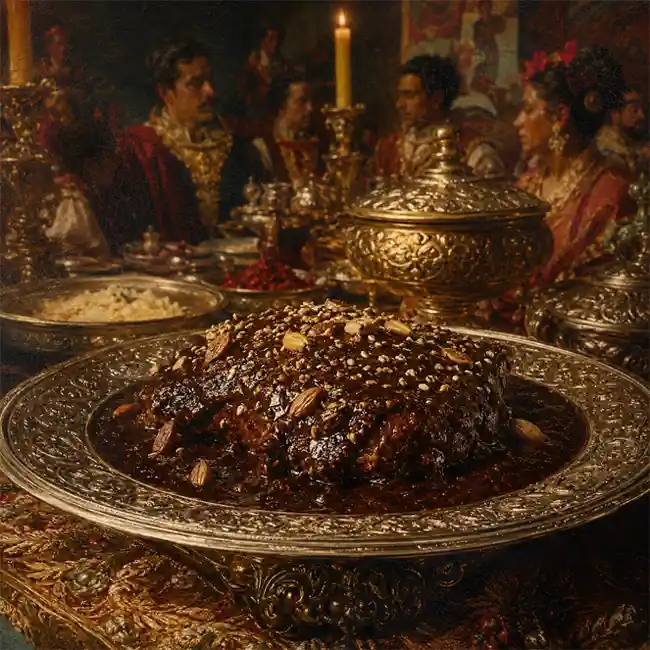
👑 Recipe: Classic 19th-Century Aristocratic Mole Poblano de Fiesta
📖 About this Royal Secret
Legend has it that early iterations of this majestic dish were served to visiting viceroys, archbishops, and high-ranking statesmen during major national celebrations. It was famously crafted to honor high society guests at grand estate banquets, symbolizing wealth, hospitality, and cross-continental sophistication. Combining native ingredients like chiles, cacao, and pumpkin seeds with Old World imports such as almonds, raisins, and aromatic spices, this regal main course stood as the crown jewel of 19th-century high-society dining.
🥑 Ingredients & The Aristocratic Touch
• The Royal Pantry:
In high-society Mexican households, every ingredient was chosen with extreme care. The dried chiles were meticulously hand-selected to ensure pristine color and suppleness. The chocolate was custom-ground from raw, single-origin cacao beans mixed with dark brown sugar, while the lard was rendered fresh daily from local heritage pork to provide a silky, velvety mouthfeel that modern vegetable oils simply cannot match.
• Modern Substitutes:
If you cannot source rendered pork lard, high-quality extra virgin olive oil or clarified butter (ghee) serves as an acceptable alternative. Traditional Mexican chocolate can be substituted with high-percentage dark chocolate (70 percent cocoa content or higher) paired with a small pinch of ground cinnamon and dark brown sugar. Plain toasted white sesame seeds can easily replace raw sesame seeds if necessary.
• The Measurements:
◦ 8 pieces of bone-in, skin-on chicken thighs and drumsticks (approximately 1200 grams)
◦ 4 dried Ancho chiles, stems and seeds removed
◦ 3 dried Pasilla chiles, stems and seeds removed
◦ 3 dried Mulato chiles, stems and seeds removed
◦ 2 dried Chipotle chiles, stems and seeds removed
◦ 60 grams Mexican dark chocolate or high-percentage cacao chocolate
◦ 50 grams unsalted almonds, raw and whole
◦ 40 grams raw pumpkin seeds (pepitas)
◦ 30 grams golden raisins
◦ 30 grams white sesame seeds
◦ 2 medium ripe red tomatoes, roasted
◦ 1 large white onion, sliced into thick rounds
◦ 4 cloves fresh garlic, peeled
◦ 2 corn tortillas, stale or lightly toasted
◦ 1/2 ripe plantain, peeled and sliced
◦ 3 grams whole black peppercorns
◦ 2 whole cloves
◦ 1 small stick Mexican cinnamon (canela), broken into pieces
◦ 1/2 teaspoon dried Mexican oregano
◦ 1/2 teaspoon anise seeds
◦ 60 grams rendered pork lard or extra virgin olive oil
◦ 1500 milliliters rich homemade chicken broth
◦ 10 grams sea salt (adjust to taste)
👨🍳 The Chef’s Ritual
• Preparing the Poultry: Begin by seasoning the chicken pieces thoroughly with sea salt. In a heavy-bottomed Dutch oven, melt 20 grams of lard over medium heat. Sear the chicken until the skin turns golden brown, about 4 to 5 minutes per side. Remove the chicken and set it aside, leaving the flavorful pan drippings intact.
• Toasting the Chiles: Lower the heat slightly. Working in quick batches, lightly toast the deseeded Ancho, Pasilla, Mulato, and Chipotle chiles in the hot fat for 10 to 15 seconds per side until fragrant. Take care not to scorch them, as burnt chiles will introduce harsh bitterness. Transfer the toasted chiles to a bowl, pour 500 milliliters of warm chicken broth over them, and let them soak for 20 minutes until thoroughly softened.
• Searing the Aromatics & Nuts: In the same vessel, add another 10 grams of lard. Fry the sliced onion and whole garlic cloves until deeply caramelized and soft. Remove and place in a blender. In the remaining fat, fry the almonds, pumpkin seeds, raisins, sliced plantain, and stale tortilla until golden and toasted. Transfer these ingredients into the blender along with the roasted tomatoes.
• Blooming the Spices: In a dry skillet over gentle heat, toast the peppercorns, whole cloves, cinnamon stick, anise seeds, and sesame seeds for 1 to 2 minutes until they release their essential oils. Grind these dry spices in a mortar or spice grinder until reduced to a fine powder, then add them to the blender.
• Creating the Velvet Paste: Add the soaked chiles along with their soaking liquid into the blender. Blend everything on high speed for several minutes until an extraordinarily smooth, thick paste forms. Pass the paste through a fine-mesh sieve into a bowl to remove any remaining skins or seeds.
• Frying the Mole Paste: Heat the remaining lard in your Dutch oven over medium-high heat. Carefully pour in the strained chile paste; it should sizzle vigorously upon contact. Reduce the heat to low and stir constantly with a wooden spoon for 8 to 10 minutes as the sauce darkens and thickens.
• Simmering to Perfection: Slowly pour in the remaining 1000 milliliters of warm chicken broth, stirring continuously to break up the paste into a silky, uniform sauce. Grate in the chocolate and stir until completely melted and integrated. Season with sea salt. Nestled the seared chicken pieces back into the simmering sauce. Cover the pot loosely and let it gently simmer over low heat for 45 to 50 minutes, stirring occasionally, until the chicken is tender and the oil naturally separates to the surface.
✨ Secrets of the Palace Kitchen (Tips & Mistakes)
• Patience with the Chile Toast: The single biggest mistake home cooks make is burning the dried chiles. Dried chiles require only a few seconds in hot fat to bloom. If they turn black, discard them and start over to avoid a bitter sauce.
• The Power of Stale Tortillas and Plantains: Stale corn tortillas provide body and thickness, while fried sweet plantain balances the sharp heat of the chiles with natural sweetness. Never skip the plantain.
• The Slow Fat Separation Test: Authentic 19th-century cooks knew the mole was ready when a thin, glossy layer of oil floated to the top surface. This indicates that all ingredients have fully emulsified and cooked through.
• Resting Improves the Flavor: Like many complex historic dishes, this main course tastes even better the following day. Reheating it gently allows the deep cacao, spicy chile, and warm nut flavors to harmonize completely.
🏰 Royal FAQ
Q1: Is this historic mole dish excessively spicy?
A: Not at all. Mexican aristocratic cuisine prioritized depth, balance, and aromatic complexity over raw heat. The sweet raisins, dark chocolate, and roasted plantain gracefully tame the mild heat of the Ancho and Pasilla chiles.
Q2: Can I prepare this main course ahead of time?
A: Absolutely. In fact, high-society kitchens often prepared the mole paste two to three days in advance of grand celebrations to allow the rich flavors to mature fully.
Q3: What side dishes pair traditionally with this meal?
A: Serve it alongside fluffy white rice cooked with long-grain rice and fresh vegetable broth, garnished with warm, hand-pressed corn tortillas.
Q4: Why is straining the sauce so critical?
A: High-society dining demanded a completely silky, elegant mouthfeel without gritty seed fragments or tough chile skins. Straining guarantees that luxurious texture.
🍷 The Taste of History (Summary)
This dish represents a masterful fusion of history, culture, and high-society art. Every single spoon delivers layered notes of roasted earthiness, gentle sweetness, balanced spice, and luxurious cacao. Cooking this recipe allows you to experience the exact flavors that delighted elite palates two centuries ago.
🕯️ Final Thoughts: Bringing History to Your Table
While this legendary main course carries two centuries of high-society heritage, you do not need a brigade of private estate chefs to bring it to life. With patience, authentic ingredients, and these step-by-step traditions, you can transform your home dining room into a grand historical palace hall. Master this recipe, share it proudly with family and friends, and keep these timeless culinary secrets alive for generations to come.
🌟 The Call to Action (The Golden Hook)
If you feel a deep passion for unlocking historic culinary secrets and bringing forgotten world flavors back to life, step inside our inner circle. Subscribe to our exclusive newsletter today to receive rare, handcrafted recipes, hidden estate cooking guides, and timeless food history delivered straight to your inbox. Let us preserve the art of grand historic dining together!
🏛️ Credit to the Keepers of the Culture (The Legacy)
We extend our deepest respect, admiration, and gratitude to the generations of Indigenous cooks, traditional Mexican kitchen masters, and culinary historians who preserved these invaluable methods through generations of oral history and family notebooks. Their dedication ensures that the rich heritage of early Mexican cuisine continues to inspire food lovers across the globe today.
| 🇲🇽 👑🍝 < Back |