
🏠 Home > 🗺️ Recipes > 👑🍝 Imperial Mains (Main Dishes) > 🇲🇽 Mexico Imperial Mains (Main Dishes) Recipes
🇲🇽 👑🍝 Mexico Imperial Mains (Main Dishes) Recipes
Published by Supakorn | Updated: August 2026
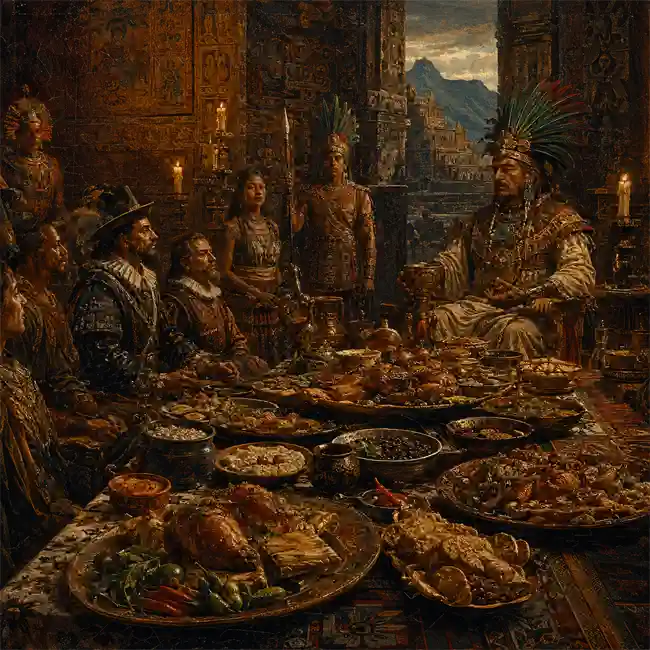
👑📜 The Storyteller’s Intro: When Emperors Ate Before Gods
You think you know Mexican food? Tacos, enchiladas, guacamole? Forget it. That’s the street. What I’m about to show you is the food they never let the street taste.
Mexico is not just one country, it’s three empires stacked on top of each other, and each one had a locked kitchen.
Let me break it down for you like a friend who just found the palace diary:
• The First Throne: The Mexica Imperial Kitchen (1325-1521). This is the OG. Almost 700 years ago. In Tenochtitlan, the Huey Tlatoani - the Great Speaker, the Emperor of the Aztecs - didn't eat like his warriors. His food was law. Commoners were forbidden to eat certain chilies, certain turkeys, certain cacao. His kitchen had over 300 dishes a day brought from 30 different provinces. Everything was ritual, purity, and power.
• The Second Throne: The First Mexican Empire (1821-1823). When Agustin de Iturbide declared himself Emperor Agustin I, he brought European aristocratic etiquette into the palace at Chapultepec. French chefs met Aztec matriarchs. This is where mole became sophisticated, where native corn was plated with silver forks.
• The Third Throne: The Second Mexican Empire (1864-1867). Emperor Maximilian and Empress Carlota. A Habsburg palace in the middle of cactus and volcanoes. Their court demanded French haute cuisine, but the Mexican aristocrats, the Criollo nobles, secretly forced them to fall in love with ancient indigenous flavors. That fusion is the most guarded secret of all.
So when we say aristocratic Mexican food, we are not talking about fancy restaurants. We are talking about food designed to show you are closer to the gods and the sun than everyone else. The ingredients were not just expensive, they were politically restricted.
The lifestyle of the old nobility was wild:
• Food as Status Signal: Nobles never ate with chili that made you sweat in public. Heat was hidden inside complex, smooth sauces. If you sweated, you were low-class.
• The Art of Distance: The royal turkey, the Huexolotl, was raised 200 km away in sacred forests and walked to the palace so its meat would be tense and clean. Corn was nixtamalized not once, but twice for the palace.
• Silence and Cold: Imperial main dishes were served lukewarm to cold, never steaming hot. Hot food was for laborers who needed energy fast. A noble ate slowly, calmly, talking philosophy while the dish stayed perfect.
Here are the names they never put on menus. These are the real imperial main dishes I’ve tracked from codices and palace letters:
• Mole Negro de Tenochtitlan - The Emperor's Black Mole: Not the mole you know. This one uses 32 ingredients, including chilhuacle negro smoked for 14 days, wild vanilla from Papantla, and ash-roasted cacao that only high priests could touch. It was blacker than obsidian.
• Barbacoa de Hoyo Imperial - The Pit of Kings: Lamb and wild boar cooked for 24 hours in a maguey-lined earth pit sealed with royal clay. The meat was never touched by metal, only by agave leaves and volcanic stones.
• Chiles en Nogada de Corte Real - The Original Patriotic Secret: Before it became a national dish, the aristocratic version used Castilla walnut cream aged in stone, pomegranate from the palace gardens of Puebla, and a picadillo made from filete de venado, not pork.
• Mixiote de Cordero y Escamoles - The Silk Pouch of the Nobles: Lamb and ant larvae, considered the Mexican caviar, wrapped in the translucent membrane of maguey and steamed. Only offered during coronation feasts.
• Pipián Rojo de la Casa de Moctezuma: A royal pumpkin seed sauce thickened without any grain, using only toasted red pipian, ahuautle (lake fly eggs), and axolotl broth. Incredibly rich and creamy.
• Tamal de Cuitlacoche y Trufa de Maiz con Hoja Santa: Not a side dish, but a main. A giant tamal the size of a forearm, filled with corn truffle, wild mushrooms from Nevado de Toluca, and wrapped in sacred hoja santa leaf.
• Caldo de Piedra Noble - The Stone Soup of Oaxaca's Kings: Raw river fish, tomatoes, and green chilies cooked instantly in a gourd by dropping white-hot volcanic stones into it. Only a noble could afford to have someone risk burning for his soup.
🗺️ The Royal Culinary Tourism: Mapping Flavors to Historic Landscapes
If you want to taste where these dishes were born, you don't go to a restaurant. You go on a pilgrimage. The imperial flavor map of Mexico is still there.
• Mexico City - The Floating Throne: Go to the ruins of Templo Mayor and then to Xochimilco. This was the chinampa, the floating gardens that fed the emperor. The royal dishes here were all about lake ingredients: ahuautle, algae, axolotl, and white fish. You can still take a trajinera boat at dawn and see old families harvesting the same ingredients.
• Puebla - The City of Angels and Aristocrats: This is where the Spanish aristocratic nuns perfected the imperial moles in the convents of Santa Rosa and Santa Monica. The walls are tiled, the kitchens are covered in Talavera. This is the birthplace of the refined Chiles en Nogada de Corte Real. Every September, the old mansions still open their doors.
• Oaxaca - The Kitchen of the Gods: The Zapotec kings ruled here for 1,000 years before the Aztecs. Their noble food is based on seven moles, wild herbs like chepiche and pitiona, and barbacoa pits. Visit the market of Tlacolula on Sunday, you will see moles that are never exported.
• Chapultepec Castle - The Last Imperial Table: The only real palace in North America. Stand in the dining room of Maximilian and Carlota. Look out at the volcanoes. This is where European service à la française met a 700-year-old corn empire. The menu cards from 1865 are still in the archive.
🚣 Cradle of Royal Delicacies - The Lake and Gulf Kingdoms
The water gave the emperors their most secret proteins. While commoners fished with nets, the palace had exclusive fishing grounds.
• The Secret of Lake Texcoco and Pátzcuaro: The royal Caldo de Piedra and the white fish Tamal. The water here was sacred. Nobles believed fish that lived near volcanic stone carried strength. The cooking method with red-hot stones is over 1,000 years old, from the Chinantec kings of Oaxaca. Tourists can experience it in San Felipe Usila, Oaxaca, where local masters still do it exactly like for a king.
• The Gulf Coast Treasure - Papantla and Veracruz: This is the kingdom of Vanilla, which was more valuable than gold. The Totonac nobles were the guardians of vanilla. Their aristocratic main dish was Pollo Encacahuatado Imperial - chicken in a sauce of ancient peanuts, vanilla pod, and smoke-dried chipotle, served with hand-torn tortillas. For food tourism, you must visit El Tajin ruins and the vanilla plantations. You will smell why emperors were obsessed.
• What to look for on a tour: Look for women selling tamales de ahuautle in Pátzcuaro. Ask for pescado blanco. These are not on Google Maps, they are whispered.
⛰️ Kingdom of Wild Aromatics & Heritage - The Highlands and Volcanoes
The mountains were the pantry and the pharmacy of the Mexican aristocracy. Only nobles could send gatherers up to 3,000 meters.
• The Highlands of Puebla and Tlaxcala - The Maguey Nobles: The maguey plant is the cow, the water, and the oven of the highlands. Imperial Barbacoa de Hoyo and Mixiote could only be made by masters who knew how to control the steam of maguey for a whole day. Visit the agave fields of Tlaxcala and the archaeological site of Cacaxtla. The old haciendas there still have the original underground pits lined with stone from 1820.
• The Volcanic Belt - Nevado de Toluca & Popocatépetl: Here comes the wild stuff. Cuitlacoche, morels, wild epazote, and the sacred herb hoja santa. The aristocratic dish Pipián Rojo uses seeds toasted on comal made from volcanic clay. The flavor is smoky, nutty, and deep like no other. For a true aristocratic food tour, go to the village of San Juan Atzingo in the State of Mexico in rainy season. The mushroom hunters there are descendants of the emperor's foragers.
• Oaxaca's Mixe Mountains: The most isolated, the most royal. The ancient Mixe kings never surrendered to the Aztecs. Their dish, Mole Amarillo de Cortejo Real, is a yellow mole made with chilcoxtle chili and wild hoja de aguacate, cooked with free-range guajolote. You have to hike to get it.
🤴👸 Royal FAQ: Unlocking Palace Kitchen Mysteries
Q1: Is imperial Mexican food spicy like regular Mexican food?
No, and that's the biggest secret. Common Mexican food uses direct heat to make you sweat. Aristocratic food hides the heat. The chilies like chilhuacle and chilcoxtle are toasted, seeded, deveined, smoked for days, and then ground into mole or pipián. The result is not spicy on your tongue, it's aromatic, smoky, and complex in your nose. The rule was: a noble should never show physical reaction while eating.
Q2: Why were ingredients like escamoles and ahuautle reserved for nobles?
Because of scarcity and ritual purity. Escamoles, ant larvae, can only be harvested 3 weeks a year and one nest gives you maybe 200 grams. Ahuautle, water fly eggs, had to be collected on reed nets at dawn on specific lakes. They were considered pure because they came from untouched nature, not from farmed animals. Only the emperor could afford to have 100 people collect breakfast.
Q3: What is the difference between palace mole and the mole you find in markets?
Three things. First, time: a palace mole took 3 days minimum, market mole takes 3 hours. Second, grinding: royal metates were made from black volcanic stone and the paste was ground 7 times until silk. Third, thickener: common mole uses bread or tortilla to thicken, royal mole uses only seeds, nuts, and dried fruit, no filler. That's why imperial mole is so expensive and never sold commercially.
Q4: Are these imperial dishes still possible to eat today as a traveler?
Yes, but you have to know where to ask. You will not find Mole Negro de Tenochtitlan on a menu. You find it by asking families in Puebla and Oaxaca who are mayordomos of old festivals. You find Caldo de Piedra Noble in Usila by asking the town elder. You find Mixiote de Escamoles during the feast of Santiago in Hidalgo. This is why we call it Unlock Hidden Recipes, it’s a treasure hunt, not a restaurant list. The full step-by-step noble recipes are coming next.
🧠 Final Thoughts: The Timeless Allure of Aristocratic Gastronomy
So here’s the truth, friend. Mexico’s imperial main dishes are not just food, they are a time machine.
For 1,000 years, from the stone temples of Tenochtitlan to the European chandeliers of Chapultepec Castle, the same idea survived: food is how you show who you are. The street food of Mexico shows its heart, its fire, its joy. The imperial food shows its memory, its patience, its power.
We have just opened the first door. We’ve mapped the landscapes, named the secret dishes, and told you why a mole can be blacker than night and why a soup can be cooked by a stone.
What’s next? In the next chapter of this culinary codex, I will take one of these forbidden dishes, like the Mole Negro de Tenochtitlan or the Barbacoa de Hoyo Imperial, and break down its exact aristocratic technique for you, step by step, in your own kitchen. No shortcuts.
So pin this map. Save Puebla, Pátzcuaro, Oaxaca, and Chapultepec. Because once you taste the food of emperors, you can never go back to just tacos.
👑 Credit to the Keepers of the Culture (The Legacy)
This article would not exist without the true keepers.
Full respect and deepest gratitude to the Mexica and Aztec descendants, the Totonac vanilla guardians of Papantla, the Zapotec mole matriarchs of Oaxaca, the Convent cooks of Puebla, and the National Institute of Anthropology and History (INAH) of Mexico.
The recipes, techniques, and stories belong to them. We are only humble storytellers who were lucky enough to listen, to read the codices like the Florentine Codex, and to be invited into kitchens that have been closed for centuries. The legacy is theirs, the honor is ours to share it with respect.
👑🍝 200-Year Mexican Aristocratic Mains: Unveiling Forgotten Grandeur
👉 Unlock Ultimate Mexican Imperial Mains
| 🌐 👑🍝 < Back | 🇲🇽 👑🥪 < Previous | Next > 🍨👑 🇲🇽 |