
🏠 Home > 🗺️ Recipes > 🍞 Breads > 🇲🇽 Mexico Breads
🇲🇽 🍞 Mexico Breads Recipes
Published by Supakorn | Updated: February 2026
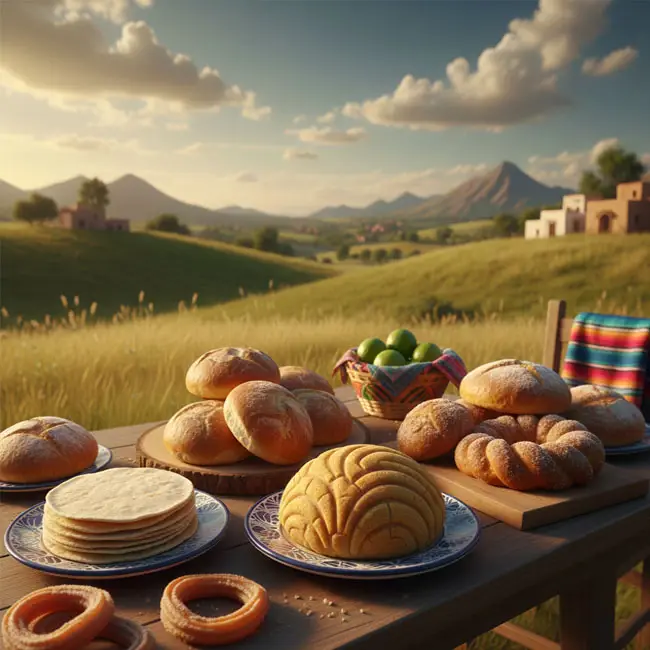
Mexican bread is one of those things that instantly makes you feel at home—even if you’ve never been to Mexico. Whether it’s the sweet smell of pan dulce in the morning, a crunchy bolillo sliced open for dinner, or a festive bread made for special celebrations, Mexican breads tell stories. Stories of families, culture, tradition, time, and joy.
This guide is your long-form, friendly walk through the wonderful world of Mexican breads, how they are part of daily life, what makes them unique, and why they continue to be loved across generations.
No recipes yet—just the delicious world around them. ❤️🍞
🥐 The Heart of Mexican Food Culture: Bread Everywhere You Go
Walk through any Mexican town early in the morning and you’ll probably hear the whistle of a panadero (baker) rolling his cart. The sound is almost nostalgic—an unspoken announcement that fresh bread is ready.
Bread is woven into everyday Mexican life. People buy it for breakfast, for snacks, for celebrations, for offerings, and for gatherings. It’s common to see families holding a tray and tongs at a local panadería, picking out both sweet and savory pieces to enjoy later at home.
Mexico doesn’t just “eat bread.”
Mexico lives bread.
Bread is present in:
— Daily breakfasts
A cup of hot chocolate or atole with a piece of pan dulce is a morning ritual for millions.
— Afternoon snacks
Kids coming home from school often grab a bread roll before heading out again.
— Religious traditions
Many breads are connected to Catholic celebrations and ancient indigenous meanings.
— Family gatherings
No dinner table is truly complete without a basket of warm bolillos.
— Street food
Some breads are used as vessels for iconic snacks—like tortas or molletes.
Bread in Mexico is comfort, culture, and continuity.
🍞 A Quick Look at the History Behind Mexican Breads
Before Spanish influence, indigenous communities already used corn, amaranth, and other grains to create early versions of bread-like foods. But when the Spanish arrived in the 1500s, wheat came with them—and it changed everything.
Mexicans adopted wheat, but didn’t copy European baking traditions word-for-word. Instead, they transformed bread into something uniquely local:
• Sweet breads influenced by European pastries but decorated with Mexican creativity
• Indigenous flavors like anise, piloncillo (unrefined cane sugar), and cinnamon
• Regional twists depending on climate, culture, and local ingredients
The result?
A bakery landscape unlike anywhere else in the world—diverse, flavorful, colorful, and distinctly Mexican.
🍩 Iconic Mexican Breads You’ll See Everywhere
Below are some of the most recognizable breads in Mexico—each with its own personality, cultural meaning, and role in daily life.
🍥 Conchas – The Superstar of Mexican Pan Dulce
If Mexican bread had a celebrity, it would be the concha.
Soft, fluffy, and topped with a crunchy “shell” pattern (hence the name), conchas are sweet, simple, and comforting.
Why people love them:
• Soft, brioche-like texture
• Beautiful sugar shell topping
• Comes in colors like white, yellow, and pink
• Perfect with hot chocolate or coffee
Conchas aren’t just bread—they’re childhood memories, family mornings, and a symbol of Mexican bakery culture.
🥖 Bolillos – The Everyday Bread Roll
Think of a French baguette, but shorter, softer inside, and crunchier on the outside—that’s a bolillo.
Mexicans use bolillos for almost anything:
• Tortas (Mexican sandwiches)
• Molletes (toasted bread with beans and cheese)
• Soups and stews
• Breakfast rolls
Every region has its own version. In some areas, it’s called birote, and it has a slightly sour flavor.
🥯 Pan de Muerto – A Bread of Tradition and Memory
This bread is made specifically for Día de los Muertos (Day of the Dead), one of Mexico’s most important cultural celebrations.
It’s round and decorated with dough that resembles “bones,” symbolizing the cycle of life.
The flavor is gently sweet with hints of orange blossom or cinnamon.
People place it on altars (ofrendas) to honor passed loved ones, and families share it together during the celebration.
Pan de Muerto is more than food—it’s a tribute.
👑 Rosca de Reyes – The Festive Bread for Kings Day
If Pan de Muerto represents remembrance, Rosca de Reyes represents joy and community.
It’s eaten on January 6 for Día de Reyes (Three Kings Day).
Rosca is oval-shaped, colorful, and topped with candied fruit. Hidden inside is a small baby figurine. Whoever gets the slice with the baby is expected to host a party (usually on February 2).
It’s playful, festive, and delicious.
🍪 Orejas – The Mexican Puff Pastry Classic
Also known as “palmiers,” Orejas are light, flaky, buttery pastries shaped like hearts or little ears.
They’re not super sweet but have a caramelized sugar crunch that pairs perfectly with coffee or milk.
🧁 Conos and Cuernos – Pastries with a Twist
Mexican bakeries feature many pastries influenced by European baking but reinvented with a local twist.
Examples include:
Conos
Cone-shaped pastries usually filled with custard or cream.
Cuernos
Shaped like croissants but sweeter and softer.
They’re not just for breakfast—you’ll see them enjoyed at any time of day.
🍘 Marranitos – Soft Gingerbread Pigs
Shaped like adorable little pigs, marranitos are made with molasses, piloncillo, and spices.
They’re tender and cake-like, not crunchy.
Their flavor is warm, nostalgic, and deeply loved across generations.
🥯 Gorditas de Nata – Soft, Sweet Griddle Breads
These come from the northern and central regions of Mexico.
Made with cream, sugar, and flour, they’re soft, slightly sweet, and cooked on a griddle instead of baked in an oven.
People often grab them at street stalls or local markets.
🍪 Polvorones – Crumbly Cookies with Big Personality
These shortbread-style cookies come in different flavors and colors.
Some are tri-colored, some are simple, but all are crumbly, buttery, and fun to eat.
Polvorones are especially popular during holidays.
🌽 Pan de Elote – Mexican Corn Bread
This isn’t like American cornbread.
Pan de elote is moist, cake-like, and often eaten warm.
It’s made with fresh corn kernels, giving it a natural sweetness and soft texture.
Many families bake it at home for celebrations or weekend gatherings.
🧀 Empanadas de Leche, Cajeta, or Fruit
Mexican empanadas aren’t always savory.
Sweet empanadas filled with milk custard, cajeta (goat milk caramel), pineapple, or guava are very common in bakeries.
Soft, fragrant, and slightly sweet, they’re one of the most comforting desserts you can find.
🍑 Pan Ranchero – Rustic Bread with Regional Soul
Pan Ranchero exists in many variations depending on the region.
Some versions are dense and hearty for ranch-style meals, while others are softer with a slight sweetness.
These breads reflect rural traditions and family recipes passed down through generations.
🌽 Ingredients That Give Mexican Breads Their Distinct Identity
Mexican breads may borrow shapes and techniques from Europe, but the ingredients tell a very local story.
Some common ones include:
— Piloncillo
Unrefined cane sugar with a deep caramel flavor.
— Mexican cinnamon (canela)
Softer and sweeter compared to cassia cinnamon.
— Vanilla and citrus
Especially orange blossom water for festive breads.
— Anise
Used in many traditional recipes for aroma.
— Wheat flour
Introduced during colonization but now a fundamental part of Mexican cuisine.
These ingredients create breads with warmth, sweetness, and a comforting aroma.
🎉 Bread in Mexican Celebrations and Rituals
Bread in Mexico isn’t just about eating—it’s culture, symbolism, and tradition.
🕯️ Pan de Muerto
Represents remembrance and honoring ancestors.
👑 Rosca de Reyes
Celebrates Epiphany and community gathering.
🌽 Corn-based breads
Used in indigenous festivals and rituals.
🎁 Gift-giving tradition
Many families bring bread as a gesture when visiting homes.
Food connects people—and bread is one of the clearest examples of that connection.
🍽️ How Mexicans Enjoy Their Bread in Everyday Life
Mexicans enjoy bread at almost any hour of the day. Some popular eating habits include:
🌅 Breakfast with hot drinks
Conchas + hot chocolate = happiness.
🧒 After-school snacks
Kids often grab pan dulce between lunch and dinner.
🍽️ Dinner companion
Bolillos with soups, beans, or stews.
🧃 Street food
Tortas filled with meats, cheeses, and veggies.
☕ Afternoon coffee break
Pan dulce with café de olla (cinnamon-spiced coffee).
Bread is flexible—it fits into almost any moment.
🗺️ Regional Bread Variations Across Mexico
Mexico is a huge, diverse country, so each region has its own bread specialties.
🌄 Northern Mexico
• Gorditas de nata
• Birote salado
• Rustic wheat breads
🌶️ Central Mexico
• Conchas
• Marranitos
• Sweet empanadas
🌴 Southern Mexico
• Pan de yema (Oaxaca)
• Roscas with local spices
• Indigenous corn-based breads
Every region adds its own flair, reflecting local histories and ingredients.
🌟 Why Mexican Bread Is Loved Around the World
Mexican breads have gained international love because they are:
• Colorful
• Comforting
• Creative
• Flavorful
• Connected to traditions
They’re easy to enjoy even if you’re not familiar with Mexican cuisine.
Whether it's a concha or a bolillo, these breads offer simplicity with personality.
❓ FAQ
1. Why are Mexican breads so colorful and decorative?
Because many are influenced by festivals and religious celebrations. Bakers decorate bread to make it joyful, inviting, and meaningful. It reflects Mexico’s vibrant culture.
2. Is Mexican bread always sweet?
Not at all. While pan dulce is popular, there are many savory breads like bolillos, birote, and rustic regional loaves.
3. What makes Mexican bread different from European bread?
Mexican breads often combine European techniques with indigenous flavors, spices, and sweeteners. The result is bread that’s softer, sweeter, more aromatic, and uniquely Mexican.
🍞 Fresh & Comforting Mexican Breads You Can Easily Bake at Home
👉 Master 3 Everyday Mexico Breads
| 🌐 🍞 < Back | 🇲🇽 🥗 < Previous | Next > 🍱 🇲🇽 |