
🏠 Home > 🗺️ Recipes > 👑🥘 Signature Royal Sauces (Sauces) > 🇲🇽 Mexico Signature Royal Sauces (Sauces) Recipes
🇲🇽 👑🥘 Mexico Signature Royal Sauces (Sauces) Recipes
Published by Supakorn | Updated: August 2026
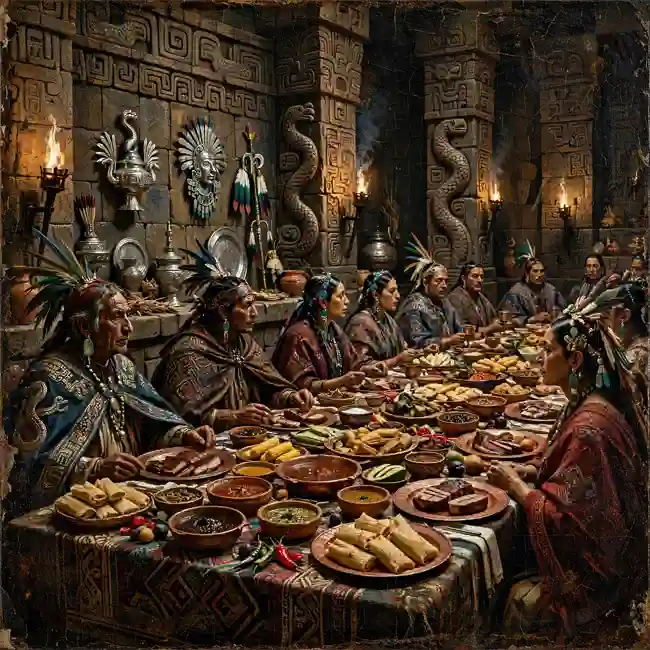
🤴👸📜 The Storyteller’s Intro: The Forgotten Secrets Behind Mexico’s Aristocratic Sauces
Imagine walking into an old Mexican kitchen just before a great feast.
The room is warm. A heavy stone metate rests near the wall. Dried chiles hang in bundles. Corn, tomatoes, squash seeds, herbs, nuts, spices, and cacao wait nearby. Somewhere in the background, someone is grinding ingredients slowly by hand.
There is no rush.
Because in the old world of Mexican cooking, a remarkable sauce was never simply something poured over food. It could represent territory, memory, ceremony, status, hospitality, and generations of culinary knowledge.
That is why Mexico Signature Royal Sauces is better understood through an aristocratic lens rather than a literal royal one. Mexico does not have a continuous European-style royal court tradition comparable to countries whose modern identities were shaped around monarchies. Instead, the story belongs to ancient Mesoamerican elites, noble households, colonial administrators, wealthy families, hacienda kitchens, convent communities, and sophisticated urban households that helped shape Mexico's historic food culture.
And this is where the story becomes fascinating.
Some Mexican sauce traditions reach back many centuries, while others became recognizable through the meeting of Indigenous and European ingredients during the colonial period. UNESCO recognizes traditional Mexican cuisine as an ancestral, living cultural system built around ingredients such as maize, beans, and chile, together with agricultural practices, ritual customs, grinding techniques, and community knowledge.
So when we talk about 200–1,000 years of culinary heritage, we should not imagine that today's recipes were written down exactly the same way a thousand years ago. The more accurate story is more exciting: techniques, ingredients, flavor principles, and culinary ideas traveled across generations and were transformed along the way.
The ancient foundation includes the world of mulli, a Nahuatl word associated with sauce. Government cultural sources describe pre-Hispanic versions of chile-based sauces and explain how these traditions later evolved through colonial-era ingredients and techniques.
Then came the colonial centuries.
New ingredients entered Mexican kitchens, including spices and other foods from Europe, Asia, and wider trade networks. Indigenous chiles, tomatoes, seeds, herbs, cacao, and native crops met ingredients such as cinnamon, cloves, nuts, sesame, and dried fruits. The result was not simply a replacement of one cuisine by another. It was a long process of culinary fusion.
The sauces became deeper, more layered, and sometimes spectacularly elaborate.
Among the most famous examples is mole poblano, whose history is surrounded by several competing stories. One enduring tradition connects the dish with the convent kitchen of Santa Rosa in Puebla, while historical and culinary sources emphasize that mole itself has much older pre-Hispanic roots. INAH describes the Santa Rosa convent as a historic place associated with the story of mole poblano, while Mexico's agricultural authorities likewise note that the sauce tradition predates the famous colonial legends.
That distinction matters.
The real secret is not one legendary cook.
The real secret is continuity.
Mexican aristocratic-style cuisine was never just about expensive ingredients. It was about knowing how to combine ordinary regional ingredients with extraordinary patience and skill.
A chile could become smoky.
A seed could become creamy.
A tomato could become bright and acidic.
Cacao could bring bitterness and depth.
A handful of spices could create warmth.
And when all of them were carefully balanced, the resulting sauce could become the centerpiece of a feast.
That is the culinary mystery behind Mexico's forgotten sauce traditions.
🗺️ The Royal Culinary Tourism: Mapping Flavors to Historic Landscapes
If you want to understand Mexico's historic sauces, the best approach is not to stay inside a restaurant.
Go where the flavors came from.
Think of Mexican culinary tourism as a journey through landscapes rather than a simple checklist of dishes.
Every region tells a different story.
🏛️ Puebla: The Baroque Heart of Aristocratic Sauce Culture
Puebla is probably the most obvious starting point for anyone fascinated by historic Mexican sauces.
Its importance comes from the extraordinary meeting of Indigenous ingredients, colonial trade, religious institutions, and urban culinary culture.
The city became an important crossroads, and its historic kitchens developed a reputation for elaborate food. Government cultural sources describe Puebla as a major stopping point for intercontinental commerce beginning in the sixteenth century, bringing ingredients through both Atlantic and Pacific routes.
This helps explain why Puebla became such an important culinary laboratory.
The legendary mole poblano belongs at the center of this story.
You will find stories connecting it with convent kitchens, religious communities, and elaborate meals prepared for important guests. One version associates the sauce with Santa Rosa convent and a visit from a high-ranking colonial official. INAH presents this as a historical tradition rather than an unquestionable fact, which is exactly how these culinary legends should be treated.
When exploring Puebla, look beyond the plate.
Visit historic convent areas.
Walk through the old streets.
Explore Puebla's historic center.
Pay attention to the Talavera-covered kitchens and colonial architecture.
The environment helps explain why dishes such as mole became symbols of refinement.
🌿 Oaxaca: The Kingdom of Many Moles
If Puebla gives you one legendary mole story, Oaxaca gives you an entire universe.
Oaxaca is famous for its remarkable diversity of mole traditions. Government sources commonly identify seven major Oaxaca mole styles:
• Mole negro
• Mole rojo
• Mole amarillo
• Mole coloradito
• Mole verde
• Mole chichilo
• Mole manchamanteles
Rather than thinking of these as seven versions of one sauce, imagine them as seven different expressions of landscape, ingredients, cooking traditions, and local identity.
Oaxaca is particularly rewarding for culinary travelers because food and cultural heritage remain closely connected.
The journey can move through markets, villages, historic churches, archaeological landscapes, family kitchens, and traditional food communities.
And that is important because the story of Mexican cuisine is not preserved only in museums.
It is preserved by people who still cook.
UNESCO's recent work highlighting traditional cooks in Oaxaca, Puebla, and Tlaxcala emphasizes that Mexican cuisine remains a living heritage transmitted through generations.
🚣 Cradle of Royal Delicacies — Lakes, Valleys & Coastal Flavor Routes
Mexico's sauce story cannot be separated from water.
Lakes, rivers, valleys, and coastal zones helped shape the ingredients available to different communities.
One of the most fascinating examples is the historic lake environment around central Mexico.
Long before modern restaurants existed, Indigenous agricultural systems such as chinampas supported food production in lake areas. UNESCO identifies chinampas, together with milpas, maize, beans, chiles, and traditional processing techniques, as important components of Mexico's living culinary heritage.
This agricultural landscape matters because sauces depend on diversity.
A cook needs something acidic.
Something aromatic.
Something earthy.
Something spicy.
Something rich.
Something fresh.
The landscape provides the vocabulary.
The kitchen provides the grammar.
🌊 Veracruz: A Gateway of Culinary Exchange
Move toward the Gulf coast and another chapter appears.
Veracruz historically functioned as a major gateway connecting Mexico with wider maritime trade networks. That movement of people and ingredients eventually influenced regional food culture.
For culinary travelers, Veracruz offers an opportunity to see how coastal geography changes Mexican cooking.
Here, sauces can feel brighter and more aromatic, while local ingredients reflect the influence of tropical environments and coastal agriculture.
The lesson is simple:
Mexican sauce culture was never isolated.
It developed through movement.
People moved.
Crops moved.
Techniques moved.
And flavors adapted.
🌾 Michoacán: The Living Kitchen
Michoacán deserves special attention because UNESCO's inscription of traditional Mexican cuisine specifically uses the Michoacán paradigm to represent a broader living culinary system.
This is not simply about famous dishes.
It is about the complete food chain:
• Growing crops
• Harvesting ingredients
• Grinding
• Cooking
• Sharing food
• Preserving knowledge
• Passing techniques to younger generations
This perspective changes how we understand aristocratic cuisine.
The sophisticated kitchen was never truly separate from farmers, growers, millers, market sellers, cooks, and Indigenous communities.
Behind every impressive sauce was an enormous network of knowledge.
That is one of Mexico's most important culinary secrets.
⛰️ Kingdom of Wild Aromatics & Heritage — Mountain Kitchens and Deep Forest Flavors
Now head toward the mountains.
Here the culinary landscape changes dramatically.
Altitude, forests, dry valleys, tropical vegetation, and Indigenous agricultural traditions create an enormous range of ingredients.
This is where Mexican sauce culture becomes especially interesting because many historic flavors are built around ingredients that outsiders might initially consider humble.
Pumpkin seeds.
Dried chiles.
Tomatoes.
Wild herbs.
Local greens.
Cacao.
Corn.
Ground seeds.
These ingredients could become extraordinarily sophisticated when treated with patience.
🌶️ The Secret Language of Chile
If Mexican sauce culture had a royal seal, the chile would probably be on it.
Chiles are not simply about heat.
Different chiles contribute different personalities.
Some bring smoke.
Some bring fruitiness.
Some bring earthiness.
Some contribute color.
Some create a lingering warmth.
The aristocratic character comes from balance rather than raw intensity.
A refined sauce should not simply make you say, “That's spicy.”
It should make you wonder:
What am I tasting now?
That layered progression is one reason Mexican moles are so captivating.
🌰 Seeds as Culinary Luxury
Another hidden feature of historic Mexican sauces is the importance of seeds.
Pumpkin seeds, sesame, nuts, and other ingredients can provide body, richness, texture, and depth.
In traditional kitchens, grinding was not merely a mechanical step.
It was part of the transformation.
The ingredient changed identity.
A seed became a paste.
A chile became a complex seasoning.
A mixture of ingredients became a sauce capable of carrying an entire meal.
This is one reason traditional grinding stones and mortars remain symbolically important in Mexican culinary heritage. UNESCO specifically highlights grinding stones and stone mortars among the distinctive tools associated with traditional Mexican cuisine.
🏞️ Oaxaca's Mixteca: Food Meets Historic Travel
For travelers who want something beyond the most famous tourist routes, Oaxaca's Mixteca region offers an extraordinary combination of food, architecture, Indigenous heritage, and landscapes.
The Oaxaca tourism authority describes the Mixteca Route as a cultural journey through archaeological sites, community museums, natural landscapes, historic Dominican convents, and long-standing Mixtec heritage. The region also highlights mole de caderas as one of its important culinary traditions.
This is exactly the kind of destination that makes culinary history feel real.
You are not merely eating a dish.
You are walking through the landscape that helped shape it.
👑 Signature Aristocratic Sauce Names Worth Remembering
Before we eventually unlock individual recipes, these are some of the most fascinating names to keep on your culinary map:
• Mole Poblano — the legendary Puebla sauce associated with colonial-era culinary culture and much older Indigenous foundations.
• Mole Negro — Oaxaca's famously dark, complex mole with a deep and layered flavor profile.
• Mole Rojo — a vibrant red Oaxacan mole built around chile-driven depth.
• Mole Amarillo — a golden Oaxacan style that reflects the region's distinctive chile and herb traditions.
• Mole Verde — a greener, fresher expression emphasizing herbs, seeds, and green ingredients.
• Mole Coloradito — a reddish-brown style balancing chile, sweetness, and savory depth.
• Mole Chichilo — a less commonly encountered Oaxacan mole associated with darker, more complex flavors.
• Mole Manchamanteles — a celebratory mole notable for its fruit-forward character and strong connections with Puebla and Oaxaca. Mexican agricultural authorities describe it as a festive dish and note that its exact origin remains uncertain.
• Pipian Verde — a seed-based sauce tradition that highlights the importance of ground seeds and green ingredients.
• Pipian Rojo — a deeper red counterpart showcasing another interpretation of chile-and-seed cooking.
• Adobo-style sauces — an important family of preparations demonstrating how Indigenous and colonial culinary influences became intertwined.
The fascinating part is that there is no single “official royal sauce.”
There is instead a huge aristocratic culinary landscape.
🍽️ How the Old Elite Ate: Beyond the Sauce Itself
Historic elite dining was about presentation as much as flavor.
Important meals were social events.
Food could communicate hospitality.
The number of dishes could communicate abundance.
The complexity of preparation could communicate status.
And the setting mattered.
Colonial convent kitchens, wealthy households, haciendas, civic celebrations, religious festivals, and formal gatherings each created different environments in which elaborate dishes could develop.
But there is an important twist.
The knowledge behind these foods did not belong exclusively to elites.
The people who actually preserved culinary techniques were often cooks, Indigenous communities, market sellers, farmers, and women who transmitted knowledge through families and communities.
UNESCO emphasizes precisely this community-based transmission of Mexican culinary knowledge.
So the phrase “aristocratic cuisine” should never erase the people who made the cuisine possible.
The grand table may have belonged to the powerful.
The culinary wisdom belonged to many hands.
🕌 Royal FAQ: Unlocking Palace Kitchen Mysteries
Q1.Did Mexico actually have royal sauce traditions?
Not in the sense of a continuous European-style Mexican monarchy whose royal kitchens produced standardized recipes.
That is why Aristocratic is the more historically responsible term for this concept.
Mexico's sauce heritage comes from ancient Mesoamerican societies, Indigenous communities, colonial institutions, wealthy households, convent kitchens, haciendas, and regional culinary traditions.
Q2.Is mole really more than 200 years old?
Yes, the broader mole tradition is considerably older than 200 years.
Mexican government sources connect mole and its precursor traditions with pre-Hispanic cuisine, while explaining that colonial-era ingredients and culinary exchange transformed the sauces into forms recognizable today.
What we should avoid claiming is that today's exact mole recipe has remained unchanged for a thousand years.
The ingredients and techniques evolved.
The culinary lineage is what is ancient.
Q3.Was mole poblano invented by a nun?
That is one of Mexico's most famous culinary legends, but it should be treated as a tradition rather than an established single-point origin.
INAH documents the Santa Rosa convent story, while other historical sources emphasize the much older Indigenous roots of mole.
In other words, the legend is part of the cultural history, but it is not the entire history.
Q4.Why are Mexican sauces so complex?
Because complexity often comes from layering rather than from one expensive ingredient.
A sauce may combine chiles, seeds, herbs, vegetables, spices, fruit, cacao, and other ingredients in carefully balanced proportions.
The complexity reflects centuries of culinary adaptation and regional diversity.
🧠 Final Thoughts: The Timeless Allure of Aristocratic Gastronomy
There is something almost cinematic about Mexico's historic sauce traditions.
A stone grinding surface.
A basket of dried chiles.
A handful of seeds.
A pot slowly developing its aroma.
A colonial courtyard.
An Indigenous agricultural landscape.
A market filled with regional ingredients.
A family gathering around a table.
Put all of these images together and you begin to understand why Mexican cuisine has survived not simply as a collection of recipes, but as a cultural system.
UNESCO recognized traditional Mexican cuisine as Intangible Cultural Heritage in 2010, emphasizing that its value comes from much more than individual dishes. It encompasses farming, food preparation, ritual practices, tools, techniques, community participation, and knowledge passed between generations.
That is the real “royal secret.”
It was never just about serving something luxurious to powerful people.
It was about turning local ingredients into something memorable.
And perhaps that is why Mexico's sauces remain so fascinating today.
Mole Poblano. Mole Negro. Mole Rojo. Mole Verde. Mole Amarillo. Coloradito. Chichilo. Manchamanteles. Pipian.
Each name opens another door.
Each region reveals another landscape.
Each historical kitchen leaves another clue.
And we are only at the beginning.
The next stage of this culinary journey will move away from history and tourism and toward the individual dishes themselves—one sauce at a time, exploring the ingredients, techniques, character, serving traditions, and hidden details that make each preparation worthy of its own chapter.
So keep the map open.
Puebla is waiting.
Oaxaca is calling.
Michoacán is still cooking.
And the secrets of Mexico's old kitchens are far from exhausted.
👑 Credit to the Keepers of the Culture (The Legacy)
The deepest respect belongs not to an imaginary royal court, but to the communities and cooks who actually carried these traditions through history.
Mexico's culinary heritage exists because generations of people planted crops, harvested chiles, worked maize, ground seeds, prepared sauces, preserved techniques, taught children, served communities, and adapted recipes without losing their cultural identity.
UNESCO's recognition of traditional Mexican cuisine explicitly places communities and practitioners at the center of this heritage.
That perspective is essential.
When we describe Mexico's historic sauces as Aristocratic Culinary Secrets, the phrase should evoke the elegance, complexity, and prestige associated with historic elite dining—but it should never imply that the cuisine was created solely by aristocrats.
The true legacy is shared.
Indigenous knowledge provided essential foundations.
Regional communities protected local ingredients and techniques.
Colonial-era kitchens introduced new combinations.
Convent cooks developed elaborate preparations.
Market cooks preserved everyday traditions.
Families passed flavors from one generation to another.
Modern traditional cooks continue the work today.
That is why Mexican sauce culture remains alive rather than frozen in a museum.
And that is the heritage worth celebrating.
The greatest Mexican culinary secret is not that the old kitchens knew how to make extraordinary sauces.
It is that the knowledge survived.
It survived migration.
It survived cultural change.
It survived changing tastes.
It survived centuries of history.
And today, it still reaches the table.
🇲🇽 Mexico's Signature Aristocratic Sauces are therefore not merely “lost royal recipes.” They are living chapters of a much larger story—one written by land, Indigenous knowledge, colonial exchange, family memory, and generations of cooks who refused to let the flavors disappear.
The next secret is waiting in the kitchen.
👑🥘 The Aristocratic Sauces of Mexico You Were Never Meant to Taste
👉 Unlock Signature Mexican Royal Sauces
| 🌐 👑🥘 < Back | 🇲🇽 👑🍱 < Previous |