
🏠 Home > 🗺️ Recipes > 🏛️🧪 Sacred Infusions & Botanical Tonics > 🏟️ Minoan Crete: Sacred Infusions & Botanical Tonics Recipes > 🏛️🧪 1.The Sacred Malotira Tonic of Ancient Crete
🏛️🧪 Journey Into Ancient Crete: The Sacred Tonic Time Forgot
Published by Supakorn | Updated: September 2026
Grab a cup of tea, pull up a chair, and let's talk about something wild — a drink that people were sipping on the island of Crete literally thousands of years before pyramids were even a blueprint. This isn't some trendy influencer "detox tonic." This is the real deal, dug up (almost literally) from the bones of one of the oldest civilizations to ever walk the earth.
🕍 Ancient Civilization Origins: Crete, Cradle of the Minoans
📖 The Storyteller's Intro: 5,000 Years of Ancestral Flavors
Picture this. It's roughly 3000 BCE. The Aegean Sea is glittering under a merciless sun, and on the island of Crete, a civilization is quietly building something extraordinary — the Minoans. No written epics survive to tell us their bedtime stories, but their palaces, their frescoes, and yes, even their kitchens whisper secrets across fifty centuries.
Long before the Greeks we read about in school textbooks, before Athens ever dreamed of democracy, the Minoans were already brewing herbal infusions in clay vessels, harvesting wild mountain herbs from the White Mountains, and mixing them with honey harvested from wild bees. These weren't just drinks. They were medicine, ritual, hospitality, and survival all rolled into one clay cup.
Archaeologists digging through Minoan palace ruins — places like Knossos and Phaistos — have found traces of herbs, honey residue, and clay vessels specifically shaped for brewing. It's the kind of discovery that makes food historians practically vibrate with excitement, because it means the "wellness tonic" trend we think is so modern? It's actually one of humanity's oldest habits.
🌍 The Global Value of Antique Heritage
Here's the thing that gets me every time I dig into ancient food history — these recipes aren't just old, they're proof of something. Proof that humans have always understood the connection between what grows wild in the mountains and what heals the body. The Minoans didn't have lab coats or peer-reviewed journals, but they had thousands of years of trial, error, and oral tradition passed down from grandmother to daughter, from healer to apprentice.
Today, this ancient wisdom carries a kind of global currency that money can't buy. UNESCO has recognized the broader Mediterranean diet — of which Crete is considered the beating heart — as an Intangible Cultural Heritage of Humanity. That's not a small thing. It means the world officially agrees: what these ancient islanders were doing with their herbs, olive oil, and honey wasn't just cooking. It was culture. It was survival wisdom worth protecting for future generations.
And honestly? In a world obsessed with quick-fix wellness shots and mystery ingredient labels, there's something deeply comforting about a tonic whose "ingredient list" has survived unchanged for five thousand years.
🔥 The Culinary Resurrection
For centuries, a lot of this knowledge lived only in remote Cretan villages, passed quietly from yiayia (grandmother) to granddaughter, brewed in mountain kitchens far from any spotlight. It never made it into fancy cookbooks. It was never trademarked or bottled. It just... survived, the way real traditions do — through repetition, love, and necessity.
But lately, food historians, ethnobotanists, and curious home cooks around the world have started digging this stuff back up (sometimes literally, alongside archaeologists). What we're witnessing right now is a genuine culinary resurrection — ancient Cretan tonics stepping out of dusty village kitchens and onto modern tables, decades after being nearly forgotten by everyone outside the island. And that's exactly the story we're about to bring back to life together.
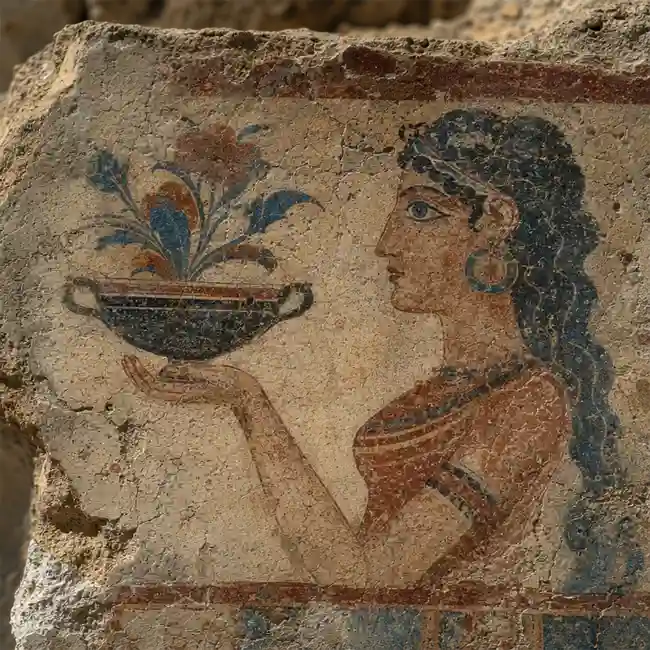
🍯 Recipe: The Sacred Malotira Tonic of Ancient Crete
🗝️ Legends Behind This Excavated Secret
Let's talk about the star of this story: an herb called malotira, known to botanists as Sideritis, or "ironwort." Legend has it the name comes from ancient warriors using the plant to treat wounds inflicted by iron weapons — hence "iron herb." Whether that's folklore or fact, one thing is certain: this plant has grown wild on Crete's rugged mountainsides since before recorded history, and it has been steeped into tonics by every generation that has called this island home.
Local legend whispers that Minoan priestesses brewed malotira with wild honey as part of purification rituals, offering it to travelers arriving at the palace as a gesture of protection and welcome. Whether or not priestesses truly performed this exact ritual, archaeological residue analysis has confirmed something remarkable — herbal and honey compounds were absolutely present in vessels from this era. The bones of this legend are, quite literally, buried in truth.
Today, elderly villagers in the mountain regions of Crete still hike up rocky slopes each summer to hand-harvest wild malotira, exactly as their ancestors did. It's a tradition so old that nobody can quite pinpoint when it started — because it simply always was.
🧺 Ingredients & The Noble Pantry
✨ The Ancestral Staples
Before we get into measurements, let's talk about what the Minoans actually had on hand. There were no supermarkets, no imported spices from across oceans. What they had was what the island gave them — wild herbs pulled straight from the mountainside, honey from bees that fed on wildflowers, and water from mountain springs so clean it needed no purification. Everything in this tonic tells the story of an island that fed its people from its own rocky, sun-baked soil.
🔄 Modern Substitutes
You probably don't have access to wild Cretan mountainsides (unless you're incredibly lucky), so here's how to bring this ancient tonic into your own kitchen using ingredients you can actually find:
• Dried malotira (Cretan mountain tea) — found in Mediterranean grocery stores or online; if unavailable, substitute dried Greek mountain tea or a blend of chamomile and sage for a similar earthy, floral profile
• Raw wild honey — any raw, unfiltered honey works beautifully; local wildflower honey is the closest modern match
• Fresh mountain spring water — filtered water is a perfectly good substitute
• A cinnamon stick (optional) — some coastal Cretan households added this for warmth and depth, especially in cooler months
• Fresh lemon peel (optional) — a modern touch that brightens the tonic without straying too far from tradition
📝 Ancient Proportions
Here's how to measure it out for a pot serving about four people:
• 4 cups of water
• 3 to 4 tablespoons of dried malotira leaves and flowers
• 2 tablespoons of raw honey, added after brewing
• 1 small cinnamon stick, optional
• A few thin strips of lemon peel, optional
• A pinch of dried sage, optional, for extra depth
🔥 The Chef's Ancient Ritual
Making this tonic isn't just cooking — it's closer to performing a small ceremony, and honestly, that's part of the magic.
Start by bringing your water to a gentle boil in a pot, never rushing it, the way mountain villagers never rush anything brewed with patience. Once it reaches a rolling boil, remove it from the heat immediately — this is important, because boiling delicate herbs too aggressively strips away their gentler aromatic qualities.
Add your dried malotira leaves and flowers directly into the hot water, along with the cinnamon stick if you're using one. Cover the pot with a lid and let it steep for a full ten to fifteen minutes. This is the sacred waiting period — the moment where water transforms into something ancestral. Use this time to breathe, to slow down, to imagine mountain air and wild herbs releasing their essence into the steam curling from your pot.
Once steeped, strain the liquid through a fine mesh sieve into cups or a serving pitcher, removing all the plant matter. While the tonic is still warm (but not scalding, so the honey's natural enzymes stay intact), stir in your raw honey until fully dissolved. Add lemon peel now if you're using it, letting it float and infuse for a final minute or two before serving.
Serve warm in the cooler months, exactly as mountain families have for millennia, gathered close for warmth and conversation.
🕯️ Secrets of the Ancestral Hearth
Every ancient tradition has its wisdom and its warnings, passed down the same way the recipe itself was — through experience. Here's what the old hearths of Crete can teach us:
• Never boil the malotira directly in the water for long periods — it turns bitter and loses its delicate floral character, so always steep after removing from heat
• Always add honey after the liquid has cooled slightly from a full boil, since scalding hot honey loses much of its natural nutritional value and subtle flavor
• Use raw, unfiltered honey whenever possible — processed honey lacks the depth and complexity that this tonic depends on
• Store dried malotira in a sealed jar away from sunlight, exactly as villagers stored it in clay containers, to preserve its aroma for months
• Don't over-steep past fifteen minutes, or the tonic can turn overly earthy and slightly astringent
• If harvesting fresh herbs yourself, always harvest in the morning after dew has dried but before the midday sun, which is when the plant's natural oils are most concentrated
• Trust your nose more than a timer — ancient cooks never had clocks, and the aroma will tell you when it's ready
⛪❓ Ancient Civilization Origins FAQ
Q1.Is malotira the same as regular mountain tea sold elsewhere?
Not exactly. While many regions across the Mediterranean and Balkans have their own version of "mountain tea," Cretan malotira refers specifically to varieties of Sideritis native to Crete's mountain ranges, with a flavor profile locals describe as slightly sweeter and more floral than mainland versions.
Q2.Did the Minoans really drink this exact tonic?
Archaeological residue analysis has confirmed herbal and honey compounds in Minoan-era vessels, strongly suggesting infusions like this were common. While we can't recreate their exact recipe word for word (they left no written cookbook), this version is built from continuous oral tradition passed down through Cretan mountain villages for generations.
Q3.Can I drink this every day?
Many Cretan households do enjoy mountain tea tonics regularly, much like others enjoy a daily cup of tea. As with any herbal infusion, moderation and awareness of personal sensitivities is always wise.
Q4.Why honey instead of sugar?
Honey was one of the only natural sweeteners available in the ancient Mediterranean world, and it carried both practical and symbolic value — it was seen as a gift from nature, often associated with health, purity, and even the divine in ancient Greek and Minoan belief systems.
🍶 The Taste of Archeology
There's something almost impossible to describe about the first sip of this tonic — a warmth that's floral, slightly herbal, faintly sweet, and undeniably earthy all at once. It doesn't taste like anything mass-produced. It tastes like mountains and patience and grandmothers who knew things science would only later confirm. Every sip is, in the truest sense, a taste of archaeology — history dissolved directly into liquid form.
🍽️ Final Thoughts: Bringing Antiquity to Your Modern Table
At the end of the day, this isn't just a recipe — it's an invitation. An invitation to slow down in a world that rarely does, to connect with something older and steadier than the latest wellness fad, and to bring a tiny piece of a five-thousand-year-old island tradition into your own kitchen. You don't need a palace, a priestess, or a mountain in Crete to experience this. You just need a pot of water, a handful of herbs, a spoonful of honey, and a little patience. Give it a try this weekend — brew a batch, sit down with someone you love, and let an ancient island do what it's always done best: bring people together over something warm and real.
🌟 The Golden Hook (The Sacred Union)
Here's the truth — recipes like this survive only because someone, somewhere, chooses to keep making them. Every time you brew this tonic, you're not just making a drink, you're becoming a tiny link in a chain that stretches back five thousand years. So why not join that chain? Brew it, share it with friends, tell them where it came from, and become part of the quiet, worldwide effort to keep humanity's oldest culinary secrets alive for the next five thousand years too.
🙏 Credit to the Keepers of the Culture (The Legacy)
None of this would exist without the generations of Cretan villagers, herbalists, and grandmothers who never wrote a single word down, yet somehow preserved this knowledge with more accuracy than any textbook ever could. This piece is written with deep respect and gratitude toward the people of Crete — past and present — who continue to harvest, brew, and honor these traditions exactly as their ancestors did. The real credit for this sacred tonic belongs entirely to them.
| 🏟️ 🏛️🧪 < Back |