
🏠 Home > 🗺️ Recipes > 🏛️🧪 Sacred Infusions & Botanical Tonics > 🏟️ Minoan Crete: Sacred Infusions & Botanical Tonics Recipes
🏟️ 🏛️🧪 Minoan Crete: Sacred Infusions & Botanical Tonics Recipes
Published by Supakorn | Updated: September 2026
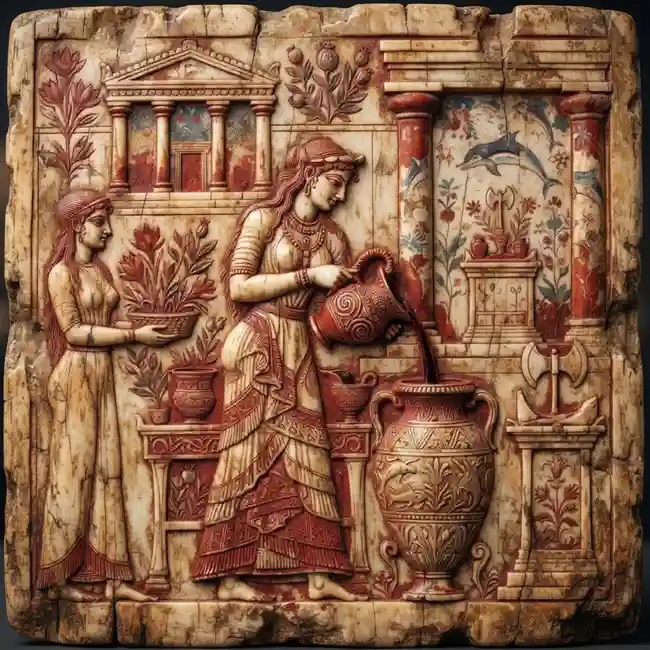
🛎️📜 The Storyteller’s Intro: 5,000 Years of Ancestral Flavors
Welcome to the kitchen of Europe’s first great civilization, friend. Long before Athens and Sparta, there was Crete, an island of goddesses, labyrinths, and kitchens that smelled like wild mountains.
We are talking about the Minoans, a culture that thrived from around 2700 BCE to 1450 BCE. That is over 5,000 years of accumulated wisdom in one place. Archaeologists call them the first high culture in Europe, and their story is written not just in palaces, but in storage jars, mortars, and charred seeds.
The history of Minoan Crete is usually divided into four epic chapters that every food lover should know:
✦ The Pre-Palatial Period (c. 3000-1900 BCE): This is the beginning. Small farming communities learning the secrets of the Cretan soil. They domesticated the olive and the wild herbs of the mountains. This is when the sacred relationship with plants began.
✦ The Old Palace Period (c. 1900-1700 BCE): The first giant palaces appear at Knossos, Phaistos, and Malia. These were not just royal homes; they were massive food distribution centers with hundreds of storerooms. Food became power, ritual, and community.
✦ The New Palace Period (c. 1700-1450 BCE): The Golden Age. This is the peak of Minoan magic. Frescoes show saffron gatherers, priestesses with botanical offerings, and elaborate banquets. Trade ships brought ideas, but the heart of the cuisine stayed deeply Cretan, herbal, and sacred.
✦ The Post-Palatial Period (c. 1450-1100 BCE): After the great palaces fell, the knowledge did not disappear. It went into the villages, into the mountains, and into the family kitchens where it survived for millennia. What we taste in Crete today is an echo of this time.
Unlike other ancient empires obsessed with conquest, the Minoans were obsessed with nature, fertility, and balance. Their art has no kings at war. It has lilies, dolphins, bees, and women gathering herbs. Their food was an extension of this worldview.
Food was medicine, and medicine was prayer. A tonic was never just a drink. It was a sacred infusion, prepared to heal the body, clear the mind, and honor the Great Mother Goddess, the central figure of their spirituality.
The core of their pantry was what we now call the Cretan trinity, but in a wilder, more ancient form:
• Wild Mountain Herbs: Dittany of Crete (diktamo), sage, thyme, oregano, and rosemary. These were not garnishes. They were the main event.
• The Sacred Olive: Olive oil was liquid gold, used for food, lamp fuel, and anointing in rituals. They had olive presses that are still impressive today.
• Barley and Pulses: Emmer wheat, barley, lentils, and chickpeas formed the hearty base of daily life.
• The Gifts of the Bee: Honey was their only sweetener and a sacred offering. Minoan beekeeping was highly advanced.
They did not just eat. They infused. They understood that hot water could pull the soul out of a leaf, a root, or a flower. That is the secret we are unlocking today.
📜 Iconic Excavated Menus: Minoan Palace Botanical Treasures
Archaeologists digging in the storerooms of Knossos and Zakros did not find recipe books. They found something better: thousands of pithoi (giant storage jars) with residue, Linear A tablets listing food offerings, frescoes of banquets, and stone tools stained with ancient botanicals. Here are the most iconic, evidence-based menus that whisper from the ruins.
🍯 The Priestess’s Sacred Infusions - Potions of Clarity and Calm
• Diktamo Elixir of the Goddess: This is the most famous Minoan tonic. Dittany of Crete (Origanum dictamnus) grows only on the sheer cliffs of Crete. Minoan frescoes show young women offering it to the goddess. The Linear A tablets list it as a temple offering. It was infused in hot spring water with a touch of wild thyme honey. It was believed to soothe pain, heal wounds, and bring clarity. Today, Cretan shepherds still call it the herb of love and healing.
• Saffron Petal Tonic for Joy: At Akrotiri, the sister island influenced by Crete, a famous fresco shows women harvesting saffron crocus stigmas. Saffron was worth more than gold. The Minoans did not just use the red stigmas; they used the whole petals. An infusion of saffron petals and stigmas in warm water was used in rituals to uplift the spirit and mark celebrations. It is one of the oldest mood-enhancing tonics in human history.
• Sage and Rosemary Memory Brew: Sage (salvia) literally means to save or to heal. Minoan mortars have been found with heavy sage residue. A daily infusion of wild Cretan sage and mountain rosemary was consumed by scribes and palace elders. They believed it kept the mind sharp and protected against forgetting. It is the original brain tonic.
• Wild Rosehip and Mallow Vitality Infusion: Excavations at Minoan peak sanctuaries found vessels containing rosehip and mallow seeds. This beautiful pink-hued infusion was made from sun-dried wild rosehips rich in vitamin C and soft mallow leaves. It was the tonic for mountain travelers and mothers, meant to restore strength.
🌿 The Palace Healer’s Botanical Tonics - The Pantry of the Gods
• Carob and Barley Grounding Porridge Drink: In the palace storerooms, archaeologists found huge quantities of carob pods and barley. The Minoans roasted carob and barley, ground them, and mixed them with hot water and honey to create a thick, comforting, chocolate-like nourishing drink. It was not sweet like modern cocoa, but deep, earthy, and incredibly sustaining. It was the breakfast of builders and farmers.
• Fig and Almond Restorative Paste: Dried figs and almonds were found preserved in jars at Phaistos. They were pounded together with anise seeds and a little honey to form a dense, energy-rich paste that could be dissolved into warm water or eaten as is. It was carried by sailors and traders as an ancient energy bar and tonic for long journeys.
• Fennel and Coriander Digestive Infusion: The Minoans were masters of spices. Fennel seeds and coriander seeds have been identified in Minoan pottery residue. After a large communal feast of legumes and barley bread, a warm infusion of crushed fennel and coriander was served to help digestion and bring balance to the body. This is the ancestor of all modern digestive teas.
• Linden and Thyme Mountain Calm: From the White Mountains of Crete, wild linden flowers and thyme were gathered in summer. An evening infusion of linden and thyme honey was the household ritual for restful sleep and calm. Minoan lamps would be lit, and families would share this gentle, fragrant tonic together.
🗺️ Minoan Life & Culinary Travel: Eating Like a Goddess in the Palace of Knossos
To understand Minoan food, you have to understand how they lived. Their palaces had no defensive walls. They were open to the world, centered around a large central courtyard where communal eating and ritual feasting happened.
The Minoan way of life was built on three pillars that you can still experience in Crete today:
• The Palace as a Kitchen Hub: The palaces of Knossos, Phaistos, Malia, and Zakros each had dozens of storerooms, kitchens, and workshops. Food was collected as tribute from villages and then redistributed for festivals, rituals, and daily needs. It was a communal system, not a private one. When you visit Knossos, stand in the West Wing storerooms and imagine hundreds of giant jars filled with olive oil, grain, and dried herbs.
• Peak Sanctuaries and Sacred Groves: The Minoans did not worship in dark temples. They hiked up mountains to open-air peak sanctuaries to offer food and botanical tonics to the gods. They also worshipped in sacred groves of olive and oak trees. Eating was done outdoors, with nature. If you travel to Crete, hiking to the peak sanctuary of Juktas, which overlooks Knossos, is the best way to feel this.
• The Village and the Wild: While the palaces were the centers, the real knowledge lived in the villages. Women were the keepers of botanical wisdom. They knew which cliff grew dittany, which meadow had the best sage, and how to dry herbs on the rooftops. This matriarchal food culture is still alive in Cretan villages where grandmothers are the ultimate authority on herbs.
Traveling for Minoan food today is not about fancy restaurants. It is about experiences:
Visit the Archaeological Museum of Heraklion to see the actual stone mortars, cups, and frescoes of saffron gatherers.
Walk the Botanical Park of Crete near Chania to smell and taste wild dittany, sage, and thyme that the Minoans used.
Take a mountain tea tour in the Amari Valley, where locals still gather 40 different wild herbs for infusions, just like their ancestors.
The best souvenir is not a statue of a bull. It is a small bag of dried Cretan mountain tea and raw thyme honey.
🚣 Aegean Currents & Cretan Trade: The Olive Oil Routes That Shaped a Civilization
Crete is an island, but the Minoans were never isolated. They were the master sailors of the Bronze Age Aegean. Their food culture traveled as far as their ships did.
The Minoans controlled the sea lanes of the Eastern Mediterranean. Their longboats, depicted in art with high prows and rows of oarsmen, connected Crete with Egypt, Cyprus, the Cyclades, and mainland Greece.
What did they trade for food?
• They Exported: Cretan olive oil in beautiful stirrup jars, fine aromatic herbs like saffron and dittany, and medicinal tonics. Minoan olive oil jars have been found as far as Egypt and the Nile Delta.
• They Imported: Ideas, spices, and new plants. They likely brought in coriander from Egypt and adopted new ways of using almonds and figs from the Near East. But they always adapted these imports to their own herbal, plant-forward style.
The sea was their highway, but the mountains were their pharmacy. The true luxury of Minoan Crete was not gold from abroad. It was the ability to walk into the White Mountains and harvest herbs that no one else in the ancient world had.
The famous Minoan fresco of the dolphins at Knossos is not just decoration. It is a reminder that their entire world, including their food, was connected to the sea, the wind, and the rhythm of nature. Their botanical tonics were often prepared with spring water carried from mountain sources to the palace by an ingenious terracotta pipe system that still exists.
🏜️ The Cretan Mountain Oasis: Where the Wild Herbs Grow
Forget the desert stereotype of ancient civilizations. The Minoan oasis was green, rocky, and high in the mountains. It was called the Madara, the high mountain plains of Crete.
The Minoans had a deep understanding of microclimates. They knew that the best herbs did not grow in the fertile lowlands, but in the harsh, sun-baked, windswept highlands where plants have to fight to survive and become more aromatic and potent as a result.
Their oases were:
• The Omalos Plateau and the Samaria Gorge: A natural refuge where wild goats and wild herbs thrived. Minoan shepherds would spend summers here, drying herbs on flat rocks under the sun.
• The Lasithi Plateau: A high, fertile bowl surrounded by mountains, famous for its thousands of ancient windmills and its incredibly rich soil. It was a major food production center for the palaces.
• The Sacred Caves: Caves like the Diktean Cave, the legendary birthplace of Zeus, were natural refrigerators and sanctuaries. They were used to store herbs, honey, and tonics at a constant cool temperature.
The Minoan foragers had rules that modern herbalists still follow:
Harvest only at midday when the essential oils are strongest.
Never pull the root of dittany; only cut the leaves so it regrows.
Dry herbs in the shade, not direct sun, to preserve color and power.
Store infusions in dark clay cups to keep them potent.
This mountain oasis is where the sacred comes from. It is not a lush garden. It is a wild, rocky, fragrant landscape that forces you to be mindful and respectful. That is the true taste of Minoan Crete.
🪓❓ Ancient Civilization FAQ: Unlocking Palace Kitchen Mysteries
Q1.How do we really know what Minoans drank if they had no written cookbooks?
Great question. We have three amazing sources. First, residue analysis. Scientists use chemical analysis on the inside of ancient cups and jars to find traces of herbs, honey, and plant compounds. Second, frescoes and art. The walls of Knossos and Akrotiri show people gathering saffron and carrying cups in ritual scenes. Third, Linear A tablets. Even though we cannot fully read this Minoan script, we can identify symbols for figs, honey, herbs, and olive oil that were used as temple offerings. Together, they give us a very clear picture of a botanical-focused culture.
Q2.Were Minoan tonics only for rich people in the palaces?
Actually, it was the opposite. The palaces collected and redistributed food, but the knowledge of wild herbs belonged to everyone, especially women in villages. Dittany, sage, and thyme grew wild and were free for anyone who knew where to look and had the courage to climb. The palace versions might have had more rare ingredients like saffron or imported spices, but the everyday sacred infusions were the people’s medicine and daily ritual.
Q3.What makes Minoan food different from later Ancient Greek food?
This is a key difference. Later Classical Greek food, especially in Athens, was very focused on civic life, symposia, and later meat. Minoan food was older, more matriarchal, and deeply plant-based and ritualistic. There are no images of Minoan kings hunting. Their main deity was a Goddess of nature and fertility. Their diet had much less meat and much more wild greens, pulses, herbs, and infusions. It was a cuisine of balance and healing, not indulgence and display. It is the root of what we now call the Mediterranean diet, but in its most original, herbal form.
Q4.Can I still taste authentic Minoan flavors in modern Crete?
Yes, and that is the most magical part. Crete is one of the few places in the world where the ancient food chain was never broken. The same wild herbs still grow on the same mountains. Cretans still drink mountain tea every day, still use copious amounts of wild greens called horta, still sweeten with thyme honey, and still use olive oil for everything. If you want to taste the closest thing to a Minoan tonic, ask for a cup of diktamo tea with local honey in a mountain village like Anogeia. You are literally tasting 5,000 years of history.
🧠 Final Thoughts: The Timeless Allure of Antique Gastronomy
We started with a giant storage jar in a dark palace storeroom and ended up on a sunlit mountain cliff picking dittany. That is the journey of Minoan Crete.
This civilization teaches us that food was never just fuel. It was connection. It connected the people to the mountain, the healer to the Goddess, the village to the palace, and the body to the spirit.
The concept of a Sacred Infusion is so powerful because it is simple. Hot water, a wild leaf, a little time, and intention. No complicated machines, no rare chemicals. Just ancient wisdom in a cup.
In a world that is always rushing, the Minoan way is a gentle reminder to slow down, forage with respect, and drink with gratitude.
The labyrinth of Knossos was not meant to trap you. It was meant to make you wander and find the center. In the kitchen, that center is always a simple, fragrant, healing brew.
So, are you ready to brew like a Minoan priestess? The full, hands-on recipes for these sacred infusions and botanical tonics, with exact ancient methods adapted for your modern kitchen, are coming next. We will be grinding, infusing, and tasting history together. Stay tuned, your palace kitchen awaits.
🏛️ Credit to the Keepers of the Culture (The Legacy)
Our deepest respect and gratitude go to the true keepers of this incredible heritage.
To the Minoan women, the foragers, the priestesses, and the healers whose botanical wisdom was passed down through whispers and hands for 50 generations without ever being written down, yet never forgotten.
To the brilliant archaeologists of the Cretan school, from Sir Arthur Evans who first revealed Knossos to modern Greek archaeologists like Dr. Efi Sapouna-Sakellarakis, whose careful work with plant residues and frescoes allows us to taste the past.
To the Archaeological Museum of Heraklion, which protects and shares these treasures with the world with such grace and scientific rigor.
To the modern Cretan villagers, shepherds, and beekeepers of the White Mountains and the Amari Valley, who still climb cliffs for dittany and who keep the ancient infusions alive in their daily lives. They are the living bridge to Minoan Crete.
This article is written with immense respect, as a humble student of a civilization that understood long before us that the earth provides, the plants heal, and the simple act of sharing a warm, fragrant cup is sacred.
Note: This content is based on archaeological evidence from the Minoan palaces of Knossos, Phaistos, and Zakros, ethnobotanical studies of Cretan wild herbs, and peer-reviewed research on Minoan diet and trade.
🏛️🧪 Journey Into Ancient Crete: The Sacred Tonic Time Forgot
👉 Sip Minoan Crete: Sacred Infusions & Botanical Tonics
| 🌐 🏛️🧪 < Back | 🏟️ 🍯 < Previous |