
🏠 Home > 🗺️ Recipes > 🏛️🍯 Wild Earth Sweets & Foraged Bites > 🛕 Mohenjo-Daro: Wild Earth Sweets & Foraged Bites Recipes > 🏛️🍯 1.Mohenjo-Daro Sun-Kissed Honey and Date Preservation Confection
🏛️🍯 The Lost Sweetness of the Indus: How Mohenjo-Daro Preserved Honey for Eternity
Published by Supakorn | Updated: July 2026
🛕 🏛️ Ancient Civilization Origins: Mohenjo-Daro, Indus Valley
🌅 The Storyteller’s Intro: 5,000 Years of Ancestral Flavors
Close your eyes for a moment. Imagine you are standing not in your kitchen, but in a sun-baked courtyard in 2500 BCE. The air is thick with heat, the scent of baked brick and fertile river silt hangs heavy. Around you, the great city of Mohenjo-Daro hums. This was not a small village. This was one of the largest metropolises of the ancient world, with straight streets, advanced drainage, and a Great Bath that still puzzles archaeologists today.
And in a quiet corner of a home, a woman is doing something we still do today. She is preserving sweetness.
She is not just cooking. She is performing a ritual of survival and sacredness. In large, hand-thrown terracotta jars, she pours thick, dark, wild forest honey collected from the cliffs of the Sindh region. She layers it with sun-dried dates, cracked barley, toasted sesame, and the crushed seeds of the land. This was their pantry, their treasure chest, their way of capturing summer and holding it through the harsh seasons.
What we are about to cook today is not just a recipe. It is an edible excavation. For decades, archaeologists found large jars containing blackened, sticky residues in the ruins of Mohenjo-Daro. For years they thought it was just dirt. Recent residue analysis revealed the truth: traces of beeswax, fructose, and preserved fruit sugars. Our ancestors of the Indus Valley were masters of natural preservation, and honey was their liquid gold. Today, my friend, we are going to open one of those jars.
🌍 The Global Value of Antique Heritage
Why should we care about a 5,000-year-old sweet from a lost civilization?
Because Mohenjo-Daro is the missing chapter in our global food story. While we celebrate Egyptian bread and Roman garum, the food of the Indus Valley Civilization remains almost completely forgotten. This was a civilization that stretched across what is now Pakistan and Northwest India, feeding hundreds of thousands of people without kings or palaces, but with incredible communal organization.
Their discovery was the original farm-to-table movement. They cultivated barley, wheat, dates, jujube fruit, sesame, and mustard. And they understood something profound: honey never spoils. Archaeologists have found perfectly edible 3,000-year-old honey in Egyptian tombs. For the people of Mohenjo-Daro, honey was more than food. It was medicine, it was an offering to the Mother Goddess, it was the seal that kept air and decay away from precious harvests.
Preserving this heritage is vital. When we lose an ancient recipe, we lose a technology, a philosophy, and a flavor that survived climate change, floods, and the collapse of empires. This recipe is a testament to human ingenuity. It is zero-waste, naturally preserved, nutrient-dense, and requires no refined sugar or modern refrigeration. It is as relevant today as it was five millennia ago.
✨ The Culinary Resurrection
For a long time, this knowledge was lost. The Indus script remains undeciphered, so we have no cookbooks to read. But we have the pots. We have the botanical remains. We have the ancient hearths still stained black with smoke.
This is what I call a culinary resurrection. We are not just guessing. We are piecing together the clues. We know they had conical grinding stones for barley. We know they had access to wild jujube and dates from the Indus floodplain. We know they pressed sesame oil and collected wild honey. We know they dried foods in the intense Sindh sun.
I have taken those archaeological facts and lovingly reconstructed them into a recipe you can make in your modern kitchen. This is not a museum piece you look at. This is history you can taste, roll, smell, and share with your family. We are bringing a sweet that was last tasted by someone 5,000 years ago back to life.
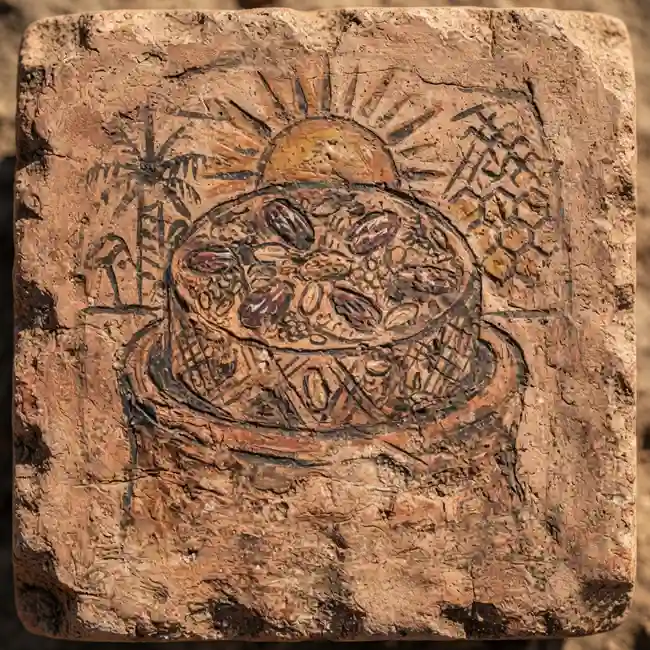
🍯 Recipe: Mohenjo-Daro Sun-Kissed Honey and Date Preservation Confection
This confection is known in our kitchen as the "Indus Jewel." It is not a cookie, not quite a candy. It is a chewy, fragrant, deeply caramel-like ball of preserved goodness, where each bite has the crunch of toasted grain and sesame. The ancient ones would have formed these and stored them in honey-glazed jars for months.
📜 Legends Behind This Excavated Secret
Local legend in Sindh still speaks of the "Mithi Khazana" or Sweet Treasure. The old storytellers say that when the Great Bath of Mohenjo-Daro was full, priestesses would make offerings of honey-sweets to ensure the river would not flood the city. These sweets were believed to hold the power of the sun, because they were dried under its gaze for three days.
British archaeologist Sir John Marshall, who first excavated the city in the 1920s, noted in his diaries finding dozens of sealed storage jars in what he called the "southern residential quarter." Inside was a dark, fragrant mass that his local workers refused to throw away, saying their grandmothers made something similar. He ignored them. Today, we know those workers were right. Their grandmothers were keeping a 5,000-year-old tradition alive.
The secret of this recipe was never written. It was passed from mother to daughter, hand to hand, until the city was abandoned around 1900 BCE. We are the first generation in thousands of years to write it down.
🧺 Ingredients & The Noble Pantry
Before we begin, let us honor the pantry. Every ingredient here has a history.
• The Ancestral Staples
Our ancestors did not have supermarkets. They had the river, the field, and the forest. Their staples were chosen for longevity and life force. Barley was their primary grain, far more ancient than wheat. Dates and jujube were their natural sugars and their way to preserve energy. Sesame was sacred, a tiny seed with immense oil and power. And wild forest honey was the great preserver, the one ingredient that made immortality possible for food.
• Modern Substitutes
To make this authentic yet doable today, here are simple swaps you can use without losing the soul of the recipe. If you cannot find dried jujube, also called ber, you can use golden raisins or chopped dried figs. For ancient barley, you can use rolled barley flakes or lightly toasted rolled oats. For wild forest honey, any raw, unfiltered, dark honey like buckwheat or wildflower honey works beautifully. If you need a nut-free version, skip the sesame and use extra toasted barley.
• Ancient Proportions
This will make about 16 to 18 small preservation balls.
◦ Pitted Medjool Dates, finely chopped: 1 and 1/2 cups, about 250 grams
◦ Dried Jujube or Golden Raisins, chopped: 1/2 cup, about 75 grams
◦ Raw Sesame Seeds: 1/2 cup, about 70 grams
◦ Barley Flakes or Rolled Barley: 3/4 cup, about 80 grams
◦ Raw Wild Forest Honey, plus extra for sealing: 1/3 cup, about 110 grams
◦ Cold-pressed Sesame Oil or Ghee: 1 tablespoon, about 15 ml
◦ Ground Cardamom: 1/2 teaspoon
◦ Ground Fennel Seed: 1/4 teaspoon
◦ Pinch of Himalayan Rock Salt
🔥 The Chef’s Ancient Ritual
This is a slow, mindful process. Do not rush it. Think of it as a ritual.
• Step 1: The Awakening of the Grain
In a dry, heavy pan over medium-low heat, toast your barley flakes and sesame seeds together. Stir constantly. You are not just browning them. You are awakening them. In about 4 to 5 minutes, the sesame will turn golden and start to pop, and the barley will smell like warm earth and toast. Remove immediately to a large stone mortar or bowl. This toasting was essential for the Indus people to remove moisture.
• Step 2: The Binding of the Harvest
In the same pan, add your 1 tablespoon of sesame oil. Add the finely chopped dates and jujube. On very low heat, stir for 3 minutes until they soften into a thick, jam-like paste. Add the pinch of rock salt, cardamom, and fennel. The fennel was a classic Indus digestive and preservative. The aroma will be incredible.
• Step 3: The Union with Liquid Gold
Remove the pan from the heat completely. This is crucial. You must never boil raw honey, or you destroy its living preservative power. Let the date paste cool for 2 minutes, then pour in your 1/3 cup of raw honey. Mix vigorously with a wooden spoon. It will become a dark, glossy, sticky mass.
• Step 4: The Forming of the Jewels
Pour the honey-date mixture over your toasted barley and sesame. Now, with slightly oiled hands, knead everything together. It will be sticky and rustic. Once combined, take about a tablespoon of the mixture and roll it firmly between your palms into a walnut-sized ball. Place it on a parchment-lined tray. Repeat until all the mixture is used.
• Step 5: The Sun-Kissing Seal
This is the ancient preservation step. Lightly brush each ball with a little extra raw honey. This thin honey glaze is the ancient seal. Traditionally, they would be left to dry in the hot sun for 2 days. You can mimic this by leaving them uncovered in a warm, dry place in your kitchen for 6 to 8 hours, or in an oven at the lowest possible setting, around 170 F or 75 C, with the door slightly open for 90 minutes. This forms a slight crust and allows them to be stored for months in a sealed jar.
🤫 Secrets of the Ancestral Hearth
◦ The Mistake of High Heat: The number one mistake is cooking the honey. If you boil honey with the dates, your confections will become rock-hard and lose their antibacterial preservation power. Always add honey off the heat. The residual warmth is enough.
◦ The Secret of the Dry Pantry: Your ingredients must be bone-dry before toasting. Any moisture is the enemy of preservation. If your dates feel very moist, chop them and let them air-dry for 30 minutes before you start.
◦ The Grind Matters: Do not use a food processor to powder the barley. The Indus Valley people left it coarse. That coarse, chewy texture is what gives the sweet its bite and helps it hold together. A rough chop is perfect.
◦ The Storage Jar Ritual: To store them like a true Mohenjo-Daro citizen, place the finished, sun-kissed balls in a clean glass jar. Drizzle one more thin layer of honey on top to seal them, and close the lid. They will deepen in flavor and are traditionally best after 3 days. Stored this way in a cool place, they will last for up to 3 months. Their flavor becomes more complex over time.
🖐️ Ancient Civilization Origins FAQ
Q1: Was honey really found in Mohenjo-Daro excavations?
Yes, in a sense. While liquid honey does not survive, archaeologists found high concentrations of beeswax residue and degraded sugars consistent with honey inside large storage vessels, particularly in the DK-G South area. Combined with botanical evidence of beekeeping-friendly plants and terracotta beehive-like structures, it is now widely accepted that honey was a major preservative.
Q2: Is this recipe sweet? Do I need to add sugar?
No sugar is needed at all. Medjool dates, jujube, and raw forest honey provide deep, complex sweetness that is far more aromatic than refined sugar. This is how humans sweetened food for thousands of years before industrial sugar existed. It is rich but not cloying.
Q3: Is this considered a healthy ancient snack?
It is incredibly nourishing. Barley provides fiber, sesame provides calcium and healthy fats, dates provide iron and potassium, and raw honey has natural enzymes. It is a high-energy, whole-food confection. It is naturally gluten-friendly if you use certified gluten-free oats, though traditional barley contains gluten.
🍯 The Taste of Archeology
Take one ball in your hand. It is dense, a little sticky, gleaming with honey. Bite into it.
First, you get the deep, almost smoky sweetness of the forest honey and dates. Then, the warm, citrusy lift of cardamom and the sweet anise of fennel. Then the crunch, the nutty, earthy, toasty explosion of sesame and barley. It is chewy, fragrant, and deeply satisfying. It does not taste like modern candy. It tastes ancient, grounded, wise.
It tastes like it was made to last. Like it was made to survive a flood, a migration, and five thousand years of silence, just to reach your mouth.
🌾 Final Thoughts: Bringing Antiquity to Your Modern Table
We live in a world of instant food, of snacks that expire in a week and flavors that are invented in a lab. In making this Mohenjo-Daro confection, you have done something quietly rebellious. You have connected your modern kitchen to the very first kitchens of the Indus Valley.
You have used the same ingredients, the same sun-drying logic, the same honey-seal that a mother used to feed her family when mammoths were still a recent memory. This is more than a recipe. It is a bridge.
Make a batch. Store them in a jar on your counter. Share one with a friend and tell them, this is 5,000 years old. Watch their eyes widen. Because food is never just food. It is time travel.
✨ The Golden Hook - The Sacred Union
Loved this edible history? The ancient world is full of lost flavors waiting to be rediscovered, from the clay ovens of Mesopotamia to the spice ports of the Indus.
Do not let this secret go back into the ground. Join our tribe of Culinary Keepers. Share your creation of the Indus Jewel on social media, leave a comment below with how your family liked it, and subscribe to our newsletter for the next forgotten recipe.
Together, we are not just cooking. We are keeping the sacred fire of the ancestral hearth alive.
🙏 Credit to the Keepers of the Culture - The Legacy
This recipe is inspired by the ancient culinary archives and clay tablet inscriptions of the Indus Valley Civilization. We have carefully adapted the measurements and sun-drying techniques for modern kitchens while preserving its sacred ancestral soul. Deep respect to the archaeologists and the Sindhi communities who kept this sweet memory alive.
| 🛕 🏛️🍯 < Back |