
🏠 Home > 🗺️ Recipes > 🏛️🌾 Primitive Grains & Flatbreads > 🛕 Mohenjo-Daro: Primitive Grains & Flatbreads Recipes
🛕 🏛️🌾 Mohenjo-Daro: Primitive Grains & Flatbreads Recipes
Published by Supakorn | Updated: July 2026
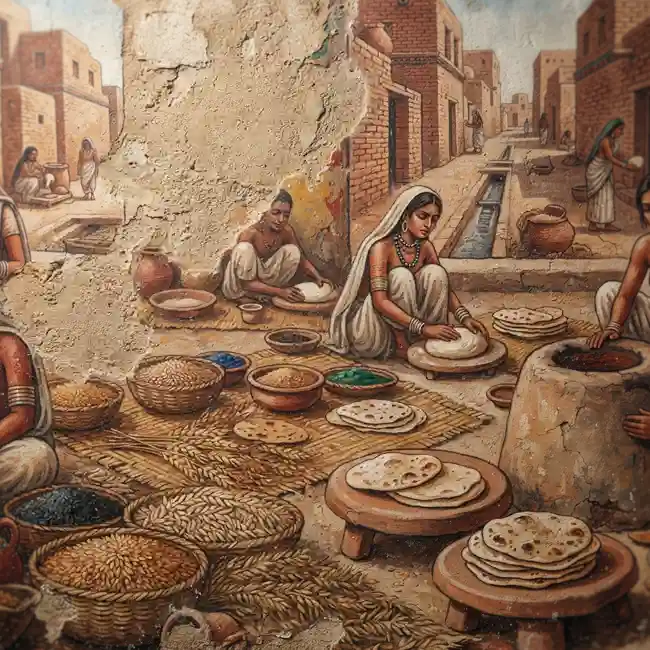
🛕 📜 The Storyteller’s Intro: 5,000 Years of Ancestral Flavors
Hey friend, can you imagine biting into the same flatbread that someone in a bustling Bronze Age city ate 5,000 years ago?
That’s exactly what Mohenjo-Daro offers us. This isn’t just a pile of old bricks in Sindh, Pakistan. This was one of the largest, most advanced cities on the planet around 2500 BCE, the crown jewel of the Indus Valley Civilization, also known as the Harappan Civilization.
When we talk about Mohenjo-Daro food, we’re not talking about one era. We’re talking about a deep, delicious timeline that food archaeologists are still piecing together:
• The Early Food Gathering Phase (c. 7000 - 3300 BCE - Mehrgarh Roots): Long before Mohenjo-Daro became a metropolis, its ancestors in the foothills of Balochistan were already taming wheat and barley. They learned to grind wild grains between stones. This is where our story of primitive grains begins.
• The Early Harappan Phase (c. 3300 - 2600 BCE): Small farming villages start to cluster along the Indus River. They perfected irrigation from the river’s annual flood. They weren’t just surviving; they were storing surplus grain in large community pits. That surplus is what built a civilization.
• The Mature Harappan Peak (c. 2600 - 1900 BCE - The Mohenjo-Daro Golden Age): This is it. The city with the Great Bath, the grid-like streets, and the massive granary. A city of 40,000 people needs serious food logistics. This era gave us standardized weights, long-distance grain trade, and the first true tandoor-like clay ovens.
• The Late Harappan Transition (c. 1900 - 1300 BCE): As the Indus River shifted, people migrated east towards the Ganges. They took their grains and flatbread knowledge with them, laying the foundation for almost all of South Asian cuisine as we know it.
What makes Mohenjo-Daro so special? Unlike the Egyptians or Romans, they left no grand cookbooks carved in stone. Their food story was hidden in carbonized seeds, charred pots, grinding stones, and the massive Great Granary itself. Every bite we recreate is a piece of detective work.
📜 Iconic Excavated Menus: From Clay Tablets to Pharaoh Tombs
Archaeologists didn’t find a menu, but they found something better: direct evidence. Here are the legendary, academically-documented food names and food categories from Mohenjo-Daro and the wider Harappan world that still make historians hungry.
• Harappan Barley Griddle Bread - Yava Roti: The absolute staple. Excavations at Mohenjo-Daro and Harappa recovered thousands of carbonized grains of six-row barley. This was not soft naan. This was a hearty, slightly nutty, high-fiber flatbread cooked on a large, flat terracotta griddle, known as a tawa ancestor. It was the daily bread of workers and merchants.
• Primitive Einkorn & Emmer Wheat Flatbread - Godhuma Chapati: Alongside barley, the Indus people cultivated ancient, low-gluten wheat varieties. Archaeobotanist finds show they used saddle querns to make coarse whole wheat flour. This flatbread was more prized than barley bread, likely reserved for families with higher status or for religious offerings.
• The Great Granary Roasted Grain Bowl - Sattu Ancestor: Inside the citadel, the massive granary could hold grain for the entire city. Scientists found evidence of parched and roasted barley and chickpeas. Roasted, ground, and mixed with water or buttermilk, this instant energy bowl was the ancient protein bar for laborers building the city walls.
• Indus Lentil & Mung Stew - Mudga Yusha: This is huge. Carbonized lentils (masoor), green gram (mung), and field peas were found in storage jars in Mohenjo-Daro homes. Slow-cooked in black-burnished pots over a low fire, this thick, earthy stew was the daily companion to every flatbread.
• Sesame & Mustard Seed Pressed Cakes: Dozens of stone oil presses have been found. The Harappans were one of the first cultures in the world to cultivate sesame. They pressed it for oil and used the leftover cake to flavor breads and stews, adding a nutty depth.
• Jujube & Date Palm Chutney - Badara Chatni: Not everything was savory grain. Seeds of Indian jujube (ber) and date palms were found in abundance. Dried, pounded with wild honey and tamarind-like sour fruits, they created a sweet-sour chutney to cut through the richness of grain and lentils.
• Clay Oven Puffed Bread - Bhatti Roti: Perhaps the most exciting find is the discovery of large, beehive-shaped clay ovens in almost every Harappan home. These are the direct ancestors of the modern tandoor. Sticking flat dough to the inner hot walls created a smoky, puffed bread with charred spots, just like we love today.
🗺️ Ancient Indus Culinary Tourism: Mapping Flavors to Historic Landscapes
If you want to taste Mohenjo-Daro today, you have to travel with your stomach. This is more than a history trip; it’s a pilgrimage to where bread began.
• The Mohenjo-Daro Archaeological Site, Sindh, Pakistan: Standing in front of the Great Granary is a spiritual moment for any food lover. This 150-foot-long brick building was the world’s first food bank. You can literally see the air ducts designed to keep grain dry. Close your eyes and you can almost hear the merchants weighing barley.
• The Home Kitchens of the Lower Town: Walk the grid streets. Every house had its own kitchen area with a circular clay hearth and grinding stones still in place. Local guides will show you how Sindhi families just outside the site still use the exact same style of chulha to make sorghum rotis.
• The Indus River Banks: The entire civilization was a gift of the Indus. Take a boat at sunset near Sukkur. The river’s silt is what made primitive wheat grow so tall. The local farmers still practice flood-retreat agriculture, a technique directly inherited from Harappan times.
• Harappa Museum & Lahore Food Streets: For a comparative taste, visit Harappa in Punjab. Then head to Lahore’s Food Street. Order a plate of missi roti, a mixed-grain flatbread made with chickpea flour and spices. Food historians believe its concept goes straight back to Harappan mixed-grain experiments.
• Mehrgarh, Balochistan: If you are truly adventurous, this is ground zero. This Neolithic site is where South Asian agriculture started. It connects the dots from wild grasses to Mohenjo-Daro’s organized bread culture.
Pro tip from a friend: Don’t go looking for a restaurant called “Mohenjo-Daro Cafe.” Go to a Sindhi village home, ask for a bajra or jowar roti cooked on a clay griddle with a dollop of fresh yogurt and jaggery. That is the most authentic Harappan meal you will ever eat.
🚣 The Indus River & Fertile Alluvium: Riverbed Agriculture
Why did primitive grains thrive here? The answer is all about the river. The Indus was not just water; it was a food system engineer.
• The Annual Inundation Miracle: Every summer, the Indus flooded, leaving behind a thick layer of fine, mineral-rich silt. This meant Harappan farmers rarely needed fertilizer. They practiced inundation farming, planting barley and wheat right after the flood receded, just like the Egyptians did with the Nile.
• The World’s First Agricultural Surplus Masters: Mohenjo-Daro had no palaces or giant temples for kings. It had granaries. That tells you everything. Their power came from food security. They developed standardized cubical stone weights to measure grain for trade, the world’s first food administration.
• A Dual-Season Cropping Genius: They were smart enough to grow two crops a year. Barley and wheat in the cool winter (Rabi season) and millets like jowar and finger millet in the hot summer (Kharif season). This double-cropping is why the city could support tens of thousands of people.
• Storage Technology That Lasted Millennia: They lined their grain pits with cow dung and clay to keep insects out. They used large, sealed terracotta jars, some as tall as a person, to store roasted grains and lentils. When archaeologists opened them 4,500 years later, the grains were still inside.
The Seed Exchange Highway: The Indus River was a trade superhighway. Boats brought new seeds from the north and took surplus grain to Mesopotamia. Lapis lazuli went one way, primitive wheat went the other. This river connectivity made Mohenjo-Daro’s diet incredibly diverse for its time.
🏜️ The Thar Fringe & Bolan Pass Trade Route Banquets: Caravan Luxuries
Mohenjo-Daro was not isolated. It was the hub of a massive trade network that stretched to Afghanistan and the Persian Gulf. And what did caravans crave after crossing a desert? A feast.
• The Oasis Caravanserai Feast: At stops along the Bolan Pass, traders would gather. The host would offer thick millet flatbreads cooked directly on hot ash, topped with sesame oil and wild herbs. This was caravan luxury, simple, filling, and it wouldn’t spoil in the heat.
• Desert Preservation Techniques: To survive the desert, Harappan cooks became masters of preservation. They sun-dried lentil cakes (the ancestor of modern bori and papad), roasted grains until completely dry, and made hard, twice-baked flatbreads that could last for months on a journey.
• The Exotic Imports: Caravan trade brought new flavors. Finds of turmeric and ginger traces in Harappan pots are debated, but we know for sure they imported dried fish from the Arabian Sea coast near Lothal. This dried fish was pounded and sprinkled on flatbreads for a salty, umami punch.
• Salt from the Salt Range: The nearby Salt Range in Punjab provided rock salt. Salt was currency. A small packet of salt could buy a pile of flatbreads. It allowed them to preserve food and make their simple grain breads taste incredible.
• The Communal Tandoor Culture: The beehive oven was not just a cooking tool; it was a social center. In the harsh desert climate, neighbors shared the large clay oven in a courtyard. Women would bring their kneaded dough and bake together while exchanging news from the caravans. That communal baking tradition is still alive in Sindh and Rajasthan today.
📝 Ancient Civilization FAQ: Unlocking Palace Kitchen Mysteries
Q1.Was Mohenjo-Daro vegetarian? What did they eat besides bread?
This is the most common question, and the answer is beautifully balanced. The Harappan diet was predominantly vegetarian and grain-based, but not strictly so. Archaeologists found plenty of fish bones, cattle bones, and evidence of dairy from cattle and buffalo. So a typical meal was a primitive grain flatbread + a lentil or mung stew + seasonal vegetables like brinjal (eggplant) + yogurt or buttermilk. Meat and fish were likely occasional, not daily, especially for the common people.
Q2.How do we actually know what bread they ate if they left no recipes?
We use archaeobotany, which is like CSI for ancient food. Scientists float excavated soil in water, and tiny carbonized seeds float to the top. They also analyze the residue inside cooking pots using chemical analysis. Starch grains of wheat and barley were found stuck to the inner walls of Harappan cooking vessels and even on the teeth of skeletons. The grinding stones have microscopic scratches that match grinding barley and wheat.
Q3.Is modern Indian flatbread like chapati or roti the same as Mohenjo-Daro flatbread?
Think of it as a direct family tree, not an exact copy. Modern chapati uses refined, high-yield wheat flour and is very soft. Harappan flatbread was made from ancient, low-gluten, high-fiber grains like einkorn, emmer, and six-row barley. It would have been denser, chewier, nuttier, and slightly smoky from the clay oven. The technique of kneading, flattening by hand, and slapping it on a hot surface is almost identical and has been passed down mother to daughter for 150 generations.
Q4.Why did they need such a huge granary if every house had its own oven?
The Great Granary was about power, trade, and survival. Mohenjo-Daro was a trading empire. The granary stored grain collected as tax from surrounding villages and grain meant for export to Mesopotamia. It was also insurance. If the Indus floods failed one year, the city could survive on stored grain. It shows a level of civic planning that was thousands of years ahead of its time. Food was politics.
🧠 Final Thoughts: The Timeless Allure of Antique Gastronomy
Here’s why I keep coming back to Mohenjo-Daro, friend. We chase fancy trends, but this civilization figured out the most profound food truth 5,000 years ago: if you can grow grain, store it well, and bake it with fire, you can build a peaceful, prosperous city without needing a massive army.
Their flatbreads were not fancy. There was no frosting, no complex plating. It was fire + grain + water + salt. And yet, that simple formula fed one of the world’s greatest cities and traveled across continents to become the roti, chapati, and pita we all love today.
Mohenjo-Daro’s primitive grains remind us that healthy eating isn’t new. Whole grains, lentils, seeds, yogurt, and seasonal fruits, this is exactly what nutritionists tell us to eat now. They were doing it before pyramids were built.
In our next deep dive, I’ll finally share the full, hands-on, archaeologically-inspired recipes for those smoky clay-oven flatbreads and roasted grain bowls, adapted for your modern kitchen with easy-to-find ancient grain flours. Get your grinding stone ready.
🏛️ Credit to the Keepers of the Culture (The Legacy)
Deepest respect and gratitude to the true keepers of this knowledge.
This article is built upon the groundbreaking work of Sir John Marshall and the Archaeological Survey of India, who first excavated Mohenjo-Daro in 1922, and the tireless archaeobotanists and Indologists at the Harappa Archaeological Research Project (HARP) and the Sindh Culture Department.
Special honor goes to the Sindhi and Punjabi farming communities of Pakistan and India, especially the women artisans of Sindh, who have preserved the art of making millet rotis on clay griddles and maintaining communal tandoors, keeping a 5,000-year-old living tradition alive with their own hands every single day. Their kitchens are the real museums.
All historical interpretations are drawn from published excavation reports and peer-reviewed studies of the Indus Valley Civilization.
🏛️🌾 The Forgotten Loaf of Mohenjo-daro: How I Baked a 4,500-Year-Old Secret
👉 Taste Mohenjo-Daro’s Ancient Grains & Flatbreads
| 🌐 🏛️🌾 < Back | Next > 🍖 🛕 |