
🏠 Home > 🗺️ Recipes > 👑🍨 Grand Finales (Desserts) > 🇳🇿 New Zealand Grand Finales (Desserts) Recipes > 👑🍨 1.Sweet Kūmara & Native Berry Hearth Pudding
👑🍨 Ancient Aotearoa Dessert: An Aristocratic-Inspired Taste of 1,000-Year-Old New Zealand
Published by Supakorn | Updated: September 2026
🏯 The Forgotten Aristocratic Legacy of New Zealand: Early Aotearoa
📜 The Storyteller’s Intro
Imagine standing beside a warm earth oven as evening settles over an early settlement in Aotearoa.
There is no grand European palace here. No marble dining hall. No silver dessert service waiting beneath crystal chandeliers.
Instead, there is earth, fire, woven materials, carefully stored food, and the unmistakable aroma of kūmara slowly cooking beneath heated stones.
This is the world we need to picture when talking about food in New Zealand roughly a millennium ago.
The first Polynesian settlers of Aotearoa developed food traditions in a landscape unlike the tropical islands from which their ancestors had traveled. Some familiar Polynesian crops could not thrive as easily in the cooler New Zealand climate, while kūmara became especially important.
Food was not simply something placed on a plate at the end of a meal. It represented survival, knowledge, seasonal awareness, community, status, hospitality, and an intimate understanding of the land.
And that makes the idea of an “ancient New Zealand dessert” fascinating.
Strictly speaking, we should not pretend that a written recipe for a palace pudding from 1,000 years ago has been discovered. There was no documented royal kitchen in Aotearoa of the kind associated with European monarchies.
Instead, this recipe explores what an aristocratic-inspired ancestral sweet dish might look like when we combine known historical ingredients, traditional cooking principles, and modern culinary reconstruction.
The result is deliberately simple.
And that simplicity is exactly what makes it beautiful.
🌍 The Global Value
Ancient food traditions often disappear not because people stop eating them, but because the details were passed from person to person rather than written down.
Before cookbooks, food knowledge lived in memory.
A skilled cook knew when a root was ready. They understood how heat changed texture. They knew which foods belonged to a particular season and how ingredients should be preserved.
In early Aotearoa, this knowledge was especially valuable.
The New Zealand environment demanded adaptation. Kūmara cultivation, storage, cooking, gathering, fishing, and seasonal food management all required practical knowledge developed over generations.
So when we talk about forgotten aristocratic or elite-inspired food, the most interesting question is not, “What did a king eat?”
It is:
What foods were considered precious enough to deserve special preparation, careful preservation, or presentation during important gatherings?
That question gives us a much more authentic doorway into the culinary history of Aotearoa.
A sweet dish built around kūmara and seasonal fruit may appear humble today, but ingredients that required cultivation, harvesting, preservation, or specialist knowledge could carry enormous cultural value.
🥣 The Collection
This article brings that idea back to the modern table through one carefully designed historical food reconstruction:
Sweet Kūmara & Native Berry Hearth Pudding
It is inspired by the ingredients and cooking environment of ancestral Aotearoa rather than presented as a verified surviving recipe.
The recipe focuses on three principles:
• Natural sweetness rather than refined sugar.
• Kūmara as the central cultivated ingredient.
• Seasonal fruit and gentle earth-oven-inspired cooking.
The goal is not to pretend we have discovered a secret palace manuscript.
The goal is something more useful: to create a respectful dish that helps us imagine how the flavors of early New Zealand might translate into a modern kitchen.
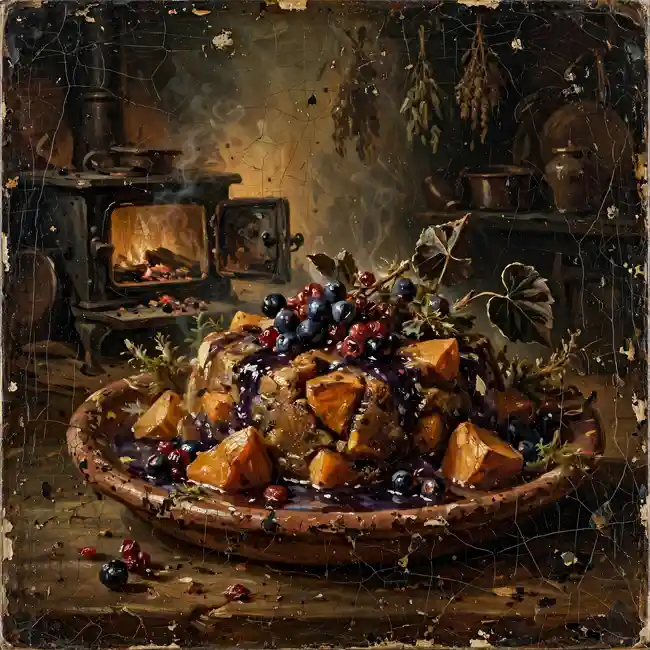
🍠 Recipe: Sweet Kūmara & Native Berry Hearth Pudding
📖 About this Aristocratic Secret
Picture an important gathering after a successful harvest.
The best kūmara has been selected. The roots are carefully prepared, while gathered berries are kept aside for a special occasion.
There is no need for extravagant decoration.
The richness comes from the ingredients themselves.
This modern historical reconstruction imagines a sweet kūmara preparation that could have suited a significant communal gathering in ancestral Aotearoa.
The word “pudding” is modern. The idea of turning a naturally sweet cooked root into a special sweet course is our culinary interpretation.
That distinction matters.
There is no surviving evidence proving that early Māori cooks made this exact pudding, so we should treat it as a historically inspired recipe, not an archaeological discovery.
And honestly, that makes the cooking more exciting.
You are not simply following a recipe.
You are stepping into the kitchen of history and asking, “What might these ingredients have tasted like together?”
🧺 Ingredients & The Aristocratic Touch
🌿 The Royal Pantry — Reimagined as an Ancestral Pantry
For this recipe, the “royal pantry” is better understood as a prestige ancestral pantry: carefully selected ingredients prepared for a meaningful occasion.
Kūmara is the star.
Introduced to Aotearoa by Polynesian settlers, kūmara became one of the most important cultivated foods in Māori food culture. Its natural sweetness makes it particularly interesting for a dessert-inspired preparation.
Native berries add acidity, color, and a little wild character.
Because the availability of particular berries varied by location and season, this recipe gives you flexibility rather than claiming one universal ancient formula.
🔄 Modern Substitutes
To make the recipe practical for today's kitchen:
• Kūmara: Use orange, gold, or white-fleshed sweet potato if authentic New Zealand kūmara is unavailable.
• Native New Zealand berries: Use commercially available māori-inspired or New Zealand berry products where appropriate, or substitute with blackberries, blueberries, raspberries, or boysenberries.
• Traditional earth-oven cooking: A conventional oven can reproduce the slow, gentle cooking effect.
• Natural sweetening: The original historical context did not depend on modern refined sugar, so the recipe keeps added sweetness low.
• Modern coconut cream: This can be used as a contemporary finishing element, but it should not be described as part of a proven 1,000-year-old New Zealand recipe.
• Mānuka honey: If used today, treat it as a modern addition rather than an ancient ingredient, since European honeybees were introduced to New Zealand much later.
⚖️ The Measurements
• Kūmara or sweet potato — 600 grams
• Fresh or frozen berries — 150 grams
• Water — 60 milliliters
• Coconut cream — 80 milliliters, optional modern finishing ingredient
• Fine salt — 1 small pinch
• Ground cinnamon — ¼ teaspoon, optional modern addition
• Natural honey — 1 to 2 teaspoons, optional modern sweetener
• Fresh berries — 50 grams for serving
• Toasted kūmara slices — a small handful for garnish, optional
Historical-minded ratio:
• 4 parts cooked kūmara
• 1 part berries
• About ½ part liquid
• Sweetener kept minimal
The idea is simple: let the kūmara provide most of the sweetness.
🔥 The Chef’s Ritual
1. Prepare the Kūmara
Wash the kūmara thoroughly.
For the most rustic texture, leave the skin on while cooking.
Traditionally inspired cooking favors patience, so avoid rushing this stage.
Roast the kūmara at approximately 375 degrees Fahrenheit / 190 degrees Celsius until completely tender.
Depending on size, this may take around 45–70 minutes.
You should be able to slide a knife through the center without resistance.
2. Let the Kūmara Rest
Remove the cooked kūmara from the oven and allow it to rest until comfortable enough to handle.
This small pause matters.
Very hot kūmara can release a surprising amount of moisture when mashed.
Allowing it to cool slightly helps you create a thicker, more concentrated mixture.
3. Create the Kūmara Base
Scoop the flesh into a bowl.
Mash it gently.
Do not turn it into an ultra-smooth purée unless you prefer a modern restaurant texture.
A little natural texture makes the dish feel more connected to its rustic origins.
Add the pinch of salt.
The salt may seem unusual in a sweet dish, but it helps sharpen the natural sweetness.
4. Prepare the Berries
Place the berries in a small saucepan with approximately 60 milliliters of water.
Warm gently for several minutes.
You want the berries to soften and release their juices without turning them into a completely smooth jam.
If using very tart berries, add a small amount of honey after removing the pan from the heat.
5. Bring the Two Worlds Together
Fold approximately two-thirds of the berry mixture into the mashed kūmara.
Keep the remaining berries for the surface.
Now taste.
If the kūmara is naturally sweet, you may not need any additional sweetener.
That is actually the point.
The dish should taste like roasted root vegetables transformed into something unexpectedly elegant.
6. Shape the Pudding
Spoon the mixture into small ceramic dishes.
Press gently with the back of a spoon.
For a more traditional-looking presentation, keep the surface slightly uneven rather than perfectly smooth.
This is supposed to feel handmade.
7. Finish with Gentle Heat
Return the filled dishes to a 338 degrees Fahrenheit ( 170 degrees Celsius ) oven for approximately 12–15 minutes.
The goal is not to bake the mixture into a cake.
You simply want the pudding warmed through and lightly set.
8. Add the Berry Crown
Spoon the remaining berries over the top.
If desired, add a small spoonful of coconut cream.
Remember that coconut cream is a modern interpretation here, not a claim about an ancient Aotearoa ingredient.
For a cleaner historical-inspired presentation, simply finish with berries.
9. Serve Warm
Serve the pudding warm.
The ideal texture sits somewhere between a rustic mash, a soft baked pudding, and a fruit compote.
It should be comforting rather than overly sweet.
🗝️ Secrets of the Palace Kitchen — Tips & Mistakes
Even though there was no historical palace kitchen behind this particular recipe, we can borrow several useful principles from traditional cooking: respect the ingredient, control the heat, and avoid unnecessary complexity.
🔥 Secret 1: Roast Before You Mash
Boiling kūmara can introduce extra water.
Roasting concentrates its natural sweetness and produces a deeper flavor.
If you want the richest result, roast the kūmara whole.
🌱 Secret 2: Do Not Over-Sweeten
This is probably the biggest modern mistake.
If you add lots of sugar or honey, you lose the character of the kūmara.
Start with no sweetener.
Taste first.
Only add a small amount if necessary.
🍇 Secret 3: Keep the Berries Slightly Tart
The berries are there to balance the sweetness of the root.
A little acidity makes the entire dessert taste more sophisticated.
If your berries are already sweet, avoid adding extra honey.
🥄 Secret 4: Do Not Overwork the Kūmara
Whipping the mixture aggressively can create a texture that feels more like commercial sweet-potato purée.
A gentle mash is better.
Leave some tiny pieces.
🧂 Secret 5: Never Ignore the Pinch of Salt
A tiny amount of salt can make naturally sweet ingredients taste fuller.
You should not taste salt directly.
It should simply make the kūmara and berries seem more expressive.
🔥 Secret 6: Gentle Heat Beats High Heat
After the kūmara is cooked, the pudding does not need aggressive baking.
Too much heat can dry the surface while leaving the inside heavy.
A short, gentle finishing bake is enough.
❌ Common Mistake: Treating the Recipe as an Archaeological Fact
This is especially important.
There is no surviving evidence establishing this exact pudding as a 1,000-year-old Māori recipe.
Calling it an authentic “royal recipe” would create a misleading historical claim.
Instead, think of it as a historically informed culinary reconstruction inspired by ingredients and foodways associated with ancestral Aotearoa.
❌ Common Mistake: Adding Ingredients That Do Not Belong to the Historical Setting
Modern ingredients can be delicious, but they should be labeled honestly.
Refined sugar, commercial vanilla, cinnamon, coconut cream, and European honey should be treated as modern adaptations rather than silently presented as ancient New Zealand ingredients.
That little bit of honesty makes the recipe stronger, not weaker.
🕌❓ Royal FAQ
Q1.Was this really a 1,000-year-old royal New Zealand dessert?
No. New Zealand did not have a European-style royal court 1,000 years ago, and there is no evidence confirming this exact dessert as an ancient royal recipe. It is a historical culinary reconstruction inspired by early Aotearoa ingredients and cooking traditions.
Q2.What is the most historically important ingredient?
Kūmara is the key ingredient. It became an important cultivated food in Māori communities and is particularly suitable for this reconstruction because of its natural sweetness and versatility.
Q3.Can I make this dessert without native New Zealand berries?
Absolutely. Use blackberries, blueberries, raspberries, or another tart berry as a modern substitute. The important culinary role is the contrast between sweet kūmara and bright fruit.
Q3.Can I make it completely without added sugar?
Yes.
In fact, that is the preferred version if your kūmara is naturally sweet.
Taste the mixture before adding honey or another sweetener.
👅 The Taste of History
The first flavor is warm and earthy.
Then comes the natural sweetness of roasted kūmara.
The berries arrive afterward, cutting through the richness with a gentle tartness.
There is something wonderfully uncomplicated about the combination.
It does not taste like a modern bakery dessert loaded with sugar, cream, and decoration.
Instead, it feels closer to what historical food reconstruction should be: an ingredient-led dish where the original food tells most of the story.
The kūmara provides body.
The berries provide brightness.
The roasting process provides depth.
And the absence of excessive sweetness allows the ingredients to remain recognizable.
That is where the real elegance lies.
For a modern dinner, serve it in small bowls with a spoonful of warm berries over the top.
If you want a more refined presentation, add a thin roasted kūmara crisp and a small amount of unsweetened coconut cream as a clearly labeled modern interpretation.
Either way, the dish works best when you resist the temptation to overdecorate it.
The history is already the decoration.
🌏 Final Thoughts: Bringing History to Your Table
❤️ The Encouragement
You do not need a castle, an ancient kitchen, or a collection of priceless historical cookware to experience the spirit of ancestral food traditions.
You need a few thoughtful ingredients, patience, and respect for the story behind them.
This Sweet Kūmara & Native Berry Hearth Pudding is intentionally approachable.
You can make it in an ordinary oven.
You can use supermarket sweet potatoes when authentic kūmara is unavailable.
You can replace unfamiliar berries with locally available fruit.
And you can adjust the texture depending on whether you prefer a rustic mash or a smoother modern pudding.
The important thing is understanding what you are cooking.
This is not about pretending to reproduce a lost royal manuscript.
It is about using food to imagine a different time while being honest about where historical evidence ends and culinary creativity begins.
That distinction is what turns a recipe into a meaningful food story.
✨ The Call to Action: The Golden Hook
If you love discovering forgotten flavors from the world's culinary past, keep exploring.
Every traditional food culture contains stories that deserve more than a passing mention.
Some recipes survive in written books.
Others survive through families, communities, seasonal practices, ingredients, and memories.
And sometimes, the best way to keep those stories alive is simply to cook.
Prepare this kūmara dessert.
Taste the contrast between earth and fruit.
Talk about where the ingredients came from.
And remember that food history is not only about famous rulers or luxurious banquets.
Sometimes the most powerful culinary stories begin with an ordinary root placed over a fire.
If you love flavors connected to history, join us in keeping the world's culinary heritage alive—one thoughtful recipe, one ingredient, and one story at a time.
🌿 Credit to the Keepers of the Culture: The Legacy
Any exploration of ancient Aotearoa food should begin with respect for Māori knowledge, communities, and cultural heritage.
This recipe should not be presented as an authentic traditional Māori recipe, nor should a modern reconstruction replace the knowledge held by Māori cultural practitioners, historians, archaeologists, growers, and food communities.
Kūmara is far more than an ingredient.
Its history is connected to Polynesian voyaging, settlement, cultivation, adaptation, and generations of knowledge in Aotearoa.
That story deserves careful treatment.
The same applies to native plants and traditional foods. Their cultural meaning can extend far beyond their culinary use.
For that reason, this recipe deliberately separates documented historical context from modern culinary interpretation.
The ingredients and cooking ideas provide inspiration.
The finished pudding is our contemporary creation.
That honesty matters.
When we explore food from another culture, the goal should never be to claim ownership of someone else's heritage. Instead, we can listen, learn, acknowledge the people who carried the knowledge forward, and approach the cuisine with curiosity and respect.
The greatest culinary treasures are not always the recipes hidden behind palace doors.
Sometimes they are the food traditions that survived because communities remembered them.
And perhaps that is the real lesson behind this ancient Aotearoa-inspired dessert:
History tastes better when we respect the people who kept it alive.
| 🇳🇿 👑🍨 < Back |