
🏠 Home > 🗺️ Recipes > 👑🍨 Grand Finales (Desserts) > 🇳🇿 New Zealand Grand Finales (Desserts) Recipes
🇳🇿 👑🍨 New Zealand Grand Finales (Desserts) Recipes
Published by Supakorn | Updated: September 2026
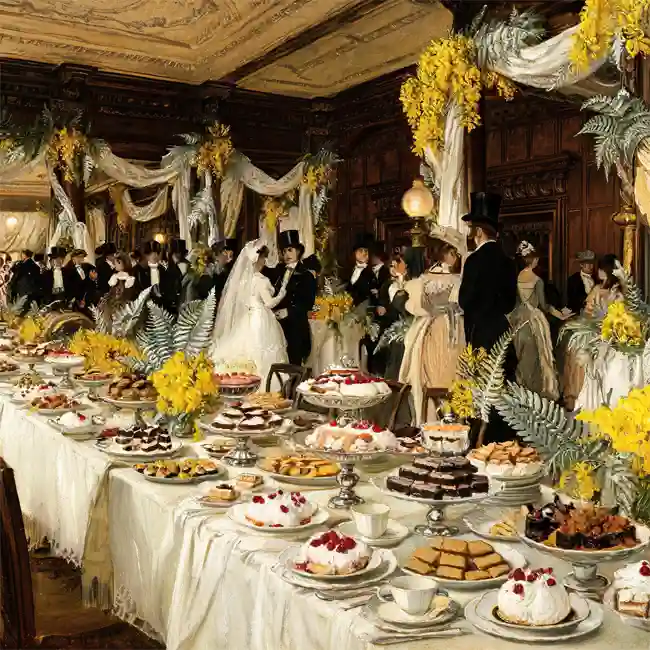
👑📜 The Storyteller's Intro: Whispers from the Manor Kitchens
Grab a seat by the fire, friend — because what I'm about to share isn't something you'll find printed on a café menu. This is the stuff whispered between old housekeepers, scribbled in the margins of estate ledgers, and passed down through generations of families who once ran New Zealand's grandest sheep stations, colonial manors, and coastal estates.
New Zealand's "aristocratic" food story isn't ancient in the way Europe's is — but don't let that fool you into thinking it's any less layered. There are really three distinct eras worth knowing about. First, there's the deep well of Māori culinary tradition, where rangatira (chiefly) households guarded their own techniques for centuries — slow-earth cooking, native botanicals, and feast preparation reserved for high-status gatherings. Then came the colonial gentry era, roughly the 1840s onward, when British and European settler families with money and land built countryside estates and tried to recreate (and quietly reinvent) the dessert traditions of "home," using whatever wild, unfamiliar abundance New Zealand's soil handed them. And finally, there's the early 20th-century high-society period — grand hotels, garden parties, and station homesteads where a "proper" pudding was basically a social credential.
What ties all three eras together is secrecy. Recipes weren't written down for outsiders. They lived in the heads of cooks, were altered slightly by every generation, and were treated almost like family heirlooms — something you inherited, not something you asked for. That's the vault we're cracking open today. We're not handing you the full recipes yet (that's coming), but we ARE going to walk you through the world these desserts came from — the flavors, the secrecy, the land, and the lifestyle behind them.
So if you've ever wondered why New Zealand's old-money dessert culture feels so mysterious compared to its Australian or British cousins, buckle in. This is the beginning of the trail.
🍽️ Secret & Signature Desserts: Names Whispered, Never Written
Every old estate had at least one dessert it was quietly famous for — the kind of dish that never left the house, never made it into a published cookbook, and was only ever served to guests who "belonged." Here are some of the names that keep surfacing in old household records and family stories:
✦ 🍮 The Steward's Custard — A dense, slow-baked egg custard said to be reserved for estate managers and visiting dignitaries; families guarded their exact ratio of cream to yolk like a trade secret.
✦ 🌿 Manor Fog Pudding — Named for the misty mornings on high-country stations, this steamed pudding leaned on native honey and a mystery "bush spice" cooks refused to name outside the family.
✦ 🍑 The Orchard Keeper's Tart — A layered stone-fruit tart tied to Hawke's Bay estates, traditionally baked only once a season and shared between a handful of neighboring households as a gesture of standing.
✦ 🐚 Harbor House Trifle — A citrus-and-cream trifle unique to coastal estates with early access to imported fruit; its recipe reportedly changed slightly with every generation of cook.
✦ 🔥 Ember Loaf — A dense fruit loaf slow-cooked over a wood range in isolated high-country homes, prized for how long it kept through winter without spoiling.
✦ 🍯 Rangatira's Honeycomb Set — Inspired by Māori use of native honey, this set custard-style dessert was later adapted into several colonial estate kitchens, though never with full credit given.
✦ 🌊 River Valley Curd Cups — Small citrus curd tarts tied to river-trade estates, known for a glossy, almost translucent finish that cooks treated as a mark of skill.
✦ 🕯️ The Homestead Secret — A catch-all name found in several old estate diaries for "the pudding we don't share," suggesting nearly every big house had one closely guarded specialty of its own.
None of these are throwaway names — each one is a small clue to a bigger recipe still waiting to be pieced together, which is exactly what the upcoming individual recipe reveals will dig into.
🗺️ The Aristocratic Culinary Tourism: Mapping Flavors to Historic Landscapes
Here's something most visitors don't realize: New Zealand's old estate desserts are basically edible maps. Every historic homestead region has its own dessert fingerprint, shaped entirely by what grew nearby and who was cooking it.
• 🏞️ Canterbury Plains estates — Vast wheat and dairy country meant heavy cream, butter-rich sponges, and slow-baked fruit puddings were the norm on the big sheep stations.
• 🌊 Otago and Southland manors — Closer to cooler coastal climates, families leaned into preserved fruits, honey, and dense, warming steamed puddings built to survive long winters.
• 🌿 Hawke's Bay orcharded estates — With stone fruit and apple orchards on the doorstep, dessert tables here were famous for layered fruit tarts and slow-cooked compotes passed between neighboring families almost like currency.
• 🏔️ Central Otago high country — Isolated stations meant improvisation; cooks stretched imported sugar and used native berries in ways that never made it into any published cookbook.
If you're the kind of traveler who likes to eat your way through history, this is a genuinely underrated trail. Old homestead towns across Canterbury, Otago, and Hawke's Bay still have heritage buildings, preserved kitchens, and local museums where you can practically feel the flour dust in the air. It's not flashy tourism — it's the quiet, "insider" kind.
🚣 Cradle of Aristocratic Delicacies — The River & Coastal Estates
The estates built along New Zealand's river valleys and coastlines had a serious advantage: access. Boats meant imported goods like sugar, spices, and citrus could reach these households faster than the isolated inland stations, which made their dessert tables noticeably more elaborate.
• 🍋 Coastal estate cooks were often the first to experiment with citrus-based curds and syrups, since imported lemons arrived by ship before they were grown reliably inland.
• 🐚 Some river-valley households built their reputations on delicate, wobbly custards — a dessert that required both fresh cream and a steady hand, which signaled a well-staffed kitchen.
• 🌾 Riverside orchards meant stewed and bottled fruit desserts were a status symbol; a pantry stocked floor-to-ceiling with preserved summer fruit said "we want for nothing" louder than almost anything else.
• 🛶 Trade routes along these waterways also meant recipe exchange between estates — cooks would trade techniques the way merchants traded goods, which is part of why so many "secret" recipes share hidden similarities today.
If you're planning a food-history trip, river and harbor towns with preserved 19th-century architecture are worth a detour. Many still hold old photographs, estate diaries, and preserved kitchen tools in local heritage collections — quiet little goldmines if you know to look.
⛰️ Kingdom of Wild Aromatics & Heritage — The Mountain & High Country Estates
Now, the high country stations tell a completely different story. Isolation bred invention. When your nearest neighbor is hours away and imported sugar is expensive, you learn to work with what the land actually gives you.
• 🌲 Native botanicals like horopito and kawakawa found their way into estate desserts as flavoring agents, often disguised under "spice" in old recipe notes so outsiders couldn't guess the source.
• 🍯 Honey, rather than refined sugar, became the sweetening backbone of many high-country puddings — partly practicality, partly pride in local self-sufficiency.
• 🔥 Slow, low-heat cooking over wood-fired ranges gave mountain-estate desserts a deep, almost smoky richness that coastal kitchens rarely replicated.
• 🌨️ Long winters meant desserts had to store well — dense fruit loaves, steamed puddings, and preserved-fruit bakes weren't just tradition, they were survival food dressed up in Sunday-best presentation.
These high-country traditions are some of the hardest to trace today, precisely because so little was written down. The families who lived this remote lifestyle guarded their techniques closely — not out of vanity, but because a good recipe that stretched scarce ingredients was genuinely valuable knowledge.
🏰❓ Aristocratic FAQ: Unlocking Estate Kitchen Mysteries
Q1: Did New Zealand actually have "royal" desserts, or is that just a figure of speech?
Great question — New Zealand never had its own royal court, so "royal" here really refers to the colonial gentry and high-society estate families who lived like local aristocracy. Their dessert culture borrowed heavily from British royal traditions but evolved into something distinctly local.
Q2: Why were so many of these recipes never written down?
Cooking skill was often a household's most valuable, non-transferable asset. Estate cooks — many of whom were live-in staff — passed knowledge down orally or through apprenticeship, partly to protect their own job security and partly because recipe books simply weren't common practice in many kitchens of the era.
Q3: Are any of these dessert traditions connected to Māori culinary practices?
Absolutely, and this is often overlooked. Long before colonial estates existed, Māori rangatira households had their own guarded culinary knowledge, especially around native ingredients and feast preparation. Some estate cooks later adapted native ingredients into their own desserts, creating a genuinely blended culinary lineage.
Q4: Can visitors actually taste any of this today?
In a handful of restored heritage homesteads and regional museums, yes — some run seasonal events recreating old-style afternoon teas. It's not widespread, which is exactly why it feels like uncovering something rather than just ordering off a menu.
🧠 Final Thoughts: The Timeless Allure of Aristocratic Gastronomy
What makes this whole trail so addictive is the mystery itself. Unlike European royal cuisine, which has been documented, published, and turned into museum exhibits for centuries, New Zealand's estate dessert culture still feels like it's half-buried. You have to go looking for it — in old ledgers, family stories, regional museums, and the quiet corners of heritage towns.
And that's exactly the appeal. There's something deeply satisfying about tracking down a dessert tradition that was never meant to travel beyond a single household. It's not flashy, it's not commercialized, and it hasn't been flattened into a tourist pamphlet. It's real, local, quietly guarded history — and we're only just scratching the surface here.
Stick around, because this is only the introduction. The individual recipe reveals — the actual step-by-step secrets behind these estate desserts — are coming next. Keep this page bookmarked, because once those drop, you'll want the full picture in front of you.
👑 Credit to the Keepers of the Culture (The Legacy)
None of this history belongs to any single writer, blog, or brand — it belongs to the families, estate cooks, household staff, and Māori communities whose knowledge and labor actually built these culinary traditions over generations. This piece exists to honor and share that legacy, not to claim ownership of it. Deep respect goes to the descendants and cultural historians who continue to preserve these stories, often quietly and without recognition, so that traditions like these aren't lost entirely to time.
👑🍨 Ancient Aotearoa Dessert: An Aristocratic-Inspired Taste of 1,000-Year-Old New Zealand
👉 Indulge in Signature New Zealander Grand Finales
| 🌐 👑🍨 < Back | 🇳🇿 👑🍝 < Previous | Next > 🍷👑 🇳🇿 |