
🏠 Home > 🗺️ Recipes > 👑🍷 Noble Elixirs & Teas (Drinks) > 🇳🇿 New Zealand Noble Elixirs & Teas (Drinks) Recipes
🇳🇿 👑🍷 New Zealand Noble Elixirs & Teas (Drinks) Recipes
Published by Supakorn | Updated: September 2026
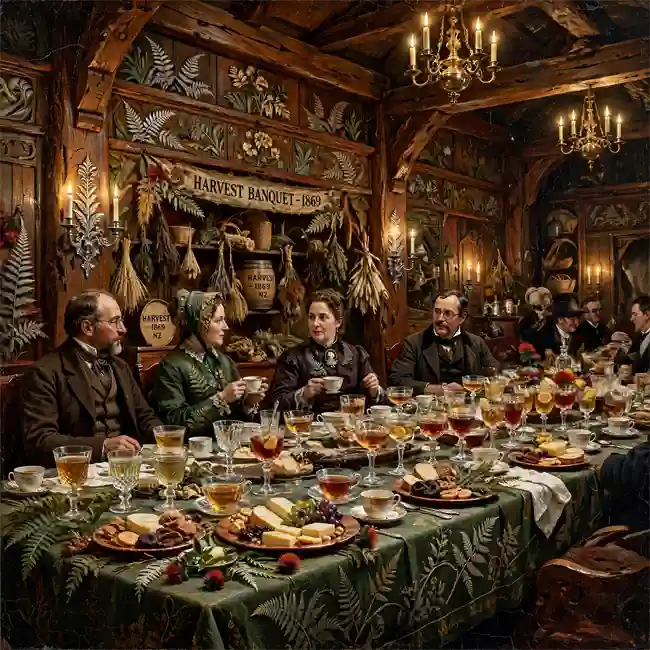
🛎️📜 The Storyteller’s Intro: The Hidden Tea Secrets of Aotearoa
If you imagine an old aristocratic dining room, you might picture silver trays, porcelain cups, embroidered cloth, and a carefully prepared drink served to important guests.
But New Zealand tells a different story.
Aotearoa does not have the same centuries-old royal court tradition found in Europe or Asia. There was no continuous New Zealand royal kitchen stretching back a thousand years. Instead, the deeper story is much more fascinating: the food and drink heritage of Aotearoa grew from Māori knowledge of the land, ocean, forests, gardens, seasonal resources, hospitality, and later cultural exchanges with European settlers.
That distinction matters.
When we talk about New Zealand Noble Elixirs & Teas, “noble” is best understood as a storytelling term for refined heritage, respected traditional knowledge, ceremonial hospitality, and ingredients that have carried cultural importance across generations.
The earliest chapters begin with the Polynesian ancestors of Māori, who arrived in Aotearoa around the 13th century. Their descendants developed sophisticated ways of adapting food plants to a much cooler environment than the tropical islands they had left behind.
Kūmara became especially important. Gardens, storage pits, fishing grounds, forests, wetlands, and coastal environments all became part of a sophisticated food system.
And then there was the forest.
Native plants offered aromatic leaves, seeds, berries, roots, and other materials that could become part of traditional foodways and medicinal knowledge. Among the best-known plants today is kawakawa, a native shrub whose leaves have long been associated with Māori traditional knowledge and are also used to make a distinctive herbal infusion.
This is where the idea of a “hidden elixir” becomes interesting.
The mystery is not necessarily that an aristocrat once locked a recipe inside a palace.
The mystery is that knowledge of the land itself could be more valuable than a recipe book.
A leaf picked at the right time, a plant recognized by an experienced gatherer, the knowledge of where it grew, the way it was prepared, and the circumstances in which it was served could all matter.
That is a very different kind of culinary secret.
And it is one worth exploring.
🍂 From Forest Knowledge to Refined Tea Culture
The modern idea of New Zealand tea culture was also shaped by later European settlement.
Tea became part of colonial domestic life, social gatherings, hospitality, and afternoon refreshment. Imported traditions gradually met local ingredients and the distinctive landscapes of Aotearoa.
Over time, New Zealand developed a culinary personality that was neither completely European nor purely inherited from Māori traditions.
It became layered.
You can see that layering in the way people think about native ingredients today.
A traditional plant such as kawakawa can appear in contemporary food culture alongside familiar tea rituals, modern cafés, heritage lodges, indigenous-inspired menus, and culinary tourism.
That creates a fascinating bridge between the ancient and the modern.
And that bridge is the real subject of this article.
🌿 The “Secret Menu” of New Zealand Heritage
Instead of presenting invented royal recipes, it is more useful to think of New Zealand’s hidden heritage drinks as a family of ingredients and traditions.
Among the names worth remembering are:
✦ Kawakawa infusion — one of the most recognizable traditional Māori herbal drinks.
✦ Mānuka-based infusions — associated with one of New Zealand’s best-known native plants and honey traditions.
✦ Horopito-infused preparations — valued for the plant’s distinctive peppery character.
✦ Native herb infusions — a broad modern category inspired by traditional botanical knowledge.
✦ Kūmara-centered culinary drinks and accompaniments — part of the wider story of this culturally important crop.
✦ Forest botanical teas — contemporary interpretations that draw inspiration from native flora.
✦ Seasonal berry and leaf infusions — modern expressions of New Zealand’s rich plant biodiversity.
These names should not automatically be treated as ancient “palace recipes.”
Their importance comes from cultural continuity, adaptation, regional identity, and the relationship between people and place.
That is a much stronger story.
🗺️ The Royal Culinary Tourism: Mapping Flavors to Historic Landscapes
New Zealand culinary tourism becomes far more interesting when you stop thinking of food as something that exists only on a plate.
Here, the landscape is part of the menu.
A cup of herbal infusion can lead you toward a forest.
A traditional food story can lead you toward an old settlement.
A discussion about kūmara can lead you toward archaeological gardens and storage pits.
A conversation about seafood can lead you toward the coastline.
This is why Aotearoa culinary heritage tourism has such strong storytelling potential.
🌊 The Bay of Islands: Where Ocean, History, and Food Meet
The northern Bay of Islands is one of the most important landscapes for understanding the early interaction between Māori communities and Europeans.
The region is closely connected with early Māori settlement, coastal food resources, trade, missionary history, and the arrival of European visitors.
For a culinary traveler, this makes the area much more than a scenic destination.
Imagine walking through a historic landscape where the ocean once supplied fish and shellfish, gardens supported communities, and plants from the surrounding environment formed part of traditional knowledge.
The flavor story begins before the drink is even poured.
🌿 Aotearoa’s Native Botanical Trail
One of the most appealing ideas for modern visitors is a New Zealand native tea trail.
Instead of visiting a collection of grand palaces, travelers can follow a trail through:
• Native forests
• Coastal communities
• Historic Māori landscapes
• Heritage gardens
• Regional food producers
• Cultural tourism experiences
• Indigenous food demonstrations
• Contemporary restaurants using native ingredients
The experience becomes less about luxury in the European sense and more about discovering the sophistication of local knowledge.
That is a form of nobility in its own right.
🚣 Cradle of Noble Delicacies — Coastal Aotearoa
New Zealand's relationship with the sea is impossible to separate from its food heritage.
Traditional Māori diets included a wide variety of seafood, including fish and shellfish. Coastal resources were not merely occasional delicacies; they were fundamental to community life.
This gives coastal New Zealand a distinctive culinary identity.
🐚 The Northern Coastal Table
Northern Aotearoa offers an especially rich combination of warm climate, coastal waters, forests, and productive gardens.
Traditional food knowledge developed around whatever the environment could provide.
Fish.
Shellfish.
Seaweed.
Birds.
Cultivated plants.
Forest foods.
And, of course, kūmara.
A visitor interested in historic New Zealand food culture can therefore experience the landscape as a kind of open-air archive.
The “menu” is written into the environment.
🌿 Kawakawa: The Green Thread Through the Story
If there is one name that deserves special attention in a New Zealand heritage tea article, it is kawakawa.
Kawakawa is a native shrub with heart-shaped leaves, and traditional knowledge surrounding the plant is deeply associated with Māori culture.
Its leaves can be prepared as an infusion, producing a distinctly aromatic drink.
The significance goes beyond flavor.
Kawakawa demonstrates how traditional Māori food knowledge does not always divide neatly into categories such as “food,” “tea,” “medicine,” or “ritual.”
Plants could occupy several roles within a knowledge system.
That is precisely why modern writers should be careful.
Rather than claiming that kawakawa was a secret aristocratic tea served in a fictional palace, it is far more respectful and accurate to recognize it as part of Māori botanical knowledge and contemporary Aotearoa food culture.
That makes the story stronger, not weaker.
🏝️ Coastal Hospitality and the Meaning of Sharing
Traditional food culture also tells us something about social life.
Food was connected with community.
Gathering, preparing, cooking, preserving, and eating were not isolated activities.
The same principle can influence how modern travelers experience New Zealand cuisine.
A heritage tea experience becomes more meaningful when it includes:
• The story of the plant.
• The landscape where it grows.
• The people who maintain the knowledge.
• The cultural meaning behind the ingredient.
• The seasonal nature of gathering.
• The relationship between food and hospitality.
That is far more memorable than simply saying, “Here is an unusual tea.”
⛰️ Kingdom of Wild Aromatics & Heritage — Mountains and Deep Forests
Move inland and the story changes.
The dramatic mountains and forests of New Zealand introduce another dimension to culinary heritage.
These landscapes encourage us to think about plants, weather, preservation, seasonal gathering, and the remarkable adaptability of communities living far from large urban centers.
🌲 The Forest as an Ancient Pantry
For Māori communities, forests provided much more than timber.
They supplied birds, plants, berries, roots, leaves, and other resources.
Traditional knowledge required people to understand where useful plants grew, when resources were available, and how they could be prepared.
This relationship between landscape and food is one of the most important themes in New Zealand’s culinary history.
It also explains why modern New Zealand chefs often become fascinated by native ingredients.
The forest offers flavors that cannot easily be copied elsewhere.
🌿 Horopito and the Peppery Forest Character
Another intriguing native plant is horopito, known for its strong peppery character.
Today, horopito may appear in modern culinary applications as a seasoning or botanical ingredient.
Its flavor immediately creates a sense of place.
It does not taste like an imported European herb.
It tastes like a product of Aotearoa.
That makes native botanicals especially valuable for culinary tourism because they provide something travelers cannot fully reproduce at home.
🏔️ Mountain Heritage and Slow Food Experiences
The mountains also encourage a different rhythm of eating.
Instead of hurried dining, imagine:
• A warm herbal infusion after a forest walk.
• Native botanical flavors introduced by a knowledgeable local host.
• Traditional food stories told beside a fire.
• Seasonal ingredients prepared simply.
• A meal connected to the surrounding landscape.
• A heritage lodge using local ingredients.
• A guided cultural experience explaining the meaning behind traditional foods.
That is the kind of experience modern travelers increasingly search for.
It is not luxury because everything is expensive.
It is luxury because the experience feels rare, personal, and connected to somewhere specific.
🏡 The Aristocratic Table Without a Palace
There is another fascinating part of the New Zealand story.
What if “aristocratic” does not have to mean castles?
In Aotearoa, refinement can be expressed through hospitality, presentation, knowledge, craftsmanship, and respect for ingredients.
A beautifully presented native botanical infusion can feel luxurious.
A carefully prepared heritage meal can feel ceremonial.
A story told by someone with deep knowledge of the local environment can feel more valuable than a printed menu.
This gives New Zealand an alternative definition of noble dining.
It is not necessarily about crowns.
It is about mana, knowledge, hospitality, place, and heritage.
🍵 Tea as a Meeting Point Between Cultures
European tea traditions became deeply embedded in New Zealand society, while Māori ingredients and food knowledge continued to shape the country's evolving culinary identity.
The result is a fascinating meeting point.
A contemporary New Zealand tea experience might therefore combine:
• Traditional tea culture.
• Native botanical ingredients.
• Māori-inspired culinary ideas.
• Modern presentation.
• Seasonal produce.
• Heritage storytelling.
• Contemporary hospitality.
That combination is one of the strongest reasons New Zealand deserves a place in any long-tail search for historic food and drink traditions.
🔍 The Most Intriguing “Hidden” Names to Remember
For readers exploring New Zealand's noble tea and heritage drink traditions, these names are worth keeping on the radar:
✦ 🌿 Kawakawa Infusion
The essential starting point for anyone exploring Māori herbal tea traditions.
Its importance comes from both its botanical identity and its place within Māori traditional knowledge.
✦ 🍃 Horopito Botanical Infusion
A more unusual direction, especially for travelers interested in strong native flavors.
Its naturally peppery character makes it memorable.
✦ 🍯 Mānuka-Inspired Elixirs
Mānuka has become internationally associated with New Zealand, particularly through honey.
Its broader botanical identity provides another pathway into the country's native ingredient story.
✦ 🍇 Native Berry-Inspired Drinks
Modern New Zealand cuisine increasingly explores native fruits and berries in creative ways.
These drinks can become a bridge between indigenous ingredients and contemporary culinary design.
✦ 🌱 Native Forest Herbal Blends
Rather than representing one ancient standardized recipe, this category reflects the modern revival of interest in native plants and traditional food knowledge.
The important point is provenance.
A good heritage drink should come with a story.
🧭 How to Experience New Zealand Noble Elixirs Like a Cultural Traveler
If you eventually travel through New Zealand looking for this culinary heritage, don't simply search for “traditional tea.”
Search for experiences.
Look for:
• Māori cultural food experiences.
• Native botanical tastings.
• Heritage gardens.
• Regional food producers.
• Indigenous culinary demonstrations.
• Historic settlements.
• Forest-based food experiences.
• Coastal food traditions.
• Museums documenting Māori food culture.
• Restaurants working respectfully with native ingredients.
And most importantly, ask who is telling the story.
A native ingredient is not automatically “Māori” simply because it grows in New Zealand.
Cultural context matters.
Provenance matters.
Permission and respectful use matter.
This is especially important when food traditions are connected to indigenous communities.
🤴🛎️ Royal FAQ: Unlocking Palace Kitchen Mysteries
Q1.Did New Zealand have a royal kitchen like European kingdoms?
Not in the historical sense implied by the phrase “royal kitchen.”
New Zealand's deeper food heritage is rooted in Māori communities, their relationship with the land and sea, and later layers of European settlement. The country did not develop a thousand-year-old royal palace culinary system comparable to European monarchies.
That is why New Zealand Noble Elixirs & Teas is more historically appropriate than claiming a literal New Zealand royal tea tradition.
Q2.Is kawakawa tea an ancient Māori tradition?
Kawakawa has a long-established place in Māori traditional knowledge, and kawakawa leaf infusion is documented as a traditional drink.
However, it is better to describe it as part of Māori botanical and food heritage rather than inventing a specific ancient “royal recipe.”
The distinction protects both historical accuracy and cultural respect.
Q3.What makes New Zealand native teas different?
The strongest difference is the connection to local ecology.
Native botanicals such as kawakawa and horopito carry flavors associated with the landscapes of Aotearoa.
They can therefore function as edible expressions of place.
For travelers, that makes them especially interesting.
Q4.Where should culinary travelers look for this heritage?
Northern New Zealand, the Bay of Islands, Māori cultural centers, regional food producers, heritage landscapes, native forests, and coastal communities can all provide different pieces of the story.
The best journey is not necessarily one destination.
It is a map of relationships between people, plants, food, history, and landscape.
🧠 Final Thoughts: The Timeless Allure of Aristocratic Gastronomy
The most fascinating thing about New Zealand's noble tea story is that it does not need an imaginary palace.
Its real treasure is already there.
It exists in the forests.
In the coastal waters.
In old gardens.
In traditional knowledge.
In native plants.
In community hospitality.
And in the stories passed from one generation to another.
Kawakawa is fascinating not because a fictional queen supposedly drank it from a golden cup, but because it represents a living connection between people and the land.
Kūmara is fascinating not because it belonged to an imaginary aristocratic banquet, but because its arrival and adaptation reveal extraordinary knowledge of agriculture, climate, storage, and seasonal life.
Hāngī is fascinating because it demonstrates how food preparation can bring people together.
And modern native botanical cuisine is fascinating because it shows how old knowledge can inspire new culinary experiences without pretending to be something it is not.
That is the real New Zealand culinary secret.
The luxury is authenticity.
The elegance is simplicity.
The heritage is the landscape.
And the story is still being written.
For travelers searching for New Zealand food culture, Māori culinary heritage, traditional kawakawa tea, native botanical drinks, historic food tourism, and aristocratic-style heritage dining, this is only the beginning.
The next chapter can go much deeper.
Future individual articles can explore the cultural background, historical context, ingredient identity, regional origins, traditional preparation concepts, and modern interpretations of each featured heritage drink one by one.
In other words, this page is the map.
The detailed culinary stories come next.
👑 Credit to the Keepers of the Culture (The Legacy)
The greatest credit belongs to the people who have preserved the knowledge behind Aotearoa's food heritage.
Māori communities, cultural practitioners, kaumātua, knowledge holders, growers, gatherers, chefs, researchers, historians, museums, and local communities all contribute to keeping New Zealand's culinary story alive.
This heritage should never be treated simply as a collection of exotic ingredients for outsiders to consume.
It is knowledge connected to people, place, whakapapa, environment, history, and identity.
That means respectful storytelling is essential.
When discussing Māori food traditions, it is important to distinguish documented history from modern interpretation, and traditional knowledge from contemporary commercial products.
It is also important to remember that not every traditional practice should automatically be copied, commercialized, or presented without cultural context.
The most responsible culinary tourism experience is one that gives credit to the people who maintain the knowledge.
Aotearoa's food heritage is powerful precisely because it remains connected to living culture.
So when we raise a cup of kawakawa infusion, explore native botanicals, taste a modern interpretation of traditional ingredients, or walk through a landscape shaped by generations of food knowledge, the experience should begin with respect.
Not with a crown.
Not with an invented palace.
But with the land, the people, and the stories that made the food possible.
That is the deeper legacy of New Zealand Noble Elixirs & Teas — a culinary heritage where the most valuable “secret recipe” may simply be the knowledge of how to live with the land.
👑🍷 New Zealand's Lost Aristocratic Court Drink: A Royal-Inspired Recipe Revealed
👉 Sip Secret New Zealander Noble Elixirs
| 🌐 👑🍷 < Back | 🇳🇿 👑🍨 < Previous | Next > 🍲👑 🇳🇿 |