
🏠 Home > 🗺️ Recipes > 🔥🧉 Primal Foraged Nectars (Raw Herbal Infusions) > 🐉 Nihewan Basin & Zhoukoudian: Primal Foraged Nectars (Raw Herbal Infusions) Recipes
🐉 🔥🧉 Nihewan Basin & Zhoukoudian: Primal Foraged Nectars (Raw Herbal Infusions) Recipes
Published by Supakorn | Updated: November 2026
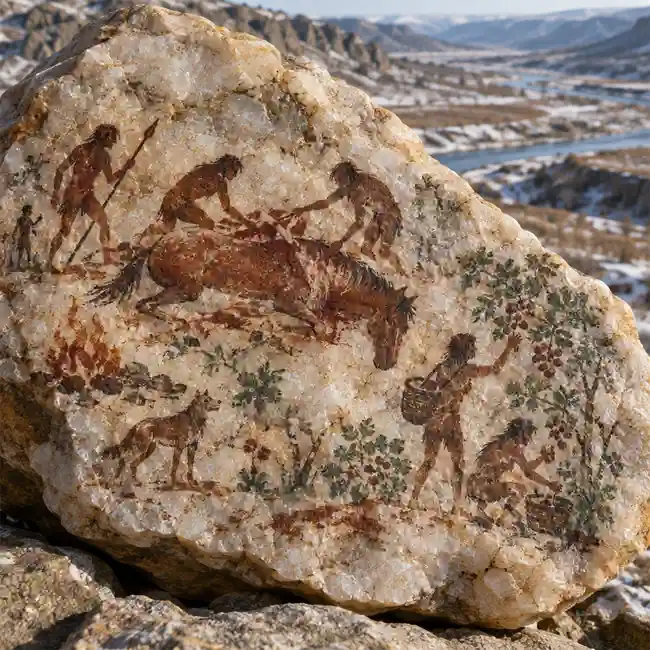
🔥📜 The Primordial Chronicles: 300,000 - 2,500,000 B.C.
Welcome to the absolute dawn of flavor, friend. We are talking about a time so ancient that the world you know did not exist yet.
✨ A World Before History: We are journeying back between 300,000 to 2,500,000 years ago, to the Early Pleistocene, the Lower Paleolithic. Northern China was not the China we know today. The Nihewan Basin in Hebei was a vast, shimmering lake district surrounded by open savanna grasslands, home to mammoths, giant rhinos, and saber-toothed cats. Not far away, the limestone hills of Zhoukoudian near Beijing were forming the perfect shelters that would one day become the most famous home for early humans on Earth.
✨ Meet Our Ancestors: This is the age of Homo erectus, and his even earlier cousins, the early hominids. Peking Man, discovered at Zhoukoudian, was not a modern human. He was shorter, stronger, with a prominent brow ridge and a brain about two-thirds the size of ours, but incredibly intelligent, resilient, and resourceful. These were the first humans to truly master living together as a group outside of Africa.
✨ The First Spark: Imagine this moment. For millions of years, darkness was absolute at night. Then, somewhere in the Nihewan Basin or deep inside Zhoukoudian Cave, someone struck stone against stone, or kept a natural wildfire burning. That first controlled hearth changed everything. Archaeologists found layers of ash, burnt bones, and reddened earth at Zhoukoudian Layer 4 and Layer 10, dating back over 500,000 years. That was not just fire for warmth. It was the first kitchen, the first social network, the first temple.
✨ The Acheulean Revolution: Their technology was stunningly elegant in its simplicity. The famous Acheulean handaxe, a teardrop-shaped stone tool chipped on both sides, was the Swiss Army knife of the Lower Paleolithic. Found by the thousands in the Nihewan Basin, these tools were used to butcher meat, crack open thick bones for marrow, dig up roots, and crush fragrant wild plants. Every meal was a direct conversation between stone, hand, and earth.
🦴 Nihewan Cradle & Zhoukoudian Hearths: Excavated Hominid Relics & Primordial Ancestral Menus
If we could read the ash and bone dust from these sites like a menu, what would it say? The fossil record is our cookbook, and it is absolutely mouth-watering in its raw, primal power.
✦ The Star of Our Story - Primal Foraged Nectars: While meat gets all the attention, the real daily hydration and medicine came from the landscape. These were not teas as we know them. These were Raw Herbal Infusions, made without boiling, using the cold-water steeping or hot-stone infusion method. Early humans would collect fresh leaves, roots, wild berries, and bark and crush them with smooth river cobbles.
✦ Signature Documented Menus from the Evidence:
◦ Mammoth Marrow Elixir: Long bones of the woolly rhinoceros and equine species found shattered at Nihewan sites like Xiaochangliang. The marrow was extracted and mixed with cold spring water and crushed wild ginger roots to create a nutrient-dense, fatty, warming broth. It was survival in a cup.
◦ Savanna Root Ash Bake: Fossilized starch grains suggest early humans dug up wild lily bulbs, cattail rhizomes, and wild yam. These were placed directly on hot ash from the hearth, a technique proven by charred parenchyma remains at Zhoukoudian.
◦ Stone-Cracked Grass Seed Mash: Wild millet and grass seeds were pounded on large anvil stones. The flour was mixed with water to form a raw paste, packed with fiber and slow energy.
◦ The Primal Foraged Nectars (Raw Herbal Infusions) - Our Hero: This is the most sophisticated menu item. Evidence of hackberry seeds, wild jujube, and aromatic herbs like wild mint and mugwort has been found in coprolites and hearth surroundings. The method was brilliant: heat stones in the fire until glowing, then drop them into a hollowed-out boulder or large animal skull filled with cold water and fresh herbs. The stone instantly heated the water without boiling it, releasing essential oils, vitamins, and delicate flavors. It was raw, it was alive, it was pure medicine.
◦ Bone-Broth Infused Herb Water: Another variation used the same hot-stone technique, but small bone fragments were left in the infusion to add collagen and minerals, creating a primitive mineral water.
🌿 Fires of the Savanna: Lower Paleolithic Hominid Heritage & Cave Traditions
How did they actually live? Forget the image of lonely cavemen. This was a highly cooperative, deeply connected culture centered entirely around the fire.
• The Circle of Life Around The Hearth: The fire in Zhoukoudian Cave was never allowed to die. Someone was always the keeper of the flame. Life happened around it. Days were spent foraging and hunting in small bands of 20-30 individuals, but evenings were for returning to the cave mouth, sharing the day's foraged herbs and hunted meat, telling stories with gestures and early language, and teaching children how to knap a handaxe. The fire meant safety from hyenas and tigers, warmth in the freezing Pleistocene winters, and a place to process food.
• Hunting, Gathering, and Pure Teamwork: Nihewan Basin was an open-air hunting ground. Hominids were not just scavengers. Cut marks on deer and horse bones show they were skilled hunters who drove animals into marshy lake edges. But gathering was the reliable foundation. Women, children, and elders were the master botanists who knew exactly which leaf could soothe a stomach, which root held water, and which berry could poison you. Their knowledge of herbal infusions was a matter of life and death.
• Where You Can Walk Today - Living History Travel Guide: If you feel the call of this ancient kitchen, you can still visit the source.
◦ Zhoukoudian Peking Man Site, Beijing, China: A UNESCO World Heritage Site. You can stand inside the actual cave where layers of ash 6 meters thick were found. The museum displays original skulls, Acheulean tools, and reconstructed hearths.
◦ Nihewan Basin, Yangyuan County, Hebei: Often called the Olduvai Gorge of East Asia. It is less touristy, more wild. You can visit the Nihewan Basin Paleolithic Archaeological Museum and see the vast ancient lake bed where handaxes are still eroding out of the cliffs.
◦ Other Sacred Corridors for Context: To understand the global story, travelers also visit Olduvai Gorge in Tanzania, the cradle of the first stone tools, and Atapuerca in Spain, where incredibly preserved hominid remains show similar early food practices.
🏔️ Echoes of the Dawn Epoch: Rift Valleys & Ancient Cave Corridors
For the true adventure traveler and archaeology lover, the story of Nihewan and Zhoukoudian is part of a much larger, epic migration map.
• The Great Ancient Highways: Early humans did not stay in one place. They followed water and animals. The Nihewan Basin was a crucial corridor connecting the high Mongolian plateau to the North China Plain. Think of it as a prehistoric superhighway of seasonal movement.
• Why Rift Valleys and Limestone Caves Matter: Early humans loved two landscapes. Open rift basins with lakes, like Nihewan, offered visibility to spot predators and abundant animals. Limestone cave systems, like Zhoukoudian, offered permanent, defensible homes. The combination of both in a relatively small area is what made Northern China such a perfect cradle for Homo erectus for over 1.7 million years.
• The Keywords of Adventure: When you search for this kind of travel, you are searching for deep time. This is about Paleolithic eco-tourism, Pleistocene landscape trekking, fossil hunting expeditions, and exploring the ancient hominid dispersal routes. It is not a beach holiday. It is standing in a wind-swept basin and knowing that the stone at your feet was last touched by a human ancestor half a million years before you were born.
• A Note on Foraging Tourism: Today, the hills around Zhoukoudian are still covered in wild jujube, wild apricot, and medicinal mugwort. Local guides can show you the very same species of plants that were likely used for those first primal nectars, creating a powerful, sensory link to the past that you can smell and taste.
🔥❓ Lower Paleolithic Secrets FAQ: Unraveling Hominid Kitchen Mysteries
Q1:What did Homo erectus actually eat every day for nutrition?
The diet was incredibly diverse and opportunistic, far from just meat. Studies of dental plaque and bone isotopes show about 60-70% of calories came from plants: tough roots, tubers, grass seeds, nuts, wild fruits, and leafy greens. The other 30-40% came from animal sources: meat, but more importantly and more reliably, bone marrow and brain tissue which are packed with fat and essential for brain growth. The raw herbal infusions were crucial for getting vitamins, hydration, and medicinal compounds that you cannot get from meat alone.
Q2:How did cooking with fire change the human brain?
This is the most important leap in human evolution, called the Cooking Hypothesis. Raw food takes enormous energy to digest. Once hominids at Zhoukoudian learned to roast roots and lightly heat meat and herbal infusions with hot stones, they unlocked far more calories and nutrients. The energy previously used for digestion could now be used to grow a larger, more complex brain. The brain size of Homo erectus increased by over 30% after the regular use of fire. Fire also detoxified many wild plants and killed parasites in meat.
Q3:How did they get the nutrition out of bones without metal pots?
With pure, brilliant stone technology. They used two methods. First, the hammerstone and anvil technique to smash long bones, exposing the rich marrow inside. Second, they used Acheulean handaxes as wedges to split skulls for brain tissue. For the nectars, they would grind bones into a fine powder using a mortar stone and then infuse that powder into water with hot stones, creating an early collagen and calcium-rich mineral drink. It was zero-waste nutrition at its most primal.
Q4:Were the wild plants and herbs they used for infusions safe?
This knowledge was earned over thousands of generations through trial, error, and incredible observation. They were master foragers who avoided toxic look-alikes by smell, taste, and season. They primarily used plants we still know today as safe and beneficial: wild mint for digestion, mugwort to repel insects and for its antimicrobial properties, wild ginger for warmth, and jujube fruits for vitamins. The raw, cold or warm-stone infusion method was actually safer than boiling, as it preserved heat-sensitive vitamins like Vitamin C and avoided destroying delicate beneficial compounds.
🧠 Final Thoughts: The Genesis of Human Flavor
Standing here, at the end of our journey, what does a simple cup of raw herbal infusion from 500,000 years ago really mean?
• It is the purest food philosophy ever created. There was no salt, no sugar, no preservatives, no processing. Every ingredient was foraged within walking distance, touched only by stone and fire. It was food with zero food miles, zero waste, and 100% connection to the land. Our modern search for clean eating, foraged foods, and herbal wellness is not new. It is a memory, a craving written deep in our DNA that is calling us home.
• It reminds us that flavor is a survival instinct. The slight bitterness of mugwort or the sharp tang of wild mint were not just tastes. They were signals of medicine, safety, and life. When we taste those primal flavors today, we are awakening a part of our brain that has been dormant since we left those caves.
• The legacy lives in you. The resilience that kept Peking Man alive through ice ages, through predator attacks, through endless winters, is the same resilience in your blood. Every time you choose a simple, natural, unprocessed food, you honor that lineage.
This is just the beginning, the opening of the cave door. In our next deep dives, we will move beyond the overview and finally crack open the specific, step-by-step methods for recreating each variation of the Primal Foraged Nectars from the Nihewan and Zhoukoudian hearths, using modern foraged ingredients.
🏛️ Credit to the Keepers of the Lower Paleolithic Heritage
We extend our deepest respect and gratitude to the tireless archaeologists, paleoanthropologists, and geologists from the Institute of Vertebrate Paleontology and Paleoanthropology of the Chinese Academy of Sciences, the Hebei Provincial Institute of Archaeology, and international research teams who have dedicated their lives to excavating the loess layers of the Nihewan Basin and the breccia of Zhoukoudian.
This historical hub and archaeological synthesis is crafted from Lower Paleolithic excavation archives, Pleistocene hearth stratigraphy, and Acheulean lithic analyses from Northern China. We honor the enduring spirit of Homo erectus and the brilliant scientists who piece together the very first chapter of our shared culinary story.
🔥🧉 Peking Man's Hearth Brew: Recreating the Wild Walnut Tea of Dragon Bone Hill
👉 Revive Nihewan Basin & Zhoukoudian: Primal Foraged Nectars
| 🌐 🔥🧉 < Back | 🐉 🍗 < Previous |