
🏠 Home > 🗺️ Recipes > 🥪 Appetizers > 🇵🇬 Papua New Guinea Appetizers > 🥪 1.Savory Baked Kau Kau Bites (Sweet Potato) , 2.PNG-Style Kokoda (Pacific Lime-Marinated Fish) , 3.Traditional Saka (Sago and Banana Parcels)
🥪 Taste the Islands: Authentic Home-Style Papua New Guinea Snacks
Published by Supakorn | Updated: February 2026
Hey there, fellow food lover! Have you ever found yourself craving a culinary adventure that takes you way off the beaten path? Today, we are heading straight to the heart of the Pacific. We’re diving into the vibrant, earthy, and incredibly soul-warming world of Papua New Guinea (PNG) home appetizers.
Now, if you aren’t familiar with PNG cuisine, you’re in for a massive treat. It’s all about the land and the sea. We’re talking fresh root vegetables, creamy coconut milk, and techniques that have been passed down through generations. While these dishes are often served as part of a larger feast, they make for incredible appetizers or "small bites" that will absolutely wow your friends at your next get-together.
In this guide, I’ve curated three of the most iconic, crowd-pleasing recipes that bring the flavors of Port Moresby and the Highlands right into your kitchen. We’ll be looking at:
🏆 • Recipe 1; Savory Baked Kau Kau Bites (Sweet Potato)
🏆 • Recipe 2; PNG-Style Kokoda (Pacific Lime-Marinated Fish)
🏆 • Recipe 3; Traditional Saka (Sago and Banana Parcels)
Ready to get some coconut milk on your hands? Let’s jump in!
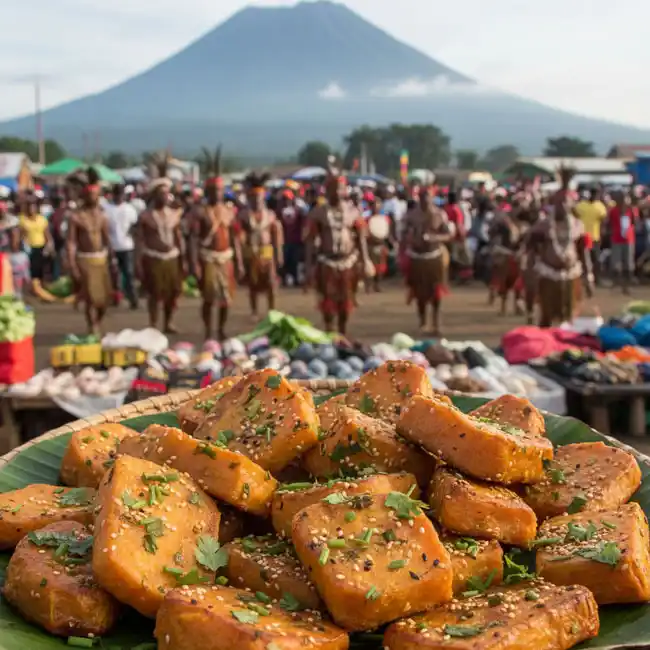
🌴 Recipe 1: Savory Baked Kau Kau Bites (Sweet Potato)
🥥 About this Recipe
In Papua New Guinea, "Kau Kau" (sweet potato) is more than just a vegetable; it’s a way of life. It’s the staple of staples. While traditional Kau Kau is often roasted in a ground oven (Mumu), these bites are a modernized home version. We’re taking that natural sweetness and pairing it with rich coconut cream and a hint of ginger. They are crispy on the outside, fluffy on the inside, and 100% addictive.
🥥 Ingredients & Measurements
• 3 large orange-fleshed sweet potatoes (Kau Kau)
• 200 ml thick coconut cream
• 1 tablespoon fresh ginger, finely grated
• 1 teaspoon sea salt
• 2 tablespoons coconut oil (melted)
• 1/2 teaspoon black pepper
• 1 spring onion, finely sliced (for garnish)
🥥 Step-by-Step Instructions
1.Prep the Spuds: Start by preheating your oven to 392 degrees Fahrenheit / 200 degrees Celsius. Peel your sweet potatoes and cut them into 1-inch cubes. Try to keep them uniform so they cook evenly.
2.The Coconut Soak: In a large bowl, whisk together the coconut cream, grated ginger, salt, and pepper.
3.Toss and Coat: Add the sweet potato cubes to the bowl. Use your hands (it’s better that way!) to ensure every single piece is drenched in that ginger-coconut goodness.
4.Arrange: Line a baking tray with parchment paper. Spread the cubes out in a single layer. Don't crowd them, or they'll steam instead of roast!
5.Bake: Pop them in the oven for about 25 to 30 minutes. Halfway through, give the tray a good shake or flip the cubes with a spatula.
6.The Finish: You’re looking for golden-brown edges and a soft center. Once done, remove from the oven and sprinkle with sliced spring onions while they are still hot.
🥥 Tips & Mistakes to Avoid
• Don't skip the ginger: The ginger cuts through the richness of the coconut and the sweetness of the potato. It’s the "secret" ingredient that makes this an appetizer rather than a dessert.
• Avoid watery coconut milk: Use the thick cream from the top of the can or a dedicated "coconut cream" pack. Thin milk will make the potatoes soggy.
• Uniform cutting: If some pieces are huge and others are tiny, the small ones will burn before the big ones are soft. Aim for bite-sized consistency.
🥥 FAQ
Q1.Can I use purple sweet potatoes?
Absolutely! They have a slightly different texture (a bit more starchy), but they look stunning on a platter.
Q2.Are these vegan?
Yes! This is a naturally vegan and gluten-free snack.
🥥 Summary
These Kau Kau bites are the ultimate comfort food. They bring the earthy essence of the PNG Highlands to your table with minimal effort. They are best served warm, perhaps with a little extra sea salt on top.

🐟 Recipe 2: PNG-Style Kokoda (Pacific Lime-Marinated Fish)
🍋 About this Recipe
If you love ceviche, you are going to fall head-over-heels for Kokoda (pronounced Ko-kon-da). This is a classic across the Pacific, but the Papua New Guinean home style is particularly heavy on the coconut cream, making it rich yet incredibly refreshing. It’s a "raw" fish salad where the acidity of citrus "cooks" the fish. It’s the perfect light appetizer for a hot summer day.
🍋 Ingredients & Measurements
• 500 grams fresh snapper or sea bass fillets (sushi-grade is best)
• 1 cup fresh lime juice (about 6 to 8 limes)
• 250 ml chilled thick coconut cream
• 1 medium red onion, very finely diced
• 1 red bell pepper, finely diced
• 1 cucumber, deseeded and diced small
• 1 fresh bird’s eye chili, minced (optional for heat)
• 1 teaspoon salt
• Small handful of fresh cilantro (coriander) for garnish
🍋 Step-by-Step Instructions
1.Prepare the Fish: Cut the fish into small, 1/2-inch cubes. Place them in a glass or ceramic bowl (avoid metal as it reacts with the acid).
2.The "Cook": Pour the lime juice over the fish. Ensure the fish is completely submerged. Cover and refrigerate for about 2 to 3 hours. The fish is "done" when it turns opaque/white all the way through.
3.Drain: Once the fish is "cooked," drain away most of the lime juice. Leave just a tablespoon or two for tang.
4.The Creamy Base: Pour the chilled coconut cream over the fish.
5.Veggie Mix: Add the diced onion, bell pepper, cucumber, and chili. Toss gently to combine.
6.Season: Add salt to taste. The coconut cream is sweet, so you need a good hit of salt to balance it.
7.Serve: Serve immediately in small glass bowls or even cleaned coconut shells for that island vibe.
🍋 Tips & Mistakes to Avoid
• Freshness is King: Since the fish isn't cooked with heat, you must use the freshest fish available. Talk to your fishmonger and tell them you're making a raw dish.
• Don't over-marinate: If you leave the fish in lime juice for 10 hours, it will become tough and rubbery. 2 to 4 hours is the sweet spot.
• Chill everything: Kokoda is best served ice-cold. Keep your coconut cream in the fridge until the very last second.
🍋 FAQ
Q1.Can I use lemon instead of lime?
You can, but lime has a more traditional "floral" acidity that defines the dish.
Q2.Is it spicy?
Only if you add the chili! Without the chili, it’s a very mild, creamy, and citrusy dish.
🍋 Summary
Kokoda is a showstopper. It looks sophisticated, tastes like a tropical vacation, and requires zero actual cooking. It’s a bright, acidic, and creamy masterpiece that represents the coastal regions of PNG perfectly.
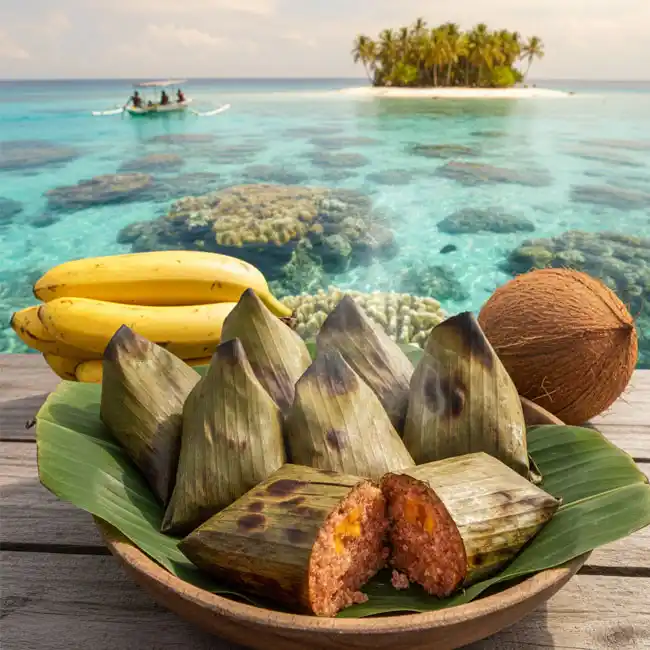
🍌 Recipe 3: Traditional Saka (Sago & Banana Parcels)
🍃 About this Recipe
Saka is a fascinating dish that showcases the unique ingredients of the PNG lowlands. It uses sago (starch extracted from tropical palm stems) and ripe bananas. Traditionally, these are wrapped in banana leaves and steamed or roasted. For our home version, we use aluminum foil or parchment paper if you can't find leaves. It’s a chewy, sweet-and-savory snack that is incredibly filling.
🍃 Ingredients & Measurements
• 2 cups sago flour (or tapioca starch as a substitute)
• 4 very ripe bananas (the spottier, the better)
• 1/2 cup freshly grated coconut (unsweetened)
• 1/2 cup warm water (add slowly)
• 1/2 teaspoon salt
• Banana leaves or parchment paper for wrapping
🍃 Step-by-Step Instructions
1.Mash the Base: In a large bowl, mash the ripe bananas until they are a smooth paste.
2.Combine: Stir in the grated coconut and salt.
3.The Sago Mix: Slowly add the sago flour to the banana mixture. It will start to get very thick and slightly "rubbery"—this is normal!
4.Hydrate: Add warm water one tablespoon at a time until you have a thick, spoonable dough that holds its shape.
5.Prepare Wrappers: If using banana leaves, soften them over a stovetop flame for a few seconds. If using parchment, cut them into 6-inch squares.
6.Wrap: Place two tablespoons of the mixture in the center of your wrapper. Fold the sides in and then the ends to create a little flat rectangular parcel.
7.Steam: Place the parcels in a steamer basket over boiling water. Cover and steam for about 20 to 25 minutes.
8.Cooling: Let them sit for 5 minutes before opening. The sago needs a moment to "set" into its characteristic chewy texture.
🍃 Tips & Mistakes to Avoid
• Don't over-water: If the dough is too runny, the Saka will be mushy. It should feel like a thick, heavy paste.
• Ripe bananas only: You need the natural sugars and soft texture of overripe bananas. Green or yellow-only bananas won't mash well or provide enough sweetness.
• Secure the parcels: Make sure the folds are on the bottom when you place them in the steamer so they don't pop open.
🍃 FAQ
Q1.What does it taste like?
It’s very unique—mildly sweet from the banana and very chewy (similar to a dense mochi) because of the sago.
Q2.Can I bake these?
Yes, you can bake the parcels at 356∘F / 180∘C for 20 minutes, but steaming keeps them much more moist and traditional.
🍃 Summary
Saka is the ultimate "survival" snack turned appetizer. It’s a wonderful way to experience the texture-focused side of Pacific island cooking. It’s simple, humble, and deeply satisfying.
✨ Final Thoughts
There you have it—a trio of authentic Papua New Guinea-inspired appetizers that you can easily whip up in a modern kitchen. From the earthy, roasted warmth of the Kau Kau Bites to the zingy, coastal freshness of Kokoda, and the traditional, chewy comfort of Saka, these dishes offer a true taste of the "Land of the Unexpected."
The beauty of PNG cooking lies in its simplicity. You don't need a million spices or complicated gadgets. You just need fresh ingredients and a little bit of patience.
I really encourage you to try making these one by one. Maybe start with the Kau Kau bites this weekend—they’re a guaranteed hit with kids and adults alike! Cooking is all about the journey and the stories we share over the plate. If you try these out, I’d love to hear how they turned out for you. Did you find a new favorite? Did the Kokoda transport you to a tropical beach?
Happy cooking, and enjoy your Pacific feast!
| 🇵🇬 🥪 < Back |