
🏠 Home > 🗺️ Recipes > 🏛️🌾 Primitive Grains & Flatbreads > 🏰 Proto-Nordic Tribes: Primitive Grains & Flatbreads Recipes > 🏛️🌾 1.Funnel Beaker Emmer & Barley Hearth Flatbread
🏛️🌾 Baking Like It's 3000 BCE: Stone Age Scandinavia's Forgotten Hearth Bread
Published by Supakorn | Updated: October 2026
🗡️🏔️ Ancient Civilization Origins: Neolithic Scandinavia (The Funnel Beaker Culture)
📜 The Storyteller's Intro: 5,000 Years of Ancestral Flavors from the Northern Hearth
Picture this. It's a cold morning about 5,000 years ago in what we now call southern Scandinavia, in today's Denmark and southern Sweden. Mist hangs over the fjords and wetlands. Smoke drifts from the roof of a long timber house. Inside, someone kneels beside the fire and grinds grain on a flat stone. They push a smaller stone back and forth, and the sound is slow and steady.
That's where today's recipe starts, my friend.
Long before the Vikings, the longships and the sagas, there were the Funnel Beaker people. Archaeologists named them after their pottery, which has a beaker shape that flares out at the top like a funnel. These were some of the first farmers in the Nordic world. They grew some of the earliest crops in northern Europe, herded cattle, sheep and pigs, and built huge stone tombs that still stand in the Danish and Swedish countryside.
They also made bread. It wasn't fluffy and it didn't come out of a modern oven. It was simple, hearty flatbread made from ancient grains and cooked on hot stones and clay griddles over open fire.
Today we're bringing that bread back to life in your kitchen.
🌍 The Global Value of Antique Heritage
This flatbread matters for more reasons than its age.
Bread is one of the oldest threads connecting humans everywhere. Grain was ground and baked into bread in the Fertile Crescent, along the Nile and across the plains of Europe. When farming slowly moved north into Scandinavia, people brought a new way of life with them along with the seeds. They settled down, planned for winter and shared food around a common fire.
This Nordic flatbread is a small edible record of that shift. Each bite carries:
• Agricultural history: emmer wheat and barley, two of the oldest farmed grains on Earth
• Wild foraging traditions: hazelnuts and wild seeds that hunter-gatherers had eaten for thousands of years before farming arrived
• Human ingenuity: grinding stones, clay griddles and fire control, which were real technology for their time
Today, food historians, museums and heritage cooks around the world are working to understand these early diets. Making a recipe like this at home lets you join that work in a small way. Ancient bread isn't only a museum topic. It's a world heritage you can taste.
⚡ The Culinary Resurrection
Here's the honest part. Nobody left a written recipe 5,000 years ago, because writing didn't exist in Scandinavia yet. What we do have is evidence:
• Charred cereal grains found at Neolithic settlement sites
• Saddle querns, the flat grinding stones used to turn grain into flour
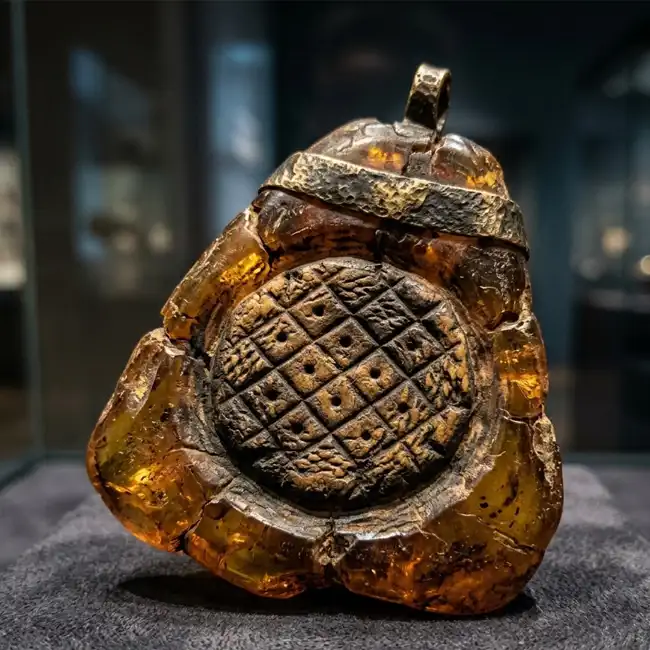
• Mysterious round clay discs from Funnel Beaker sites, which many researchers think were used as baking plates or griddles
• Hazelnut shells found in huge numbers at prehistoric sites across the Nordic region
Put those clues together and you get a pretty clear picture of the kind of bread these early farmers could have made. Our version is a careful reconstruction based on those ingredients and tools, adjusted so you can make it in a modern kitchen.
You're not just baking here. You're bringing a 5,000-year-old idea back to life.
🍞 Recipe: Funnel Beaker Emmer & Barley Hearth Flatbread
🏺 Legends Behind This Excavated Secret
Let's add a little storytelling around the fire. The facts come from archaeology, but the story fills the gaps.
Imagine the clay discs that archaeologists keep pulling out of the Danish soil. They're round, flat and sometimes marked with patterns. For years people argued about them. Were they lids? Ritual objects? Some researchers suggested something much simpler: bread griddles.
Now picture a family in late autumn. The harvest is in. The barley is dry and the emmer is stored in pits and pots. The hazelnuts have been gathered from the forest edge and roasted by the fire. Someone grinds a handful of grain, mixes it with water, crushed nuts and a pinch of precious salt, then presses the dough flat by hand.
The dough goes onto the hot clay disc. It hisses, bubbles and turns golden. A nutty, toasty smell fills the longhouse.
That bread probably wasn't just food. It may have been shared at gatherings, carried on long trips and possibly left as offerings at the great stone tombs. We can't know every detail, but we know they fed their families with grain, fire and patience, and that's the heart of this recipe.
🧺 Ingredients & The Noble Pantry
🌰 The Ancestral Staples
Before we list anything, let's meet the main ingredients. Each one has a long history.
• Emmer wheat: one of the first wheats humans ever farmed, with a deep, nutty and slightly sweet flavor. It was a staple of early Nordic farmers.
• Naked barley: tough and cold-hardy, which made it perfect for the northern climate. It gives the bread an earthy, slightly grassy taste.
• Hazelnuts: the superfood of prehistoric Scandinavia. People were roasting and eating them long before farming arrived.
• Flaxseed: farmed in Neolithic Europe for both fiber and food. It adds richness and a nice crunch.
• Salt: valuable and sometimes traded over long distances, possibly from coastal sources.
• Animal fat or butter: studies of residues in Neolithic pottery show early Nordic farmers used dairy, so a little butter fits the story.
• Wild honey (optional): a rare, special treat from the wild. Use it lightly, like a festival luxury.
🛒 Modern Substitutes
Don't worry if you can't find every ancient grain. Here's how to make this work with what's in your local store.
• Emmer flour: look for it labeled as "emmer" or "farro flour." If you can't find it, use spelt flour, which is the closest match, or whole wheat flour.
• Einkorn flour: another great ancient-grain option that can stand in for emmer.
• Barley flour: available at health food stores. In a pinch, blitz pearl barley in a high-speed blender until it's fine.
• Hazelnuts: buy hazelnut meal or grind whole roasted hazelnuts. Almonds work too, though they're less authentic.
• Flaxseed: golden or brown both work. Grind them yourself or buy flax meal.
• Salt: coarse sea salt gives the most rustic feel.
• Fat: unsalted butter, ghee or lard. For a plant-based version, use cold-pressed rapeseed (canola) oil, which suits the Nordic theme.
• Cooking surface: a cast-iron skillet, a griddle, a baking steel or a pizza stone instead of an ancient clay disc.
⚖️ Ancient Proportions
These amounts make about 6 rustic flatbreads, each roughly the size of your palm.
◦ Emmer flour (or spelt): 1 cup (about 120 grams)
◦ Barley flour: 1/2 cup (about 60 grams)
◦ Ground roasted hazelnuts: 3 tablespoons (about 25 grams)
◦ Ground flaxseed: 1 tablespoon (about 8 grams)
◦ Coarse sea salt: 1/2 teaspoon
◦ Warm water: 1/2 cup plus 1 to 2 tablespoons (about 130 to 150 ml), added slowly
◦ Melted butter or animal fat: 1 tablespoon for the dough, plus extra for brushing
◦ Wild honey (optional): 1 teaspoon mixed into the water
◦ Whole flaxseeds or crushed hazelnuts for topping (optional): 1 tablespoon
Simple ratio to remember: 2 parts emmer to 1 part barley, with a small handful of nuts and seeds, and enough water to make a soft, non-sticky dough.
🔮 The Chef's Ancient Ritual
Slow down for this part. Your ancestors weren't in a hurry, so you don't need to be either.
✦ Step 1: Awaken the hazelnuts 🌰 Toast the hazelnuts in a dry pan over medium heat for 4 to 5 minutes, stirring often, until they smell rich and toasty. Rub off the loose skins with a clean towel, let them cool, then grind them into a coarse meal. Grinding by hand with a mortar and pestle makes it feel extra ancestral.
✦ Step 2: Gather the grains 🌾 In a large bowl, mix the emmer flour, barley flour, ground hazelnuts, ground flax and salt. Run your fingers through it. This is the same basic mix of grain, nut and seed that fed early Nordic farming families.
✦ Step 3: Call the water 💧 If you're using honey, stir it into the warm water until it dissolves. Pour about three-quarters of the water into the flour along with the melted butter. Mix with your hand or a wooden spoon. Add the rest of the water a little at a time until the dough comes together. It should be soft and slightly tacky but not sticky.
✦ Step 4: The kneading meditation 🙌 Knead on a lightly floured surface for 3 to 4 minutes. Barley has very little gluten, so the dough won't get stretchy like regular bread dough, and that's expected. You just want it smooth and even.
✦ Step 5: Let it rest 🕯️ Cover the dough with a cloth and let it rest for 20 to 30 minutes. The flour soaks up the water and the dough gets easier to shape. Ancient bakers probably let dough rest by the fire while they finished other chores.
✦ Step 6: Shape the sun discs ☀️ Divide the dough into 6 equal balls. Flatten each one between your palms, or roll it out to about 1/4 inch (6 mm) thick. Rough edges are good because they look authentic. If you like, press whole flaxseeds or crushed hazelnuts into the top.
✦ Step 7: Heat the sacred stone 🔥 Heat a cast-iron skillet or griddle over medium-high heat for about 5 minutes. Don't add oil. Ancient griddles were used dry, and the flatbread toasts directly on the hot surface.
✦ Step 8: Bake by fire 🍞 Cook each flatbread for 2 to 3 minutes per side until you see golden-brown spots and the bread puffs slightly in places. Press gently with a spatula so it cooks evenly.
✦ Step 9: The anointing 🧈 While each flatbread is still hot, brush it lightly with melted butter. Stack them under a clean cloth so they stay soft and warm.
✦ Step 10: Share the bread 🤝 Serve warm. In true Stone Age style, tear the bread by hand and share it.
Serving ideas inspired by ancient times:
◦ Fresh butter and a sprinkle of sea salt
◦ Soft cheese or thick yogurt
◦ Smoked fish or roasted meat
◦ Wild berry compote made from lingonberries, blueberries or raspberries
◦ Roasted root vegetables and herbs
🔥 Secrets of the Ancestral Hearth
These are the tips and common mistakes that decide whether your flatbread turns out great or just okay.
• Secret 1: Don't treat it like modern bread. Emmer and barley have less gluten than modern wheat, so the dough won't be stretchy or elastic. Don't over-knead it or add loads of extra flour trying to "fix" it. Rustic is the goal.
• Secret 2: Add water slowly. Ancient grains absorb water differently from modern flour. Dumping it all in at once is the fastest way to get sticky dough. Go slowly.
• Secret 3: Toast the hazelnuts. Raw hazelnuts taste flat. Toasting brings out the deep, buttery flavor that makes this bread special.
• Secret 4: Use a hot, dry pan. If the pan isn't hot enough, the bread dries out before it browns. Oil in the pan makes it fried instead of hearth-baked. Preheat well and keep the pan dry.
• Secret 5: Watch the thickness. Too thick and the middle stays raw and doughy. Too thin and it turns into a cracker. About 1/4 inch (6 mm) is right.
• Secret 6: Let the dough rest. Skipping the rest makes the dough crumbly and hard to shape. Twenty minutes makes a big difference.
• Secret 7: Wrap them while warm. Stacking the flatbreads under a cloth traps steam and keeps them soft. If you leave them out, they harden fast.
• Secret 8: Try a live fire. If you have a safe outdoor fire pit or grill, cook these on a hot cast-iron plate over embers. The smoky flavor is close to what the original bakers would have tasted.
• Secret 9: Store them properly. Keep leftovers wrapped at room temperature for up to 2 days, or freeze them for up to a month. Reheat briefly in a dry pan.
• Common mistake: going too sweet. This isn't dessert. Honey was a rare luxury, so a teaspoon is plenty. Let the grains and nuts stand out.
ᛘ❓ Ancient Civilization Origins FAQ
Q1: Did people in Scandinavia really eat bread 5,000 years ago?
Yes, very likely. Funnel Beaker farmers grew emmer wheat and barley, and archaeologists have found charred grains, grinding stones and clay discs that may have been baking plates. We don't have an exact surviving recipe, but simple flatbreads are a very reasonable reconstruction based on that evidence.
Q2: Is this the same as Viking bread?
No. The Viking Age started around 800 CE, roughly 3,800 years after the Funnel Beaker culture. This flatbread comes from a much older time, so think of it as the great-great-great (many more greats) grandparent of Viking bread.
Q3: Can I make this gluten-free?
Emmer, spelt and barley all contain gluten. For a gluten-free version inspired by the original, use a mix of buckwheat flour and oat flour labeled gluten-free, and add a little more ground flax to help bind the dough. It won't be historically exact, but it's still tasty and rustic.
Q4: Why is there no yeast?
Most early breads were unleavened, meaning flat and made without added yeast. Wild fermentation may have happened in some places, but simple flatbreads were the most practical everyday food for early farmers, so we keep it pure here.
🏛️ The Taste of Archaeology
Your first bite is warm and nutty with a deep toasted-grain flavor. The barley is earthy, the emmer is slightly sweet, and the hazelnuts and flax make it feel rich. The butter melts into the golden spots and a little sea salt brings everything together.
It's not fancy, and that's the point. It's honest food: grain from the field, nuts from the forest and fire from the hearth. When you eat it, you're tasting the kind of food that helped carry an early farming society through long northern winters.
Archaeology usually means dusty trowels and museum glass. This time you can eat it.
🍽️ Final Thoughts: Bringing Antiquity to Your Modern Table
You don't need a time machine to connect with the past. You need a bowl, some flour, a hot pan and about 45 minutes.
This 5,000-year-old Nordic flatbread is one of the easiest ancient recipes you can try at home. It works well for:
Weekend baking projects: fun, simple and a little bit magical
Family cooking with kids: a hands-on way to teach history that's much more fun than a textbook
History lovers and food nerds: a great conversation starter at any dinner
Healthy eaters: whole grains, fiber, healthy fats and no refined sugar
Make a batch this week. Serve it with butter and berries for breakfast, with smoked fish for lunch, or next to a hearty stew for dinner. Then tell your friends they're eating something based on a recipe that's older than the pyramids of Giza. That usually gets people's attention.
🌟 The Golden Hook (The Sacred Union)
Here's something we believe: lost ancient recipes shouldn't stay lost.
Every time someone bakes a forgotten bread, cooks an ancient stew or rebuilds a dish from archaeological clues, a small piece of human history comes back. You can help with that too.
Bake it and share it: take a photo of your flatbread and show the world your take on Stone Age Scandinavia
Tell the story: when you serve it, share where it comes from, because the story is part of the flavor
Join our circle of keepers: subscribe and follow along as we bring back more ancient food secrets from Mesopotamia, Egypt, the Indus Valley, ancient China, the Andes and beyond
Leave a comment: which lost civilization should we explore next? Your ideas shape our next recipe
Together we're building a global kitchen table where the oldest flavors on Earth get a second life. Pull up a chair and join us.
🙏 Credit to the Keepers of the Culture (The Legacy)
This recipe wouldn't exist without the many people who came before us.
The Funnel Beaker farmers of ancient Scandinavia: they cleared the forests, planted the first northern fields, ground grain by hand and fed their families through harsh winters. This bread starts with them.
The hunter-gatherers before them: they knew every hazelnut grove and wild seed in the northern landscape, and that foraging knowledge carried over into the farming age.
Archaeologists and archaeobotanists: they carefully dig, sift, study and identify charred grains, food residues and ancient tools so we can understand what people really ate.
Museums and heritage institutions across the Nordic countries: they protect these artifacts and share them with the world.
Today's traditional bakers in Scandinavia: their flatbreads, crispbreads and hearth breads keep the northern bread tradition going.
We offer this recipe with respect. It's a reconstruction, not a claim of exact historical truth, made with care and curiosity. If you're from the Nordic region or study its prehistory, we'd love to learn from you and keep improving how we honor this heritage.
Thank you for keeping the old flavors alive. 🌾🔥
| 🏰 🏛️🌾 < Back |