
🏠 Home > 🗺️ Recipes > 🏛️🌾 Primitive Grains & Flatbreads > 🏰 Proto-Nordic Tribes: Primitive Grains & Flatbreads Recipes
🏰 🏛️🌾 Proto-Nordic Tribes: Primitive Grains & Flatbreads Recipes
Published by Supakorn | Updated: October 2026
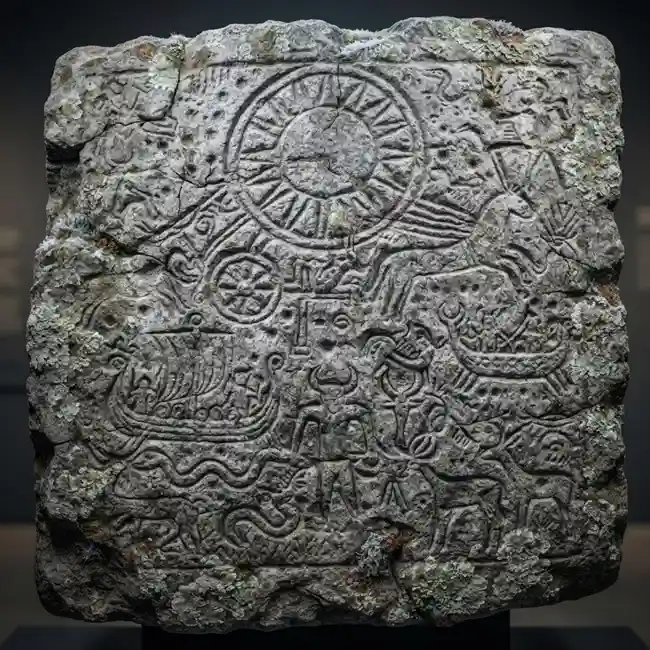
⚔️ 📜 The Storyteller's Intro: 5,000 Years of Ancestral Flavors
Okay, picture this with me for a second. It's roughly 3000 BC. You're standing on a windy stretch of coast somewhere between what we now call Denmark and southern Sweden. There's no castle, no longship, no horned helmet — honestly, forget almost everything Hollywood told you about the north. What's actually there is a low timber house, a smoky hearth, a flat stone worn smooth from grinding, and a woman pressing a disc of coarse barley dough onto a hot stone beside the fire.
That smell — toasted grain, woodsmoke, a bit of hazelnut oil — is the smell of northern European cuisine being born.
Here's the thing that gets me about Proto-Nordic food: it's one of the least glamorous ancient cuisines on paper and one of the most moving in reality. There are no palace kitchens here, no clay tablets listing royal banquets, no tomb paintings of feasting nobles. What we have instead are burnt crumbs, charred seeds, scorched pot-crusts, and — in the most extraordinary cases — the actual contents of a human stomach, preserved for thousands of years in a peat bog. These people never wrote a single recipe down. The bogs wrote it down for them.
So when we talk about "forgotten civilization recipes" from the far north, we're really talking about food archaeology detective work. And it's good.
Let's get the timeline straight, because the north moved to its own rhythm:
✨ Late Mesolithic — the Ertebølle period (roughly 5400–3950 BC). Still hunter-fisher-gatherers, and thriving at it. Shell middens the size of small hills, pointed-base pottery, seals, oysters, hazelnuts by the bucket. No farming yet — but they already had cooking pots, which is a bigger deal than it sounds.
✨ Early & Middle Neolithic — the Funnel Beaker culture, or TRB (roughly 3950–2800 BC). This is the big one. Farming arrives. Emmer wheat, einkorn, naked barley, flax. Cattle, sheep, goats, pigs. Megalithic tombs start dotting the landscape. Grain enters the northern diet permanently.
✨ Pitted Ware & Battle Axe/Corded Ware cultures (roughly 3200–2300 BC). A fascinating wobble — some coastal groups went back toward seals and fish while others doubled down on herding. The north was never one single food culture.
✨ Nordic Bronze Age (roughly 1700–500 BC). Peak prehistoric prosperity. Barley becomes king, millet shows up, oak-coffin burials preserve clothing and food residue, rock carvings cover Swedish cliffs. This is when flatbread baking really settles into daily life.
✨ Pre-Roman Iron Age (roughly 500 BC–AD 1). Rye and oats arrive and change everything. Bog bodies from this era hand us the most detailed ancient meal we have from anywhere in northern Europe.
Five thousand years, five broad chapters, one very stubborn love affair with ground grain on a hot stone. Let's dig.
📜 Iconic Excavated Menus: Dishes Recovered from Bog, Hearth & Pot
A quick, honest note before the list: none of these names are "original." Nobody knows what a Funnel Beaker farmer called her breakfast. These are the working names archaeologists, museum kitchens and experimental-archaeology sites use for dishes reconstructed from physically recovered evidence — charred remains, stomach contents, food crusts on potsherds, grain impressions baked into clay. Think of them as labels on real finds rather than inherited recipe titles.
✦ 🥣 The Bog Gruel — the most famous ancient meal in Scandinavia
◦ Reconstructed from the stomach and gut contents of Iron Age bog bodies recovered in Danish peat, most famously Tollund Man (Silkeborg) and Grauballe Man (near Aarhus).
◦ The analysis showed a thick cooked porridge built on barley, flax/linseed, and pale persicaria (knotweed) seeds — plus a scatter of wild field weeds like corn spurrey and fat hen.
◦ Re-examination of Tollund Man's gut using modern techniques added traces of fish protein and a slightly scorched, bottom-of-the-pot character — meaning someone genuinely let the porridge catch on the clay.
◦ It is, no exaggeration, the single best-documented prehistoric meal in all of northern Europe.
✦ 🍪 Hearthstone Flatbread (the ancestor of every Nordic crispbread)
◦ Charred flatbread and bread-lump fragments have turned up at Bronze Age and Iron Age settlement sites across Sweden and Denmark, often right in or beside the hearth.
◦ Coarse, unleavened, pressed thin, baked on a hot flat stone or a ceramic plate propped at the fire's edge.
◦ Usually hulled or naked barley, sometimes blended with emmer, occasionally stretched with ground hazelnut, acorn or wild seeds.
◦ This is the deep ancestor of knäckebröd, flatbrød, rieska and every thin northern bread that followed.
✦ 🌾 Naked Barley Hearth Cakes
◦ Naked barley (the hull-free kind) was the grain of Neolithic and Bronze Age Scandinavia — easier to process than hulled types and dead reliable in a short, cool growing season.
◦ Identified through thousands of charred grains and through grain impressions pressed accidentally into wet pottery clay, then fired permanently into the vessel.
✦ 🥄 Ertebølle Pot-Crust Stew
◦ Not a bread at all — a thick simmered mix, identified from the burnt food crusts fused to the inside of pointed-base Ertebølle pots.
◦ Residue analysis points to fish, marine resources, and plant matter cooked together into something between a stew and a porridge.
◦ Strongly suggests that before grain even arrived, the north already had a "boil everything slowly in a pot" tradition waiting for it.
✦ 🌰 Hazelnut & Wild Seed Meal
◦ Roasted hazelnut shells show up in staggering quantities at Mesolithic and Neolithic sites — one of the north's true super-foods.
◦ Ground into a coarse meal, it fattened up thin barley doughs and carried flavour through the lean months.
✦ 🌿 Fat Hen & Knotweed Porridge
◦ Wild "weed" seeds that we'd now pull out of a garden were harvested deliberately, especially in the Iron Age. Nutritious, free, and incredibly abundant.
✦ 🧈 Milk-Soaked Grain Mash
◦ Lipid residue studies on Neolithic northern pottery have found dairy fats, and ceramic sieves from the broader early-farming world point to milk processing.
◦ Soft grain softened in milk or a fresh soured dairy product is an extremely likely everyday dish — humble, filling, and quietly the ancestor of a thousand Nordic porridges.
✦ 🐟 Smoke-Dried Fish with Flatbread
◦ Not one excavated "dish," but an inescapable combination given the volume of fish bone, net and fish-trap evidence at waterlogged sites.
🗺️ Walking the Grain Road: Eating & Travelling Through Proto-Nordic Country
The best part about this particular ancient cuisine? You can actually go stand in it. The landscape barely changed, the museums are superb, and Scandinavia has an unusually strong experimental-archaeology scene where people cook this food over real fires for visitors.
✦ Denmark — the heartland of the evidence
• Silkeborg Museum, Jutland — home of Tollund Man. His face is 2,400 years old and you will not forget it. The bog-meal research lives here.
• Moesgaard Museum, Aarhus — Grauballe Man, plus genuinely world-class Neolithic and Bronze Age galleries.
• Sagnlandet Lejre (Land of Legends), Zealand — a working experimental-archaeology landscape where reconstructed prehistoric houses have smoke curling out of them and people are grinding grain on saddle querns.
• National Museum of Denmark, Copenhagen — Funnel Beaker pottery, the oak-coffin burials, flint and querns under one roof.
• Jelling, Ertebølle, Limfjord villages — small-town Denmark where the shell middens and bog sites sit quietly in the fields.
✦ Sweden — rock art and lake-edge farming
• Tanum rock carvings, Bohuslän (UNESCO) — thousands of Bronze Age images pecked into granite. The Vitlycke Museum on site puts them in context.
• Alvastra pile dwelling area, Östergötland — a famous Neolithic wetland structure beside Lake Vättern.
• Ekehagens Forntidsby, Västergötland — a prehistoric village where visitors grind, bake and cook over open hearths.
• Gotland — Pitted Ware coastal sites, limestone cliffs, and a seal-and-fish food story all its own.
✦ Norway — the thin northern edge of farming
• Jærmuseet / Landa prehistoric village, Rogaland — reconstructed Bronze and Iron Age houses on Norway's most farmable coastline.
• Historisk Museum, Oslo — the national prehistory collection.
• Lofoten and the northern coast — where grain always played second fiddle to fish, and the food culture shows it.
How these people actually lived day to day:
• Small clustered farmsteads of timber-and-daub longhouses, with people at one end and animals at the other for shared warmth.
• One central hearth doing everything — heat, light, roasting, boiling, baking, smoking, drying.
• Saddle querns worked on the knees. Hard labour; skeletal wear on ancient women's joints tells that story plainly.
• Food stored in pits, in pots, dried, smoked and salted from the sea.
• A food year ruled by the dark: harvest hard, preserve harder, stretch everything until spring.
🚣 Fjords, Lakes & Shell Middens: The Water Routes That Fed the North
If Mesopotamia had rivers, the Proto-Nordic world had coastlines. Water wasn't just a highway here — it was the pantry that made the grain diet survivable.
• The Limfjord, northern Jutland — the classic Ertebølle shell midden country. Mountains of oyster and cockle shell built up over centuries of eating.
• Tybrind Vig, Funen — a submerged Stone Age settlement off the Danish coast, where the seabed preserved wooden paddles, dugout canoe remains and textile fragments that dry land would have destroyed.
• Øresund and the Danish straits — the sheltered, fish-rich water between Denmark and Sweden, and the natural corridor along which farming knowledge travelled north.
• Lake Vättern and Lake Mälaren, Sweden — inland water systems with Neolithic and Bronze Age settlement clustered right along the shore.
• The Store Åmose wetlands, Zealand — a waterlogged basin that has given up extraordinary organic preservation.
Why the water matters to the food story:
• Fish, seal and shellfish supplied the protein and fat that thin northern grain harvests could never provide alone.
• Seawater and coastal plants offered salt and mineral seasoning in a region with no salt mines.
• Boats moved seed grain, livestock, flint and ideas up the coast far faster than feet ever could.
• Waterlogged, oxygen-free mud is the single best preservative in archaeology — most of what we know about Proto-Nordic daily life, we owe to mud.
🏜️ Heath, Peat & Open Bog: The North's Own "Desert"
There's no sand sea in Scandinavia, but there is a vast, strange, open wilderness that functioned a lot like one — the heathlands and raised bogs of Jutland and southern Sweden. Thin acidic soil, almost no shelter, wind that never stops. Hard country to farm, and sacred country to the people who lived beside it.
• Jutland's heathlands — heather, sand and silence, stretching for miles. Grazing land, not grain land.
• Danish raised bogs — including the peat cuttings where Tollund Man and Grauballe Man were found by workers digging fuel.
• Store Mosse, Sweden — a huge protected bog landscape, now a national park and birding destination.
• Why bogs matter so much: cold, acidic, oxygen-free peat halts decay. Skin, hair, stomach contents, wooden tools, textiles — all of it can survive for millennia.
• The uncomfortable context: many bog finds, including those bodies, appear to be ritual deposits. The meal in Tollund Man's stomach is a scientific gift that came from a death we'll never fully understand. Worth holding that respectfully.
• Food from the margins: bogs weren't empty of calories either — cloudberries, lingonberries, crowberries, bog myrtle and wild greens all grew there.
🗡️❓ Ancient Civilization FAQ: Unlocking the Mysteries of the Northern Hearth
Q1:How do we know what Proto-Nordic people ate if nothing was written down?
Four main sources, and they stack up surprisingly well. First, charred plant remains — seeds that fell in the fire and carbonised instead of rotting. Second, grain impressions in pottery, where a seed stuck to wet clay and burned out during firing, leaving a perfect negative mould archaeologists can cast and identify to species. Third, residue analysis of the burnt crusts inside cooking pots, which reveals fats, proteins and plant markers. Fourth, the showstopper: bog body gut contents, which give an actual meal rather than an average.
Q2:Was it real bread, or just porridge pressed flat?
Mostly the second, honestly — and that's not an insult. Without gluten-rich wheat varieties and without leavening, a dough of barley and seeds can't rise into a loaf. What it can do is cook beautifully thin and fast on a hot stone, which is exactly what the finds show. Dense, nutty, chewy at the centre and crisp at the edges. Flat, deliberate and extremely good with fat or fish.
Q3:Which grains actually grew that far north 5,000 years ago?
Emmer wheat and einkorn came in with the first farmers, but naked barley quickly became the northern favourite — it tolerates short seasons, cool summers and poor soil better than anything else available. Flax was grown for both fibre and oil-rich seed. Oats and rye arrived much later, in the Iron Age, and they're the reason later Nordic baking looks so different from Neolithic baking.
Q4.How did they season food with no spice trade?
Creatively. Sea salt and salty coastal plants, wild garlic and ramsons, juniper berries, bog myrtle, mustard-family seeds, horseradish-type roots, and above all smoke — which in a one-hearth house is less a seasoning choice than a fact of life. Add roasted hazelnut, animal fat and soured dairy, and you have a flavour palette that's narrow but genuinely deep.
🧠 Final Thoughts: The Timeless Allure of Antique Gastronomy
Here's what stays with me. Most ancient cuisines we romanticise were written down by someone rich. Proto-Nordic food wasn't written at all — it survived by accident, in burnt crumbs and cold mud, because ordinary people cooked ordinary meals over the same fire for five thousand years.
And the thread never actually broke. Grind barley, press it thin, bake it on a hot surface — that's Neolithic Denmark, and it's also the crispbread in a Stockholm supermarket this afternoon. Thick seeded porridge, smoked fish, foraged berries, soured dairy: half the New Nordic movement is just that list with better plating. These "lost ancient recipes" aren't lost. They went quiet for a while, that's all.
Full reconstructed recipes are coming next — the barley hearth flatbread, the seeded bog-style gruel, the hazelnut meal, the whole smoky set. Bring a cast-iron pan and a bit of patience. 🌾
🏛️ Credit to the Keepers of the Culture (The Legacy)
• To the Neolithic and Bronze Age farmers, fishers and foragers of Scandinavia — the real authors of every dish above.
• To the archaeobotanists and residue chemists who identify a 5,000-year-old meal from a seed smaller than a grain of sand.
• To the Danish, Swedish and Norwegian museum teams at Silkeborg, Moesgaard, the National Museum of Denmark, Vitlycke, Historisk Museum and beyond, who preserve and share this with the public.
• To the experimental archaeologists at Sagnlandet Lejre, Ekehagens Forntidsby, Landa and similar sites, who keep the fires actually burning.
• To the peat cutters, farmers and divers whose chance discoveries handed science its most important finds.
• To the bog bodies themselves — people, not exhibits. Their last meal became our best evidence. That deserves to be said out loud.
🏛️🌾 Baking Like It's 3000 BCE: Stone Age Scandinavia's Forgotten Hearth Bread
👉 Master Proto-Nordic Tribes' Primitive Grains & Flatbreads
| 🌐 🏛️🌾 < Back | Next > 🍖 🏰 |