
🏠 Home > 🗺️ Recipes > 🔥🍗 First Flame Hearth (Primitive Roasted Meats) > 🐉 Qinling Mountains & Lantian Caves: First Flame Hearth (Primitive Roasted Meats) Recipes
🐉 🔥🍗 Qinling Mountains & Lantian Caves: First Flame Hearth (Primitive Roasted Meats) Recipes
Published by Supakorn | Updated: November 2026
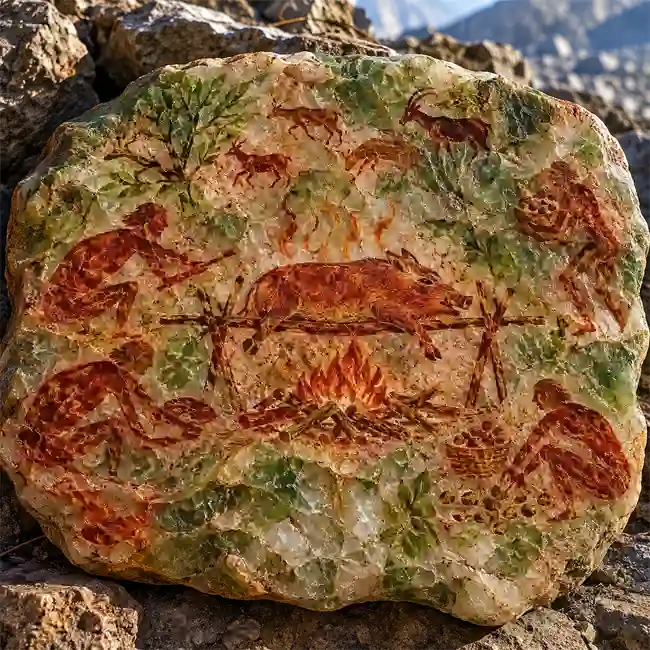
Picture this: a misty ridge in central China, crisp mountain air, and a small group of early humans crouched around a crackling pile of branches. Someone has just dragged back a deer leg. Nobody has spices, pots or plates. They do have stone flakes, sharp eyes and an appetite that would shape the human brain for millions of years.
Welcome to the Qinling Mountains and the Lantian loess caves, one of the most fascinating chapters in the story of the early human diet. Grab a seat by the fire. We're going way back.
🌫️📜 The Primordial Chronicles: 300,000 - 2,500,000 B.C.
Let's set the scene. The Lower Paleolithic is the longest chapter of human history. It runs from roughly 2.5 million years ago, when the first stone tools appear in Africa, to around 300,000 years ago. That's millions of years of trial, error, hunger and very slow change.
🌍 From the Savanna to the Dragon's Spine
• Out of Africa, earlier than we thought: Hominins evolved on the African savanna. For a long time, people assumed they stayed there until fairly late. Then came Shangchen in Lantian County, Shaanxi. In 2018, researchers reported stone tools there dated to about 2.1 million years ago. That makes it one of the oldest known traces of hominins outside Africa.
• The Qinling divide: The Qinling Mountains run east to west across central China. They form the natural line between China's colder, drier north and its warmer, wetter south. For early humans, this was a rich border zone where animals from both climates mixed.
• Lantian Man enters the story: In the 1960s, Chinese scientists found two key fossils near Lantian. One is a mandible from Chenjiawo. The other is a skull from Gongwangling, now thought to be about 1.6 million years old. Together they became famous as "Lantian Man," an early East Asian population of Homo erectus.
👁️ The First Stare Into the Flames
Imagine the first time an early human stood close to a wildfire. Lightning strikes dry grass, the hillside glows, and after the smoke clears there are roasted animals and baked roots in the ash. Scientists think fire use probably started like this. Hominins took advantage of natural fires before they learned to keep, carry and finally control their own.
Here's an honest note, friend to friend. Clear, undisputed hearths from the Lower Paleolithic are rare everywhere on Earth. At Lantian, possible traces of burning have been discussed, but they're still debated. The best-supported early fire evidence comes from places like Wonderwerk Cave in South Africa (about 1 million years ago) and Gesher Benot Ya'aqov in Israel (about 780,000 years ago). So the "First Flame Hearth" theme here is a careful reconstruction based on evidence from many sites, not a claim that we've found a Lantian barbecue pit.
🧱 Stones That Changed Dinner Forever
• Oldowan-style tools: The oldest Shangchen artifacts are simple cores and sharp flakes. They're basic, but they work very well for slicing hide and cutting meat.
• Acheulean handaxes: Much later, teardrop-shaped bifacial handaxes appear around the Qinling region, especially in the Luonan and Hanzhong basins. These Acheulean-style tools were the Swiss Army knives of the Stone Age. People used them to butcher animals, dig up roots, cut wood and crack things open.
• Why it matters for food: Better tools meant more meat taken off a carcass. They also meant more marrow cracked out of bones and more tubers dug from the ground. Technology and diet grew up together.
🦴 Loess Layers & Lost Feasts: Lantian's Excavated Relics and Primordial Ancestral Menus
Quick reality check first. Nobody in the Lower Paleolithic wrote down a recipe. Writing was still millions of years away. The "menus" below are reconstructions based on fossil animal bones from the Lantian sites, cut marks and smashed bones found across Lower Paleolithic sites, plant remains, and what we know about Homo erectus behavior. Think of it as a natural history museum display you can almost taste.
🐘 Stegodon Ember-Seared Rib Strips
◦ The animal: Stegodon was an extinct relative of elephants, and its remains appear in the Gongwangling animal bones.
◦ The reconstruction: Strips of meat cut with stone flakes, possibly scavenged from animals that died naturally, then seared over glowing coals.
◦ Why it's legendary: One large animal could feed a group for days. Hunting a giant was dangerous, so scavenging was a smart strategy.
🦌 Giant Deer Haunch on Open Coals
◦ The animal: Large deer, including giant deer types like Sinomegaceros, wandered the Pleistocene forests and grasslands of northern China.
◦ The reconstruction: A whole hind leg laid across embers and turned slowly. The outside chars while the inside stays juicy.
◦ Flavor notes (imagined): Smoky, lean and gamey, with crispy bits where the fat dripped into the fire.
🐎 Cracked-Bone Marrow Scoop
◦ The animal: Early wild horses such as Equus sanmeniensis lived on the open loess plains near Lantian.
◦ The reconstruction: Long bones smashed open with a hammerstone, and the fatty marrow scooped out with a stone flake or a stick.
◦ Why it's a superstar: Marrow is packed with calories and fat, which a big-brained species badly needs. Fire-warmed bones also crack more easily and the marrow becomes soft and spreadable.
🐗 Wild Boar Ash-Pit Roast
◦ The reconstruction: Chunks of wild pig buried under hot ash and dirt, then left to cook slowly.
◦ The magic: Burying meat in ash protects it from flare-ups, keeps the moisture in, and gives a tender, earthy result.
🥔 Qinling Ash-Baked Wild Tubers
◦ The reconstruction: Starchy roots and bulbs dug up with sharpened sticks or handaxes, then pushed into warm ashes.
◦ Why it matters: Many raw roots are tough and hard to digest. Heat breaks down the starches and turns them into easy energy.
🍒 Hackberry & Wild Fruit Forage Bowl
◦ The evidence link: Burnt hackberry seeds were found at Zhoukoudian, the famous Peking Man site to the northeast. They're a clear hint that fruit gathering was part of Homo erectus life in China.
◦ The reconstruction: A handful of hackberries, wild nuts and seasonal berries collected along the Qinling foothills.
🌿 Hot-Stone Wild Herb Infusion
◦ The reconstruction: A creative museum-style idea: aromatic mountain leaves soaked in water in a natural rock hollow, warmed by dropping in fire-heated stones. It contains no alcohol, just plants, water and stone.
◦ Honest footnote: Clear evidence of hot-stone boiling comes from much later periods, so treat this one as a "what if" rather than a proven Lantian tradition.
🌿 Fires of the Loess Highlands: Lantian Hominid Heritage & Cave Traditions
Now let's talk about everyday life, which may be the most fun part of exploring Stone Age food traditions.
🔥 Life Around the First Hearth
◦ Warmth and safety: Fire kept away the cold of the loess plateau, and it may have scared off predators like saber-toothed cats such as Megantereon, which were part of the Gongwangling fauna.
◦ A social magnet: Many anthropologists think the campfire created the first "dinner table." Food was shared, faces glowed, and evenings got longer and more social.
◦ The cooking hypothesis: Primatologist Richard Wrangham argues that cooking made food softer and more nourishing, so Homo erectus could spend less energy chewing and more on growing a big brain. Not everyone agrees on the timing, but it's one of the most talked-about ideas in early human diet research.
🏹 Hunting and Scavenging as a Team
◦ Strength in numbers: Early hominins had no bows or spears with stone tips yet. Cooperation was their real weapon, whether they were chasing animals or scaring predators off a fresh kill.
◦ Smart scavenging: Arriving first at a carcass and grabbing the marrow-rich bones was a big win.
◦ Gathering matters too: Plants, fruits, nuts, insects and eggs probably made up a large share of the diet. They're just much harder to find in the fossil record than bones are.
🗺️ Real Prehistoric Sites You Can Visit Today
◦ Lantian Ape-Man Site, Shaanxi, China: Located at Gongwangling, about an hour's drive from Xi'an. There's a site museum telling the story of Lantian Man, with the Qinling foothills as a beautiful backdrop.
◦ Zhoukoudian Peking Man Site, Beijing, China: A UNESCO World Heritage Site with caves, a museum and decades of Homo erectus research history. It's a must for anyone curious about ancient fire cooking debates.
◦ Olduvai Gorge, Tanzania: Often called the "Cradle of Mankind," with layers of Oldowan and Acheulean tools and a site museum near the gorge.
◦ Atapuerca, Spain: A UNESCO site with remarkable early human fossils from Europe, plus guided tours and a large Museum of Human Evolution in nearby Burgos.
🏛️ Echoes of the Dawn Epoch: Rift Valleys, Loess Gorges & Ancient Cave Corridors
If you're the kind of traveler who'd rather look at loess cliffs than shopping malls, this one's for you. The ancient migration routes of early humans across continents make an amazing travel theme.
🏞️ The Great Rift Valley: Where It All Began
◦ Why go: East Africa's rift valleys preserved layer after layer of volcanic ash, so they're among the best places on Earth to date early human remains.
◦ Traveler vibe: Wide skies, deep gorges and the strange feeling of walking where our ancestors first picked up stones.
🏔️ The Qinling Range: China's Natural Dragon Spine
◦ Mount Taibai: The highest peak in the Qinling, at roughly 3,767 meters, with forest zones changing from subtropical to alpine as you climb.
◦ Mount Huashan: Part of the wider Qinling system and famous for its dramatic cliff paths.
◦ Living wildlife: Today the Qinling is home to giant pandas, golden snub-nosed monkeys and takins. Fun fact: giant panda ancestors also appear among the Lantian fossil animals.
🌾 The Loess Plateau: A Million-Year Time Capsule
◦ What it is: Thick layers of wind-blown dust built up over the last 2.6 million years or so, with soils and dust layers alternating like a giant history book.
◦ Why scientists love it: At Shangchen, stone tools appear in many different layers. That means hominins came back to this area again and again over a very long time.
🧭 The Out-of-Africa Corridor
◦ Dmanisi, Georgia: About 1.8 million years old, with remarkably well-preserved early Homo skulls. It's a key stop on the route between Africa and Asia.
◦ The Levant: Sites in modern-day Israel, including Gesher Benot Ya'aqov, show the land bridge between continents and some of the best early fire evidence.
◦ East Asia: From Shangchen and Lantian to Zhoukoudian, the story shows early humans adapting to new climates, new animals and new plants.
🎒 Friendly Tips for Archaeology Travelers
◦ Base yourself in Xi'an: It's the easiest gateway to Lantian, and you can also visit the Terracotta Army while you're there.
◦ Go in spring or autumn: The weather is milder for site visits and mountain hikes.
◦ Respect the sites: Stay on marked paths, never take stones or bones, and follow local guidelines.
◦ Hire a local guide: Small site museums make much more sense when someone can explain the stories behind the displays.
🔥❓ Lower Paleolithic Secrets FAQ: Unraveling Hominid Kitchen Mysteries
Q1: What did Homo erectus actually eat?
Most likely a flexible mix of foods: meat and marrow from hunted or scavenged animals, plus tubers, fruits, nuts, seeds, insects and maybe eggs. The menu changed with location and season. Around Lantian, the local animals included deer, horses, pigs, Stegodon and more, so there was plenty of potential protein. Plants almost certainly filled in the gaps.
Q2: Did cooked food really help grow the human brain?
It's a strong and popular idea, but still debated. Cooking makes food easier to chew and digest, so the body gets more energy from the same meal. Homo erectus had a larger brain and smaller teeth and gut than earlier hominins, which fits the theory. The tricky part is that clear evidence of controlled fire is rare before about one million years ago. That's why some researchers think meat-eating and tool use came first, and regular cooking followed later.
Q3: How did early humans get marrow out of bones?
They placed a long bone on a stone "anvil" and struck it with a hammerstone until it split. Archaeologists recognize these impact marks and spiral fractures on fossil bones. Then they used stone flakes or sticks to scrape out the fatty marrow, one of the most calorie-dense foods available in the wild.
Q4: Were ancient wild plants safe to eat?
Not always. Many wild roots, seeds and leaves contain natural toxins or compounds that are hard to digest. Early hominins probably learned through generations of experience which plants were safe and which ones to avoid. Fire also helped, because cooking breaks down some harmful compounds. A friendly warning for today: never eat wild plants you can't identify with complete confidence. Leave that to experts.
🧠 Final Thoughts: The Genesis of Human Flavor
There's something primal about it, right? Before sauces, salt shakers and kitchen gadgets, there was just fire, stone and hunger. The Qinling Mountains and the Lantian loess sites remind us that our taste for smoky, roasted, fatty food may be one of our oldest instincts.
• Pure, raw nutrition: Wild meat, rich marrow, earthy tubers and wild fruit, with nothing artificial added.
• Teamwork in every bite: Every meal depended on the group sharing work, risk and food.
• A legacy we still taste: Every time you gather around a grill or campfire, you're joining a tradition that may go back more than a million years.
Stay tuned! In upcoming posts, we'll go deeper into each "cave menu," including how to recreate primitive roasted meats, ash-baked roots and hot-stone herbal infusions in a modern, safe and delicious way. Keep the fire burning. 🔥
🏛️ Credit to the Keepers of the Lower Paleolithic Heritage
This story wouldn't exist without the people who spend decades kneeling in dust, sifting loess and studying tiny scratches on ancient bones. We sincerely thank them:
• Institute of Vertebrate Paleontology and Paleoanthropology (IVPP), Chinese Academy of Sciences: For pioneering work on Lantian Man, Zhoukoudian and Chinese human evolution.
• Pioneering paleoanthropologists: Including Wu Rukang, who described the Lantian fossils, and Jia Lanpo, whose work shaped Chinese Paleolithic archaeology.
• The Shangchen research team: Led by Zhu Zhaoyu with Chinese and international colleagues, who pushed the timeline of humans outside Africa back to about 2.1 million years.
• Shaanxi provincial archaeologists and site museum staff: For protecting and sharing the Lantian and Qinling heritage with the public.
• Global researchers: Teams at Olduvai Gorge, Atapuerca, Dmanisi, Wonderwerk Cave and Gesher Benot Ya'aqov, whose work helps us understand early fire, tools and diet.
"This prehistoric food journey draws on Lower Paleolithic excavation reports, loess-plateau dating studies, fossil animal records, and stone-tool research from the Qinling Mountains, the Lantian sites and other early human sites worldwide. We honor the resilience of our earliest ancestors and the scientists, curators and field crews who keep uncovering the long, smoky story of how humans learned to eat."
🔥🍗 Reconstructing the 1.63-Million-Year-Old Flame: The Untamed Art of Lower Paleolithic Cooking
👉 Discover Qinling Mountains & Lantian Caves: First Flame Hearth
| 🌐 🔥🍗 < Back | Next > 🧉 🐉 |