
🏠 Home > 🗺️ Recipes > 🔥🧉 Primal Foraged Nectars (Raw Herbal Infusions) > 🐉 Qinling Mountains & Lantian Caves: Primal Foraged Nectars (Raw Herbal Infusions) Recipes
🐉 🔥🧉 Qinling Mountains & Lantian Caves: Primal Foraged Nectars (Raw Herbal Infusions) Recipes
Published by Supakorn | Updated: November 2026
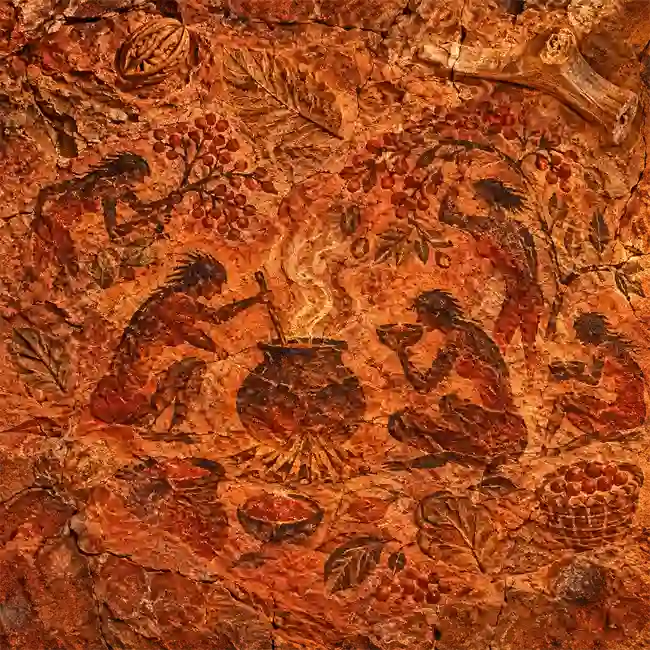
🐲📜 The Primordial Chronicles: 300,000–2,500,000 Years Ago
Imagine standing beneath the enormous limestone cliffs of the Qinling Mountains, surrounded by ancient forests, mist-covered valleys, and the distant sounds of prehistoric wildlife. There are no cultivated gardens, no ceramic cups, no kitchens, and certainly no neatly organized collections of cooking ingredients. Everything comes directly from the surrounding landscape.
Welcome to the fascinating world of the Lower Paleolithic, an immense chapter of human prehistory stretching approximately 2.5 million to 300,000 years ago. This period witnessed extraordinary changes in early human behavior, stone technology, food gathering, and the gradual development of increasingly sophisticated survival strategies.
Across ancient landscapes, early hominins explored forests, grasslands, riverbanks, and limestone cave systems. Their daily existence depended on recognizing edible plants, locating water, collecting seasonal fruits, scavenging animal remains, and understanding the resources available in their immediate environment.
The Qinling Mountains and the Lantian region of present-day Shaanxi, China, offer a particularly fascinating setting for exploring this prehistoric world.
The region is associated with important early human fossil discoveries, including the famous Lantian hominin remains. These discoveries provide valuable evidence for understanding early human evolution in East Asia.
🦴 The World of Homo erectus and Early Hominins
The Lower Paleolithic was not a single cultural tradition belonging to one human species. It was a long period involving several hominin populations with different anatomical characteristics and behavioral abilities.
Among the most important were:
✦ Homo erectus: An early human species associated with major developments in stone technology, expanded geographic distribution, and changing patterns of food acquisition.
✦ Early Asian Homo populations: Fossil discoveries from China provide important evidence for the diversity and evolutionary history of early humans across East Asia.
✦ Earlier hominins: Older African populations established important foundations for later human evolutionary developments.
The Lantian discoveries are especially significant because they help researchers investigate early human presence in China. The famous Lantian fossil record includes remains from different archaeological contexts and geological periods, making the region an important destination for studying human antiquity.
🔥 The First Relationship with Fire
Fire represents one of the most fascinating subjects in prehistoric food history.
Early humans would have encountered natural fire through lightning strikes, burning vegetation, and wildfires. Learning to approach, preserve, and eventually control fire represented a major behavioral development.
The archaeological evidence for early fire use is complex. Some sites preserve convincing traces of burning, while others remain debated. Researchers therefore distinguish between natural fire exposure, opportunistic use, and deliberate fire control.
As fire became increasingly important in later prehistoric communities, it transformed the possibilities of food preparation.
Heat could soften certain foods, change their texture, and make some previously difficult ingredients easier to consume.
But what about the plants growing around the Qinling Mountains?
Before cooking vessels existed, natural plant materials could be collected, chewed, crushed, or soaked in available water. These simple possibilities provide an interesting way to imagine the earliest relationships between humans and wild botanical resources.
🧬 Acheulean Technology and the Ancient Food Landscape
Another remarkable development during the Lower Paleolithic was the appearance and spread of Acheulean stone technology.
Acheulean traditions are particularly famous for their large cutting tools, including handaxes and cleavers.
These tools were useful for processing animal remains, cutting plant materials, breaking down tough organic substances, and performing other everyday tasks.
However, not every early human community used Acheulean technology. Different regions preserved different technological traditions, and the archaeological record of East Asia is particularly diverse.
The most important point is that stone tools expanded the ways early humans could interact with their environment.
Foraging was no longer simply a matter of picking whatever appeared edible. It increasingly involved observation, selection, processing, and the practical use of available tools.
The ancient landscape became a natural pantry filled with opportunities, challenges, and seasonal surprises.
🦴 Excavated Hominid Relics & Primordial Ancestral Menus
The prehistoric food story of the Qinling Mountains and Lantian region is best understood through archaeological evidence rather than imagined recipes presented as historical facts.
Fossils, stone artifacts, animal remains, geological deposits, and traces of ancient environments allow researchers to reconstruct aspects of early human life.
Although archaeologists have not recovered a documented Lower Paleolithic herbal drink recipe from Lantian, the region's natural environment offers a fascinating setting for exploring the possibilities of prehistoric plant gathering.
Our featured culinary theme is Primal Foraged Nectars (Raw Herbal Infusions).
It represents a creative reconstruction of how early humans might have interacted with wild plant materials and naturally available water.
🌿 Featured Ancestral Botanical Creations
The following names are interpretive menu concepts inspired by prehistoric foraging environments. They are not verified archaeological recipes or documented ancient beverage names.
• Qinling Wild Leaf Nectar: Inspired by the leafy vegetation of mountain forests, this concept celebrates the relationship between early hominins and naturally occurring edible plant resources.
• Lantian Forest Berry Essence: A prehistoric-inspired botanical concept based on the seasonal availability of wild fruits and berries in ancient woodland environments.
• Primitive Mountain Blossom Water: Inspired by flowering plants that would have provided seasonal food opportunities for early foragers and other animals.
• Ancient Woodland Root Infusion: A conceptual representation of the underground plant resources that prehistoric communities could encounter while searching for edible roots and tubers.
• Stone-Creek Botanical Nectar: Inspired by the relationship between freshwater environments and wild vegetation growing along ancient streams.
• Qinling Forest Fruit Extract: A creative interpretation of the natural flavors associated with wild fruit gathering in mountain ecosystems.
• Limestone Valley Leaf Essence: A botanical concept inspired by plants growing around rocky slopes, sheltered valleys, and limestone landscapes.
• Primordial Woodland Water: A simple representation of the importance of freshwater sources within early human survival environments.
These creations are designed to communicate the atmosphere of prehistoric foraging rather than claim that specific beverages were consumed by Homo erectus.
🦴 The Archaeological Pantry: What Could Early Humans Find?
The ancient landscape provided a broad selection of potential food resources.
Some of the most interesting categories include:
1. Wild Fruits
• Seasonal berries.
• Naturally occurring woodland fruits.
• Small edible fruits growing along forest edges.
• Fruit resources available near streams and open woodland.
Wild fruits offered natural sugars, water, and various plant nutrients. Their availability depended heavily on season, climate, and local vegetation.
2. Leaves and Young Shoots
• Tender leaves from suitable edible plants.
• Young shoots emerging during favorable growing seasons.
• Soft vegetation found in woodland clearings.
• Fresh plant materials growing near freshwater environments.
Not every green leaf was edible, of course. Correct plant identification would have been essential.
3. Roots and Underground Plant Resources
• Edible tubers.
• Suitable underground storage organs.
• Plant roots from known edible species.
• Seasonal underground food resources.
These ingredients are especially interesting because underground plant foods could remain available when some surface vegetation became scarce.
4. Seeds and Nuts
• Naturally occurring seeds.
• Hard-shelled nuts.
• Seasonal woodland plant resources.
• Small edible plant materials collected from the forest floor.
Processing these foods could require considerable effort, depending on their hardness and natural protective structures.
5. Freshwater and Natural Plant Contact
Water was fundamental to every aspect of early human survival.
Streams, springs, and rivers provided essential drinking water while supporting diverse plant and animal communities.
The relationship between water and plant gathering is central to our primal nectar theme.
🧉 Why Raw Herbal Infusions Make an Interesting Prehistoric Theme
The concept of a raw herbal infusion offers an imaginative window into early human relationships with nature.
Modern herbal infusions usually involve placing suitable plant materials in water to release their aroma, flavor, and soluble compounds.
However, there is no direct archaeological evidence proving that Lower Paleolithic hominins in the Qinling or Lantian region routinely prepared herbal infusions in this manner.
It is more accurate to describe this theme as an experimental interpretation of prehistoric botanical possibilities.
Possible activities to explore include:
• Collecting suitable wild leaves.
• Crushing edible plant materials using simple stones.
• Exploring the natural aromas of seasonal vegetation.
• Observing how plant materials interact with water.
• Learning how different environments influence botanical diversity.
Importantly, ancient plants should not automatically be considered safe because they are natural. Many wild species contain irritating or toxic substances, and their historical edibility cannot be assumed without reliable identification.
Our prehistoric nectar collection is therefore an educational and imaginative celebration of botanical diversity rather than a practical wild-plant consumption guide.
🌿 Fires of the Savanna: Lower Paleolithic Hominid Heritage & Cave Traditions
To understand ancient food culture, we must look beyond individual ingredients.
The Lower Paleolithic was fundamentally about survival within changing ecosystems.
Early humans needed to understand animal movements, recognize useful plants, locate dependable water sources, and respond to seasonal environmental changes.
The Qinling Mountains provided a particularly interesting ecological setting because the region connects different environmental zones.
Mountain slopes, woodland habitats, river valleys, and surrounding plains offered different opportunities for gathering food.
🏞️ Living Between Forests, Valleys, and Limestone Caves
Imagine an early hominin group moving through a forested valley.
Some individuals investigate the ground for fallen fruits and seeds. Others search for edible underground plant resources. Nearby, a freshwater stream attracts birds and other wildlife.
The surrounding landscape becomes a source of food, shelter, and information.
Caves and rock shelters could provide protection from weather and predators, although early humans did not necessarily occupy every cave permanently.
Their movements were influenced by environmental conditions, food availability, and access to suitable shelter.
🧱 The Importance of Stone Tools in Daily Food Gathering
Stone technology was essential to many aspects of prehistoric survival.
Early stone tools were not decorative objects. They were practical instruments that helped hominins interact with their surroundings.
Important activities included:
• Cutting plant materials.
• Processing animal remains.
• Breaking certain hard organic materials.
• Scraping and preparing useful natural resources.
• Shaping wooden implements and other materials.
• Extracting accessible food from difficult surfaces.
Different tool traditions developed across different regions.
In East Asia, archaeologists have identified diverse stone assemblages that help explain how early human populations adapted to local environments.
The famous Lantian archaeological record belongs to this broader story of early technological development.
🍃 Seasonal Food Gathering and Ancient Environmental Knowledge
Long before agriculture, food availability followed natural cycles.
Different seasons provided different resources.
Spring
• Young vegetation emerged.
• Some plants produced fresh shoots.
• Flowering vegetation attracted insects and other wildlife.
• Changing temperatures influenced animal movements.
Summer
• Many plants developed leaves, flowers, and fruits.
• Water availability became especially important in certain landscapes.
• Woodland and riverbank environments offered diverse resources.
Autumn
• Some trees produced nuts and seeds.
• Certain fruits became available for collection.
• Underground plant resources could become particularly interesting.
Winter
• Plant availability could become more restricted.
• Stored natural resources and accessible animal foods became increasingly important.
• Shelter and reliable water sources were essential.
These seasonal patterns provide a useful framework for imagining the challenges faced by prehistoric foragers.
🐾 Food Sharing and Group Survival
Early human survival was not necessarily an entirely individual activity.
Cooperation could improve access to resources and help groups respond to difficult environmental conditions.
Sharing food, maintaining social relationships, and exchanging knowledge about useful locations may have contributed to group resilience.
However, the precise social organization of individual Lower Paleolithic populations remains difficult to reconstruct.
We should avoid assuming that every prehistoric community followed the same customs.
What is clear is that food acquisition required a combination of physical ability, environmental awareness, and behavioral flexibility.
🔥 From Natural Fire to Changing Food Possibilities
Fire eventually became one of the most important technologies in human food history.
Its benefits extended beyond cooking.
Fire could provide warmth, illumination, protection, and opportunities for social interaction.
When food was exposed to heat, its physical and chemical properties could change.
Some foods became softer, while others developed different aromas and textures.
These developments would become increasingly important in the long story of human culinary evolution.
For the Qinling and Lantian theme, the image of an ancient group gathering around a natural shelter and sharing knowledge about edible plants offers a powerful connection between prehistoric life and the origins of food culture.
🏛️ Echoes of the Dawn Epoch: Qinling Mountains, Lantian Caves & Ancient Archaeological Corridors
The Qinling Mountains are not simply a dramatic geographical backdrop.
They occupy an important position in China's natural and archaeological heritage.
Stretching across central China, the mountain system separates major climatic and ecological regions and supports a remarkable variety of habitats.
The Lantian area, meanwhile, is internationally recognized for its contribution to research into early human evolution.
For travelers interested in prehistoric landscapes, these locations provide an opportunity to explore the relationship between geology, biodiversity, and human origins.
🏞️ 1. Qinling Mountains: The Ancient Natural Pantry
The region is known for:
• Extensive mountain landscapes.
• Diverse forest ecosystems.
• River valleys and freshwater environments.
• Rich plant biodiversity.
• Distinctive wildlife habitats.
• Dramatic seasonal changes.
From a prehistoric food perspective, the mountains represent the type of varied ecosystem that could support different forms of wild plant gathering.
Visitors interested in botanical history can explore how elevation, sunlight, rainfall, and soil conditions influence the distribution of plant communities.
🦴 2. Lantian: A Landmark in Early Human Evolution
The Lantian hominin fossils are particularly important for understanding early human populations in East Asia.
One famous discovery comes from Gongwangling, associated with an early Homo fossil record.
Researchers have used fossil evidence, geological studies, and archaeological investigations to investigate the age, environment, and evolutionary significance of these discoveries.
For visitors, the broader Lantian region provides a fascinating opportunity to connect ancient human fossils with the landscapes in which they were discovered.
🏛️ 3. Zhoukoudian: Exploring the World of Peking Man
It is particularly associated with the discoveries known as Peking Man, traditionally classified as Homo erectus.
The site has provided important evidence concerning:
• Early human fossil remains.
• Stone tool technologies.
• Ancient environmental conditions.
• Animal remains.
• The archaeological debate surrounding early fire use.
Zhoukoudian is especially valuable for travelers who want to understand how archaeologists reconstruct prehistoric behavior from fragmented physical evidence.
🌍 4. Olduvai Gorge: The African Roots of Early Human History
Its discoveries have contributed enormously to understanding early hominin evolution.
The gorge contains archaeological deposits associated with different stages of early human history, including important stone tool traditions.
For visitors interested in ancient food culture, Olduvai offers an opportunity to explore the environmental conditions in which early hominins acquired food and developed technological adaptations.
🏞️ 5. Atapuerca: Europe's Extraordinary Prehistoric Record
Its cave systems and archaeological deposits preserve evidence from multiple periods of human evolution.
The discoveries have helped scientists investigate:
• Early human occupation in Europe.
• Ancient environmental changes.
• Fossil preservation.
• Stone tool traditions.
• Long-term patterns of human adaptation.
Atapuerca demonstrates how prehistoric landscapes can preserve extraordinary records of human activity across immense periods.
🧭 Planning a Prehistoric Food Heritage Journey
For travelers interested in connecting archaeological history with natural landscapes, a Qinling and Lantian journey can focus on three complementary experiences:
• Natural history exploration: Discover the mountain ecosystems, forests, valleys, and freshwater environments associated with the Qinling landscape.
• Archaeological heritage: Explore the history of Lantian hominin discoveries and the scientific significance of early human fossils.
• Cultural and museum interpretation: Learn how researchers use fossils, geological evidence, and stone tools to reconstruct prehistoric life.
The most rewarding approach is to combine archaeological education with responsible nature tourism.
Instead of treating prehistoric sites as places where every ancient food tradition can be directly observed, visitors can appreciate how scientific evidence reveals different aspects of the past.
🦴❓ Lower Paleolithic Secrets FAQ: Unraveling Hominid Kitchen Mysteries
Q1: What Did Homo erectus Eat During the Lower Paleolithic?
Homo erectus likely consumed a varied diet that changed according to location, season, and environmental conditions.
Potential food resources included:
• Wild fruits.
• Seeds and nuts.
• Underground plant foods.
• Leaves and other suitable vegetation.
• Insects and other small animals.
• Meat from hunted or scavenged animals.
• Bone marrow and other accessible animal tissues.
The exact dietary composition differed between populations.
Archaeological evidence from animal remains, stone tools, dental studies, and environmental reconstruction helps scientists investigate these dietary patterns.
It is important to remember that no single prehistoric menu represents every Homo erectus community.
Q2: Did Early Humans Use Fire to Prepare Their Food?
Evidence for early fire use varies considerably between archaeological sites.
Some deposits preserve burned materials and other traces that researchers interpret as evidence of fire-related activity.
However, distinguishing natural burning from deliberate human fire use is challenging.
Over time, controlled fire became increasingly important in human life.
Cooking transformed certain foods by changing their texture and digestibility. These changes may have contributed to broader developments in human nutrition and behavior.
Nevertheless, the exact timing and evolutionary consequences of cooking remain active research topics.
Q3: Why Was Bone Marrow Important in Prehistoric Food Culture?
Bone marrow is a nutrient-rich tissue containing fat and other important nutrients.
Large animal bones could preserve valuable food resources even after much of the surrounding meat had disappeared.
Archaeologists sometimes identify characteristic impact marks and fracture patterns that suggest early hominins broke bones to access their internal contents.
However, bone fragmentation must be interpreted carefully because natural processes and other animals can also damage bones.
Bone marrow therefore provides an interesting example of how prehistoric humans may have made use of different parts of animal remains.
Q4: Could Lower Paleolithic Humans Prepare Raw Herbal Infusions?
It is possible that early humans encountered situations in which plant materials came into contact with water.
They may have handled, chewed, crushed, or soaked suitable plant materials as part of their daily activities.
However, there is currently no reliable archaeological evidence demonstrating that Homo erectus in the Qinling or Lantian region prepared standardized herbal infusions comparable to modern herbal drinks.
The concept of Primal Foraged Nectars is therefore an imaginative culinary interpretation rather than an established historical practice.
Q5: Were Ancient Wild Plants Safe to Consume?
Not necessarily.
Natural vegetation contains both edible and potentially toxic species.
Some plants may also have different chemical properties depending on their maturity, growing conditions, or preparation.
Modern researchers use botanical identification, archaeological evidence, and comparative ethnobotany to investigate the historical use of plants.
We should never assume that an unidentified modern wild plant is safe to consume simply because it resembles something associated with prehistoric foraging.
🧠 Final Thoughts: The Genesis of Human Flavor
The story of the Qinling Mountains and Lantian Caves is ultimately a story about adaptation.
Long before modern kitchens, early humans faced an environment filled with uncertainty.
They had to understand the relationship between plants, animals, water, climate, and changing seasons.
Every successful food-gathering activity depended on recognizing opportunities within the natural landscape.
The Lower Paleolithic provides an extraordinary perspective on how these early survival strategies developed.
Stone tools expanded the possibilities of food processing. Greater knowledge of the environment helped early populations identify useful resources. The gradual development of fire-related technologies eventually transformed the ways humans interacted with food.
Our featured concept, Primal Foraged Nectars (Raw Herbal Infusions), celebrates another fascinating aspect of this ancient relationship: the botanical world.
From wild leaves and seasonal fruits to roots, seeds, and naturally occurring freshwater, the prehistoric landscape offered countless potential interactions between early humans and their environment.
Although the exact preparation of herbal infusions cannot be confirmed for the Lantian hominins, exploring this theme allows us to appreciate the extraordinary diversity of natural food resources available before agriculture.
The Qinling Mountains and Lantian region remind us that human food history did not begin with recipes written on paper.
It began with observation, experimentation, environmental knowledge, and the search for nourishment.
Every forest, valley, stream, and rocky shelter was part of a much larger story.
And somewhere within that immense prehistoric journey lies the beginning of humanity's relationship with flavor.
The next chapter of this ancient culinary adventure can explore the fascinating world of prehistoric fruits, underground plant foods, wild seeds, and the earliest possibilities of botanical food preparation.
🏛️ Credit to the Keepers of the Lower Paleolithic Heritage
This prehistoric food and cultural overview is an interpretive synthesis inspired by archaeological discoveries, early hominin fossil research, Lower Paleolithic stone technology, and paleoenvironmental studies.
Special recognition belongs to the archaeologists, paleoanthropologists, geologists, paleobotanists, and conservation specialists whose dedicated research continues to illuminate the lives of our earliest ancestors.
The scientific heritage of the Qinling Mountains, Lantian, and other important prehistoric landscapes reminds us that understanding human origins requires patience, careful investigation, and respect for archaeological evidence.
We celebrate the researchers and heritage institutions preserving these irreplaceable records of humanity's ancient past, while recognizing the distinction between scientifically documented discoveries and creative prehistoric culinary interpretation.
🔥🧉 Qinling's Ancient Wild Harvest: A Primitive Bamboo Shoot Tea Experience
👉 Extract Qinling Mountains & Lantian Caves: Primal Foraged Nectars
| 🌐 🔥🧉 < Back | 🐉 🍗 < Previous |