
🏠 Home > 🗺️ Recipes > 🏛️🍯 Wild Earth Sweets & Foraged Bites > 🏯 Sanxingdui: Wild Earth Sweets & Foraged Bites Recipes
🏯 🏛️🍯 Sanxingdui: Wild Earth Sweets & Foraged Bites Recipes
Published by Supakorn | Updated: September 2026
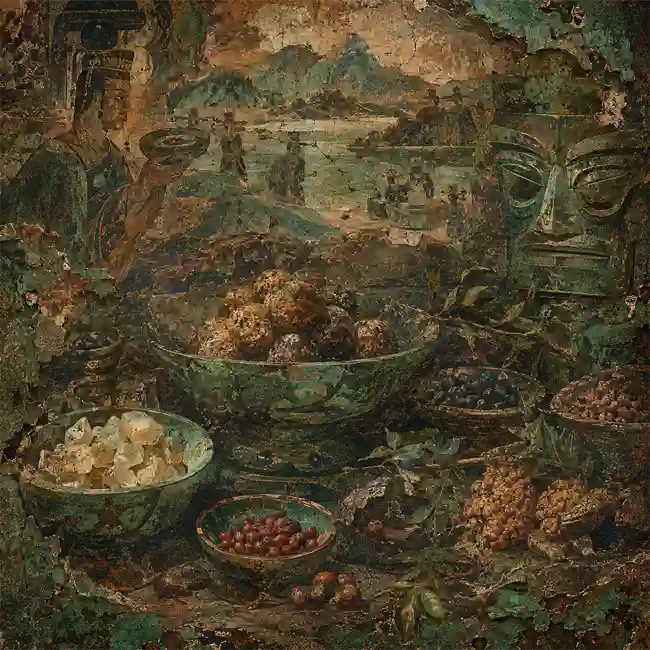
🐉📜 The Storyteller’s Intro: 5,000 Years of Ancestral Flavors
Imagine walking through the misty Sichuan Basin 5,000 years ago, where the legendary Shu Kingdom thrived long before written history remembered its name. This is Sanxingdui, not just an archaeological site, but a forgotten culinary universe.
So what was Sanxingdui exactly? If you are new here, let me give you the quick, friendly breakdown:
• The Timeline is Mind-Blowing: The Sanxingdui culture spans roughly from 4,800 to 2,800 years ago, with four distinct cultural layers that archaeologists love to talk about. It starts with the early Baodun Culture phase around 2700 BCE, blossoms into the first Sanxingdui phase around 2000 BCE, hits its glorious golden age between 1600-1200 BCE which gave us those iconic bronze masks, and then mysteriously fades around 1000 BCE.
• It Was Not One Era, But Four Worlds: Each era had its own food story. The early settlers were millet masters. The middle era became rice revolutionaries thanks to the fertile Chengdu Plain. The golden era was all about ritual feasting and sacred offerings. The final era shows a shift towards more sophisticated foraging and preservation.
• A Civilization Without Writing, But With Incredible Flavor Memory: The Shu people left no cookbooks. They left something cooler - carbonized seeds in pottery jars, honey residue in bronze vessels, traces of wild chestnut shells, and food offerings placed carefully beside those giant bronze heads. We are literally tasting history from the dirt.
• Why Wild Earth Sweets? Unlike the imperial kitchens of later dynasties, Sanxingdui sweets were not about refined sugar. They were about the forest giving you a gift. Think wild honey, mountain tubers roasted in ash, sticky rice pounded with foraged berries, and nuts caramelized with tree sap. This was survival food turned into sacred food.
• The Real Vibe of Sanxingdui Eating: It was communal, spiritual, and deeply connected to the land. Food was not just eaten. It was offered to ancestors, shared after a successful hunt, and used to mark the seasons. If you love the idea of slow food, this is the original slow food.
📜 Iconic Excavated Menus: The Sacred Sweets of the Shu Kingdom
This is my favorite part. Based on actual archaeological finds from Pits K1-K8, residue analysis, and paleobotanical studies at Sanxingdui and the related Jinsha site, here are the star dishes that keep showing up. No recipe details yet, just the legends.
✦ Wild Honey and Millet Cluster - Mi Su Tuan: This is the superstar. Archaeologists found millet grains clumped together with traces of beeswax and wild honey in pottery li tripods. The Shu people would toast foxtail millet until it popped slightly, then bind it with heated wild cliff honey and crushed wild walnuts. It was found as an offering in ritual pits.
✦ Smoked Chestnut and Tuber Cake - Li Gen Gao: Carbonized remains of Chinese water chestnuts and wild yam were discovered in ash pits. They would mash steamed wild taro-like tubers with roasted chestnuts and smoke it over camphor wood. The result was a smoky, naturally sweet, dense cake that could last for days on a journey.
✦ Bronze Vessel Sticky Rice with Raspberry Glaze - Zhan Nuo Mei: Residue inside bronze zun vessels shows fermented sticky rice combined with wild Rubus berries. Not a wine, but a sweet, slightly tangy, porridge-like sacred dessert. The glutinous rice from the Chengdu Plain was mixed with crushed wild raspberries and red bayberries for color and sweetness.
✦ Forest Fungus and Lotus Seed Sweet Soup - Jun Zi Geng: In the waterlogged areas, lotus seeds and various edible tree fungi were preserved. This was a gentle, naturally sweet soup thickened with lotus root starch, sweetened only with dates from wild jujube trees and honey. It was likely served warm during ancestor rituals.
✦ Caramelized Ginkgo and Pine Nut Bites - Yin Xing Song Zi: Ginkgo biloba trees are living fossils, and they were everywhere in ancient Sichuan. Excavated ginkgo nutshells show roasting marks. They were pan-toasted in pottery and coated with pine sap reduction and crushed pine nuts. A crunchy, buttery, ancient trail mix.
✦ Ash-Roasted Wild Yam with Osmanthus Dust - Hui Wei Shan Yao: The simplest and most soulful. Wild yams roasted directly in the ash of the hearth, split open, and dusted with dried, fragrant wild osmanthus flowers. The flower dust was found stored in small ceramic boxes. Pure, earthy, floral sweetness.
✦ Puffed Job’s Tears and Mulberry Bar - Yi Ren Sang Shen: Job's tears, an ancient grain still used today, were found in storage jars. They puffed them like popcorn and pressed them with dried mulberries and honey into bars. This was the energy bar of the Shu warriors and traders.
🗺️ The Shu Way of Living: Eating, Dwelling, and Traveling the Ancient Kingdom
If you want to understand the food, you have to understand how they lived. Sanxingdui was not living in isolation. They were masters of their environment.
• The House Was the Kitchen: Shu homes were wattle-and-daub semi-subterranean houses with a central hearth. That hearth was everything - heater, stove, and sacred altar. Cooking was done in pottery vessels like the guan and pen, directly in ash and over open flame. No fancy stoves, just earth and fire.
• The Ultimate Forager’s Supermarket: Their pantry was a 20-mile radius of pure biodiversity. The Longquan Mountains provided chestnuts, walnuts, wild honey, and mushrooms. The Chengdu Plain gave them rice, millet, lotus, and water chestnuts. The forests gave them tubers, ginkgo, and wild berries. They ate what the season offered, nothing more.
• Food as a Spiritual Passport: In Sanxingdui, you did not just cook for yourself. Every major meal started with an offering. Sweet foods, especially honey-based ones, were considered pure enough for the gods. That is why we find sweets in the sacrificial pits alongside bronzes and elephant tusks. Sweetness was a bridge to the ancestors.
• Travel Tip for Modern Food Explorers - The Sanxingdui Food Trail: You can still taste this legacy today. If you visit Sanxingdui Museum in Guanghan, Sichuan, go beyond the museum. The surrounding villages still forage.
◦ Visit the local markets in Guanghan in late summer for fresh wild honey and osmanthus.
◦ Take a walk along the Yazi River banks where ancient foragers once collected lotus seeds. The landscape has not changed much.
◦ Try the modern Sichuan version of sticky rice cakes, ci ba, in nearby villages - it is the direct descendant of the ancient sticky rice sweets.
◦ Stay in a local guesthouse and ask about smoked taro. Many older families still make a version of Li Gen Gao.
• Community Feasting Was the Social Network: Large pottery basins show traces of communal eating. After a harvest or a successful bronze casting, the whole settlement would share sweet millet clusters and tuber cakes. Food was how you belonged.
🚣 Minjiang River Basin Roots: Where Water Created Flavor
You cannot talk about Sanxingdui without talking about water. This is your keyword rabbit hole for ancient river cuisine.
• The Lifeline of the Shu Kingdom: Sanxingdui sits on the tributaries of the Minjiang River system, specifically the Yazi River and Mamu River, which feed into the Tuo River. This entire Minjiang River Basin was their highway, their irrigation, and their fridge.
• River Foraging Was a Skill: The riverbanks were not just for water. They were foraging hotspots for water chestnuts, lotus roots, wild rice shoots, and freshwater snails which were sometimes sweetened with honey for ritual dishes. The mud itself preserved tubers naturally.
• Wetland Pantry, Dryland Flavor: The genius of Sanxingdui cooks was balancing the wet and dry. They would take water-rich lotus seeds and pair them with dry-roasted ginkgo nuts. They would take slippery wild yams and smoke them until dense and sweet. The river gave abundance, the fire gave concentration.
• Why the Basin Matters for Sweets: The high humidity of the Sichuan Basin meant honey never fully crystallized and fruits fermented quickly. So they learned to preserve sweetness through smoking, ash-roasting, and honey-binding rather than drying alone. It is a totally different technique from northern China.
🏜️ The Bamboo Sea Oasis: Sanxingdui’s Hidden Forest Sanctuary
Wait, a desert in Sichuan? Not quite, but Sanxingdui had its own version of an oasis, and it is crucial for understanding their sweets.
• The Sichuan Bamboo Forest Oasis Concept: Forget sand dunes. The oasis of the Shu people was the vast, dense bamboo and broadleaf forests surrounding the Chengdu Plain. In the sweltering summer, these forests were cool, humid sanctuaries where food could be stored and wild ingredients thrived.
• The Forest Was Their Refrigerator and Sugar Factory: Deep in these forest oases, wild bees built massive hives, sap ran sweet in the spring, and berries stayed fresh longer in the shade. Foragers would go into the forest for days and come back with honey, resin, and aromatic flowers.
• Travel Inspiration for the Modern Oasis Seeker: If you are traveling for this food story, do not just stay in Chengdu city. Head to the Shunan Bamboo Sea, about 3 hours away, to feel what an ancient Shu forest oasis was like. Locals there still harvest bamboo shoots and make sweet bamboo rice, a direct echo of Sanxingdui’s forest sweets. It is the closest you will get to tasting the wild.
🐉❓ Ancient Civilization FAQ: Unlocking Palace Kitchen Mysteries
Q1: How do we actually know what Sanxingdui people ate if they had no writing?
Great question. We use three super cool sciences. First, paleobotany, where we look at carbonized seeds under a microscope. Second, residue analysis, where we scrape the inside of ancient pottery and bronze and test for fats, beeswax, and starches. Third, experimental archaeology, where we recreate the pottery and try cooking in it. The honey-millet cluster was confirmed because beeswax lipids were found baked into the pottery walls. It is real detective work.
Q2: Were Sanxingdui sweets only for the elites and priests?
Not at all, and that is what makes it special. Unlike later Chinese dynasties where sugar was for royalty, wild sweets were for everyone. Honey and tubers were available to all. The difference was presentation. Commoners ate roasted yams with flowers, while priests offered the same ingredients in sacred bronze vessels to the gods. The ingredients were democratic, the ritual was elite.
Q3: What is the biggest difference between Sanxingdui sweets and other ancient civilization sweets like Egyptian or Mesopotamian?
No refined processing. Egyptians had early sugar cane press and date syrup factories. Mesopotamians had extensive date palm cultivation. Sanxingdui had zero cultivation for sweetness. Every single sweet thing was foraged wild. No farms for sugar. That makes their sweets more seasonal, more floral, more smoky, and much more connected to the immediate forest. It is wild earth versus farmed earth.
Q4: Can I recreate these flavors at home without ancient tools?
Absolutely, and that is the beauty of it. You do not need a bronze zun. The spirit is simple - toast a grain, add a wild honey, add a foraged nut or berry, and use smoke or ash for depth. Use sticky rice, real wildflower honey, roasted chestnuts, and dried osmanthus flowers from any Asian market. You are 90% there. The full authentic recipes with exact methods are coming in our next deep dive.
🧠 Final Thoughts: The Timeless Allure of Antique Gastronomy
Sanxingdui reminds us that sweetness did not start in a factory or a palace kitchen. It started in the woods, with sticky hands from wild honey, smoke in your hair from the hearth, and a shared cake made from a yam you dug yourself that morning.
These Wild Earth Sweets and Foraged Bites are not just lost ancient recipes. They are a mindset. They teach us that the most memorable flavor comes from patience, from knowing your landscape, and from treating food as a gift rather than a product.
The bronzes of Sanxingdui stare at us with giant, otherworldly eyes, but their pantries were deeply human, warm, and sweet. We have only scratched the surface of their iconic menus and their river and forest foodways. In our next chapter, we will finally get our hands dirty and reconstruct the full, step-by-step ancient methods.
Stay curious, stay wild, and keep foraging.
🏛️ Credit to the Keepers of the Culture (The Legacy)
This content is deeply indebted to the tireless work of the Sanxingdui Archaeological Team from the Sichuan Provincial Institute of Archaeology, the curators and researchers of the Sanxingdui Museum in Guanghan, and the scholars of the Jinsha Site Museum.
Special respect to the ancient Shu people themselves, whose ingenuity in living with the land created a culinary heritage that survived 5,000 years in the earth. We also honor the local Sichuan communities, village elders, and traditional foragers around the Chengdu Plain and Minjiang River Basin who have kept wild food knowledge alive through oral tradition.
All historical interpretations are based on published archaeological reports, paleobotanical studies, and museum research. We write with deep reverence for the Shu civilization and its enduring legacy.
🏛️🍯 The Lost Honey Cakes of Sanxingdui: Tasting a 5000-Year-Old Sweet Secret
👉 Taste Sanxingdui: Wild Earth Sweets & Foraged Bites
| 🌐 🏛️🍯 < Back | 🏯 🍲 < Previous | Next > 🧪 🏯 |