
🏠 Home > 🗺️ Recipes > 🏛️🌾 Primitive Grains & Flatbreads > 🏰 Ancient Celts: Primitive Grains & Flatbreads Recipes
🏰 🏛️🌾 Ancient Celts: Primitive Grains & Flatbreads Recipes
Published by Supakorn | Updated: October 2026
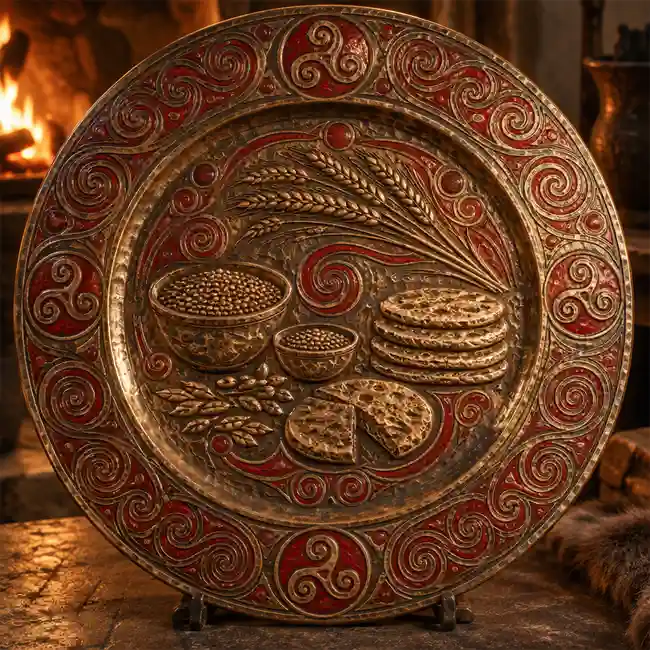
🏹📜 The Storyteller’s Intro: 5,000 Years of Ancestral Flavors
Picture a handful of grain resting in someone’s palm. It could be barley, wheat, or another cereal grown close to home. Around it are the everyday sounds of a settlement: footsteps on packed earth, a grinding stone at work, and a fire being prepared for a meal. It is a simple scene, but it opens a fascinating question: what did the people we call the ancient Celts actually eat?
Before we follow that question, let’s straighten out the timeline. Five thousand years ago takes us to roughly 3000 BCE, long before the archaeological cultures usually identified as Celtic. Farming communities were already living across parts of Europe, cultivating grains and developing food traditions. But calling a 3000 BCE loaf “Celtic” would give it an identity that the evidence cannot support.
The story has several chapters. Neolithic farming and later Bronze Age communities came first. The Hallstatt period, beginning around 800 BCE, is associated with early Iron Age societies in parts of central Europe. The La Tène period, emerging around the fifth century BCE, is especially important to discussions of Celtic art and material culture. Meanwhile, communities across Britain and Ireland developed their own regional histories, which do not fit neatly into a single continental timeline.
So why begin a Celtic food story with a 5,000-year view? Because farming knowledge did not appear overnight with the Iron Age. People inherited landscapes, tools, crops, and ways of preparing food from many generations before them. That long background matters—even though we must not mistake those earlier people for historically identifiable Celts.
This is also why “ancient Celtic cuisine” is a useful doorway, not a single fixed menu. Communities lived in different climates and landscapes. Their food depended on local fields, seasonal harvests, available animals, trade, and household resources. A family in an inland hillfort did not necessarily eat in the same way as a lakeside household or a community near the Atlantic coast.
Grains give us a particularly good way into their world. Archaeologists can study charred seeds, storage pits, grinding stones, and traces left on cooking equipment. These discoveries cannot tell us every ingredient in a finished meal. They can, however, show that growing, storing, and processing cereals were important parts of daily life.
Flatbreads belong in this conversation, but with a little caution. A simple grain dough cooked as a cake or flatbread is plausible in many ancient food settings. Yet a charred grain found in a pit is not proof of a particular bread, and surviving food remains rarely arrive with a name attached. Think of this article as a walk through the evidence, the landscapes, and the possibilities—not a claim that we have recovered an exact Celtic family recipe.
🌾 What Do We Mean by “Primitive Grains”?
Here, “primitive” describes older farming and processing traditions; it does not mean crude or unsophisticated. Ancient growers made choices about crops that could survive local conditions and feed their communities. Grinding grain, managing stores, and turning a harvest into dependable food all required skill.
Depending on the place and period, archaeological discussions of Iron Age food may include barley, wheat varieties such as emmer or spelt, and other cereals. The balance varied. That variation is part of the story: there was no universal “Celtic grain blend” waiting to be rediscovered.
📜 Iconic Finds and Food Names: What the Evidence Really Records
Ancient food writing can make every discovery sound like a lost dish from a royal menu. The reality is more interesting—and more honest. Archaeologists frequently identify ingredients and food practices, while exact dish names are much harder to recover. The names below therefore distinguish between grains found in archaeological contexts, broad food descriptions in ancient writing, and modern labels used to explain possible foods.
⭐ Barley-based foods: Barley appears in many discussions of ancient European farming and food. It was a useful crop, but finding barley at a settlement does not tell us whether a particular batch became a loaf, a cake, or another meal.
⭐ Emmer wheat foods: Emmer is an older wheat with a long history in European agriculture. Its presence helps us imagine the work behind a meal: harvesting, separating grain, grinding, and making food from what the household had available. “Emmer flatbread,” though, is a modern descriptive phrase unless a particular find supports that identification.
⭐ Spelt wheat foods: Spelt is closely associated with parts of Iron Age and Roman-period Europe. It can be tempting to put it on every ancient Celtic menu, but crops changed across regions and centuries. A site’s own evidence matters more than a broad cultural label.
⭐ Grain cakes and flatbreads: These are reasonable categories for talking about simple cereal foods, not guaranteed ancient Celtic dish titles. Their appeal lies in how ordinary they may have been: food made to fit the grain supply, the cooking place, and the needs of the household.
⭐ Bread mentioned by classical writers: Some Greek and Roman accounts describe foods eaten by peoples they called Celts or Gauls, including bread. Such writing is valuable, but it comes from outsiders with their own interests and assumptions. It is best read alongside archaeology, not treated as a complete household menu.
⭐ Charred cereal remains: They may not look dramatic in a display case, yet they are among the most revealing food finds. Fire sometimes preserved what would otherwise have vanished. A few darkened grains can help researchers identify crops and ask how a settlement managed its food supply.
⭐ Grinding stones and querns: These are not dishes, of course, but they deserve a place in any account of ancient grain food. They represent repeated labor. Before a grain-based meal could reach a hearth, someone had to process the harvest.
⭐ The key takeaway is wonderfully grounded: we know more about the cereals and the work than about the ancient names of finished dishes. That does not make the food story less vivid. It brings the people who grew and prepared it into clearer view.
📚 Why Isn’t There a List of Excavated Celtic Recipes?
Most ancient meals were eaten, cleared away, or broken down by time. Even when a fragment survives, identifying its ingredients can require careful analysis, and identifying its original name may be impossible.
Later traditional breads can offer interesting comparisons, but a familiar modern name should not automatically be carried back into the Iron Age. A word used centuries afterward is not proof that an excavated Celtic household used the same word—or made the same food.
🗺️ From Hillfort Fields to Living Landscapes: Eating and Traveling Through Celtic History
If you want to imagine grain in its everyday setting, begin outside the kitchen. Look toward a field, a storage area, a path between settlements, or a place where grain could be ground. The ancient food story is a landscape story. What people ate depended on where they lived and how they organized the work of keeping a community fed.
In parts of Iron Age Europe, settlements ranged from small farmsteads to larger defended places. A hillfort might draw your eye because of its banks and wide views, but its food history often lies in less imposing traces: seeds, pits, tools, and the remains of ordinary activity. A dramatic earthwork and a tiny grain are two pieces of the same human story.
Danebury hillfort in southern England offers a compelling way to think about this relationship. Archaeological work there has informed discussions of Iron Age settlement and agriculture. As you imagine walking its earthworks, remember that a community’s daily rhythms depended not just on defenses or gathering spaces, but on harvests and stored food.
Across the Channel, the Heuneburg area in southern Germany connects visitors with an early Iron Age landscape often discussed in relation to Hallstatt-period societies. It is a place to think about connections between settlements, farming regions, and wider networks—not a place where we can point to one surviving “Celtic flatbread recipe.”
Bibracte in France, a major late Iron Age settlement, offers another perspective. Its remains invite questions about how a large community obtained, moved, prepared, and shared food. When you look at a settlement on that scale, “What was for dinner?” quickly becomes “How did all these people keep food coming?”
A visit to an archaeological museum can be just as rewarding as a walk through a site. Seek out displays of grain samples, tools, and reconstructed household spaces. The small objects are easy to pass by, but they often tell you more about meals than the largest and most eye-catching artifact in the room.
You do not have to pretend a modern landscape is unchanged to enjoy this journey. Fields have shifted, settlements have disappeared, and today’s paths may not follow ancient ones. The pleasure of traveling with food history in mind is noticing what the landscape still helps you ask: Where could crops grow? How far might grain travel? Where would people gather to prepare a meal?
🏠 A Day Built Around the Harvest
Grain food was never just the moment of eating. It began with choosing and tending a crop. Harvesting had to be followed by processing and storage, all while a household managed other work.
The practical questions mattered. Was a harvest sufficient? Would stored grain remain usable? How much time could be spent grinding before the next task called? Those concerns may feel surprisingly familiar. The tools and circumstances were different, but the wish to make good use of food was deeply human.
We should also resist the idea that everyone ate alike. Household resources, age, season, and local ecology could shape a person’s meals. Archaeology helps us build a picture of possibilities, not hand an identical plate to every member of an ancient community.
🚣 Along the Rivers and Lakes of the Ancient Celtic World
Rivers make excellent companions for a journey through ancient food landscapes. They connected places, supported movement, and helped shape where people settled. That does not mean every grain traveled by boat. It means waterways belong in the bigger picture of how communities related to one another.
The upper Danube region is particularly evocative when thinking about early Iron Age central Europe. Around sites such as Heuneburg, it is easier to picture food history as more than a single farm’s story. Fields, settlements, routes, and exchanges formed a wider landscape in which crops had real social value.
La Tène, near Lake Neuchâtel in Switzerland, gives its name to the archaeological period so often linked with Celtic material culture. Its watery setting makes it memorable, but it should not be mistaken for a preserved menu. The site helps locate a cultural and archaeological story; evidence for food still needs to be considered carefully, find by find.
River valleys also remind us why broad labels can mislead. Communities beside different waterways encountered different environments and maintained different connections. An inland settlement near one river cannot stand in for every group described as Celtic across Europe.
If you travel with this question in mind, take a moment near the water to look inland as well. A river route is only part of the picture. Behind it were people working fields, carrying supplies, and preparing food at home. Grain connects those quieter places to the larger routes we can still trace on a map.
🏰❓ Ancient Civilization FAQ: Unlocking the Everyday Kitchen Mysteries
Q1:Were the Celts Already Making Flatbreads 5,000 Years Ago?
Not in a way we can accurately describe as Celtic. Around 3000 BCE, European farming communities had already developed long histories of cultivating and preparing cereals. The Celtic cultural and archaeological labels generally discussed in this article belong to much later periods. A long grain tradition forms the background; it is not evidence that Celtic identity existed five millennia ago.
Q2:Have Archaeologists Found a Named Ancient Celtic Flatbread?
An exact, securely named Iron Age Celtic flatbread is not something we should claim from the available evidence. Grain remains, processing tools, occasional surviving food material, and written descriptions can each tell part of the story. They do not usually give us a dish label and an ingredient list together. When you see an appealing ancient-sounding bread name, it is worth asking whether it comes from the period itself or is a modern description.
Q3:What Can Grinding Stones Tell Us About Food?
They tell us that grain processing was a meaningful part of life at a site. Alongside crop remains and other evidence, they can help researchers investigate how food was prepared. But a grinding stone alone cannot reveal whether the resulting grain went into bread, a cake, or another dish. Its strongest message is about work: making grain useful took time and effort.
Q4:Is There One Best Place to Experience Ancient Celtic Food History?
There is no single capital of ancient Celtic eating. A hillfort such as Danebury encourages questions about farming and storage; the Heuneburg area places food within an early Iron Age landscape; Bibracte prompts questions about feeding a larger settlement. Museums add the close-up view of grains and tools. Together, these places offer a richer experience than any one imagined “authentic Celtic menu.”
🧠 Final Thoughts: The Timeless Allure of Ancient Grain Food
The most captivating thing about ancient grain food may be how close it feels. We cannot step into an Iron Age home and confidently name every dish. Yet we can recognize the care behind a stored harvest, the effort of grinding grain, and the comfort of food prepared for people waiting nearby.
The 5,000-year journey is not a claim that the Celts were there at the beginning. It is a reminder that the Celtic-era grain story grew within a much older history of European farming. Keeping those timelines separate makes the story more compelling, not less.
For now, the grains, landscapes, and everyday routines deserve the spotlight. The full exploration of possible flatbread preparations can come later, with the same promise guiding it: curiosity is welcome, but an imagined recipe should never be passed off as an excavated fact.
🏛️ Credit to the Keepers of the Culture: The Legacy
Our picture of ancient food exists because people have cared for these places and studied their smallest traces. Archaeologists, archaeobotanists, museum teams, conservators, local communities, and heritage stewards help preserve evidence that might otherwise disappear or be misunderstood.
Their work also reminds us to speak respectfully about the past. “The Celts” were not one household with one cookbook. They were diverse communities across different places and times, and the people who came before them had histories of their own.
The best way to honor that legacy is to keep asking careful questions. Let a charred grain be important without turning it into a complete recipe. Let a landscape stir your imagination without claiming it has remained frozen in time. And let the ordinary act of preparing food give ancient lives the attention they deserve.
🏛️🌾 Celtic Wild Oat Flatbread: Rediscovering the Flavors of an Ancient World
👉 Unlock Ancient Celts' Primitive Grains & Flatbreads
| 🌐 🏛️🌾 < Back | Next > 🍖 🏰 |